What the Feed-End Pulley Does
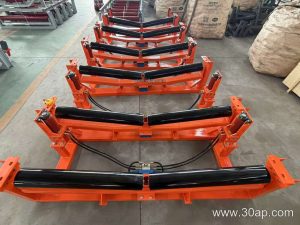
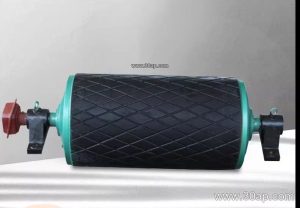
The feed-end pulley is the conveyor pulley positioned where material first lands on the belt. In many conveyor layouts this is the tail pulley, which supports and guides the belt at the loading zone. It is not a drive pulley, not a bend pulley, and not a snub pulley. Those parts perform different jobs elsewhere on the conveyor. The feed-end pulley works with the conveyor belt, the idler rollers on the carrying side, and the conveyor bracket that holds the assembly in place. Its main tasks are to keep the belt aligned during loading, absorb part of the impact from falling material, and return the belt smoothly toward the drive end.
Construction and Surface Options
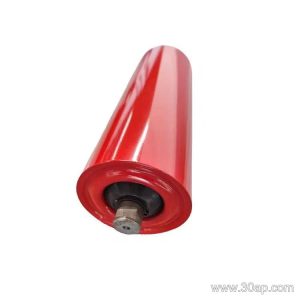
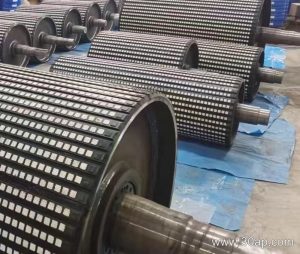
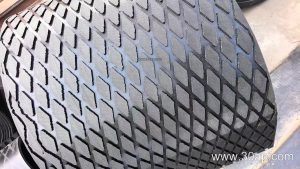
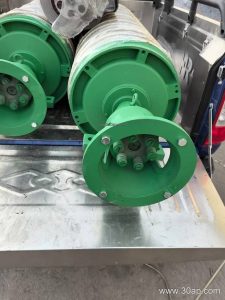
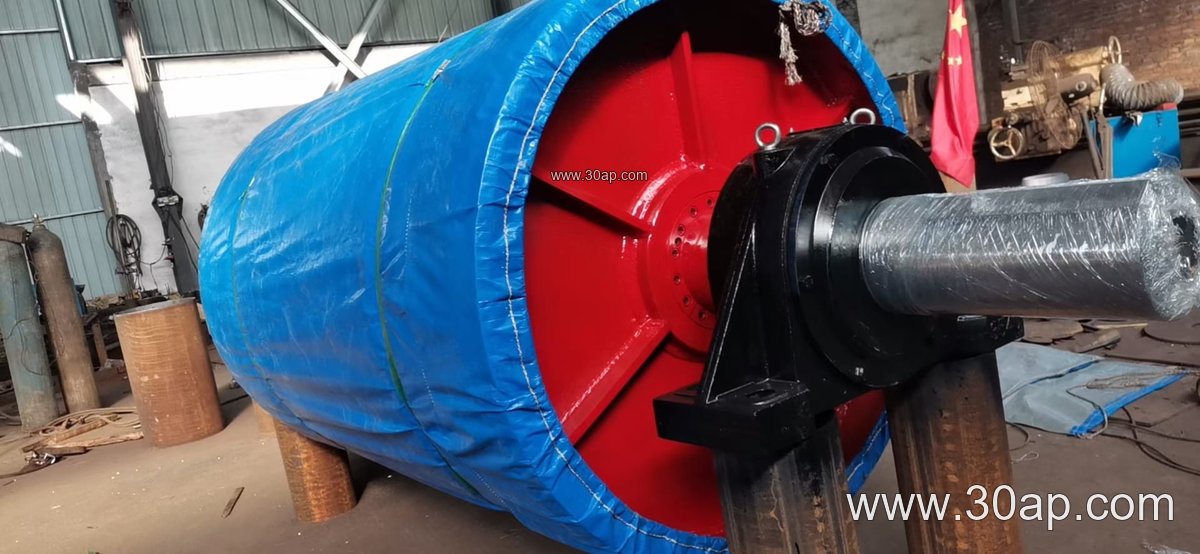
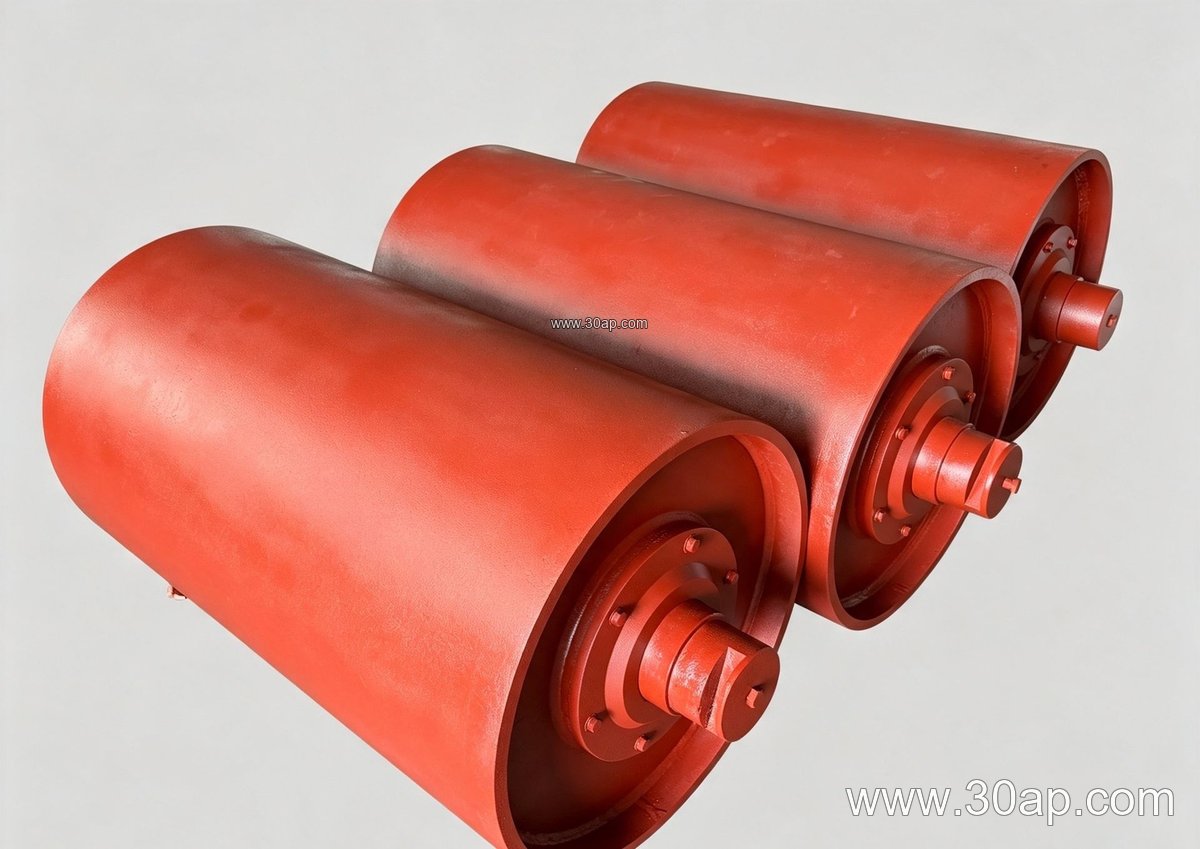
A typical feed-end pulley has a steel shell, welded end discs, a shaft, and bearing housings. The shell surface may be plain, or it may carry rubber lagging applied by cold bonding, hot vulcanizing, or casting. Diamond and herringbone patterns are common where extra grip or water shedding is useful. Ceramic lagging is chosen in some abrasive duty. Lagging thickness is often 8, 10, 12, 15, or 20 mm, selected according to belt speed, load, and the risk of slip. The pulley face width normally exceeds the belt width so the belt is fully supported. For example, a B800 belt usually runs on a pulley face of about 950 mm, and a B1200 belt on roughly 1400 mm. These are reference values, not fixed rules. Shaft diameter is determined by torque and load, with common sizes including Ø80, Ø100, Ø120, and Ø140.
Common Reference Dimensions
- Belt width B650 with pulley face around 750 mm
- Belt width B1000 with pulley face around 1150 mm
- Belt width B1400 with pulley face around 1600 mm
- Pulley diameters such as Ø315, Ø400, Ø500, Ø630, Ø800, and Ø1000
- Example combinations: B800 × Ø500, B1200 × Ø1000, B1400 × Ø800
One belt width can match more than one pulley diameter. The correct pair depends on belt tension, wrap angle, and the space available at the loading point.
Where It Is Used
Feed-end pulleys appear in quarry lines, sand and aggregate plants, cement clinker handling, and power station coal conveying. In a crushing and screening circuit, the pulley at the feed point often faces heavy impact and abrasive dust. In a coal preparation plant, flame retardant conveyor belt grades are common, and the pulley lagging should be compatible with the local safety requirements. The pulley also matters in port bulk terminals, steel plant sinter lines, and fertilizer or grain silos where gentle belt support reduces spillage. In each case the feed-end pulley is matched to the belt type, whether that is an EP conveyor belt, an NN conveyor belt, a steel cord conveyor belt, or a chevron conveyor belt for inclined loading.
Buyer Checklist
Before ordering, confirm the belt width, the pulley face width, the shaft diameter, and the bearing type. Ask whether the loading point needs impact idlers or a cushioning bed ahead of the pulley. Check the lagging material against the conveyed material: heat resistant conveyor belt duties may call for heat-tolerant lagging, while oil resistant conveyor belt duties need rubber that resists swelling. For underground mining conveyor belt applications, confirm that the pulley finish and lagging meet the mine’s fire and antistatic expectations. Also review the conveyor bracket dimensions and the take-up arrangement, because a feed-end pulley that is hard to access will be hard to maintain.
Maintenance Notes
Inspect lagging wear at the loading zone more often than at other pulleys. Material build-up on the shell can cause belt tracking problems, so keep the scraper or cleaning device in good condition. Check bearing temperatures and lubrication intervals, and verify that the pulley remains square to the belt centerline. A small misalignment at the feed end can grow into edge damage along the conveyor belt. When replacing lagging, record the original thickness and pattern so the replacement keeps the same grip and belt path.