What a Self-Aligning Idler Set Does
A self-aligning idler set is a group of carrying or return rollers designed to correct belt drift without manual adjustment. When a conveyor belt starts to wander toward one side of the frame, the angled rollers in this set steer it back toward the centerline. In a quarry, a cement plant, or a power plant coal yard, this small correction prevents edge damage, spillage, and premature wear on the conveyor belt.
The set works through geometry rather than electronics. The rollers are mounted at a slight forward tilt, usually about 1.5 to 2 degrees, and often arranged in a V or tapered pattern. Friction from the moving belt turns the assembly slightly, and the resulting sideways force nudges the belt back into line. This is a mechanical tracking correction that keeps working as long as the rollers turn freely.
Construction and Common Configurations
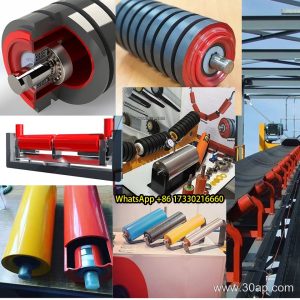
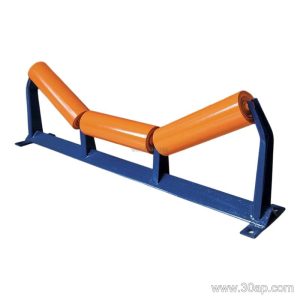
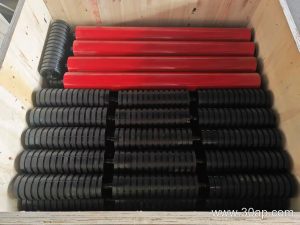
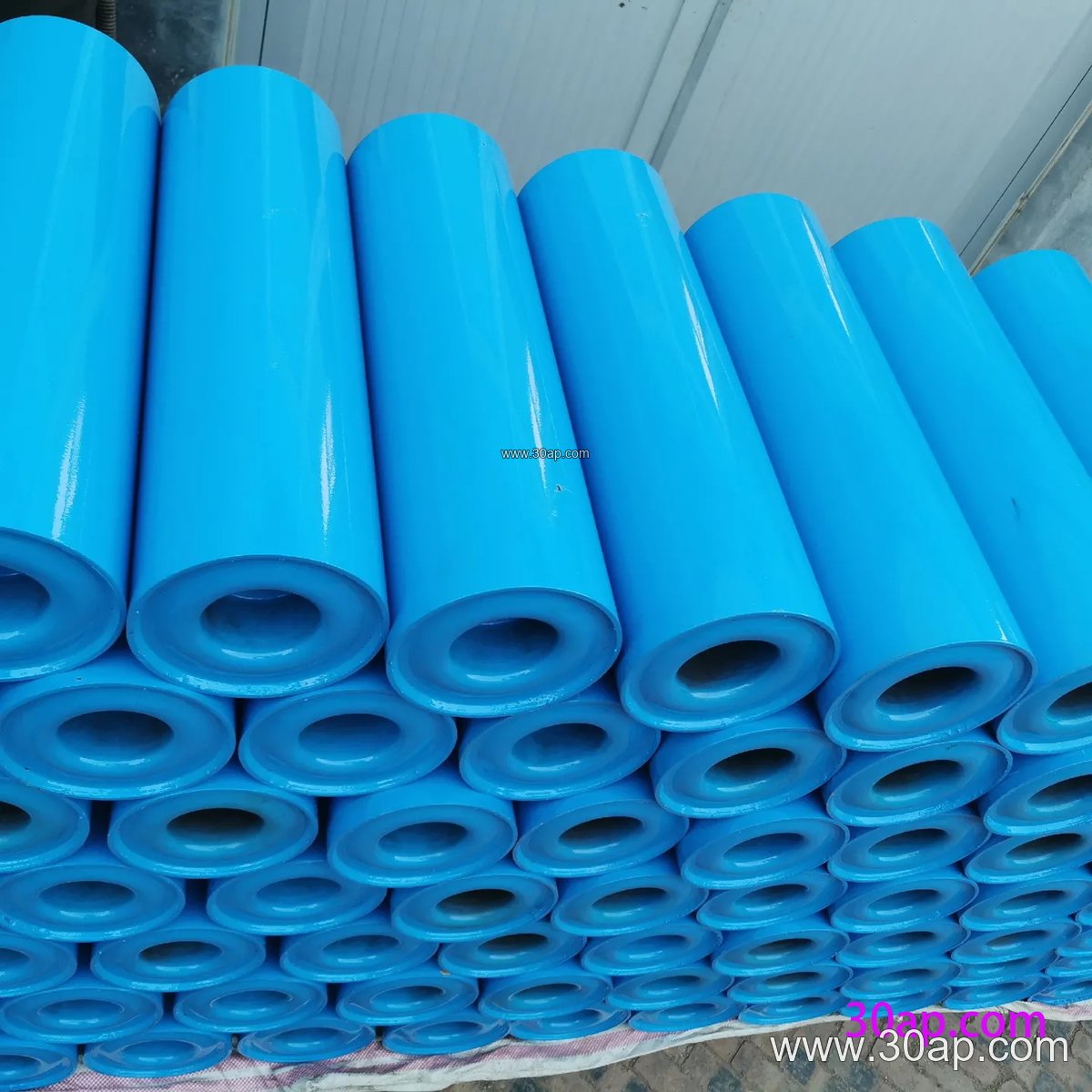
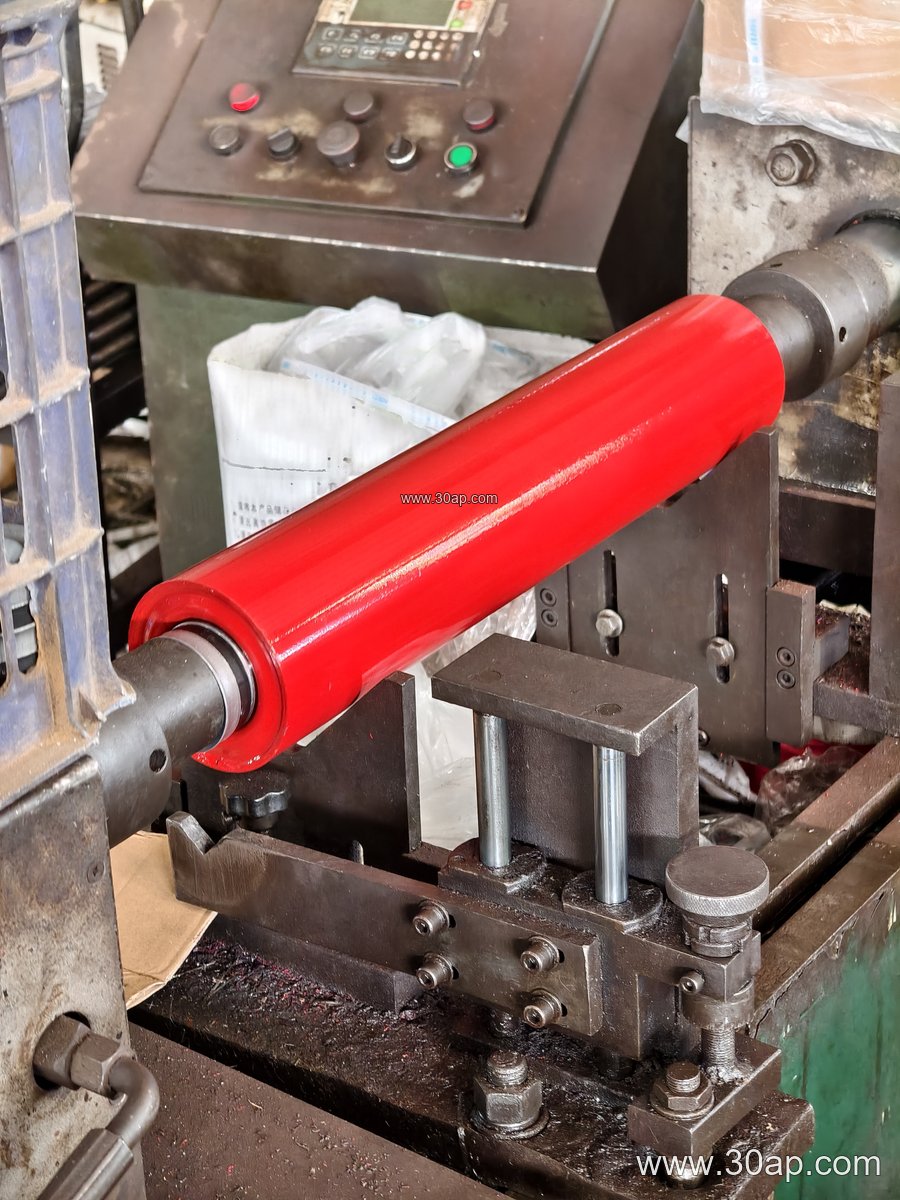
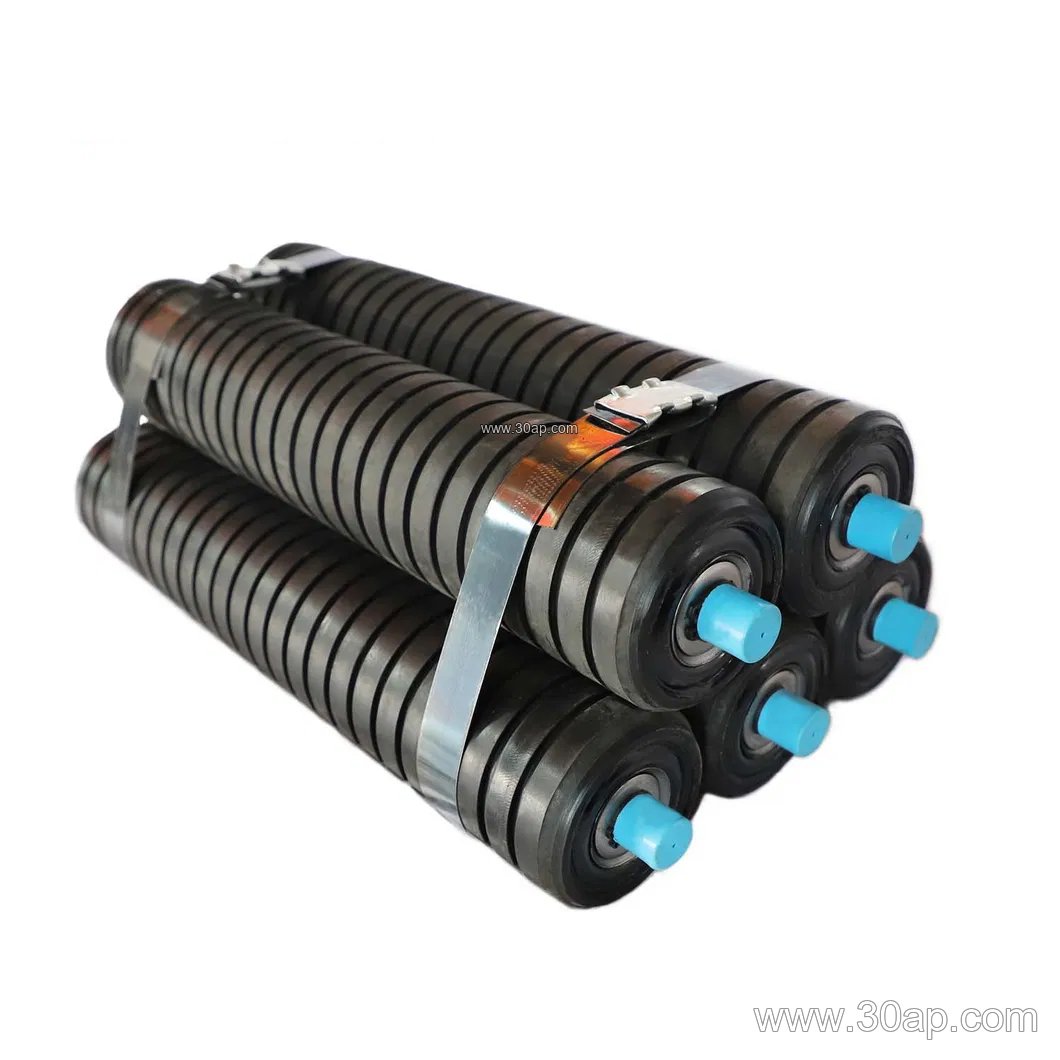
A typical set includes a sturdy frame, two or three rollers, sealed bearing housings, and a pivot mechanism that lets the assembly rotate. Roller shells are usually steel tube, and in abrasive service they may be fitted with rubber rings or ceramic covers. Bearing sizes commonly range from 6204 through 6310, matched to the load and roller diameter rather than to belt width alone.
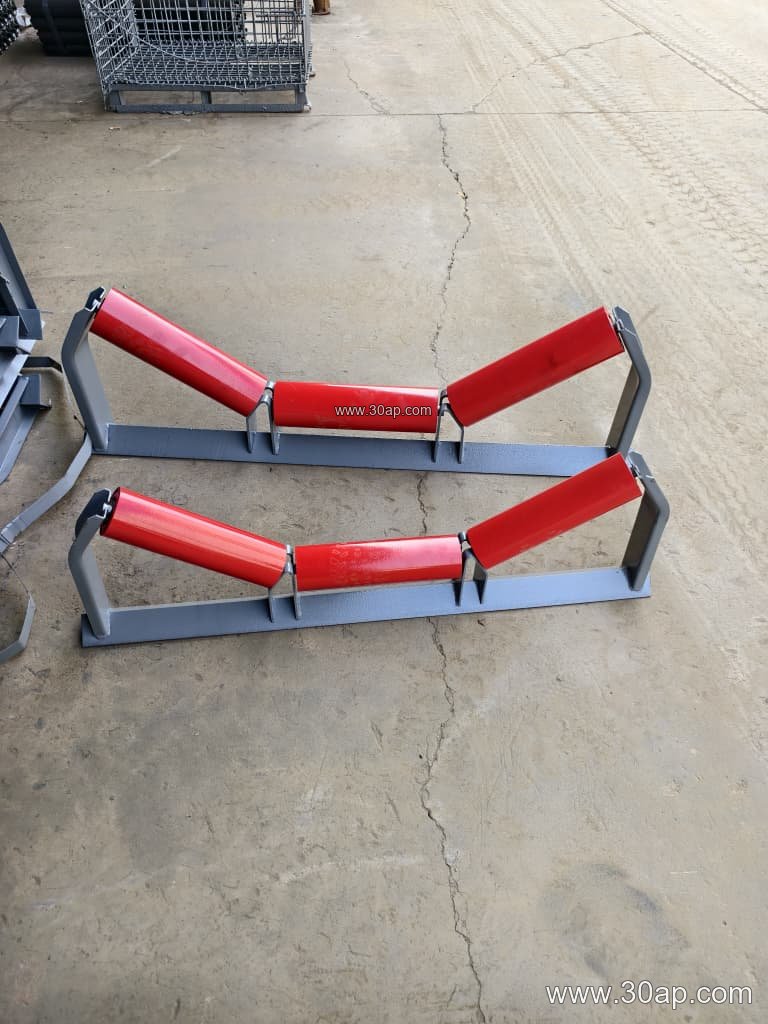
The main variants are friction self-aligning, tapered self-aligning, and plain self-aligning designs. A friction type uses contact with the belt to pivot the frame, while a tapered type relies on conical roller ends to create the correcting force. Both are distinct from fixed troughing idlers, which carry the load but do not steer the belt.
| Parameter | Common Range |
|---|---|
| Roller diameter | Ø63, Ø76, Ø89, Ø102, Ø108, Ø127, Ø133, Ø159, Ø178 mm |
| Belt width | B400, B500, B650, B800, B1000, B1200, B1400, B1600, B1800 mm |
| Trough angle | 20, 30, 35, 45 degrees |
| Bearing | 6204, 6205, 6305, 6306, 6308, 6310 |
| Roller surface | Steel tube, nylon, ceramic, rubber ring |
Roller length follows belt width, trough angle, and the number of rollers in the set. As a rough reference, a three-roll troughing set may use about 200 mm rollers at B500, 315 mm at B800, 465 mm at B1200, and 600 mm at B1600. These are typical examples only; side rollers and center rollers can differ, and final dimensions are set by the conveyor design.
Where the Set Fits on the Conveyor
Self-aligning sets are usually installed at intervals along the carrying run and on the return run, especially before and after curves, transfer points, and long straight sections where drift is likely. In a limestone mine or a sand and aggregate line, they help keep an abrasion resistant conveyor belt centered under the load. In a coal handling system, a flame retardant conveyor belt benefits from the same correction because misalignment on a wide belt can quickly damage edges.
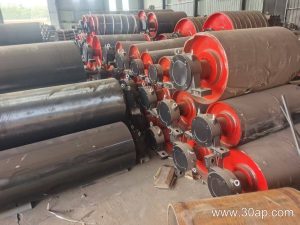
They are not a substitute for a drive pulley, tail pulley, or bend pulley. Those components transmit power and change belt direction, while the self-aligning set only controls tracking. Likewise, it should not be confused with a buffer idler set used at loading points to absorb impact.
Selection Points for Buyers
- Match roller diameter and bearing class to the belt speed and load, not to belt width alone.
- Confirm the trough angle and roller lengths with the conveyor frame drawing.
- Choose the roller surface for the environment: rubber rings for impact, ceramic for heavy abrasion, plain steel for general duty.
- Check that the pivot mechanism is protected from dust and that seals suit the site conditions.
- For wide belts, such as a 1200mm or 1500mm conveyor belt, verify the frame stiffness and mounting brackets before ordering.
On a steel plant conveyor or a port ship loading line, a properly sized self-aligning idler set reduces downtime caused by belt edge rubbing and spillage. Buyers should ask for the mounting dimensions, roller diameter, bearing number, and surface option, and should confirm how the set interfaces with the existing conveyor bracket. For heavy-duty mining conveyor belt systems, a heavier frame and sealed bearings are usually worth specifying.
Installation and Maintenance Notes
Mount the set square to the belt centerline and check that the pivot moves freely before tensioning the belt. Keep the rollers clean, because packed material can lock the pivot and cancel the correcting action. Inspect seals and bearing play at routine intervals, and replace worn rubber rings before they damage the belt cover. Used alongside a well-tracked EP conveyor belt or steel cord conveyor belt, this set supports longer service life for the whole conveyor line.