What a Custom Conveyor Bracket Does on a Conveyor Line
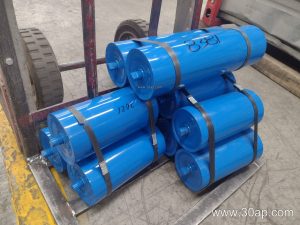
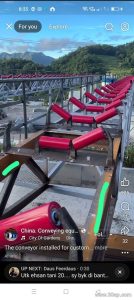
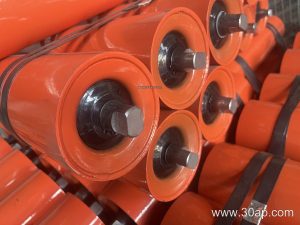
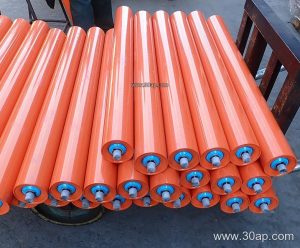
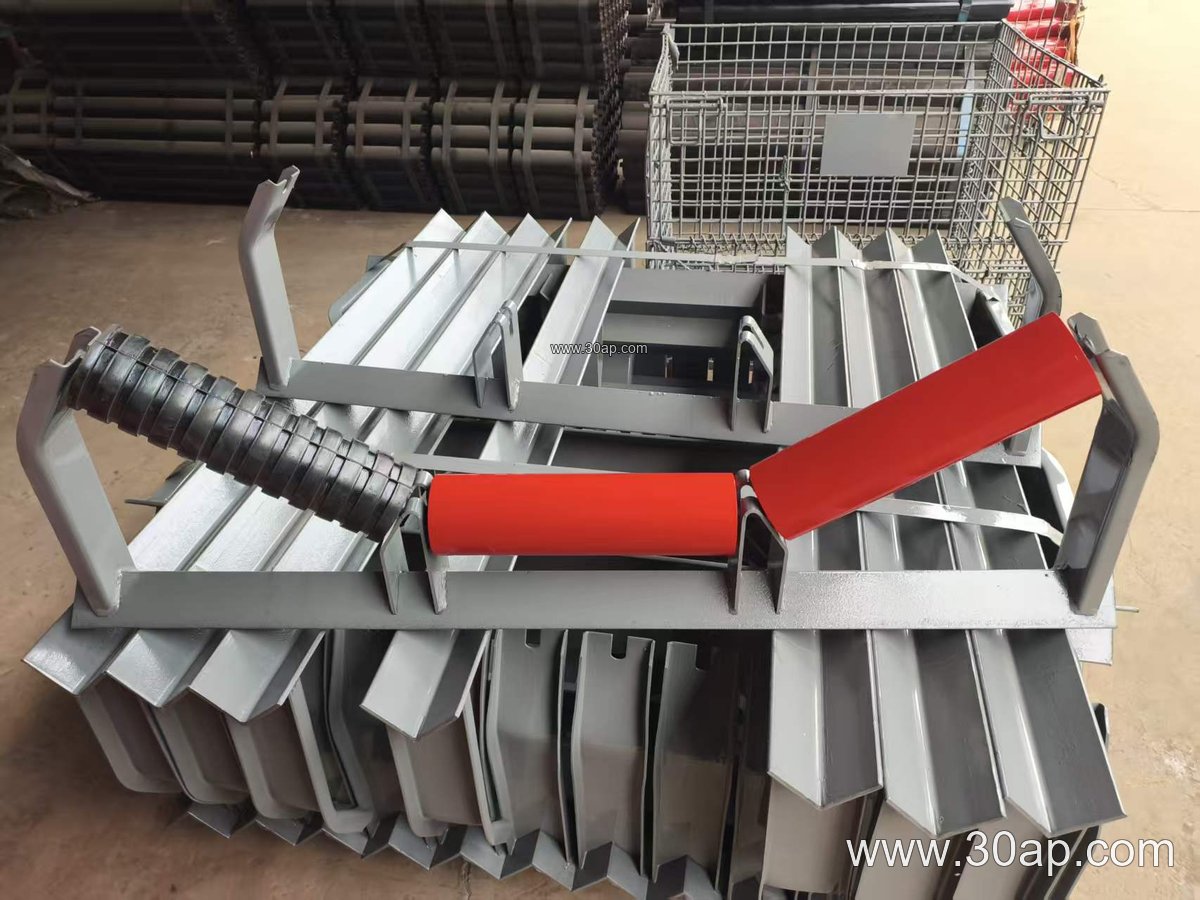
A custom conveyor bracket is a fabricated support component that holds idler rollers in the correct position under or over the conveyor belt. Unlike a catalog bracket pulled from a shelf, a custom unit is built to match the actual belt width, trough angle, roller diameter and mounting hole spacing of a specific conveyor. In a quarry, a cement plant or a power plant coal yard, the bracket is often the part that bridges the gap between standard rollers and non-standard structure.
The bracket is not a pulley and does not drive the belt. It carries the idler roller, which in turn supports the conveyor belt and the material load. Drive pulleys, tail pulleys and bend pulleys are separate components with different duties, so a bracket should never be ordered as a substitute for any of them.
How a Custom Bracket Is Built
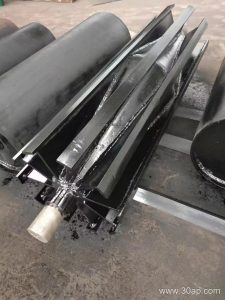
Most brackets are made from angle steel, channel steel or folded steel plate. The fabrication route usually starts with cutting, then hole punching or drilling, then bending and welding. A custom bracket may combine a trough section, a base plate and adjustable slots so the roller position can be fine-tuned on site.
Common mounting styles include fixed brackets, adjustable brackets and transition brackets. A fixed bracket locks the roller at one trough angle, while an adjustable bracket can be set between common angles such as 20 degrees, 30 degrees, 35 degrees and 45 degrees. Some designs add a slight forward tilt of about 1.5 to 2 degrees to help belt tracking.
Where Custom Brackets Are Used
Custom brackets appear wherever the conveyor structure is non-standard or the belt line has been modified. Typical locations include limestone mines, iron ore plants, coal washing plants, crushing and screening lines, cement plants, power plant coal handling, port loading systems and steel plant sintering lines.
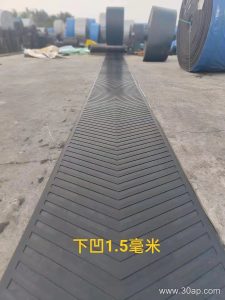
In a sand and gravel line, a custom bracket may be needed when a crusher discharge conveyor uses a wider belt than the original frame allowed. In a coal mining conveyor, flame retardant conveyor belt and anti-static conveyor belt are often specified, and the bracket must match the roller spacing without interfering with the belt edge. The same bracket family can support a rubber conveyor belt, an EP conveyor belt or a steel cord conveyor belt, but the load and roller diameter will differ.
Matching Bracket to Belt Width and Roller Diameter
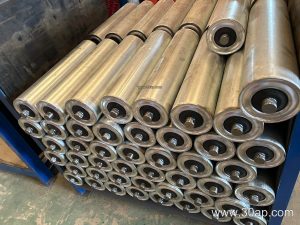
Belt width and roller diameter are selected together with the trough angle and the load. A B650 bracket with a 30 degree trough and Ø89 rollers is a common light-duty arrangement, while a B1200 bracket with a 45 degree trough and Ø133 rollers suits heavier bulk material. A B1400 or B1600 line may use Ø159 or Ø194 rollers depending on the belt tension and material lump size.
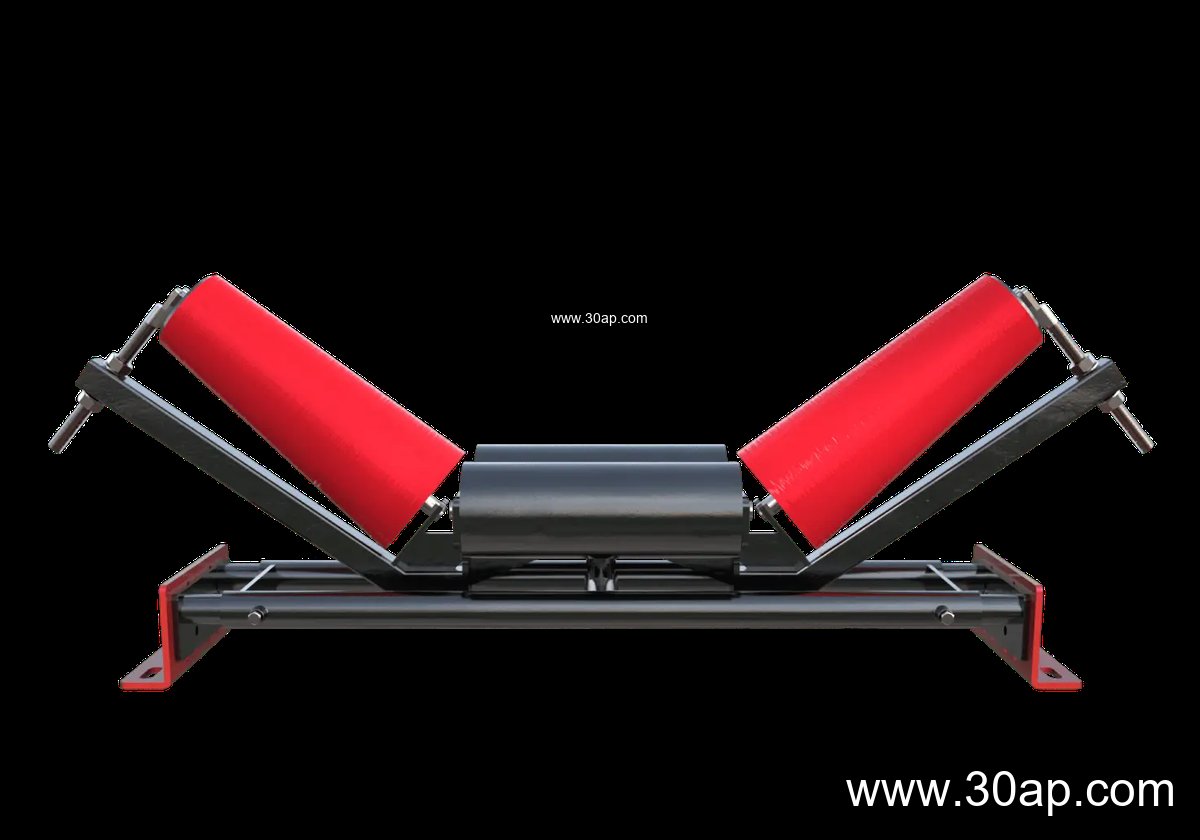
The table below shows reference combinations only. Actual mounting hole spacing and crossbeam length are determined by the conveyor design, not by a fixed rule.
| Belt Width | Trough Angle | Roller Diameter | Typical Bracket Style |
|---|---|---|---|
| B500 | 20° / 30° | Ø89 | Fixed trough bracket |
| B650 | 30° / 35° | Ø89 / Ø108 | Adjustable bracket |
| B800 | 35° / 45° | Ø108 / Ø133 | Trough bracket or transition bracket |
| B1000 | 35° / 45° | Ø108 / Ø133 / Ø159 | Adjustable trough bracket |
| B1200 | 35° / 45° | Ø133 / Ø159 | Heavy trough bracket |
| B1400 | 35° / 45° | Ø133 / Ø159 / Ø194 | Heavy trough or impact bracket |
| B1600 | 35° / 45° | Ø159 / Ø194 | Heavy trough bracket |
| B1800 | 35° / 45° | Ø159 / Ø194 | Custom heavy bracket |
| B2000 | 35° / 45° | Ø159 / Ø194 | Custom heavy bracket |
Return brackets are also part of the bracket family. A V-return bracket or a flat return bracket supports the belt on the return side and is often paired with a training idler. These are not the same as trough brackets and should be specified separately.
Buyer Checklist for a Custom Conveyor Bracket
- Confirm the belt width, such as B800, B1000 or B1200, and the actual frame dimensions.
- State the required trough angle and whether adjustment is needed.
- Give the idler roller diameter, for example Ø108 or Ø133, and the roller length.
- Provide mounting hole spacing and crossbeam length from the existing structure.
- Describe the environment: coal dust, cement powder, salt spray or high temperature.
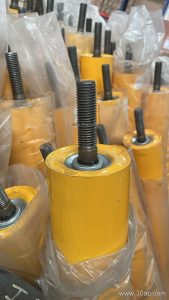
- Specify the material and surface treatment, such as painted, galvanized or hot-dip galvanized.
For harsh duty, a heavy-duty mining conveyor belt or a high abrasion resistant conveyor belt may run on the same bracket type, but the bracket thickness and roller diameter should be reviewed together. In food or fertilizer plants, a food grade conveyor belt may need a bracket with smooth edges and easy-clean surfaces.
At www.beltconveyorparts.com, custom conveyor bracket drawings are reviewed against the belt width, trough angle and roller diameter before fabrication. A bracket that fits the conveyor frame properly helps the idler roller turn freely, keeps the conveyor belt centered and reduces edge damage. Whether the line handles coal, clinker, ore or aggregate, the bracket is a small part that affects the whole support system.