What a Fixed Conveyor Bracket Does
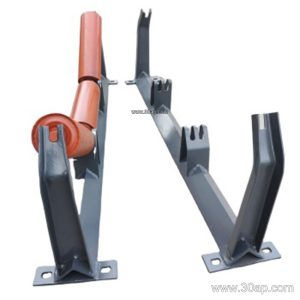
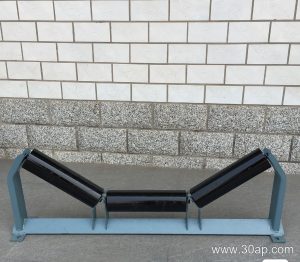
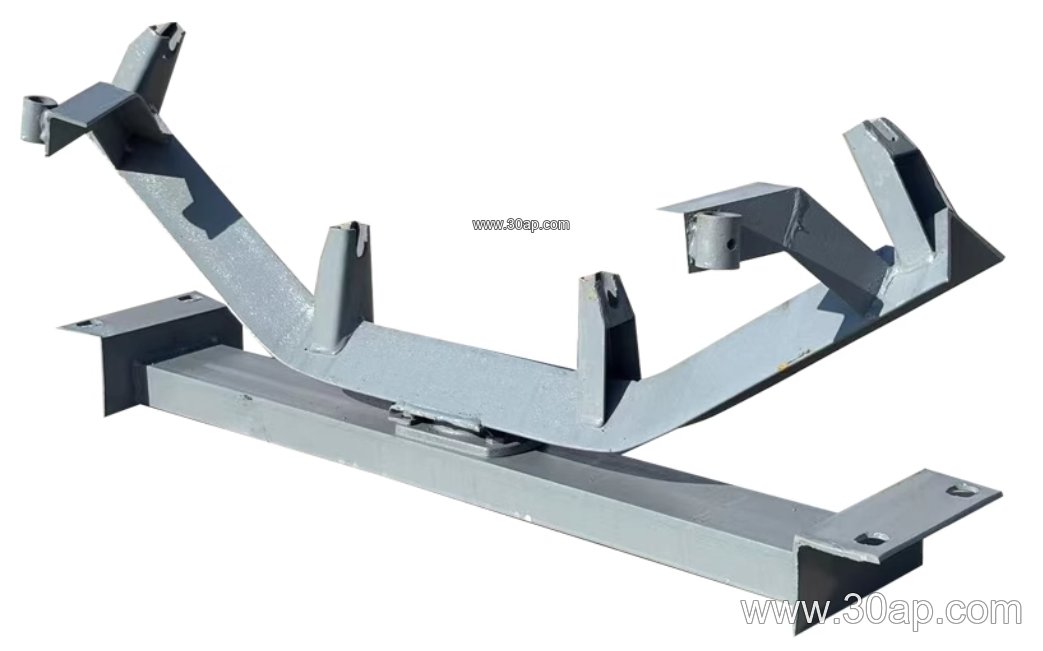
A fixed conveyor bracket is a welded steel support that holds idler rollers at a set position and angle along a conveyor frame. Unlike adjustable designs, the fixed type has no sliding or pivoting joints. Once bolted in place, the trough angle and roller spacing stay constant, which keeps the belt profile predictable through years of service. Maintenance crews in a limestone quarry or a cement plant often prefer this simplicity because there is nothing to drift out of alignment after heavy material impact.
The bracket itself carries no drive function. It is purely structural, and it works together with the conveyor belt, the idler roller and the conveyor pulley to keep material centered and moving steadily.
Construction and Common Materials
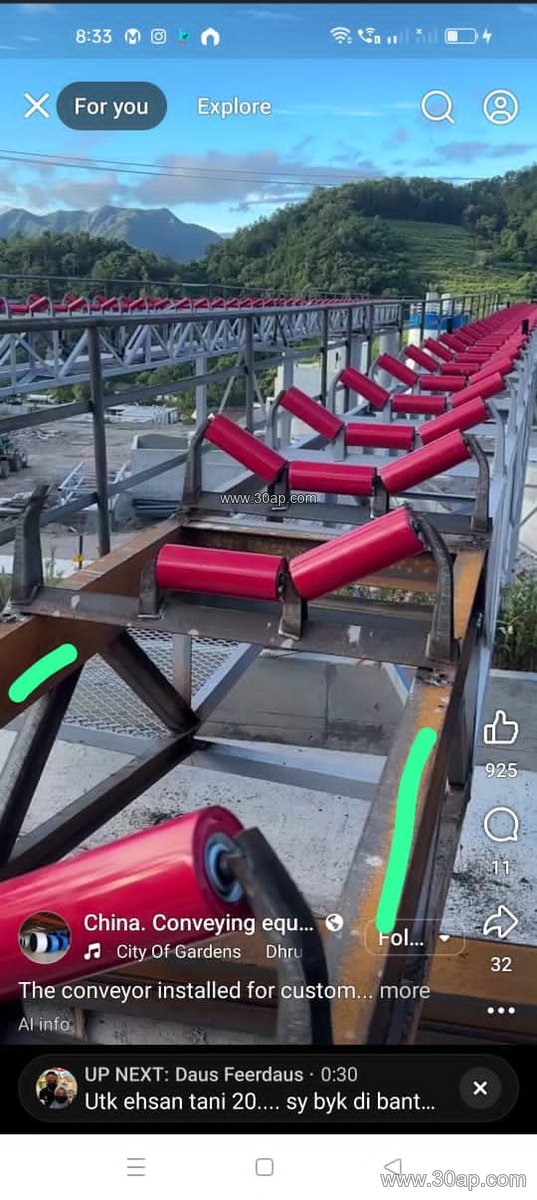
Most fixed brackets are fabricated from angle steel, channel steel or folded steel plate. A typical troughing bracket for the carrying side uses a base beam with two or three inclined arms that set the rollers in a V or U profile. Return-side brackets are flatter, and V-return designs use two rollers in an inverted V to help the belt track straight.
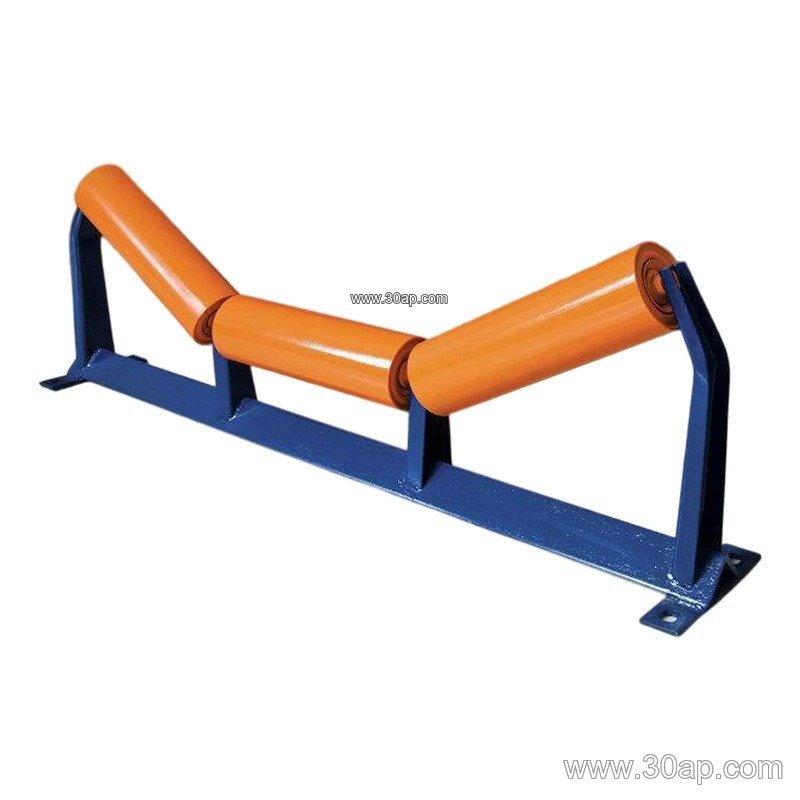
Fabrication quality matters more than raw steel gauge. Accurate hole spacing, square welds and consistent arm angles determine whether the rollers sit evenly and whether the belt runs without edge wear. Buyers should ask for the bracket drawing and confirm that mounting hole distances match their frame, since hole pitch and crossbeam length vary with belt width and trough angle rather than following one universal number.
Typical Applications
Fixed brackets appear across bulk handling. In a coal preparation plant, flame retardant conveyor belt grades run over troughing brackets that must resist dust and vibration. In an iron ore terminal, heavy-duty brackets support rollers under a steel cord conveyor belt carrying high-density loads. Aggregate lines, power plant coal yards and fertilizer silos all rely on the same principle: a rigid bracket keeps roller alignment stable so the belt does not wander.
Where belt tracking changes frequently, a self-aligning bracket may be compared with the fixed version. That comparison is useful, but the fixed bracket remains the standard choice for straight runs with stable loading.
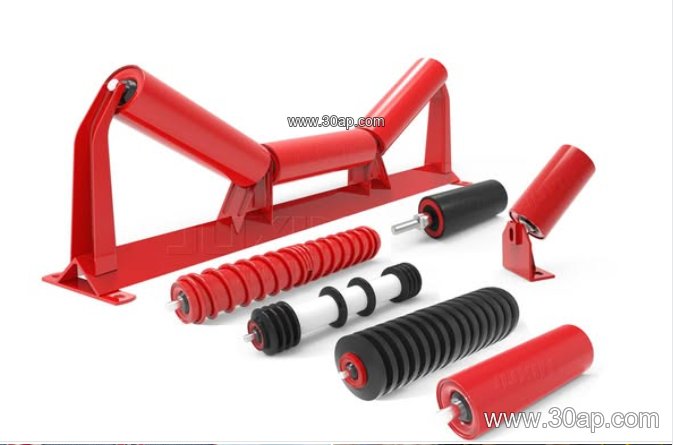
Matching Bracket, Belt Width and Roller Diameter
Bracket selection starts with the belt width and the required trough angle, then moves to roller diameter. These three values are related but not locked together. A wider belt does not automatically require one specific roller size, and a given trough angle can be paired with more than one roller diameter depending on load and speed. The table below lists common reference values used in design discussions.
| Parameter | Common Reference Values |
|---|---|
| Belt width | B500, B650, B800, B1000, B1200, B1400, B1600, B1800, B2000, B2200 |
| Trough angle | 20°, 30°, 35°, 45° |
| Roller diameter | Ø89, Ø108, Ø133, Ø159, Ø194 |
| Material | Angle steel, channel steel, folded steel plate |
Example combinations such as B800 with 35° and Ø108, or B1200 with 45° and Ø133, are common starting points. A B650 line running a 30° trough with Ø89 rollers is another familiar setup. Treat these as references, not fixed rules, and confirm the final geometry with the conveyor designer.
Buyer Checklist
- Confirm belt width, trough angle and roller diameter before ordering, and check that the bracket drawing matches the existing frame.
- Ask whether the bracket is for the carrying side, the return side, or a transition zone, because each position uses a different shape.
- Review the surface treatment. Painted or galvanized finishes extend life in wet or coastal conditions.
- Check weld quality and hole alignment, since poor fabrication causes roller misalignment and premature belt edge damage.
- Consider the material being carried. Abrasion resistant conveyor belt and heat resistant conveyor belt duties may call for heavier bracket sections or additional support spacing.
Installation and Maintenance Notes
Install brackets on a straight, level frame and tighten bolts progressively from the center outward so the crossbeam does not distort. After the first week of operation, recheck bolt torque, because vibration in a crusher conveyor belt line can loosen fasteners. Inspect brackets whenever rollers are replaced; a bent arm or elongated hole is a sign that the bracket should be repaired or renewed rather than reused.
Keeping the bracket rigid and correctly aligned protects the belt, the idler roller and the conveyor pulley, and it reduces downtime in demanding sites such as a copper ore concentrator or a ship loading terminal.