What a Belt Conveyor Bend Pulley Does
A belt conveyor bend pulley is a non-driven roller that changes the direction of the conveyor belt, usually redirecting the return strand or guiding the belt around a tensioning device. It does not pull the belt the way a drive pulley does, and it does not release material like a head or discharge pulley. Its job is routing and support: keeping the belt on a clean path, maintaining wrap angle on other pulleys, and helping the take-up system hold steady tension. Many plant engineers also call this component a redirecting pulley or a snub pulley when it is used to increase contact angle.
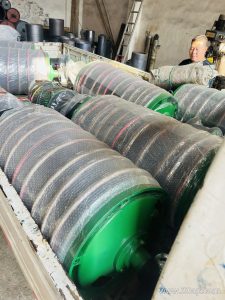
Because it carries belt tension without transmitting drive torque, the bend pulley is often specified differently from a drive pulley. A drive pulley needs high friction between shell and belt, so it is usually lagged. A bend pulley may run with a plain shell or a light rubber covering, depending on belt speed, load, and whether slip or material build-up is a concern.
Construction and Surface Options
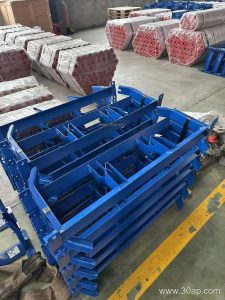
The assembly normally consists of a cylindrical shell, end discs, a shaft, bearing housings, and a supporting conveyor bracket. Shells are commonly fabricated from steel tube or rolled plate, machined at the ends for balance. Shafts usually range from Ø50 to Ø200 mm on general bulk handling conveyors, but the final shaft size is determined by torque, bearing span, and radial load, not by belt width alone.
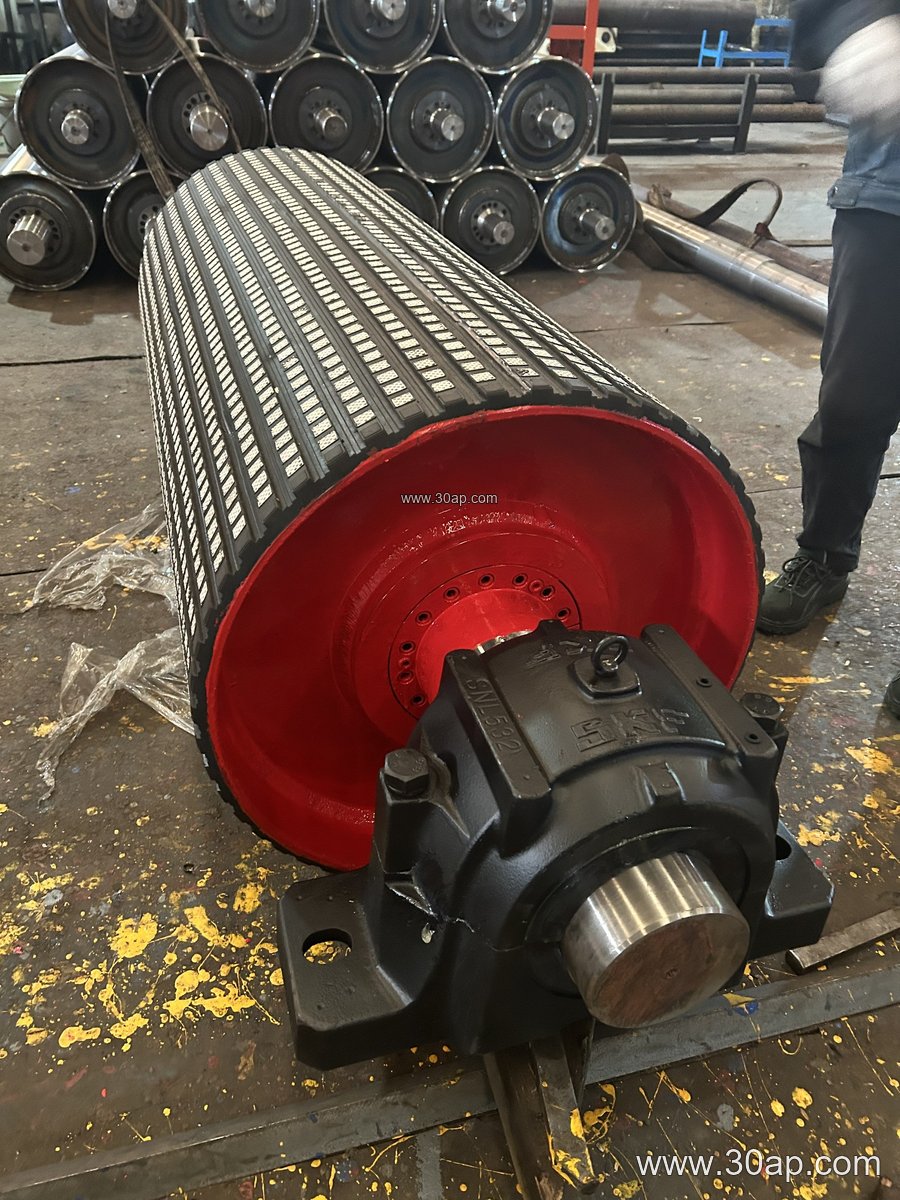
Surface treatment is a key buying decision. Common forms include:
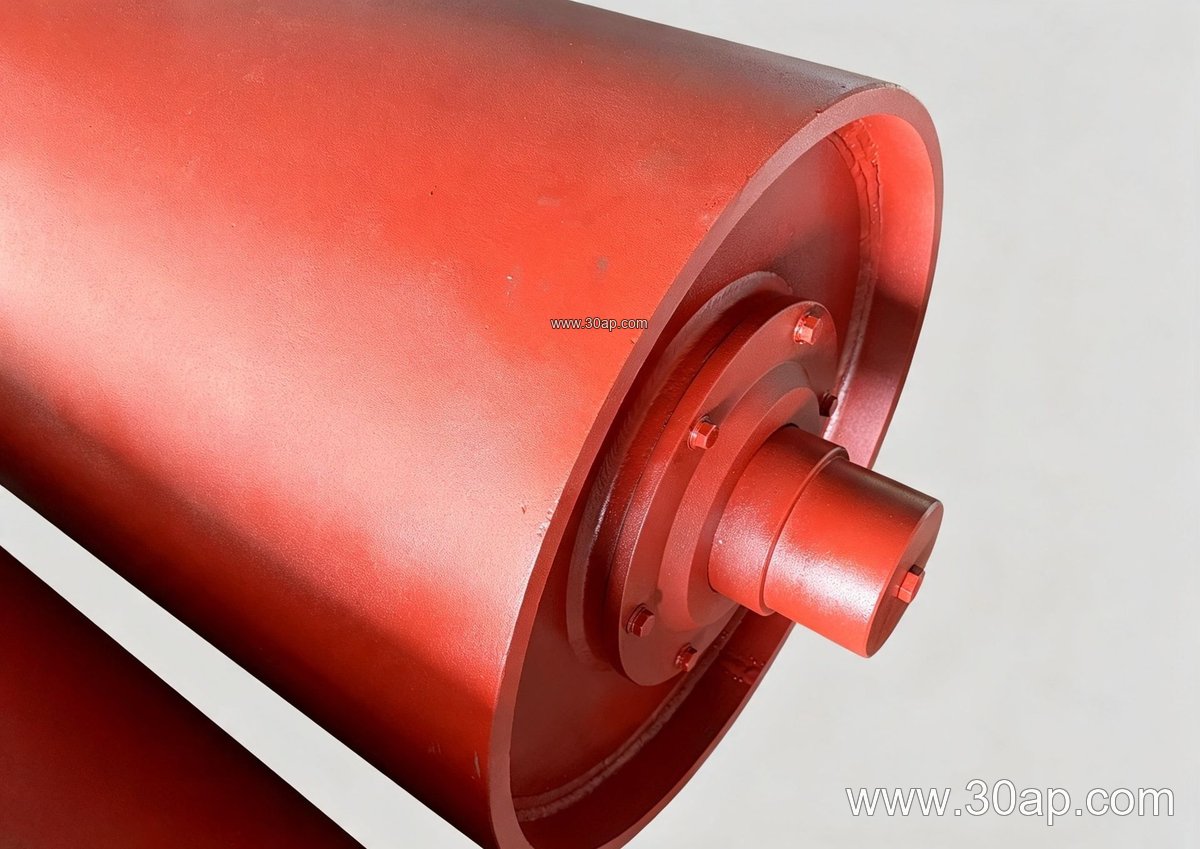
- Plain shell for light duty and low wrap applications
- Cold-bonded rubber or hot-vulcanized rubber for improved grip and wear life
- Diamond or herringbone lagging to shed water and fines
- Ceramic lagging for high-abrasion service
Lagging thickness is often 8, 10, 12, 15, or 20 mm. In a quarry or sand and aggregate line, a rubber-lagged bend pulley can reduce belt slip and protect the shell from abrasive dust. In a coal preparation plant or underground coal mining conveyor, flame retardant belt grades such as PVG800S Conveyor Belt are common, and the pulley lagging should be selected with similar fire safety goals in mind.
Sizing and Matching the Belt
Bend pulleys are sized together with belt width, belt type, and the required wrap angle. The pulley face width is normally wider than the belt so the belt does not run off the edge. Examples from common practice include B800 with a face around 950 mm, B1000 with around 1150 mm, and B1200 with around 1400 mm. Diameter choices such as B800 × Ø500 or B1200 × Ø1000 appear in many layouts, but no single belt width is tied to one diameter. A heavy-duty mining conveyor with a thick Steel Cord Conveyor Belt may need a larger diameter to control bending stress than a short transfer point using an EP Conveyor Belt.
| Parameter | Common reference values |
|---|---|
| Belt width | B400, B500, B650, B800, B1000, B1200, B1400, B1600, B1800, B2000 |
| Pulley diameter | Ø200, Ø250, Ø315, Ø400, Ø500, Ø630, Ø800, Ø1000, Ø1250 |
| Shaft diameter | Ø50, Ø60, Ø70, Ø80, Ø90, Ø100, Ø120, Ø140, Ø160, Ø180, Ø200 |
| Face width examples | B650 ≈ 750 mm, B1000 ≈ 1150 mm, B1400 ≈ 1600 mm |
| Lagging thickness | 8, 10, 12, 15, 20 mm |
Where It Fits in the Conveyor Layout
A bend pulley is often placed near the tail or take-up area, where the belt must turn back toward the head. It may also be used before a drive pulley to increase wrap angle, or after a tripper to guide the return strand. In a port bulk terminal, a bend pulley on the return run helps keep a wide 1800mm Wide Conveyor Belt aligned before it enters the tensioning carriage. In a cement plant, heat resistant belt grades may require careful pulley spacing so the belt does not overheat the lagging.
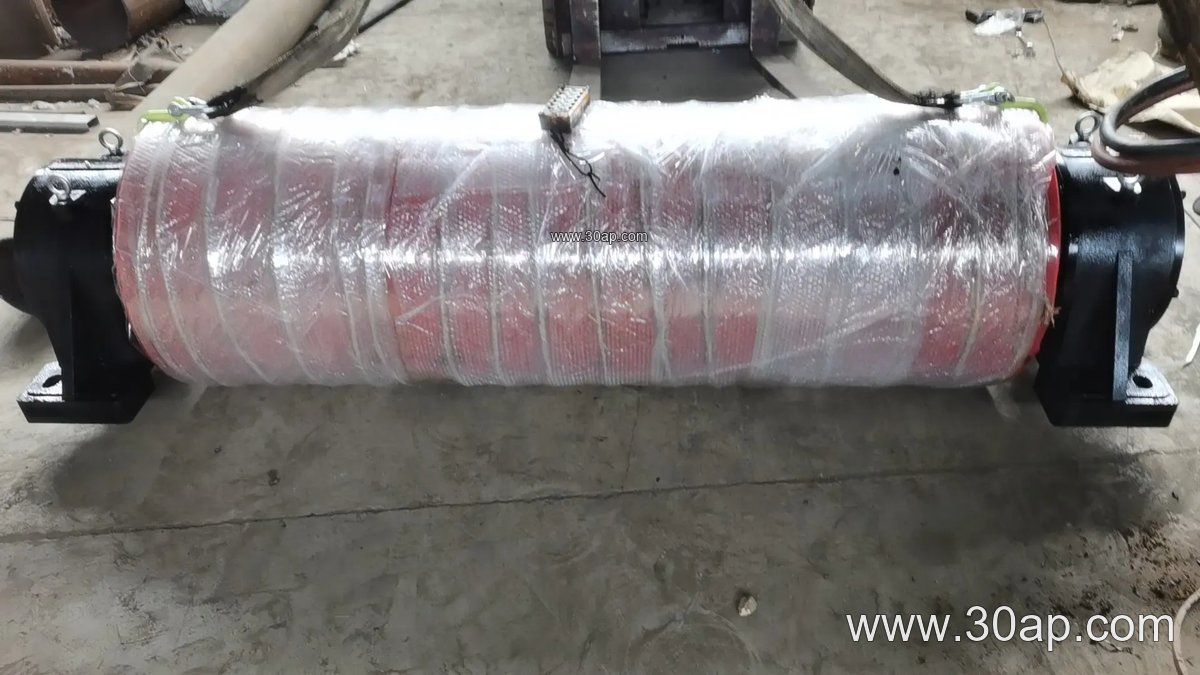
It is not a substitute for a drive pulley, tail pulley, or tension pulley. Each has a different role: the drive transmits power, the tail supports the loading zone, and the take-up pulley moves to maintain tension. The bend pulley simply redirects. When a layout needs both redirection and tension travel, a separate take-up pulley or a bend pulley mounted on a movable carriage may be used.
Buyer Checklist
Before ordering, confirm the belt width, belt construction, and expected tension. Check whether the conveyor handles a Fabric Core Conveyor Belt, a Multi-Ply Fabric Core Conveyor Belt, or a high-strength steel cord belt, because bending radii differ. Ask for the required shaft diameter based on calculated load, not a guessed figure. Specify the lagging type and thickness, bearing type, and whether a conveyor bracket or base frame is included. For dusty or wet service, mention the environment so the supplier can recommend suitable sealing and surface form.
Finally, plan inspection access. A bend pulley that is hard to reach tends to be neglected, and seized bearings can damage an otherwise healthy conveyor belt. Regular checks of lagging wear, bearing temperature, and belt tracking will keep the routing stable in mining, quarry, power, and bulk material operations.