What a Rubber Ring Impact Idler Does
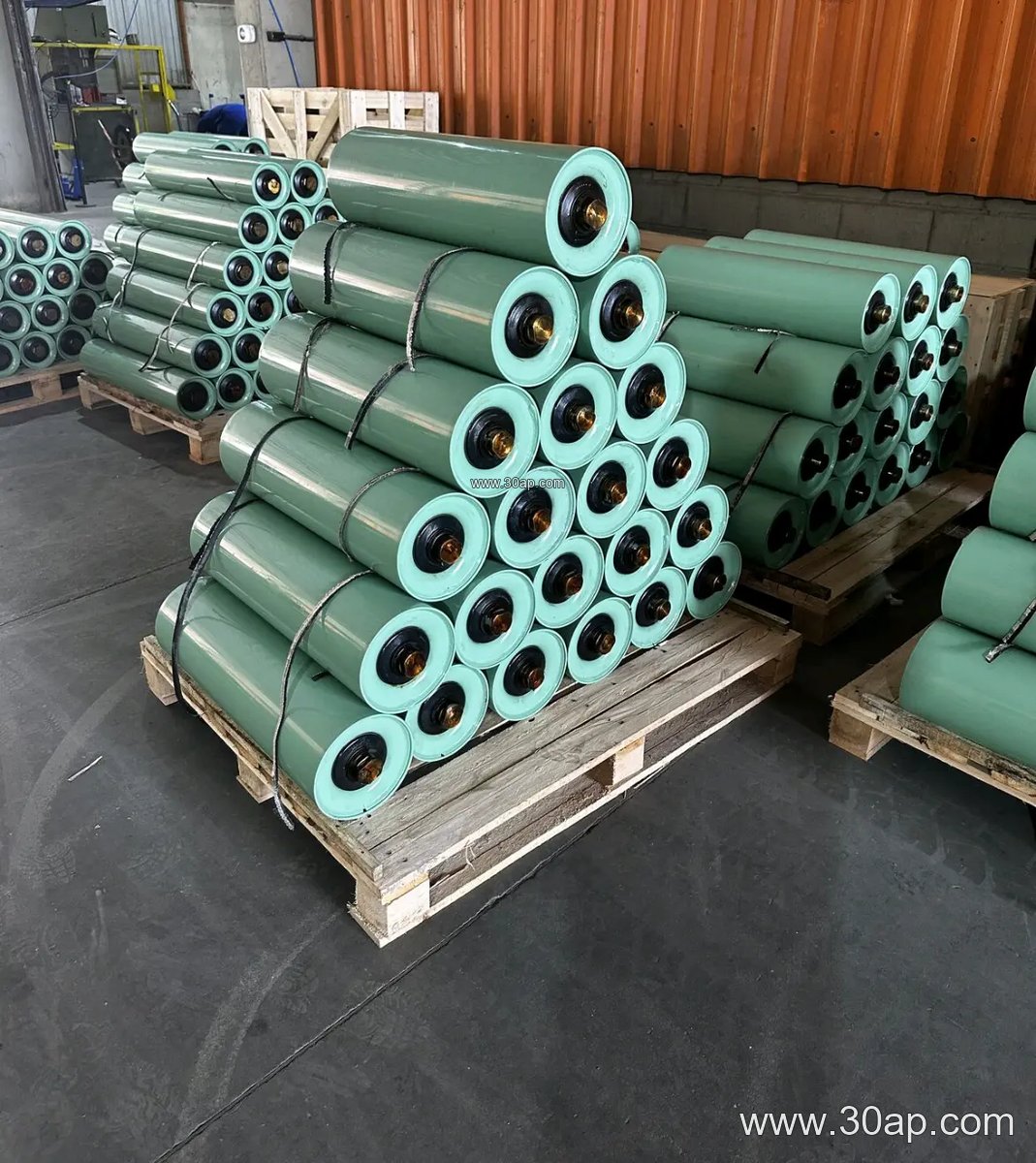
A rubber ring impact idler is a buffer roller used at conveyor loading zones where bulk material drops onto the belt. Instead of a plain steel shell, the roller carries a series of rubber rings or discs that absorb the strike of falling rock, ore, clinker, or aggregate. This reduces point loading on the conveyor belt and helps protect the belt cover from cutting and gouging. In a quarry, limestone mine, or crusher discharge line, the rubber ring impact idler sits directly under the chute and takes the first hit before the belt settles into a normal trough.
The product is also known as a rubber disc impact roller or rubber ring buffer idler. It is a subtype of impact idler, and it should not be confused with a trough idler, return idler, or self-aligning idler. Those rollers carry the belt; the rubber ring impact idler absorbs impact energy at the load point.
Construction and Key Parts
A typical unit has a steel shaft, bearing housings, a steel tube body, and a set of rubber rings pressed onto the shell. The rings are usually made from abrasion resistant rubber and are spaced along the roller face. Common bearing sizes include 6204, 6205, 6305, 6306, 6308, and 6310, matched to the shaft and load rating by the manufacturer rather than by belt width alone. The roller ends often use labyrinth seals or lip seals to keep out dust and water.
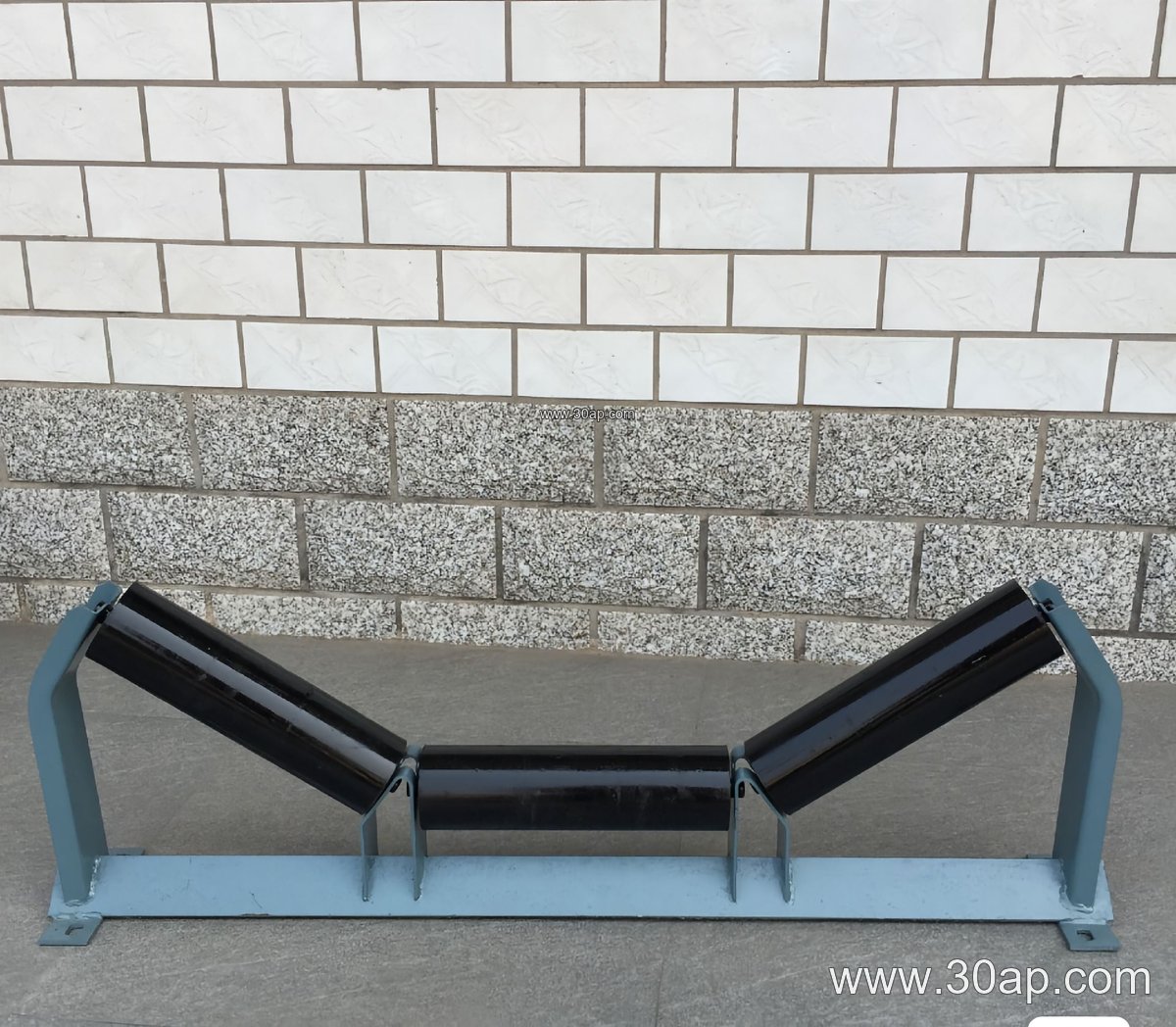
Roller diameter is chosen from a range such as Ø63, Ø76, Ø89, Ø102, Ø108, Ø127, Ø133, Ø159, Ø178, Ø194, or Ø219 mm. Larger diameters generally suit higher belt speeds and heavier lumps. Belt widths are commonly B400, B500, B650, B800, B1000, B1200, B1400, B1600, B1800, B2000, B2200, and B2400. Roller length varies with belt width, trough angle, and idler arrangement; for example, a three-roll trough set may use a middle roller of about 200 mm for B500, 315 mm for B800, 465 mm for B1200, and 600 mm for B1600. These are common references, not fixed pairings, and side rollers can differ from the center roller.
Where It Fits on the Conveyor
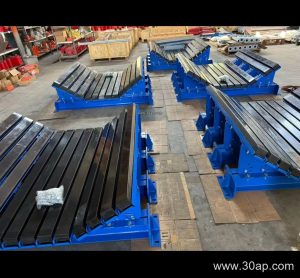
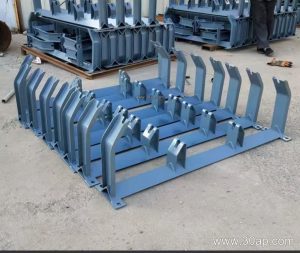
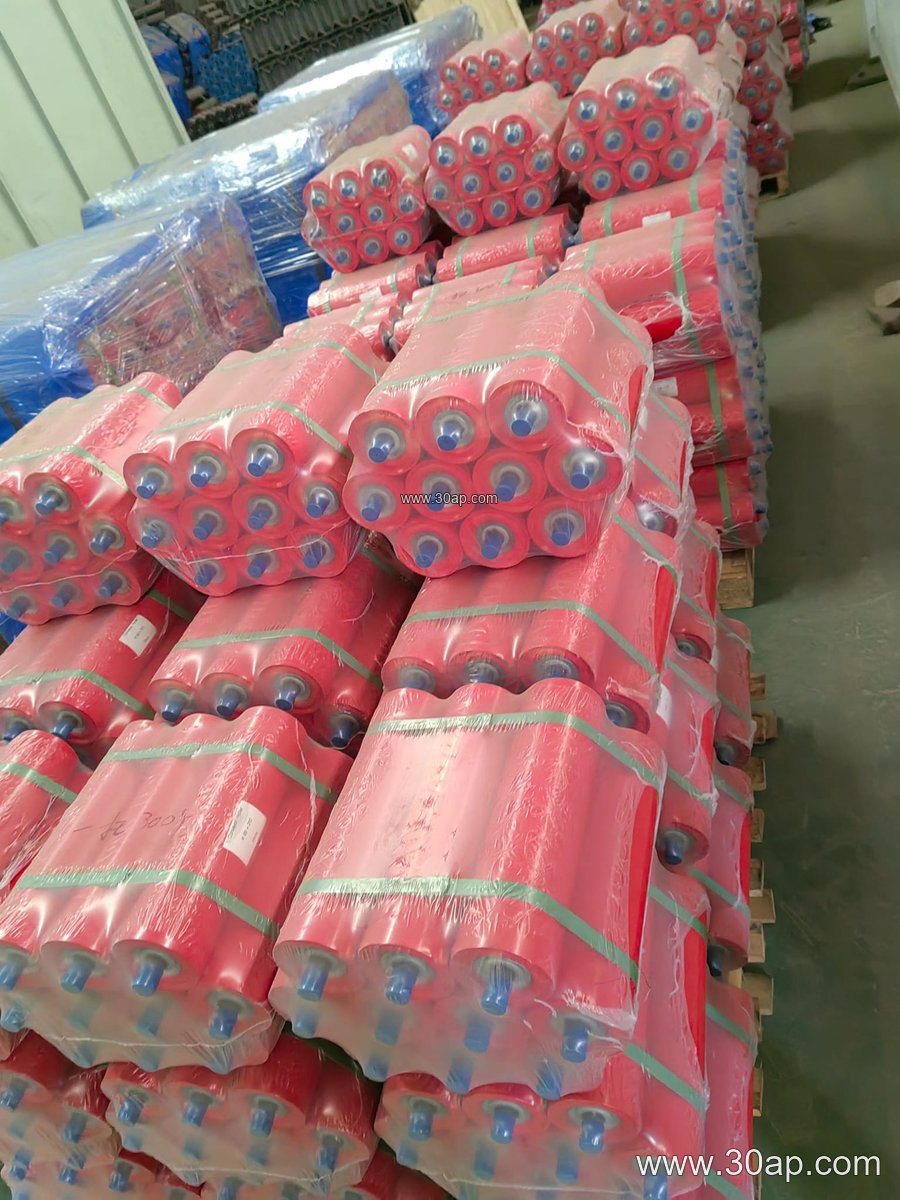
The rubber ring impact idler is installed in the impact cradle or buffer section under the loading chute. It is often used in series: several idlers in a row form a buffer bed that supports the conveyor belt through the impact zone. Typical industries include sand and gravel plants, cement plants, coal washing plants, power plant coal handling, iron ore and copper ore transfer points, and port ship loading. In these places, a heavy-duty mining conveyor belt or an abrasion resistant conveyor belt may run over the buffer section, and the rubber rings help reduce shock to both belt and frame.
For comparison, a standard trough idler carries the belt along the main run, while a rubber ring impact idler is placed only where material falls. A return idler supports the empty belt on the return side, and a self-aligning idler corrects belt tracking. Each has its own job, and none replaces the other.
Selection and Maintenance Notes
Buyers should match the impact idler to the drop height, lump size, throughput, and belt width. The rubber ring hardness, ring thickness, and spacing affect how well the roller absorbs energy. The conveyor bracket and frame dimensions must also fit the chosen roller diameter and shaft end. In dusty or wet conditions, seal quality matters as much as rubber quality.
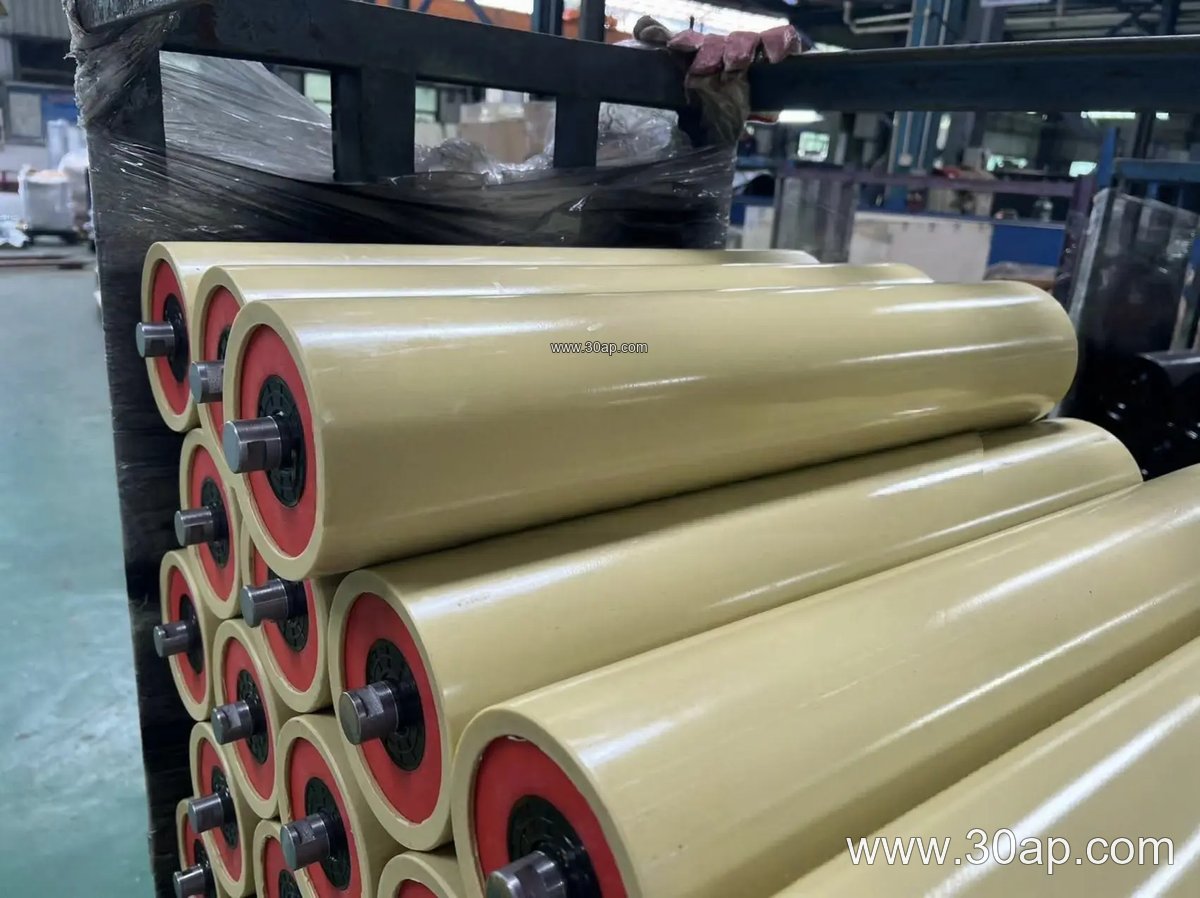
Maintenance is mainly inspection: check for worn or missing rings, flat spots, seized bearings, and loose brackets. Replace worn rings before the steel shell is exposed, because exposed metal can damage the conveyor belt. Keep the loading chute centered so impact is spread across the buffer section rather than concentrated on one idler.
Common Reference Data
| Item | Common reference values |
|---|---|
| Roller diameter | Ø63, Ø76, Ø89, Ø102, Ø108, Ø127, Ø133, Ø159, Ø178, Ø194, Ø219 mm |
| Belt width | B400, B500, B650, B800, B1000, B1200, B1400, B1600, B1800, B2000, B2200, B2400 |
| Trough angle | 20°, 30°, 35°, 45° |
| Bearing | 6204, 6205, 6305, 6306, 6308, 6310 |
| Roller surface | Rubber rings on steel shell |
| Idler set | Single roll, two-roll, three-roll trough |
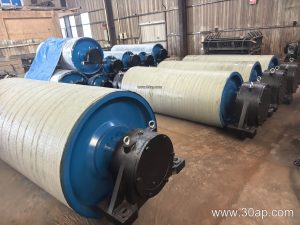
These values are for general reference. Actual selection should follow the conveyor design, material conditions, and the manufacturer’s data. For related conveyor components, buyers often compare the impact idler with the conveyor pulley, idler roller, and conveyor bracket used on the same line, and may also review the conveyor belt specification such as EP conveyor belt or steel cord conveyor belt to ensure the buffer section suits the belt construction.