What Pulley Custom Machining Really Covers
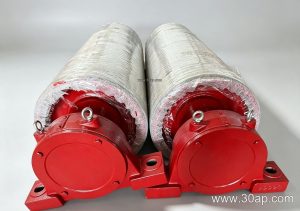
Pulley custom machining is the process of producing a conveyor pulley to the dimensions, load profile and surface condition of a specific conveyor line rather than picking a stock item off a shelf. The result is a made-to-order drum that matches the belt width, the shaft interface, the bearing arrangement and the duty cycle. In a quarry, a coal preparation plant or a power station coal yard, the difference between a generic drum and a properly machined one often shows up as belt tracking problems, premature lagging wear or shortened bearing life.
Because the pulley is a rotating structural component, custom machining touches several disciplines at once: shell rolling and welding, end disc or hub fabrication, shaft machining, keyway and taper lock preparation, dynamic balancing, and surface preparation before lagging. A buyer who understands these steps can ask better questions and avoid mismatches at installation.
How a Custom Pulley Is Built
The usual sequence starts with the shell, which is rolled from steel plate and welded. End discs or hubs are then attached, and the shaft is machined to the required journal diameters, keyway and shoulder geometry. The assembly is welded, stress relieved where the design calls for it, and machined on the outside diameter and faces to control runout. Balancing follows, especially on wider or higher-speed drums.
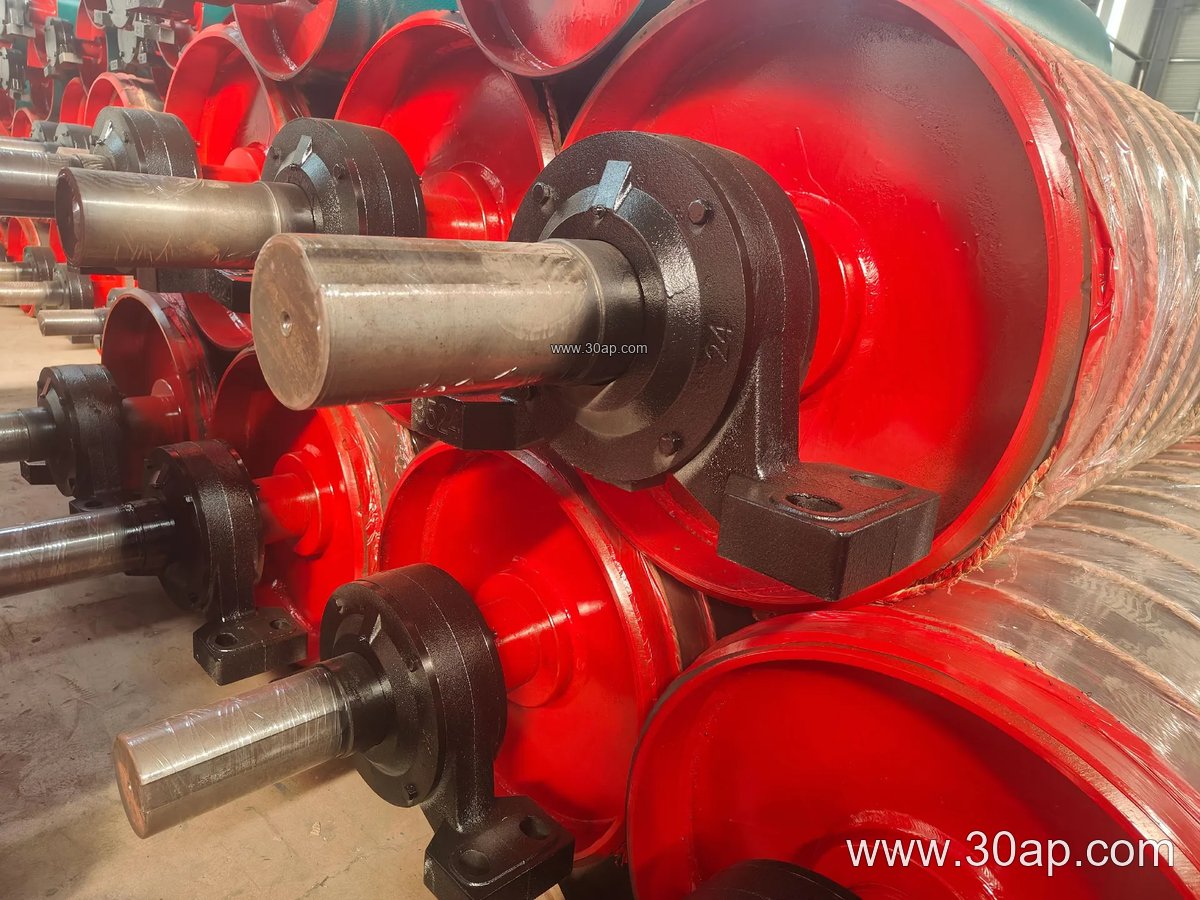
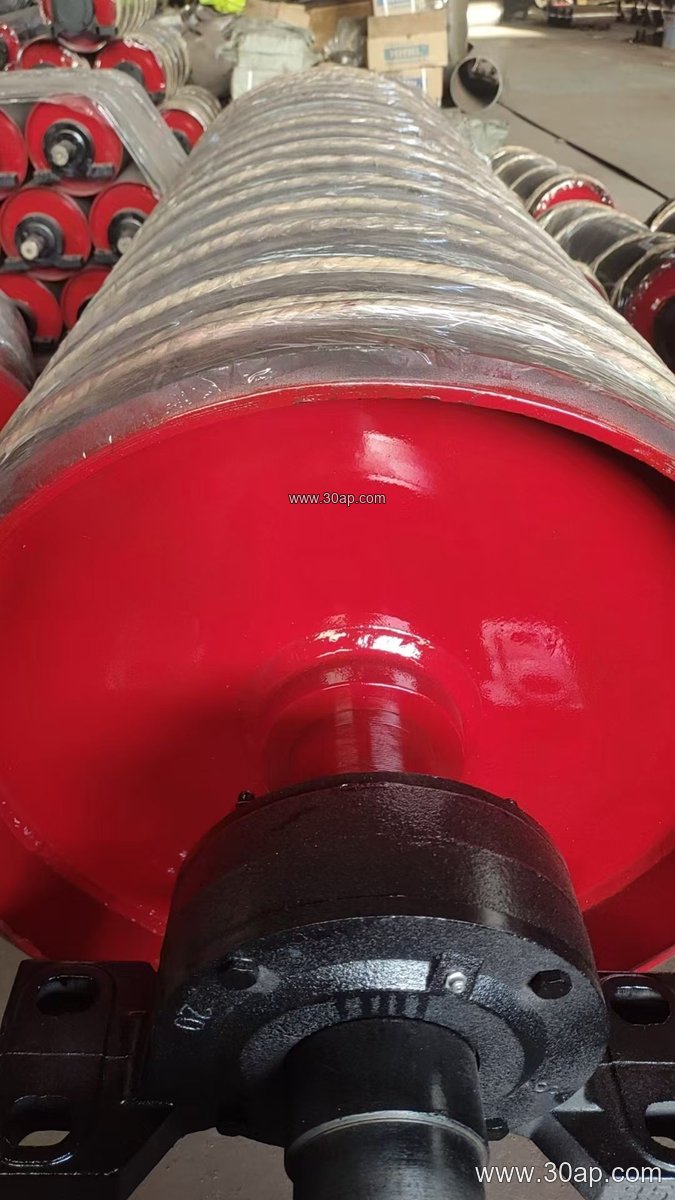
Surface work comes next. Depending on the application, the shell may stay plain or receive cast rubber, cold-bonded rubber, hot vulcanized rubber, diamond grooving, herringbone pattern, ceramic tiles or a plain rubber sheet. Common lagging thicknesses are 8, 10, 12, 15 and 20 mm, chosen according to grip requirements and material carryback. The finished drum is then inspected for dimensions, concentricity and coating adhesion.
Where the Machined Drum Sits in the Conveyor
Position matters as much as geometry. A drive pulley transmits torque and needs a shaft sized for the driven load, plus lagging that grips without slipping. A tail pulley at the loading end guides the return belt and often works with a conveyor bracket and take-up arrangement. A bend pulley changes belt direction and usually carries a lighter load. These are different jobs, and a drum machined for one position is not a drop-in replacement for another.
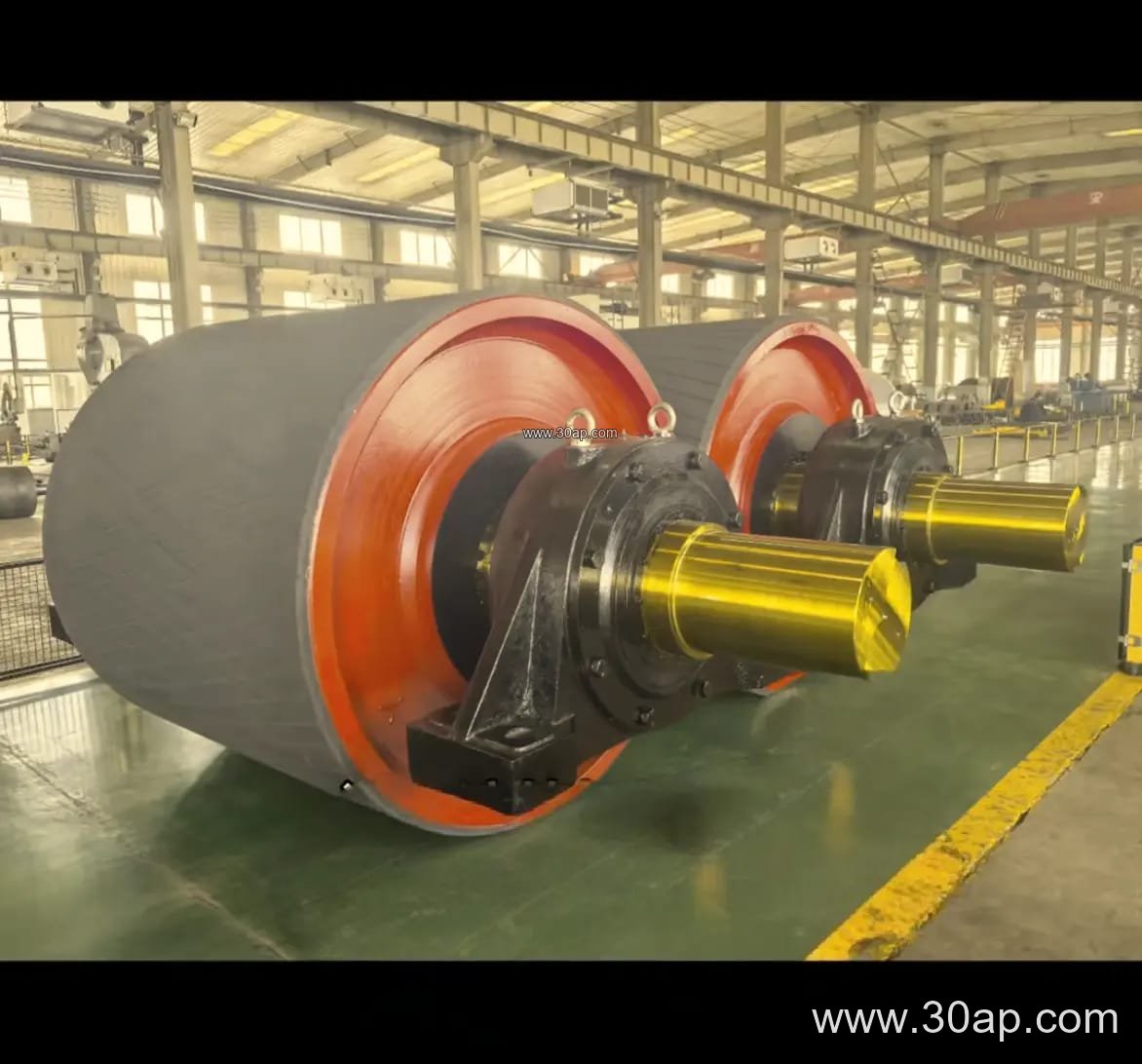
In a limestone mine or a cement plant clinker line, a head pulley may run against an abrasion resistant conveyor belt carrying sharp, hot material, while a tail pulley in the same circuit sees fines and dust. That difference alone can justify different lagging and different shaft details. Similar logic applies in a copper ore concentrator, a steel plant sinter line or a port bulk terminal handling iron ore.
Matching Belt Width, Diameter and Shaft
Custom machining begins with the belt width and the conveyor geometry, but it does not end there. Pulley face width is normally a little wider than the belt; reference values often used in design are shown below, and the final figure is set by the belt manufacturer and the conveyor designer.
- B400 belt: pulley face around 500 mm
- B500 belt: pulley face around 600 mm
- B650 belt: pulley face around 750 mm
- B800 belt: pulley face around 950 mm
- B1000 belt: pulley face around 1150 mm
- B1200 belt: pulley face around 1400 mm
- B1400 belt: pulley face around 1600 mm
- B1600 belt: pulley face around 1800 mm
- B1800 belt: pulley face around 2000 mm
Diameter is selected from belt tension, wrap angle, belt stiffness and the space available. Typical drum diameters include Ø200, Ø250, Ø315, Ø400, Ø500, Ø630, Ø800, Ø1000, Ø1250 and Ø1400. A combination such as B800 × Ø500 or B1200 × Ø1000 is common in practice, but no single belt width locks a pulley to one diameter. Shaft diameter is a separate calculation driven by torque and bearing load; common journals range from Ø50 to Ø200, and the correct value must come from the conveyor design rather than from belt width alone.
Surface Choices and the Belt They Serve
Lagging selection usually follows the belt and the material. A heavy-duty mining conveyor belt on a primary drive may call for diamond or ceramic lagging to maintain grip in wet conditions. A heat resistant conveyor belt in a clinker or sinter application may need a lagging compound that tolerates elevated temperature. Where oil mist or fine dust is present, a plain or grooved rubber surface can be easier to keep clean.
For long overland or high-tension lines using steel cord conveyor belt, pulley machining tolerances and balance quality deserve extra attention. On shorter in-plant conveyors running EP conveyor belt or multi-ply fabric core belt, the drum still needs accurate face width and true running. In food and grain silo applications, a smooth, easily cleaned surface may be preferred over deep grooving. The point is to specify the surface from the duty, not from habit.
What a Buyer Should Confirm Before Ordering
A clear specification shortens machining time and reduces rework. Useful items to settle early include:
- Belt width, pulley face width and required diameter
- Shaft diameter, keyway size and bearing seat details
- Mounting position: drive, tail, bend, take-up or snub
- Lagging type and thickness, plus groove pattern if any
- Balance grade and runout tolerance for the line speed
- Environment: dust, moisture, temperature, oil or chemical exposure
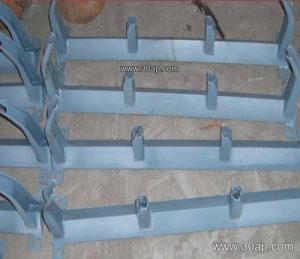
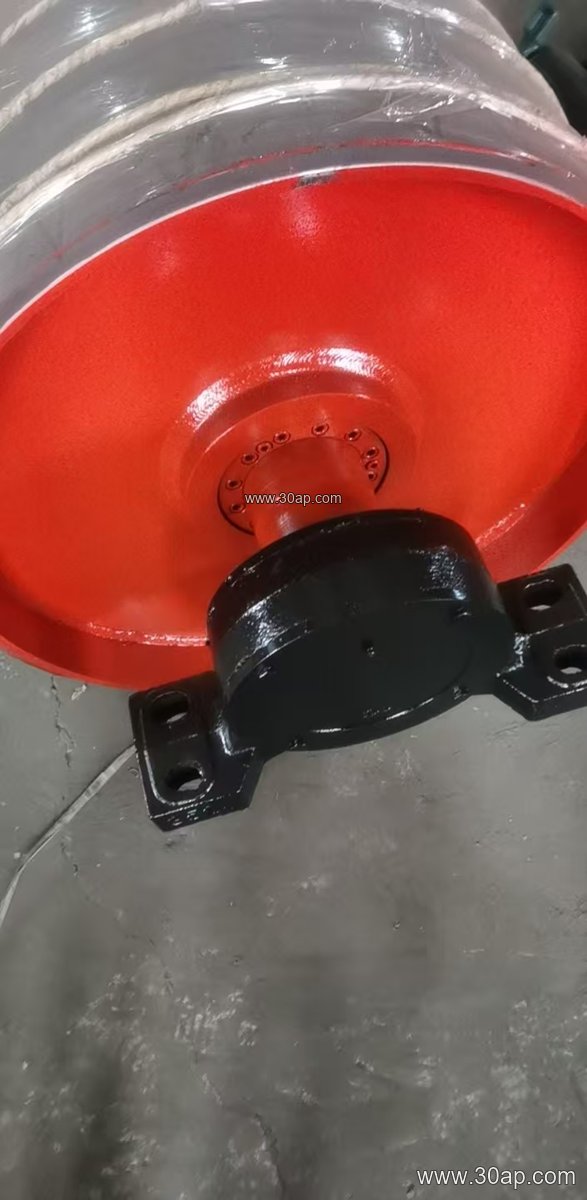
It also helps to confirm how the drum will connect to the conveyor bracket or take-up frame, and whether an idler roller or conveyor pulley elsewhere on the line imposes alignment constraints. Drawings should show the shaft end details, not just the shell.
Maintenance Notes That Start at the Drawing Board
Well-machined pulleys are easier to maintain. Accurate faces and balanced shells reduce vibration, which in turn protects bearings and lagging. Replaceable lagging or bolted ceramic tiles can extend service life in abrasive service, while a properly sized shaft avoids the fatigue cracking that appears when a drum is overloaded. During scheduled shutdowns, check lagging wear, keyway condition and shaft runout, and verify that the belt still tracks centrally on the drum face.
For conveyors in mining, cement, power and aggregate service, pulley custom machining is ultimately about fit: the drum should match the belt, the load and the mounting point. When those three align, the conveyor runs quieter and the maintenance team spends less time chasing tracking faults.