What a Conveyor Support Leg Does on a Belt Conveyor
A conveyor support leg is the vertical member that carries the conveyor frame above the ground or floor structure. It transfers the weight of the loaded belt, the idler roller sets, the conveyor pulley assemblies, and the frame itself into the foundation. In a typical installation, the leg works together with a conveyor bracket, cross beams, and stringers to form a rigid, aligned support system. Get this component right, and the belt tracks better, the rollers last longer, and maintenance is simpler.
On many bulk handling lines, the support leg is a fabricated steel part rather than a simple post. It may be fixed, height-adjustable, or hinged, depending on how the conveyor is assembled and whether floor levels change along the route.
How the Support Leg Is Built
Most conveyor support legs are produced from angle steel, channel steel, or folded steel plate. The leg usually has a base plate with bolt holes for anchoring, a vertical column, and a top connection that mates with the conveyor bracket or longitudinal beam. Height adjustment can be achieved with slotted holes, telescopic sections, or threaded adjusters, which help when the floor is uneven or when the belt line must be leveled precisely.
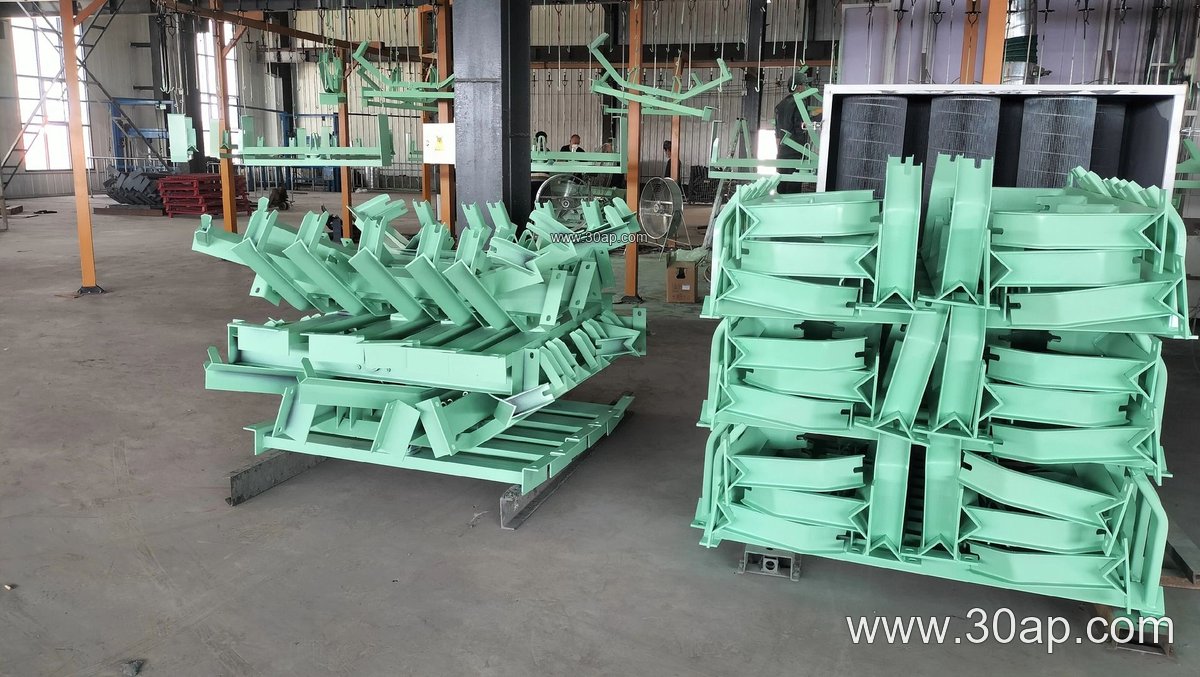
Fabrication quality matters more than appearance. Weld seams should be continuous where loads are concentrated, and the base plate should be flat so the anchor bolts do not pull the leg out of plumb. A hot-dip galvanized or painted finish is common for outdoor installations such as a quarry conveyor belt line, while indoor plants may use painted steel.
Typical matching data for the frame and roller side of the same conveyor family are shown below. These are reference values, not fixed combinations.
- Belt width range: B500, B650, B800, B1000, B1200, B1400, B1600, B1800, B2000, B2200
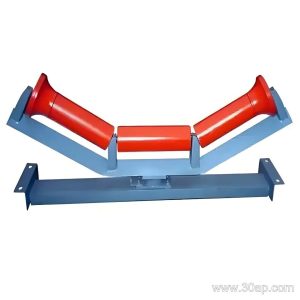
- Trough angle: 20 degrees, 30 degrees, 35 degrees, 45 degrees; adjustable frames can be set between these angles
- Roller diameter: Ø89, Ø108, Ø133, Ø159, Ø194
- Material: angle steel, channel steel, folded steel plate
Example arrangements such as B800, 35 degrees, Ø108 or B1200, 45 degrees, Ø133 are common, but the mounting hole spacing and cross beam length change with belt width and trough angle and should be confirmed by design.
Where Conveyor Support Legs Are Used
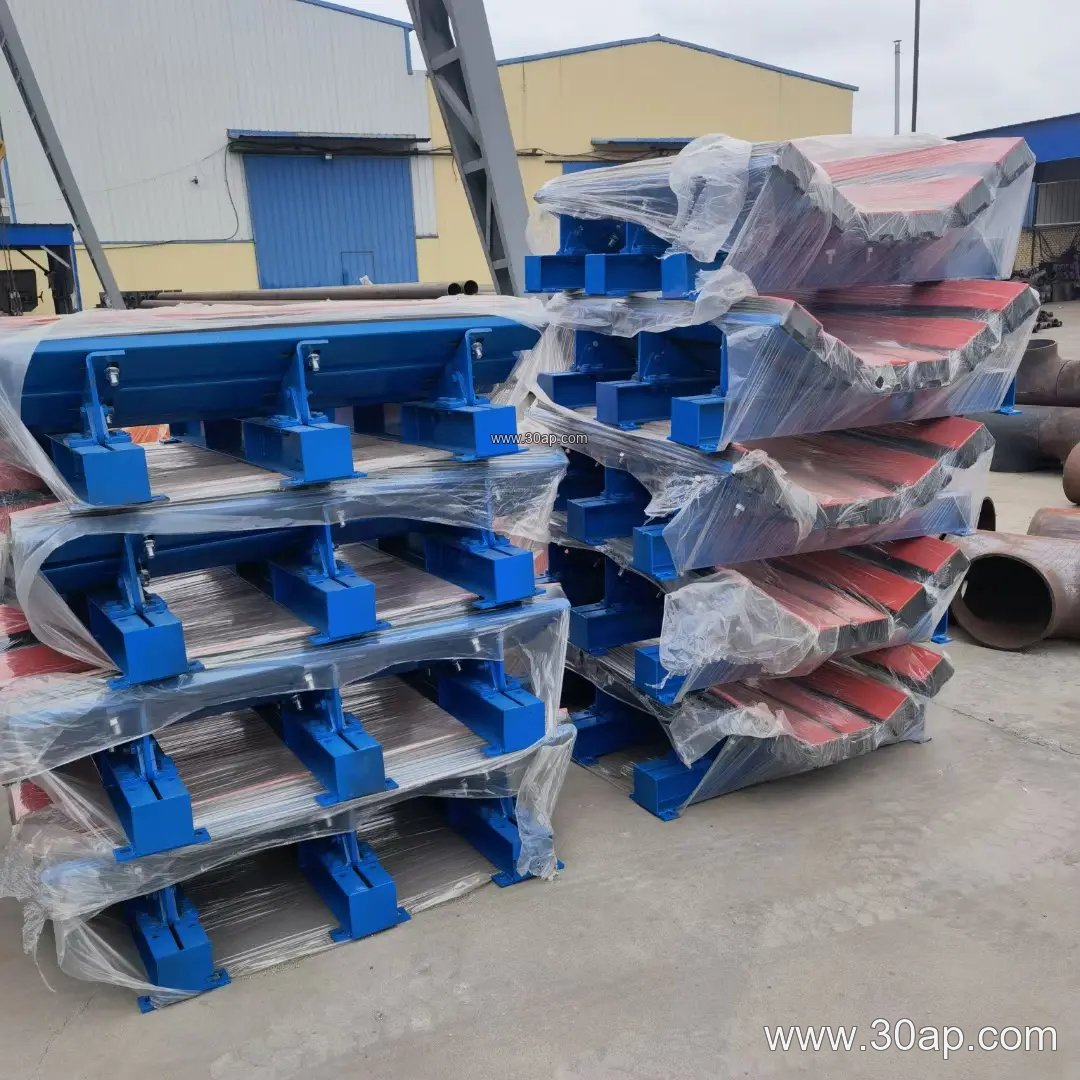
Support legs appear wherever a conveyor must be raised above the ground. In a limestone mine or aggregate plant, they hold the frame above the stockpile area and keep the conveyor belt clear of spillage. In a coal washing plant, they support the inclined sections that feed the screening equipment. In a power plant coal yard, they carry long overland runs across the yard. They are equally common in cement plants, steel plants, port loading lines, and tunnel mucking systems.
The leg must suit the duty of the line. A heavy-duty mining conveyor belt carrying iron ore needs a sturdier leg and larger anchor than a light package-handling conveyor. On a long overland route with a steel cord conveyor belt, the leg spacing is usually determined by the structural engineer rather than selected from a catalog.
Fixed, Adjustable, and Other Frame Variants
The support leg is only one part of the frame family. Trough idler brackets, return brackets, V-return brackets, impact brackets, self-aligning brackets, and transition brackets all sit on the same structure. When comparing options, note that a fixed leg is simple and rigid, while an adjustable support leg helps correct floor level differences and small installation errors. Neither replaces the other; the choice depends on the site.
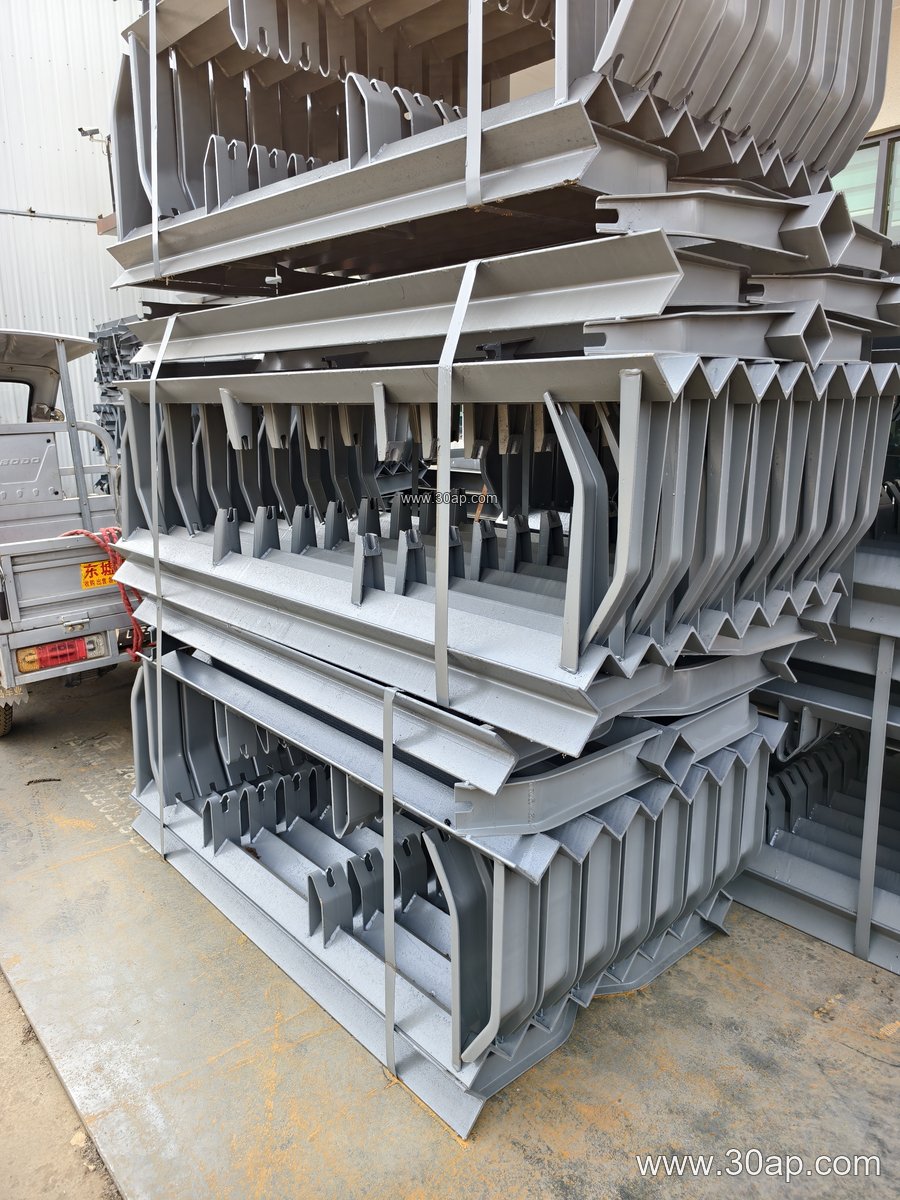
The frame also interacts with the idler roller set, the conveyor pulley, and the conveyor bracket. A misaligned leg can force the rollers out of square, which shows up as belt mistracking. This is why the base plate and the top connection deserve as much attention as the steel section size.
What Buyers Should Check Before Ordering
Before requesting a quotation, prepare the following information:
- Belt width and trough angle, for example B1000 with 35 degrees
- Roller diameter and the bracket type that will sit on the leg
- Conveyor length, incline angle, and whether the ground is flat or stepped
- Required height range and whether adjustment is needed
- Anchor method and foundation type
- Finish and environment, especially for outdoor or corrosive sites
Ask for a drawing that shows the base plate hole pattern and the top interface. Do not assume that a leg for one belt width will fit another without checking. For abrasive duties, such as a high abrasion resistant conveyor belt in a crushing circuit, the frame should be rigid enough to prevent vibration from loosening the anchors. For hot material, a heat resistant conveyor belt may be used, but the leg still needs to keep the frame stable under thermal expansion.
Finally, keep spare base plates and anchor bolts. Small parts cause long stoppages when they fail. For a complete frame package, buyers often combine support legs with conveyor brackets, idler rollers, and the appropriate conveyor belt specification, and request the frame drawing as one coordinated set.