What a Bend Pulley Assembly Is
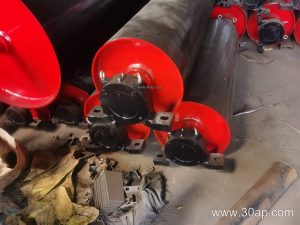
A bend pulley assembly is the change-of-direction roller group that guides the conveyor belt around a corner in the return run or at a tensioning station. It is not a drive pulley and not a tail pulley; it does not transmit power and it does not receive material. Its job is to redirect the belt path, hold wrap angle on the drive or tension pulley, and keep the return strand tracking cleanly. On a long overland or plant conveyor, a well-built bend pulley assembly is often the difference between steady belt tracking and edge wear.
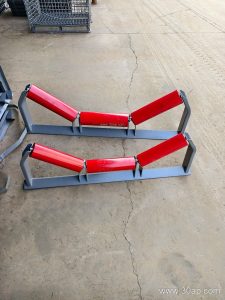
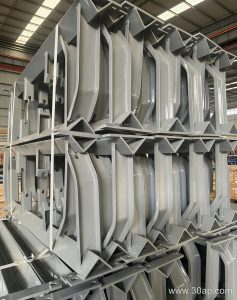
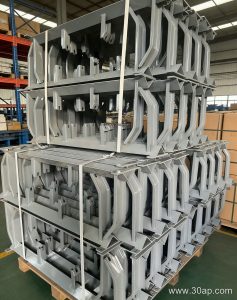
The assembly usually combines the pulley shell, shaft, hubs, bearing housings, and the supporting structure, sometimes with a conveyor bracket set for mounting to the stringer. Buyers often say “bend pulley” when they mean the complete assembly with bearings and frame, so it helps to confirm exactly what is included.
Construction Details That Matter
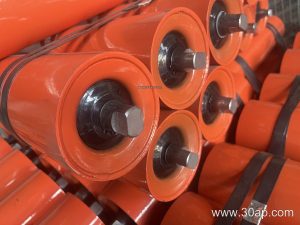
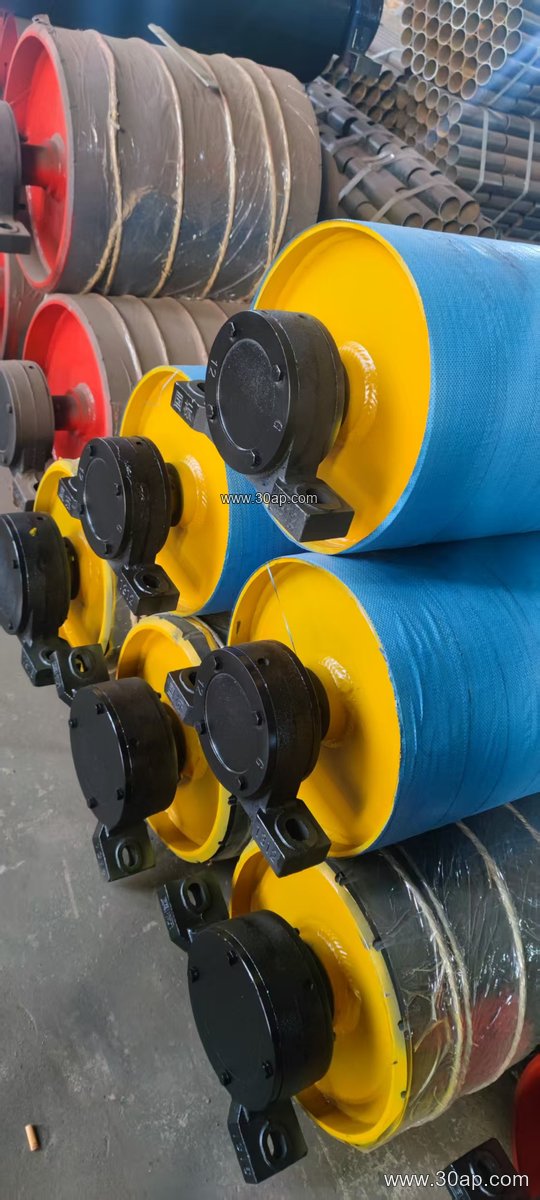
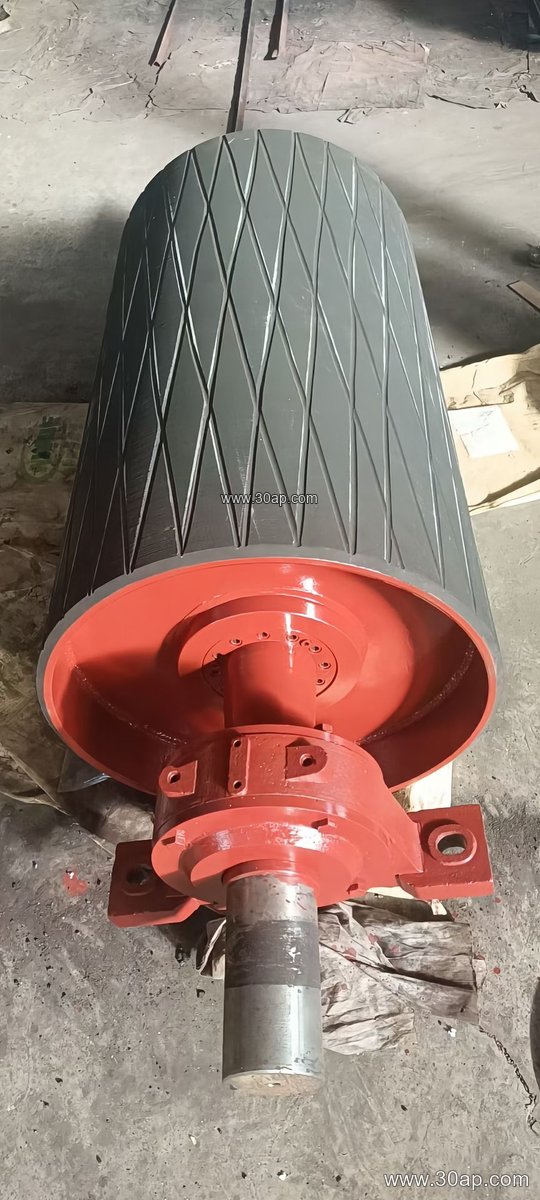
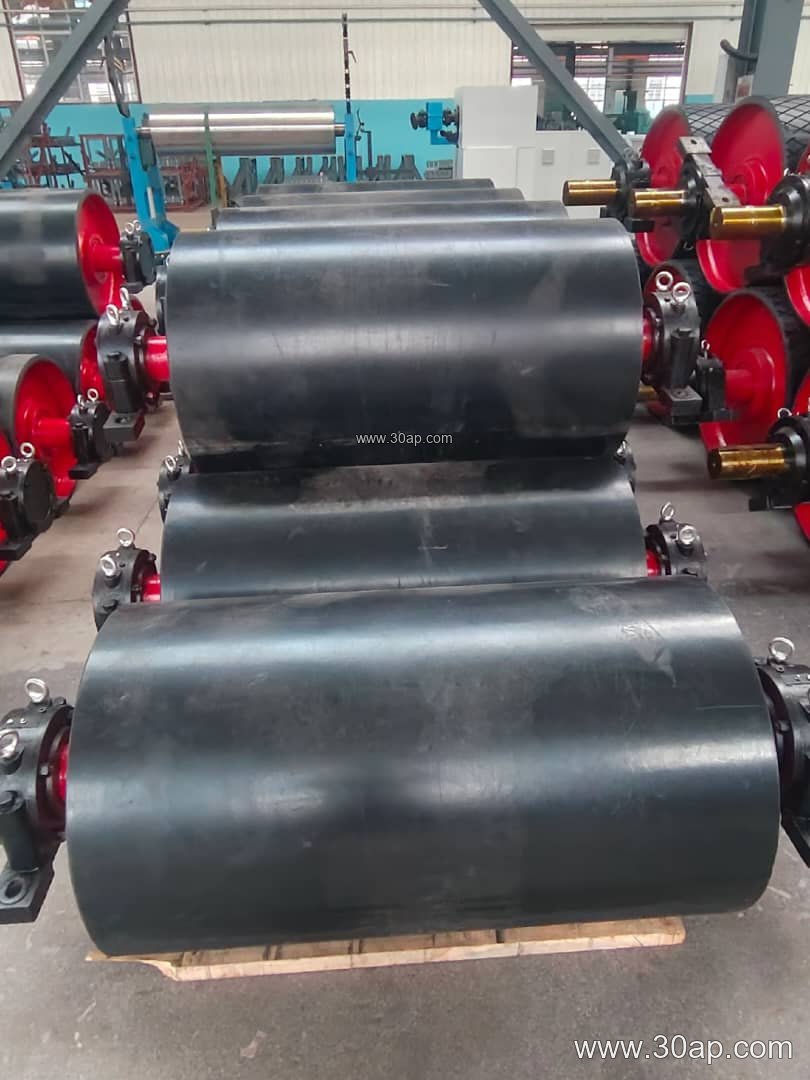
Most bend pulley assemblies are welded steel drums with a machined face, keyed or shrink-fitted shaft, and spherical roller bearings in pillow block housings. The face is often lagged to protect the belt and improve grip on the return side. Common surface forms include plain, cold-bonded rubber, hot-vulcanized rubber, diamond grooving, and ceramic lagging. Lagging thickness is frequently 8, 10, 12, 15, or 20 mm depending on belt tension and duty.
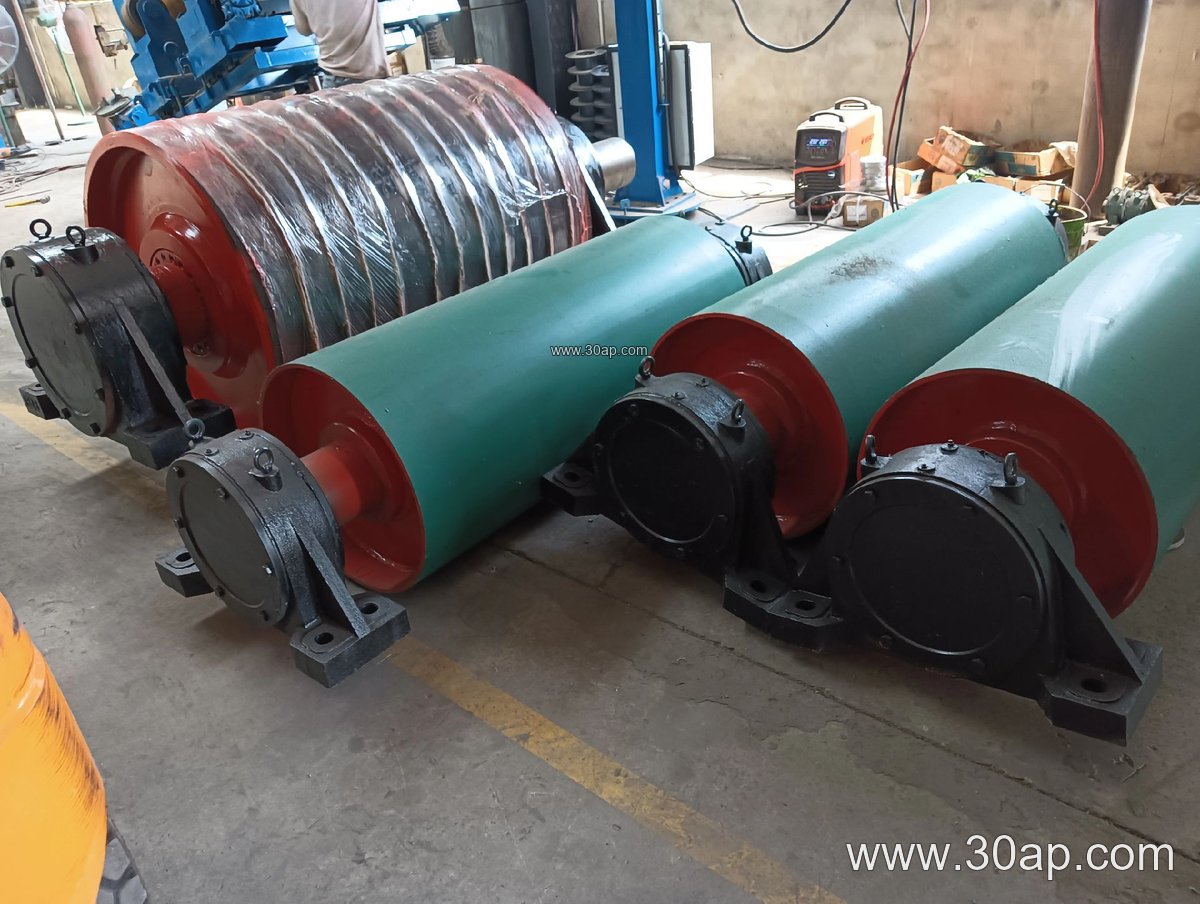
Shaft diameter is set by torque and load, not by belt width alone. Typical shaft sizes run from Ø50 to Ø200 mm; a B800 return bend pulley might use Ø80 or Ø100 mm shaft, while a B1400 tension bend station may need Ø140 mm or more. These are design ranges, not fixed pairings.
Face width is normally wider than the belt. Representative values:
- B500 belt — about 600 mm face
- B650 belt — about 750 mm face
- B800 belt — about 950 mm face
- B1000 belt — about 1150 mm face
- B1200 belt — about 1400 mm face
- B1400 belt — about 1600 mm face
- B1600 belt — about 1800 mm face
Diameter commonly ranges from Ø200 to Ø1800 mm. A short return bend may use Ø315 or Ø400; a high-tension take-up bend pulley may use Ø800 or Ø1000. Combinations such as B800 × Ø500 or B1200 × Ø1000 appear in real layouts, but no single belt width locks in one diameter.
Where It Sits in the Conveyor
Bend pulley assemblies appear at the head return, before and after the take-up, and at intermediate redirect points where the belt must clear a structure. In a coal handling plant, they steer the return strand under the discharge chute. In a limestone quarry or aggregate line, they keep the belt aligned through a transfer tower. In a cement plant clinker conveyor, a lagged bend pulley assembly helps maintain tension on a heat resistant conveyor belt without slipping. In a power plant coal yard, they work alongside conveyor idler rollers and conveyor brackets to hold the return run steady.
Related belt types influence the choice. A steel cord conveyor belt carries high tension and usually needs a larger bend diameter and heavier shaft; a fabric core conveyor belt or multi-ply fabric core conveyor belt tolerates tighter bends. Abrasion resistant conveyor belt and impact resistant conveyor belt in a crusher circuit put more demand on lagging quality. Flame retardant conveyor belt and anti-static conveyor belt in underground mining conveyors require non-sparking, static-dissipating lagging choices. In food or fertilizer plants, a smooth rubber face is often preferred over ceramic.
Selection and Maintenance Notes
Match the bend pulley assembly to the belt path, not just the belt width. Check wrap angle, belt tension, and the return strand load. Confirm lagging type against material and environment, and confirm bearing housing style against the mounting frame. Use the conveyor bracket drawing to verify bolt spacing and clearance.
During service, inspect lagging wear, bearing temperature, and shaft seal condition. Replace worn lagging before it damages the belt edge. Keep the pulley face clean so material buildup does not cause mistracking. For more conveyor component guidance, see the roller and pulley notes at www.bendpulley-assembly.com/bend-pulley-assembly.