What a Four-Roll Idler Bracket Does
A four-roll idler bracket is the steel support assembly that carries four idler rollers under a loaded conveyor belt, usually in a trough or transition arrangement. It is a troughing bracket family member rather than a single roller, and it spreads the belt across more contact points than a conventional three-roll set. That extra roll helps control belt sag in wide, heavily loaded lines, especially where a fabric core conveyor belt or steel cord conveyor belt carries dense material at high tonnage.
In a typical arrangement, the outer rolls sit at the trough angle and the inner rolls share the center load. The bracket keeps the rollers at the designed angle and at the correct spacing so the belt forms a stable trough. Buyers often meet this component on wide belts in quarry, iron ore, and power plant coal handling circuits.
How the Bracket Is Built
Most four-roll idler brackets are fabricated from angle steel, channel steel, or folded steel plate. The frame has mounting pads or slots for each roller shaft, plus feet or hanger points that fix it to the conveyor stringer. Roller positions are set by the design trough angle, and the crossbeam length follows the belt width.
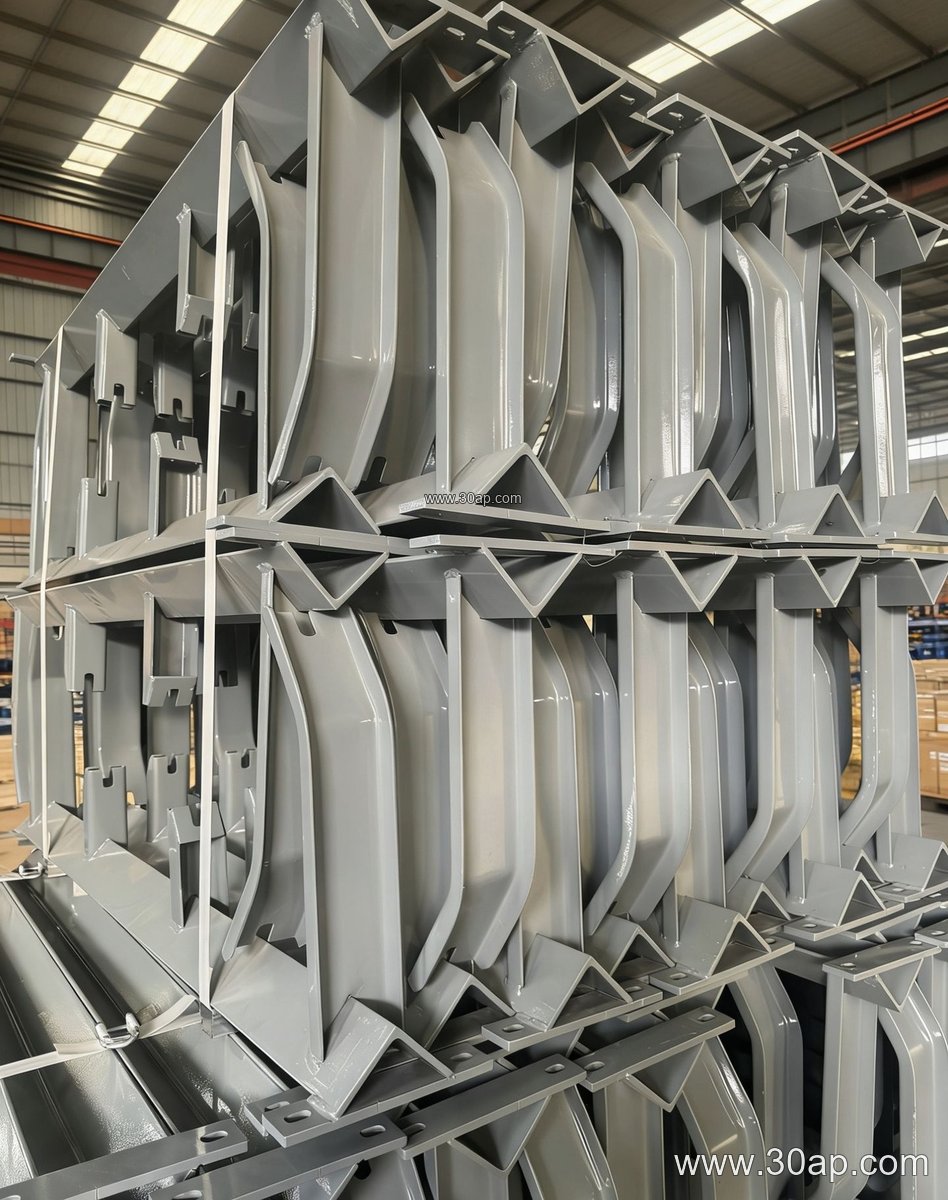
Because four rollers share the load, the bracket usually needs a stiffer frame than a three-roll troughing set. Weld quality, hole alignment, and the flatness of the mounting faces matter more than cosmetic finish, since a twisted frame will misalign the idlers and wear the belt edge.
- Frame material: angle, channel, or folded plate
- Roller positions: set by trough angle and belt width
- Mounting: fixed feet, bolted pads, or hanging arrangement
- Finish: painted or galvanized, depending on the site environment
Where It Fits on the Conveyor
The most common position is the carrying side in the load zone and along the main run where belt width and material weight are high. In a coal mining conveyor belt line, a four-roll bracket can reduce the unsupported span between rollers on a wide belt. In a limestone or aggregate conveyor belt circuit, it helps keep a heavy, abrasive load centered.
It is not a substitute for a bend pulley or a tail pulley; those are separate components that change belt direction. The bracket only supports the belt between pulleys. Some plants also use a four-roll version near transfer points where impact is moderate, paired with impact idlers where drop height is large.
Matching Bracket, Belt, and Roller
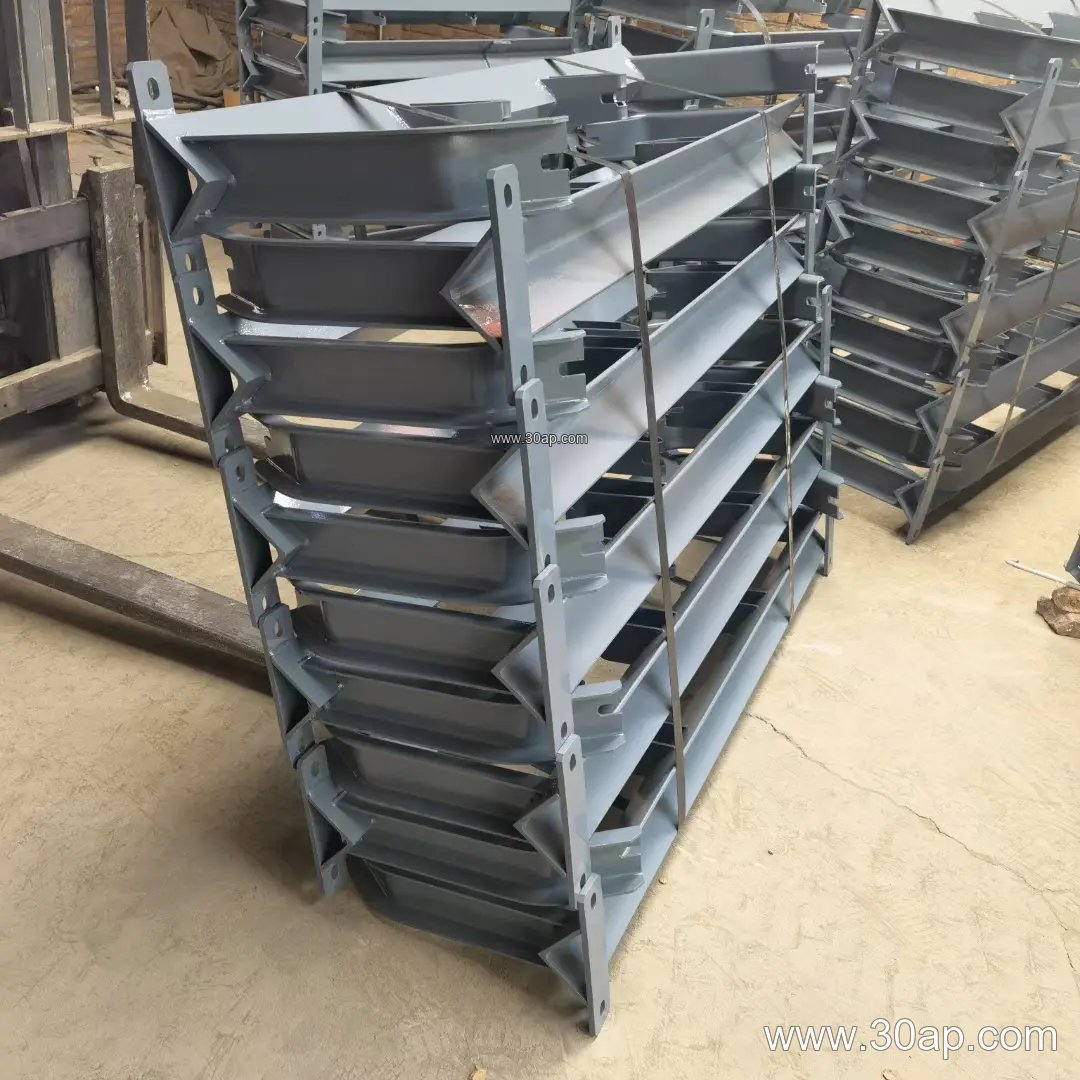
Selection starts with belt width, expected load, and the trough angle the conveyor profile requires. Typical widths run from B500 up to B2200, and common trough angles are 20, 30, 35, and 45 degrees. Roller diameters such as Ø89, Ø108, Ø133, Ø159, and Ø194 are used according to load and belt speed. These are reference ranges, not fixed pairings; a B1200 belt may run with more than one roller diameter depending on the design.
| Parameter | Common Reference Range |
|---|---|
| Belt width | B500, B650, B800, B1000, B1200, B1400, B1600, B1800, B2000, B2200 |
| Trough angle | 20°, 30°, 35°, 45° |
| Roller diameter | Ø89, Ø108, Ø133, Ø159, Ø194 |
| Frame material | Angle steel, channel steel, folded plate |
Mounting hole spacing and crossbeam length change with belt width and trough angle, so they are confirmed from the conveyor drawing rather than assumed. On a 1200mm wide conveyor belt or a 1500mm wide conveyor belt, the bracket footprint grows accordingly. Adjustable versions allow the trough angle to be set within a range, which is useful during commissioning or when the belt profile is changed.
Buyer Checklist
- Confirm belt width, trough angle, and roller diameter before ordering.
- Check that mounting holes match the existing stringer or hanger points.
- Ask whether the frame is fixed or adjustable; adjustable brackets suit lines that may be re-profiled.
- Match the bracket to the roller type in use, such as troughing, impact, or training idlers.
- For dusty or wet sites, consider galvanized or coated frames.
- Review weld and alignment checks, especially on wide belts.
A four-roll idler bracket is a small part of the conveyor, but it controls how the belt sits and how evenly the load is shared. Getting the frame geometry right protects both the conveyor belt and the idler roller set, and it keeps the whole line running with fewer edge and splice problems.