What a Tapered Self-Aligning Idler Does
A tapered self-aligning idler is a carrying or return idler whose rollers are conical rather than straight. The taper, combined with a small forward lead on the roller axis, produces a gentle sideways force that nudges a drifting conveyor belt back toward the center line. It is a training idler, not a drive pulley, tail pulley, or bend pulley — those components transmit power or change belt direction, while this idler only corrects tracking. In a quarry conveyor or a power plant coal handling line, a few of these units are usually enough to keep long flights of belting running true.
The same product is also called a conical self-aligning idler or taper training idler. These names describe the same assembly; they are not separate products.
Construction and Mounting
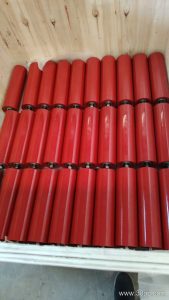
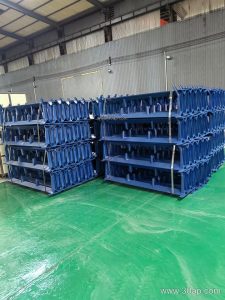
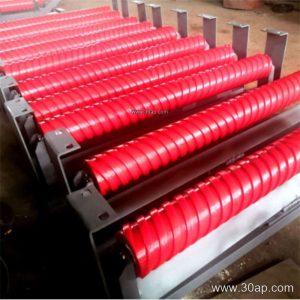
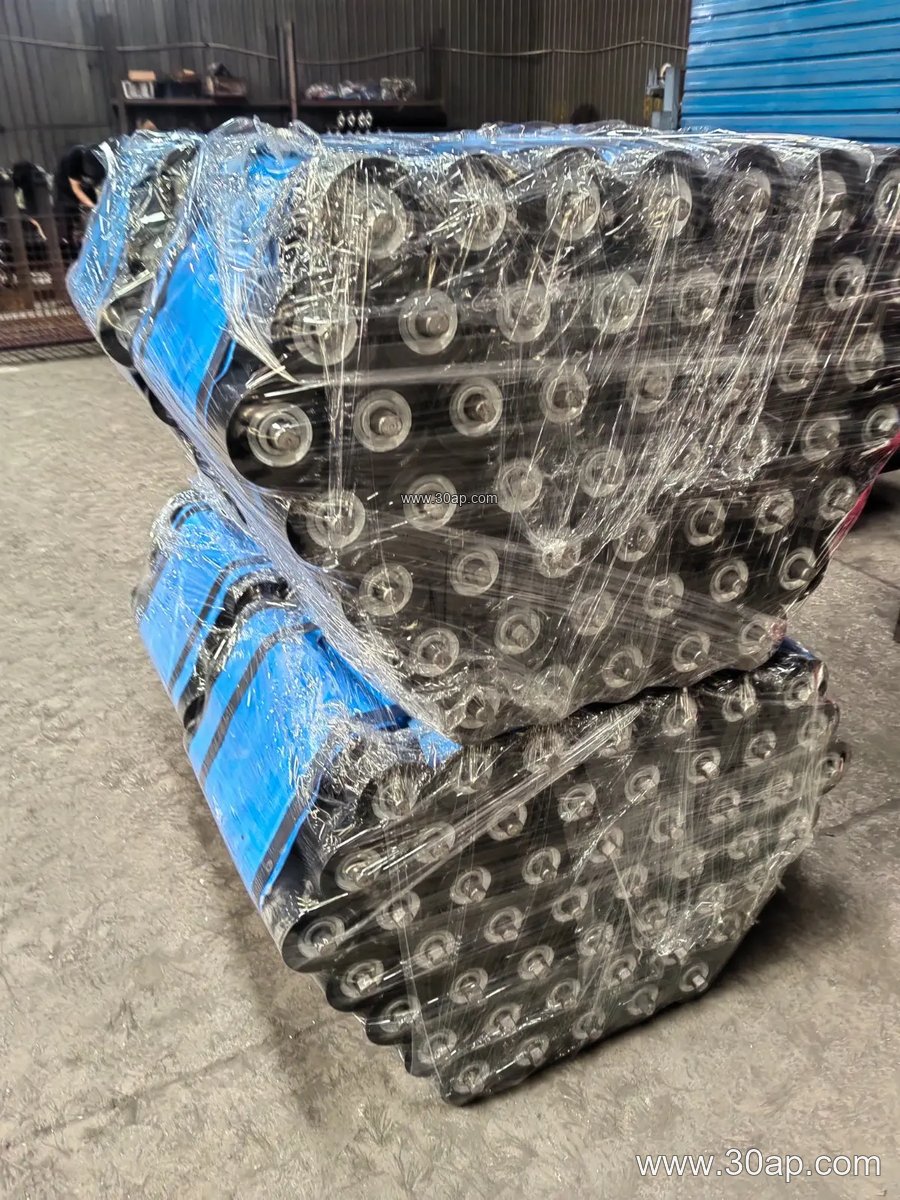
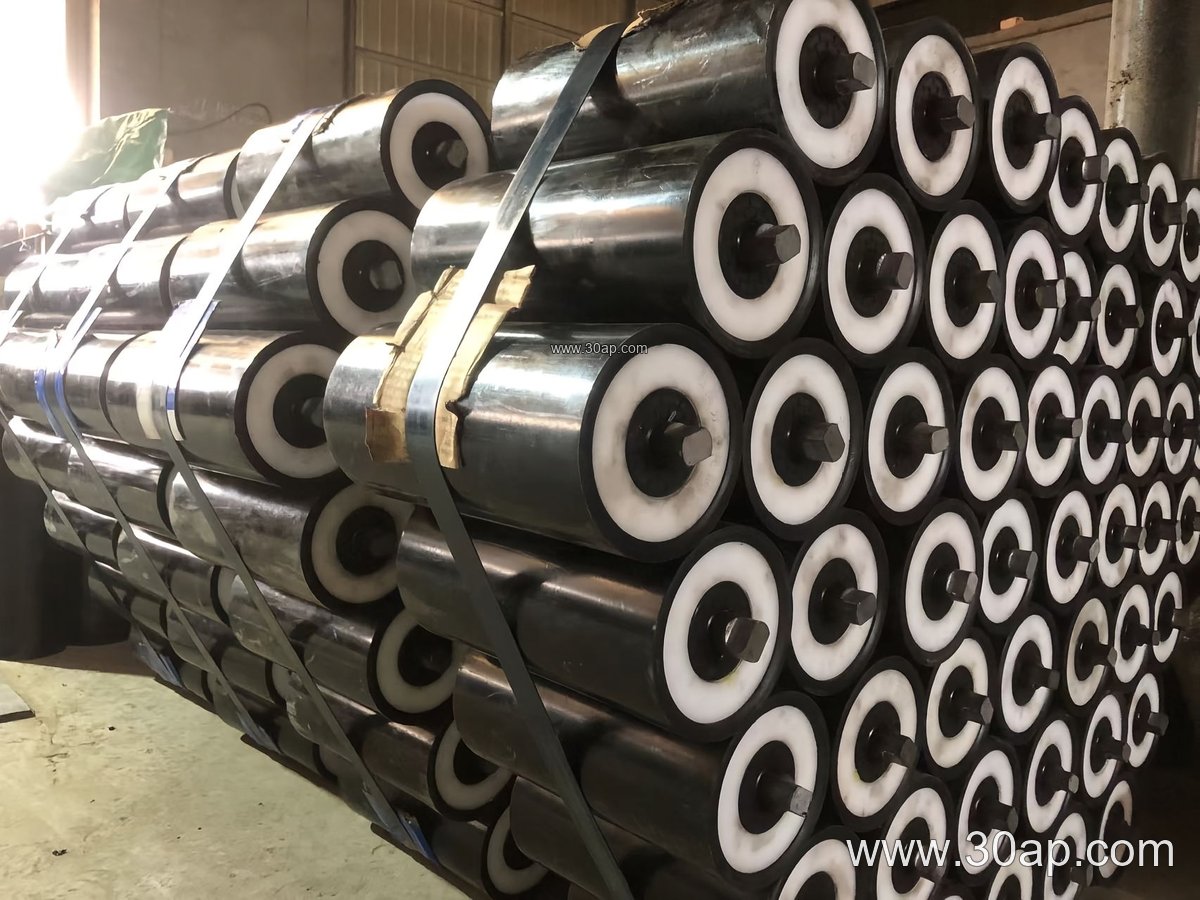
Most designs use two tapered rollers set on a pivoting frame. The frame turns on a central vertical shaft or bearing, so when the belt touches a tapered roller it swings the assembly slightly and steers the belt back. Roller shells are commonly steel tube, though nylon, ceramic, or rubber-disc surfaces appear where wear or build-up is a concern. Bearings are typically sealed deep-groove types such as 6204, 6205, 6305, 6306, 6308, or 6310, matched to the shaft and load by the manufacturer rather than by belt width alone.
The idler sits in a conveyor bracket or frame that allows rotation. On the carrying side it may replace a standard troughing set at selected points; on the return side it is often used with V-return or flat return idlers. A small forward tilt of about 1.5 to 2 degrees is common in training idlers and helps the correction effect, but the exact angle is a design choice.
Where It Fits in a Conveying System
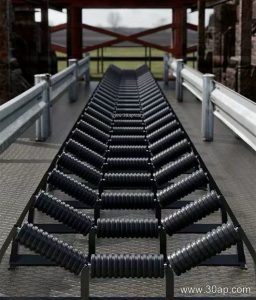
These idlers are useful wherever belt wander is likely: long overland flights, inclined sections, loading points with off-center material, and conveyors that reverse or run in tunnels. Typical settings include a limestone quarry, an iron ore transfer line, a cement plant clinker circuit, and a port ship-loading conveyor. They also suit aggregate and sand plants where a Fabric Core Conveyor Belt or an EP Conveyor Belt runs at moderate tension and is sensitive to edge contact with the frame.
On heavier duties, such as a Steel Cord Conveyor Belt carrying ore, training idlers are placed at intervals decided by the conveyor designer. They are not a substitute for proper pulley alignment, adequate take-up tension, or a squared frame; they correct minor drift, not a badly installed conveyor.
Common Sizes and Selection Points
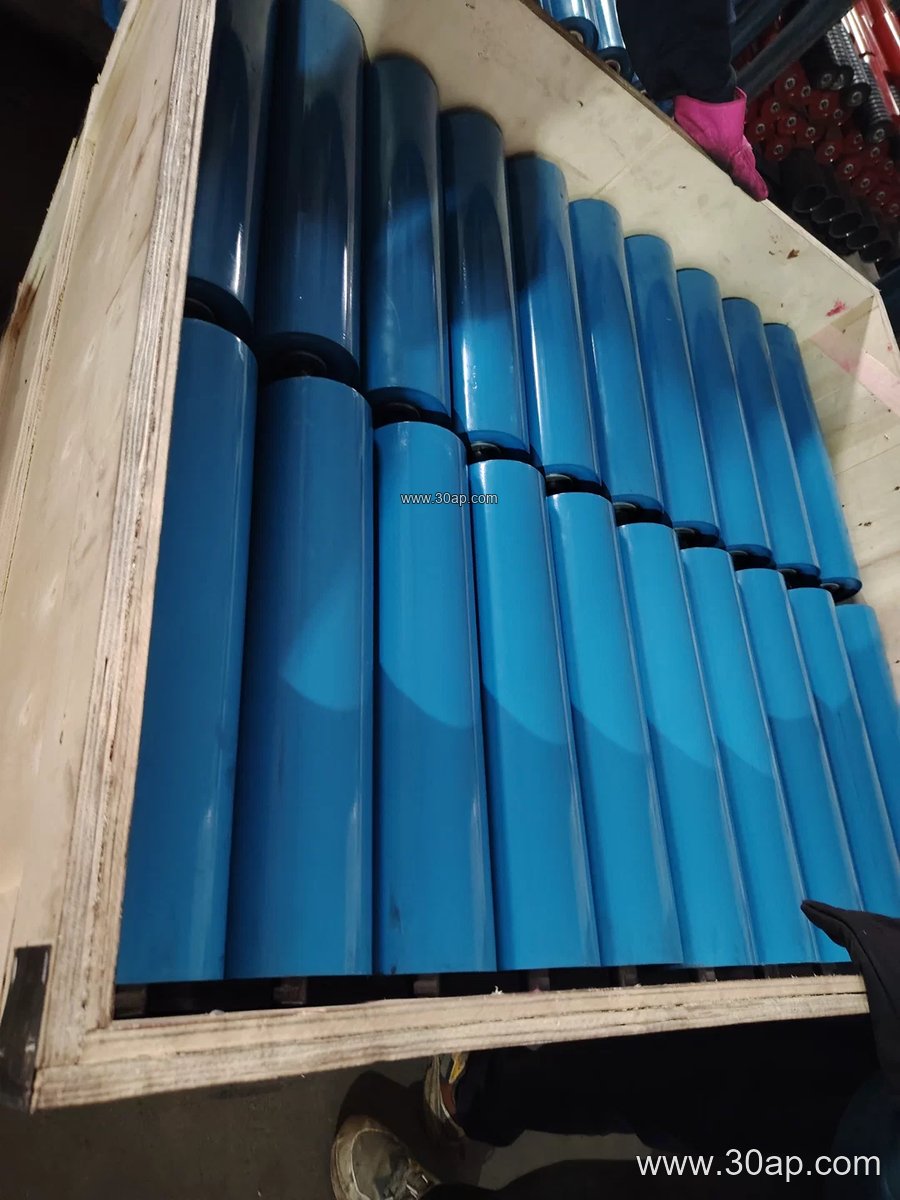
Roller diameter and belt width are related but not fixed to each other. A buyer should confirm the belt width, the idler group form, the shaft ends, and the mounting height. The table below gives common reference values; final dimensions are set by the conveyor design.
| Item | Common reference values |
|---|---|
| Roller diameter | Ø63, Ø76, Ø89, Ø102, Ø108, Ø127, Ø133, Ø159, Ø178, Ø194, Ø219 mm |
| Belt width | B400, B500, B650, B800, B1000, B1200, B1400, B1600, B1800, B2000, B2200, B2400 |
| Trough angle (carrying side) | 20, 30, 35, 45 degrees |
| Forward lead | about 1.5 to 2 degrees |
| Roller surface | steel tube, nylon, ceramic, rubber disc |
| Bearings | 6204, 6205, 6305, 6306, 6308, 6310 |
For a three-roll troughing set, common roller lengths are roughly 200 mm at B500, 250 mm at B650, 315 mm at B800, 380 mm at B1000, 465 mm at B1200, 530 mm at B1400, 600 mm at B1600, 670 mm at B1800, and 750 mm at B2000. Side rollers and center rollers can differ, and a tapered training idler often uses its own frame dimensions. Do not assume a given belt width locks in one pulley diameter or one shaft size.
Buyer Checklist
- State the belt width, belt type, and whether the idler is for the carrying or return run.
- Confirm the mounting bracket pattern and the space available under the belt.
- Match the roller surface to the material: rubber-disc rollers for impact zones, ceramic or nylon where abrasive fines cause shell wear.
- Check bearing sealing against dust and water, especially in wash-down or tunnel conditions.
- Ask how many training idlers the layout needs; spacing is a design decision, not a fixed rule.
Used correctly, a tapered self-aligning idler reduces edge damage and spillage on a Bulk Material Conveyor Belt and lowers the chance of belt rubbing the structure. Pair it with well-aligned conveyor pulleys and a properly tensioned belt, and tracking problems become far less frequent. For related components such as the idler roller, conveyor pulley, and conveyor bracket, keep the same dimensional discipline across the whole conveyor.