What a Discharge Pulley Does
A discharge pulley is the pulley at the head end of a conveyor where the belt unloads its material. As the belt wraps the pulley and turns downward, the load is thrown clear into a chute, stockpile, or the next stage of the process. Because it sits at the transfer point, this head-end pulley carries the full belt tension together with the weight of the material being discharged, which makes it one of the most heavily loaded components on the conveyor.
It is often called a head pulley or an unloading pulley, and these names describe the same component. A discharge pulley should not be confused with a tail pulley, a bend pulley, or a drive pulley, even though all of them are conveyor pulleys. The tail pulley turns the belt at the loading end, a bend pulley changes belt direction without discharging, and the drive pulley transmits torque. Each serves a different purpose and is selected on its own criteria.
Construction and Surface Options
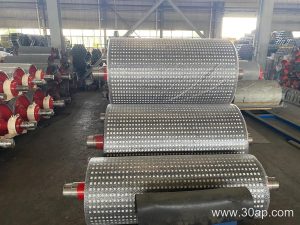
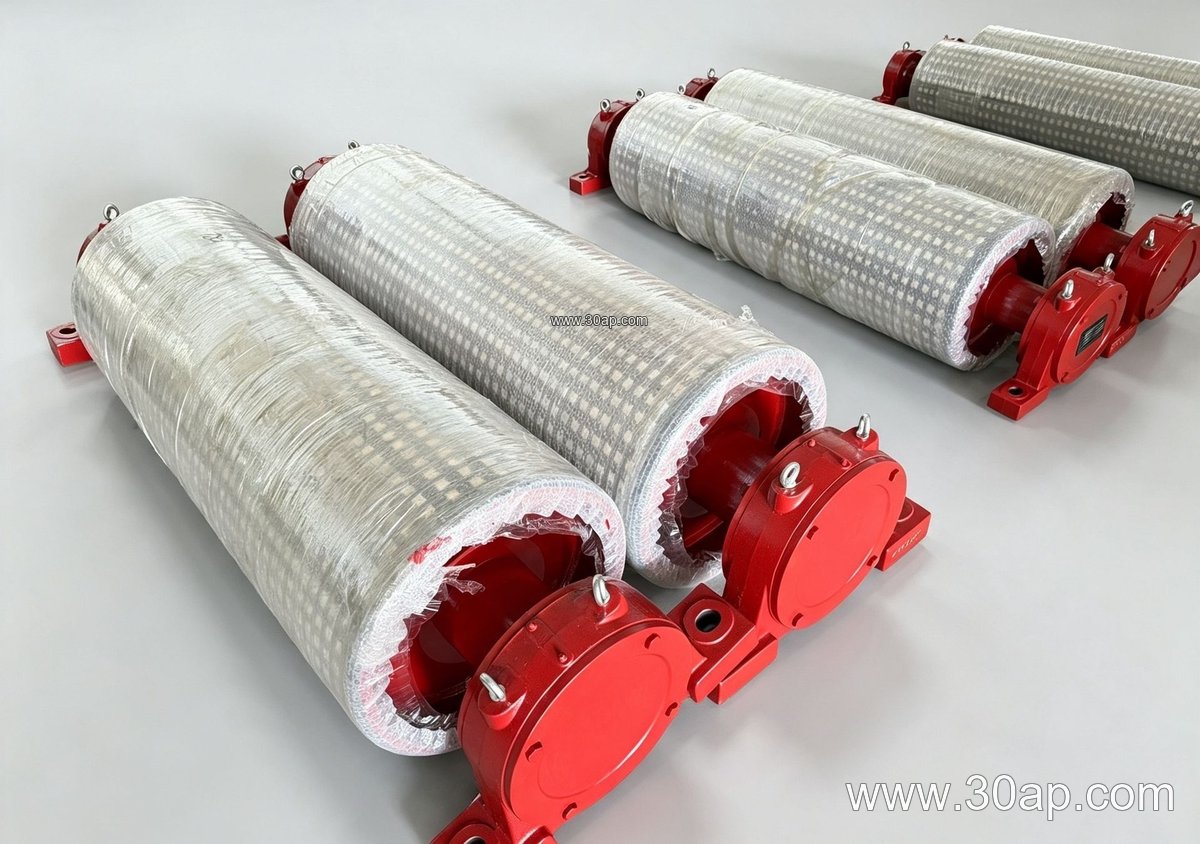
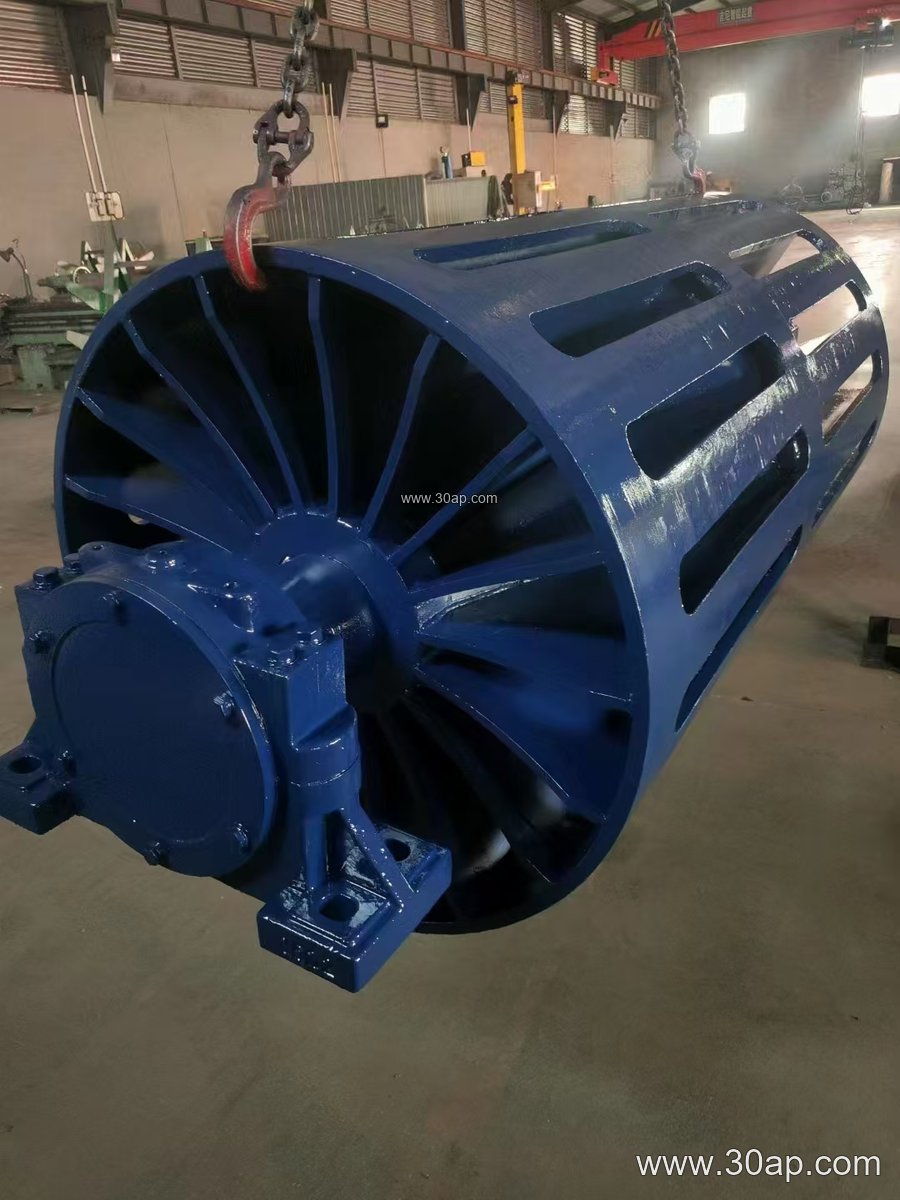
The body is usually a welded steel drum with dished or flat end plates and a shaft that runs through or is welded to the shell. Larger units may use a hub-and-shaft connection for easier replacement. The surface can be supplied plain or lagged, depending on grip and wear requirements.
- Plain finish for light duty or where slip is not a concern
- Hot vulcanized or cold-bonded rubber lagging for general grip
- Diamond or herringbone grooving to shed water and fines
- Ceramic lagging for high-wear transfer points
Lagging thickness commonly falls between 8 mm and 20 mm, and the choice depends on belt speed, tonnage, and whether the belt is wet. A discharge pulley does not normally need to transmit drive torque, so lagging here is mainly about protecting the shell and reducing belt slip during starting.
Matching Belt Width and Pulley Size
The pulley face width is usually a little wider than the belt so the belt is fully supported and mistracking is reduced. Typical reference combinations are shown below; these are common examples, not fixed rules.
| Belt width | Typical pulley face width | Example diameter |
|---|---|---|
| B500 | About 600 mm | Ø400 mm |
| B800 | About 950 mm | Ø500 mm |
| B1000 | About 1150 mm | Ø630 mm |
| B1200 | About 1400 mm | Ø800 to Ø1000 mm |
| B1400 | About 1600 mm | Ø800 to Ø1250 mm |
| B1800 | About 2000 mm | Ø1250 to Ø1600 mm |
A wider belt does not force one particular diameter, and a given belt width can be paired with several diameters depending on belt speed, wrap angle, and tension. Shaft diameter is set by torque and bearing load, not by belt width alone. Common shaft sizes range from Ø50 mm to Ø200 mm, and the final value should come from the conveyor designer’s calculation.
Where It Fits in the Plant
Discharge pulleys appear wherever a belt hands off material. In a quarry or aggregate line they sit at the end of the primary crusher discharge belt, throwing rock onto the next screen. In a coal washing plant or power plant coal yard they handle abrasive, sometimes damp material that demands good lagging and robust bearings. Cement plants use them on clinker and limestone belts, while port and ship-loading conveyors rely on large head pulleys to reach high capacities.
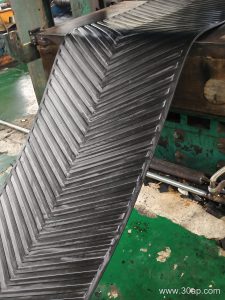
The belt itself matters as much as the pulley. A heavy-duty mining conveyor belt or an abrasion resistant conveyor belt will wear the shell and lagging differently from a smooth EP conveyor belt running light aggregate. In wet or dusty service, a flame retardant conveyor belt may be specified for safety, and a corrugated sidewall conveyor belt or chevron conveyor belt changes the discharge pattern because the cleats affect how material leaves the pulley.
Buyer Checklist
- Confirm belt width, belt type, and operating tension so the pulley face and shaft are sized together.
- State the material, moisture, and temperature so lagging compound and thickness suit the duty.
- Decide between plain, rubber, and ceramic surfaces based on slip risk and wear.
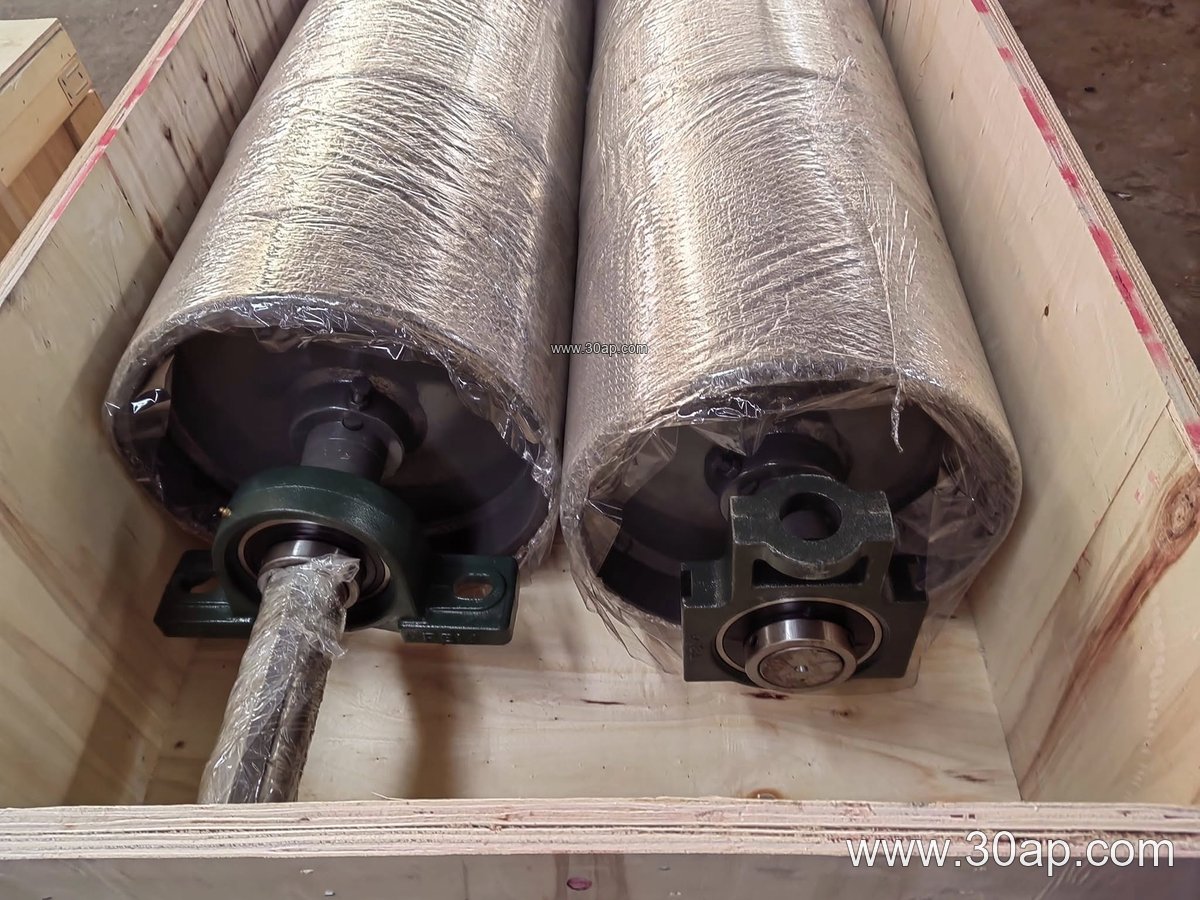
- Check bearing type, sealing, and lubrication access, since the head end is often remote and hard to service.
- Ask for the balancing grade and runout tolerances, which affect vibration at speed.
- Confirm mounting interface with the conveyor bracket and frame before ordering.
Inspect the discharge pulley periodically for lagging wear, shell cracks, and bearing temperature. A worn lagging surface can cause belt slip and mistracking, while a loose shaft connection may lead to vibration. Replacing lagging on schedule is usually cheaper than replacing the whole drum, and keeping the pulley aligned with the chute reduces spillage and belt edge damage.