When Carryback Clings to the Roller
In plants handling damp limestone, clay-rich ore, or washed aggregate, the return side of a conveyor often tells the story first. Material that fails to discharge at the head pulley sticks to the belt and then transfers onto the first idler roller it meets. Once that wrap builds, the roller loses its round profile, the belt begins to track poorly, and spillage follows. An anti-material-buildup idler is designed to break that cycle by presenting a surface that sheds fines instead of collecting them.
The same problem appears in coal preparation plants, cement mills, and power station coal yards where moisture content fluctuates. A standard flat return roller gives tacky material a smooth, continuous surface to cling to. The anti-buildup version changes that surface geometry or material so that the carryback cannot form a stable layer.
How the Roller Sheds Material
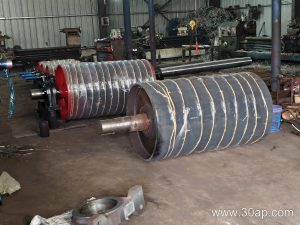
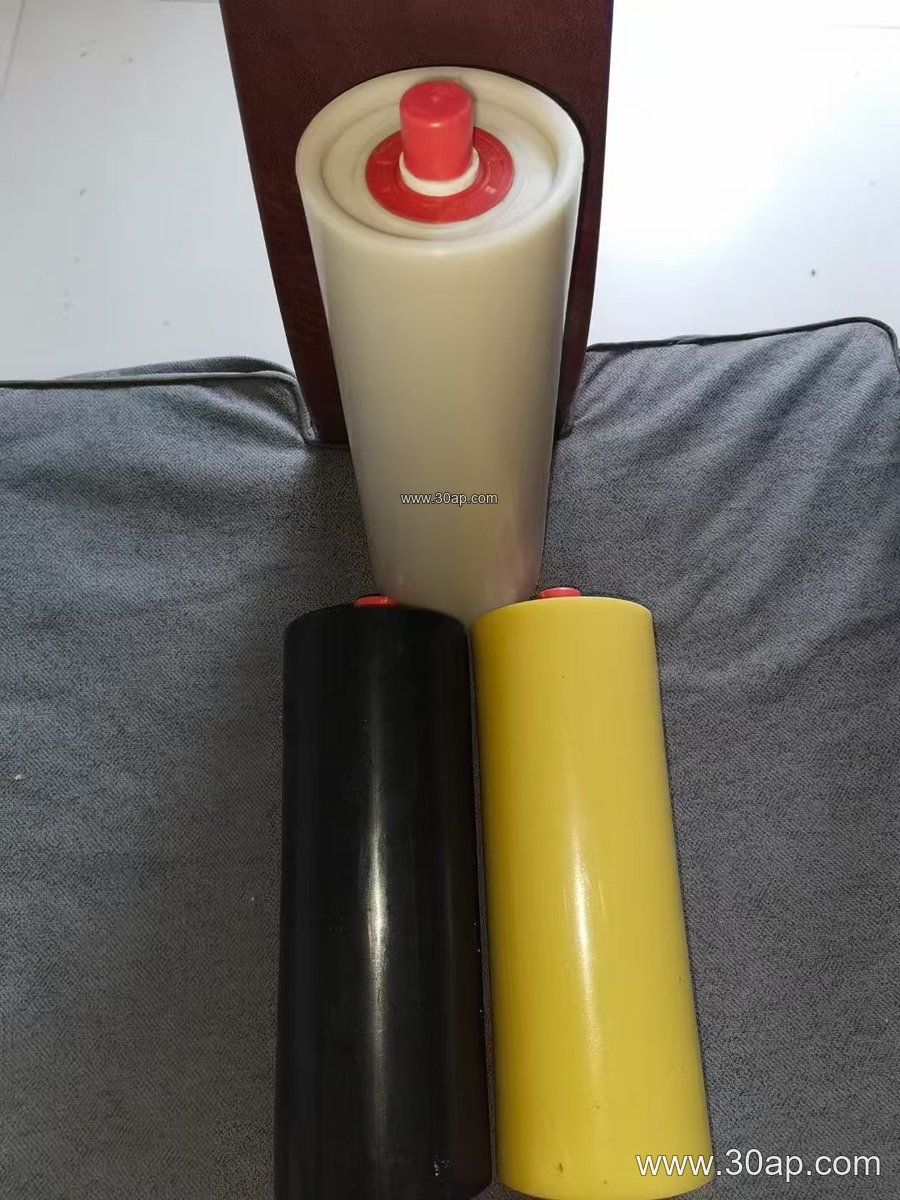
Build-up resistant idlers generally fall into two families. The first uses a profiled shell, often a spiral or helical form, sometimes called a spiral idler roller. As the shell turns, the helix works like a screw, pushing accumulated fines toward the ends instead of letting them cake in the middle. The second family uses a resilient sleeve or ring arrangement, where rubber or polyurethane discs flex slightly under load and release sticky material as the roller rotates.
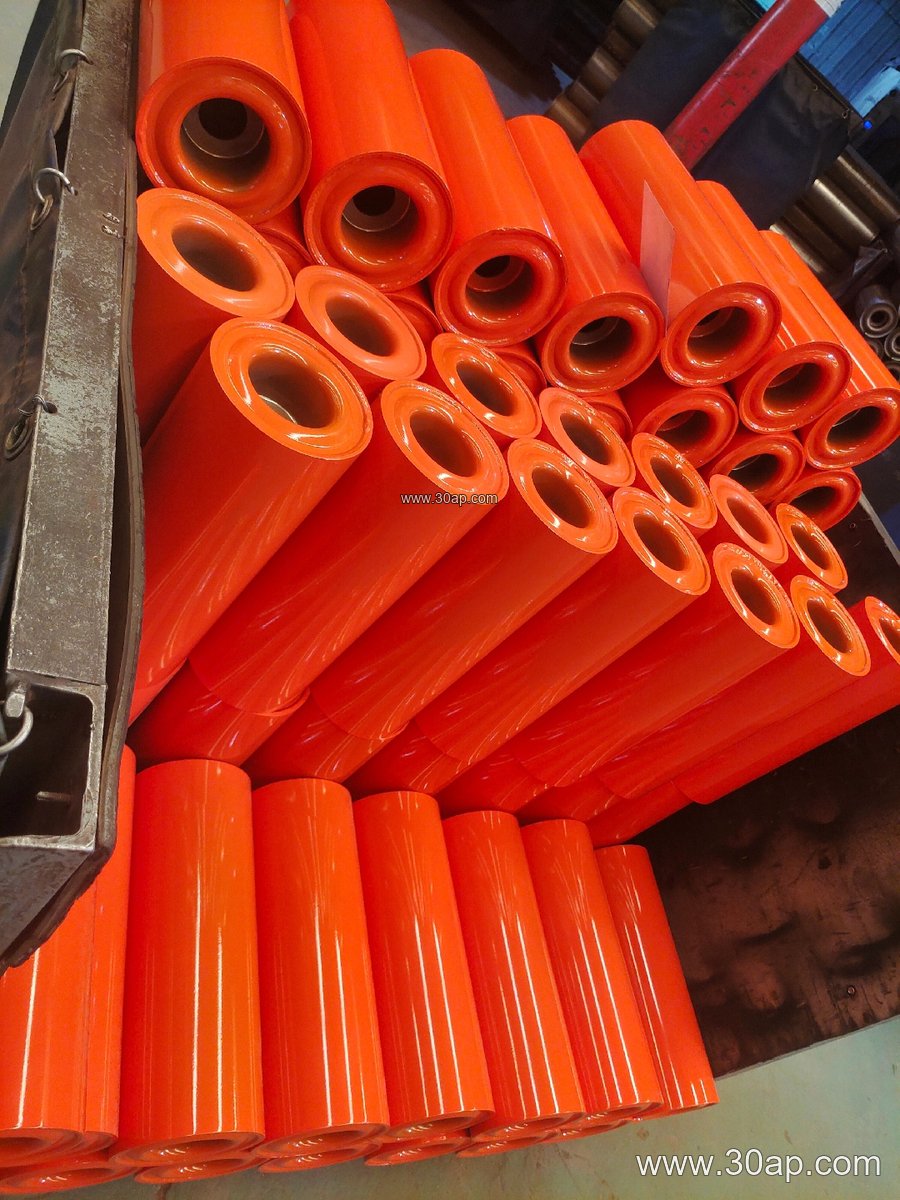
Both approaches share a common goal: avoid a continuous smooth cylinder on the return run. The shell may be made from steel tube with a protective coating, or from a non-stick polymer in lighter-duty aggregate service. Bearing housings are usually sealed against fine dust, with common bearing numbers such as 6205, 6305, or 6306 selected according to load and shaft size rather than belt width alone.
Roller diameter follows the conveyor design. Common sizes in this family include Ø89, Ø108, Ø127, Ø133, and Ø159 mm, with larger diameters used where belt speed and material load demand more bearing capacity. The idler roller is mounted in a conveyor bracket that must match the frame spacing and the return run height.
Where the Idler Earns Its Place
The most direct application is the return strand immediately behind the discharge point. In a limestone quarry or a sand and gravel line, this is where wet fines first land on the return belt. A spiral return roller or a rubber-disc return idler installed there can prevent the wrap from starting.
Other positions benefit as well. In a cement plant, the transfer points around crushers and screens produce dust that mixes with moisture and coats nearby rollers. In a coal mining conveyor system, fines from a coal mining conveyor belt can pack onto smooth return rollers during humid weather. An anti-buildup idler on the return side complements a flame retardant conveyor belt and a well-designed conveyor pulley at the head.
It is worth noting that a drive pulley, tail pulley, and bend pulley are not interchangeable with idlers. They perform different functions, and the anti-buildup feature described here applies to the idler roller itself, not to those pulleys.
Selection Points for Buyers
Start with the belt width and the return idler configuration. A single return roller, a V-return set, and a two-roller return arrangement each place different demands on the roller. For reference, common roller lengths in three-roller carrying sets run roughly 200 mm for B500, 315 mm for B800, 380 mm for B1000, and 465 mm for B1200, but return idler lengths differ and should be confirmed against the frame drawing.
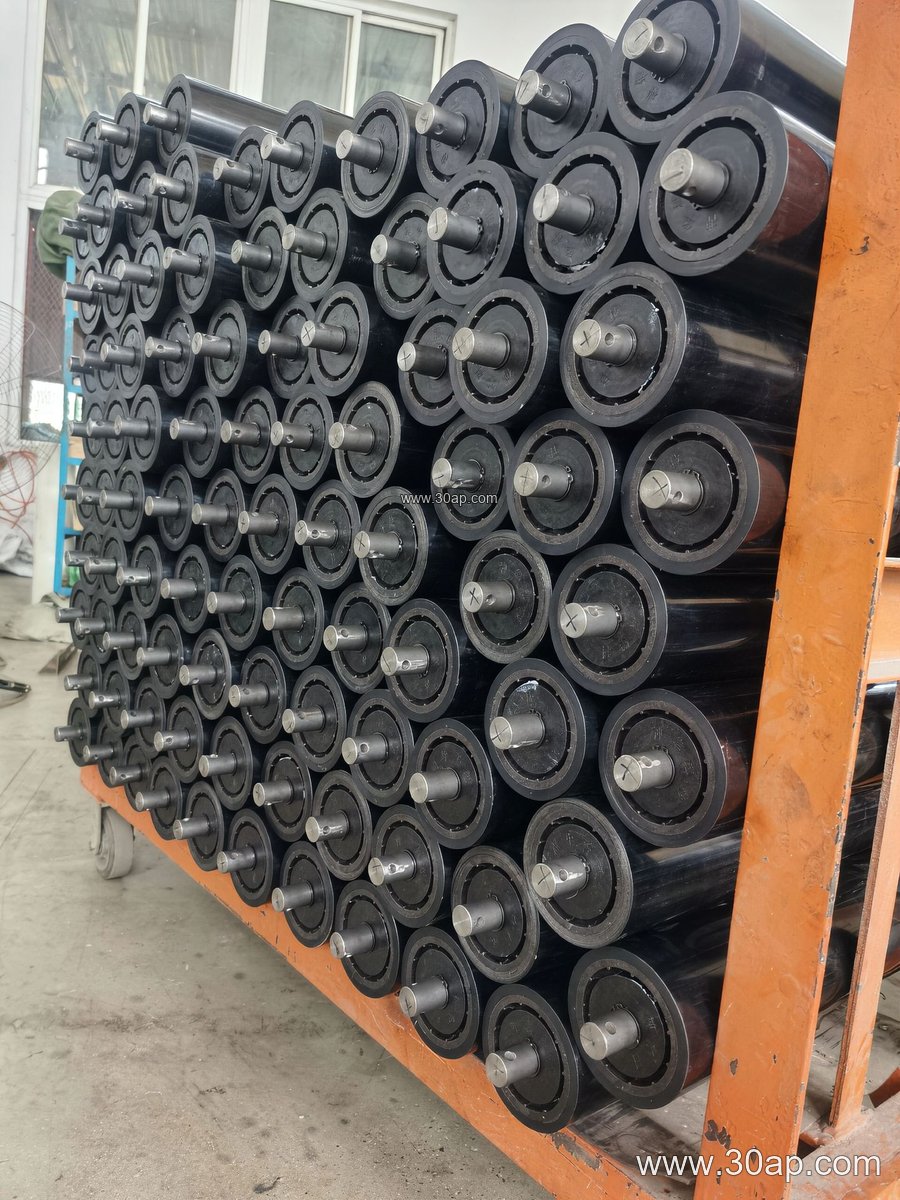
Consider the material. Sticky limestone fines may respond well to a spiral steel roller, while a rubber-ring return idler may suit a primary crusher discharge where impact and fines coexist. In a fertilizer or grain facility, a non-metallic or coated roller may be preferred to avoid contamination.
Check the sealing arrangement. Dust and moisture are the enemies of bearing life, and a well-sealed idler roller will outlast a poorly sealed one in the same position. Bearing numbers such as 6204 through 6310 appear across this family, but the correct choice depends on the calculated load and the shaft diameter specified by the conveyor designer.
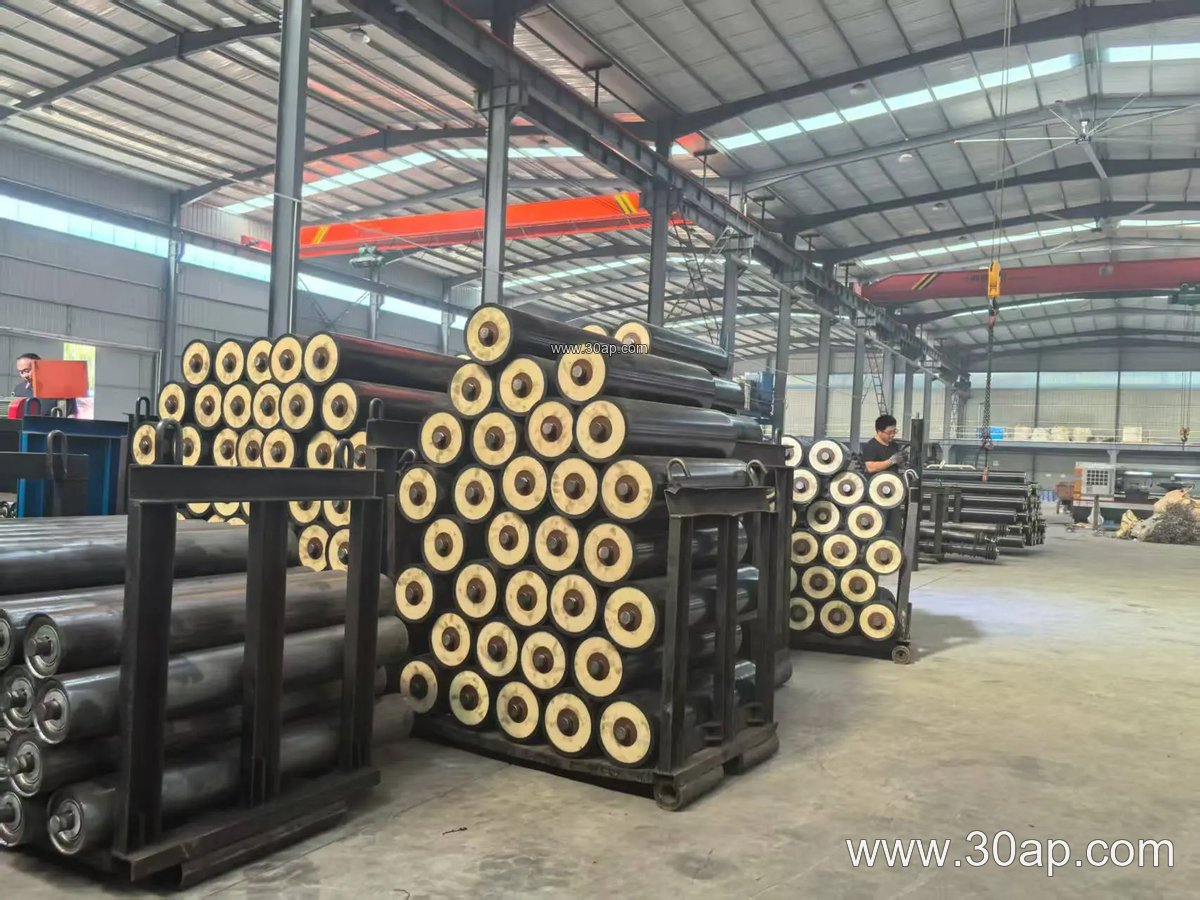
Finally, match the roller to the belt. An abrasion resistant conveyor belt running at high speed over a lightweight return roller may wear the shell quickly; a heavier shell or a wear-resistant coating can help. The idler should be treated as part of the whole conveyor system, alongside the conveyor belt, the conveyor pulley, and the conveyor bracket that holds it.
Maintenance and Retrofit Notes
Anti-buildup idlers are not maintenance-free. Inspect the return strand after the first weeks of operation, since a roller that is working correctly will show little or no accumulation. If material still clings, check belt cleaning at the head pulley and consider whether a secondary cleaner is needed.
Retrofitting is straightforward when frame dimensions are known. Record the existing roller diameter, shaft size, and bracket spacing before ordering. In a port or ship loading conveyor, where belt widths of 1400 mm, 1600 mm, or 1800 mm are common, the return idler must be specified for the actual frame, not assumed from the belt width alone.
The anti-material-buildup idler is a focused solution to a specific problem. Used in the right position and matched to the material and frame, it helps keep the return run clean and the belt tracking true.