What a Belt Conveyor Take-Up Pulley Does
The belt conveyor take-up pulley is the rotating component that maintains the correct tension in the conveyor belt. It is mounted on a movable carriage or take-up frame, and its position is adjusted to compensate for belt stretch, load variations, and thermal expansion. In a quarry or aggregate line, a slack belt can slip on the drive pulley and spill material; a properly set take-up pulley keeps the belt tracking and prevents premature wear on the conveyor belt and idler roller set. The same principle applies in a coal mining conveyor belt system or a power plant coal handling circuit, where reliable tensioning directly affects availability.
Construction and Key Components
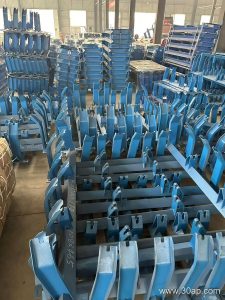
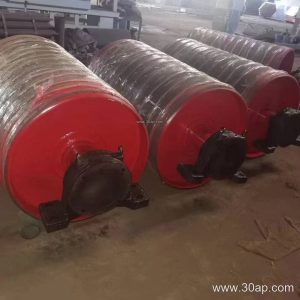
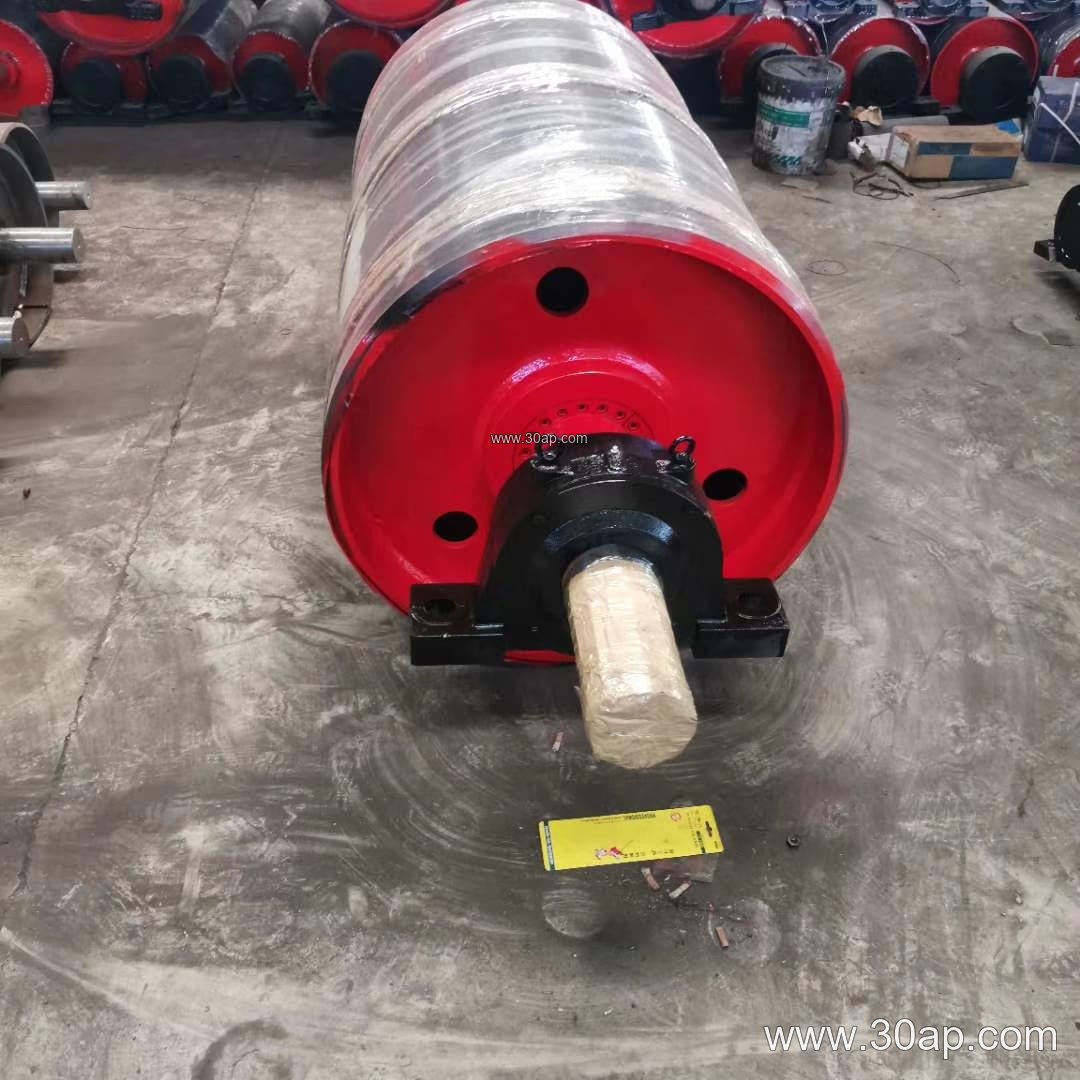
A typical take-up pulley is built around a steel drum with a shaft, bearings, and a lagged surface. The drum shell is usually machined to match the belt width, and the shaft is sized by torque and load rather than by belt width alone. Bearings are selected for the take-up travel and the radial loads imposed by belt tension. Surface options include plain steel, rubber lagging applied cold or hot, diamond grooving, and ceramic lagging for high-traction duties. The pulley is often paired with a conveyor bracket and a take-up frame that allows horizontal or vertical movement, depending on the conveyor layout.
Common Surface Forms
- Plain finish for lighter duty and clean running
- Rubber lagging (cold-bonded or hot-vulcanized) for general grip
- Diamond or herringbone lagging to improve traction and shed water
- Ceramic lagging for high-torque, wet, or oily conditions
Lagging thickness commonly ranges from 8 mm to 20 mm, with 10 mm and 12 mm often used in aggregate and cement plant conveyors. The take-up pulley should not be confused with a drive pulley, tail pulley, or bend pulley; each has a distinct role. A bend pulley changes belt direction, while a tail pulley forms the return end, and a drive pulley transmits power. The take-up pulley is the tensioning element, and its design must suit the take-up system.
Typical Applications
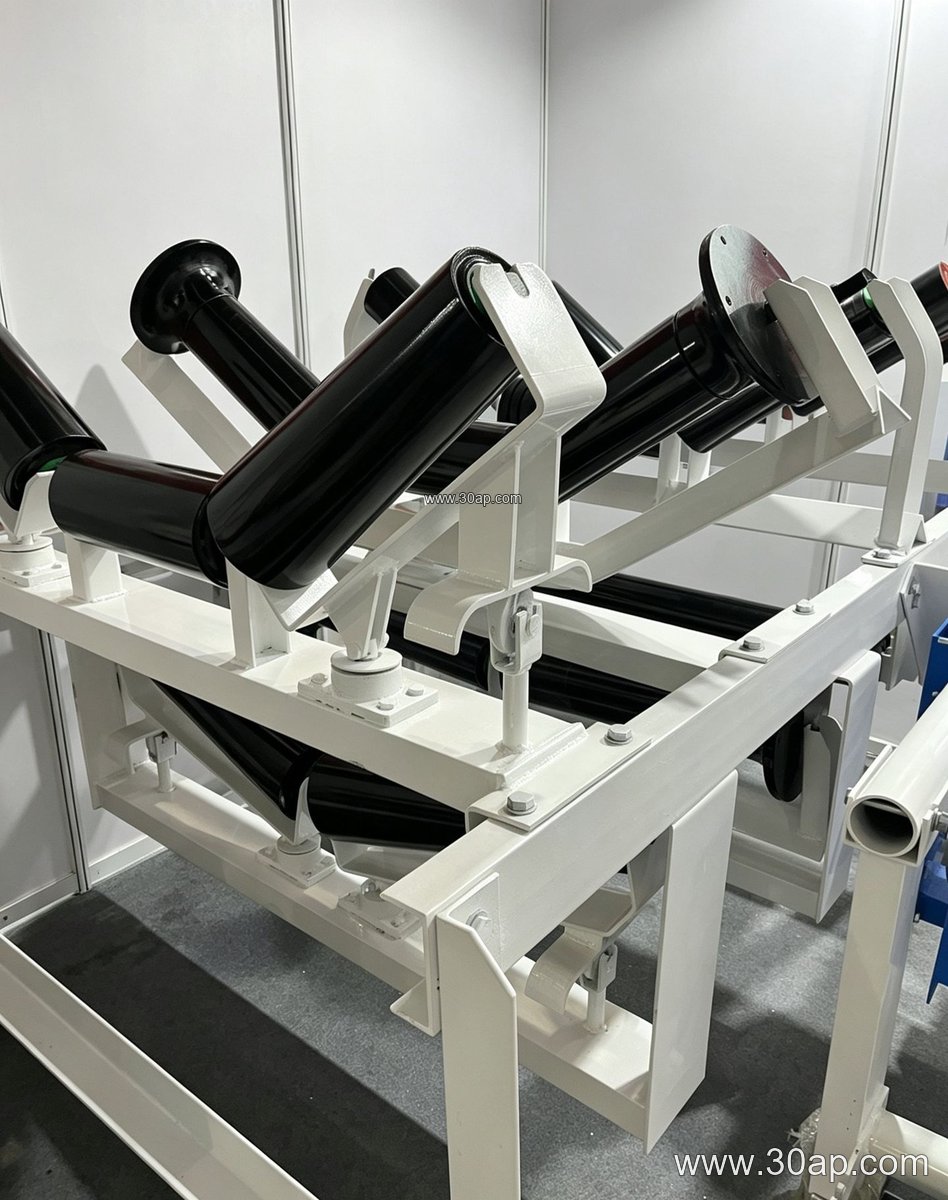
Take-up pulleys appear wherever belt tension must be controlled. In a limestone mine or stone crushing plant, they are often located near the tail end to take up slack from a long overland conveyor. In a cement plant, they help maintain tension on clinker and raw material belts that operate under varying loads. Port bulk terminals use them on ship loading conveyors, and underground coal mining conveyor belts rely on them to keep flame retardant conveyor belt tracking in confined spaces. Other industries include steel plants, fertilizer handling, and tunnel spoil removal.
Matching the Pulley to the Belt and Duty
Selection starts with the belt width and the required take-up travel. A B800 belt on a medium-duty conveyor might use a pulley with a face width around 950 mm, but the actual diameter and shaft size depend on the belt tension, speed, and load profile. Common diameters for take-up pulleys include Ø315, Ø400, Ø500, Ø630, and Ø800, with larger sizes such as Ø1000 or Ø1250 used on high-tension installations. A B1200 conveyor might pair with a Ø1000 take-up pulley, while a B1400 system could use Ø800 or larger. These are reference examples, not fixed rules; the engineer must confirm the shaft diameter from torque and bearing loads. For heavy-duty mining conveyor belt or steel cord conveyor belt applications, the take-up pulley should be sized for the higher tension and shock loads.
Reference Dimensions for Planning
The following values are typical reference data for discussion with a supplier. They do not represent a universal specification.
- Belt width B400: pulley face about 500 mm
- Belt width B650: pulley face about 750 mm
- Belt width B800: pulley face about 950 mm
- Belt width B1000: pulley face about 1150 mm
- Belt width B1200: pulley face about 1400 mm
- Belt width B1400: pulley face about 1600 mm
- Belt width B1600: pulley face about 1800 mm
- Belt width B1800: pulley face about 2000 mm
Shaft diameters commonly range from Ø50 to Ø200, selected by calculation. The take-up pulley should match the conveyor bracket and frame design so that travel is smooth and alignment is maintained.
Buyer Checklist
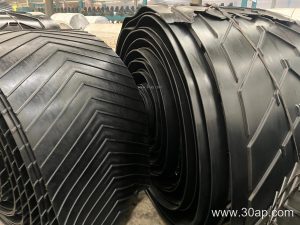
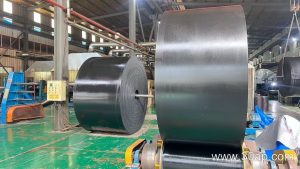
Before ordering a belt conveyor take-up pulley, confirm the belt width, the required take-up stroke, the lagging type and thickness, the shaft and bearing arrangement, and the environmental conditions. In a wash plant or port, moisture may call for diamond lagging; in a cement plant, dust and heat may influence bearing seals and lagging choice. Ask for the pulley drawing and verify that the face width and shaft diameter suit your conveyor. Also check compatibility with the conveyor belt specification, such as EP conveyor belt or steel cord conveyor belt, and with the existing idler roller and bracket positions. Regular inspection of lagging wear and bearing condition helps avoid unplanned stops. For more information on related components, visit conveyor pulley and conveyor belt resources.