What a Rubber-Lined Pulley Does
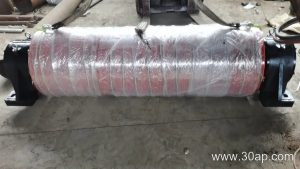
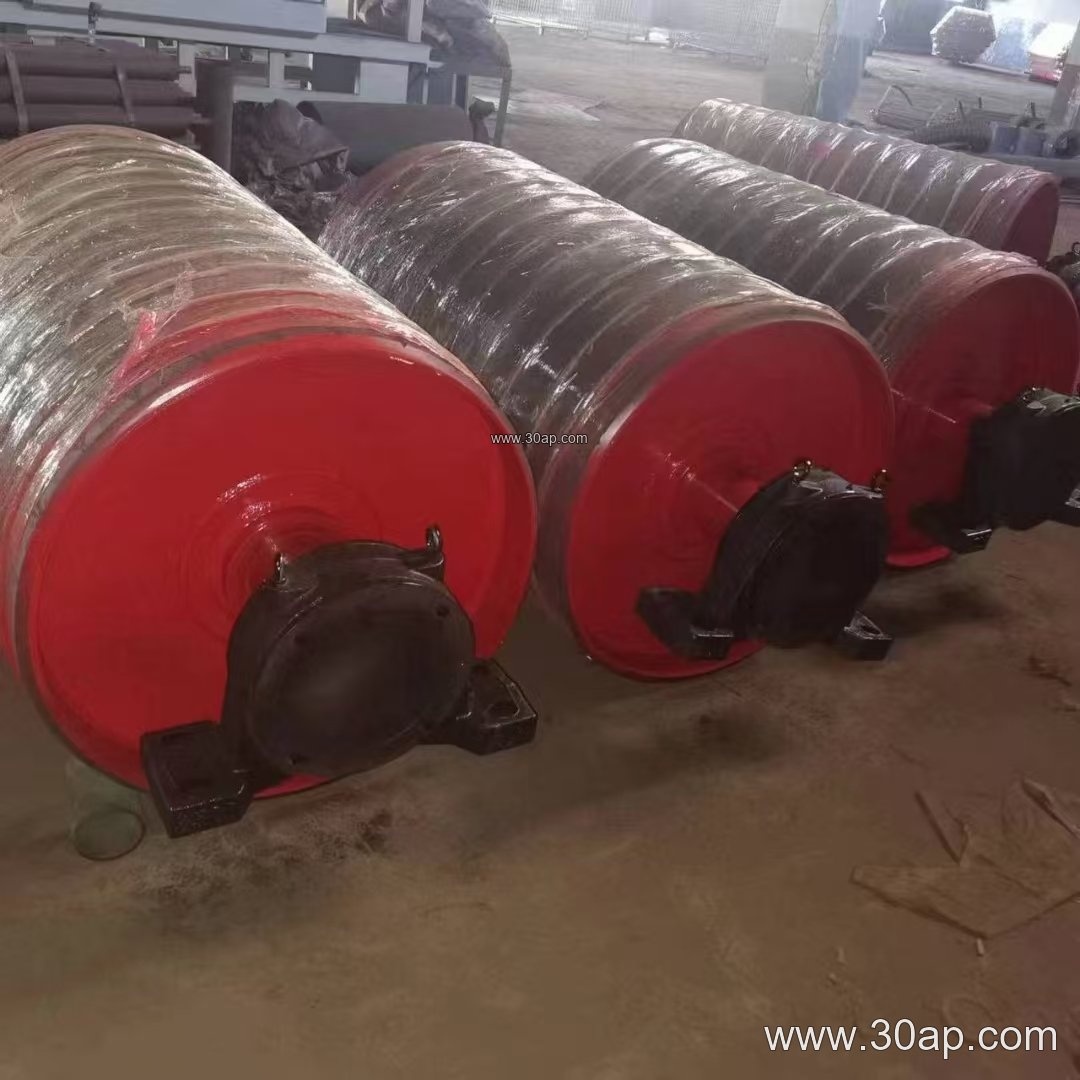
A rubber-lined pulley is a conveyor pulley whose shell carries a bonded rubber layer, usually applied by hot vulcanization or cold bonding. The rubber is not a cosmetic coating. It changes how the pulley grips the belt, how it sheds material, and how it wears in service. In a quarry or a cement plant, that difference can decide whether a conveyor starts smoothly under load or slips at the drive.
Because the lining is a surface treatment rather than a separate product family, a drive pulley, tail pulley, or bend pulley can all be supplied with rubber. These are different positions with different duties, and the lining is specified to suit each one.
How the Lining Is Built
The pulley shell is machined, cleaned, and prepared for adhesion. Rubber sheet is cut to the shell width, wrapped, and bonded. Hot vulcanization in an autoclave gives a dense, seamless bond; cold-bonded linings are an alternative where workshop conditions suit them. Common lining thicknesses are 8, 10, 12, 15, and 20 mm, chosen against belt tension and expected slip rather than picked by habit.
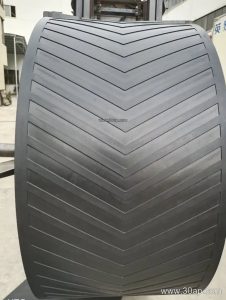
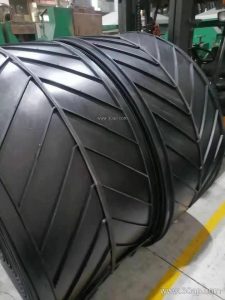
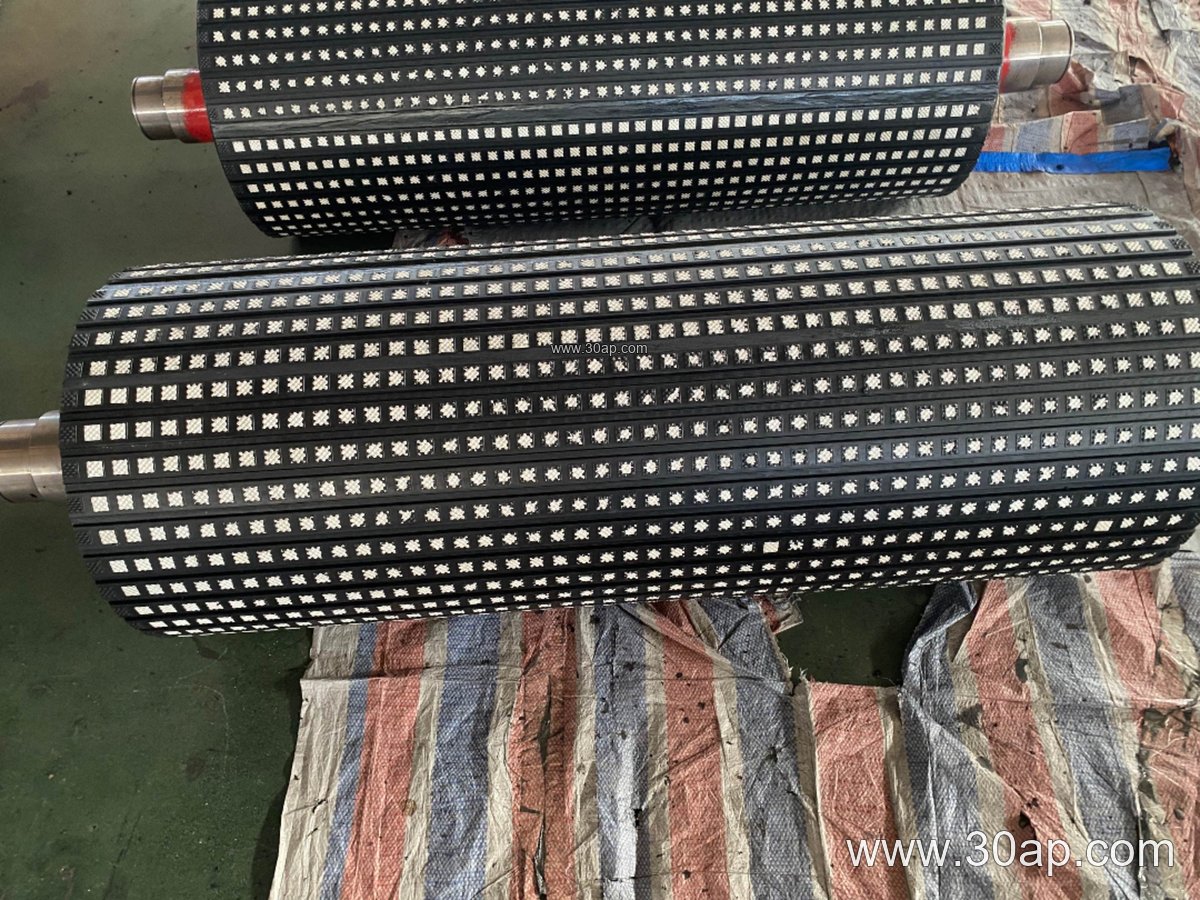
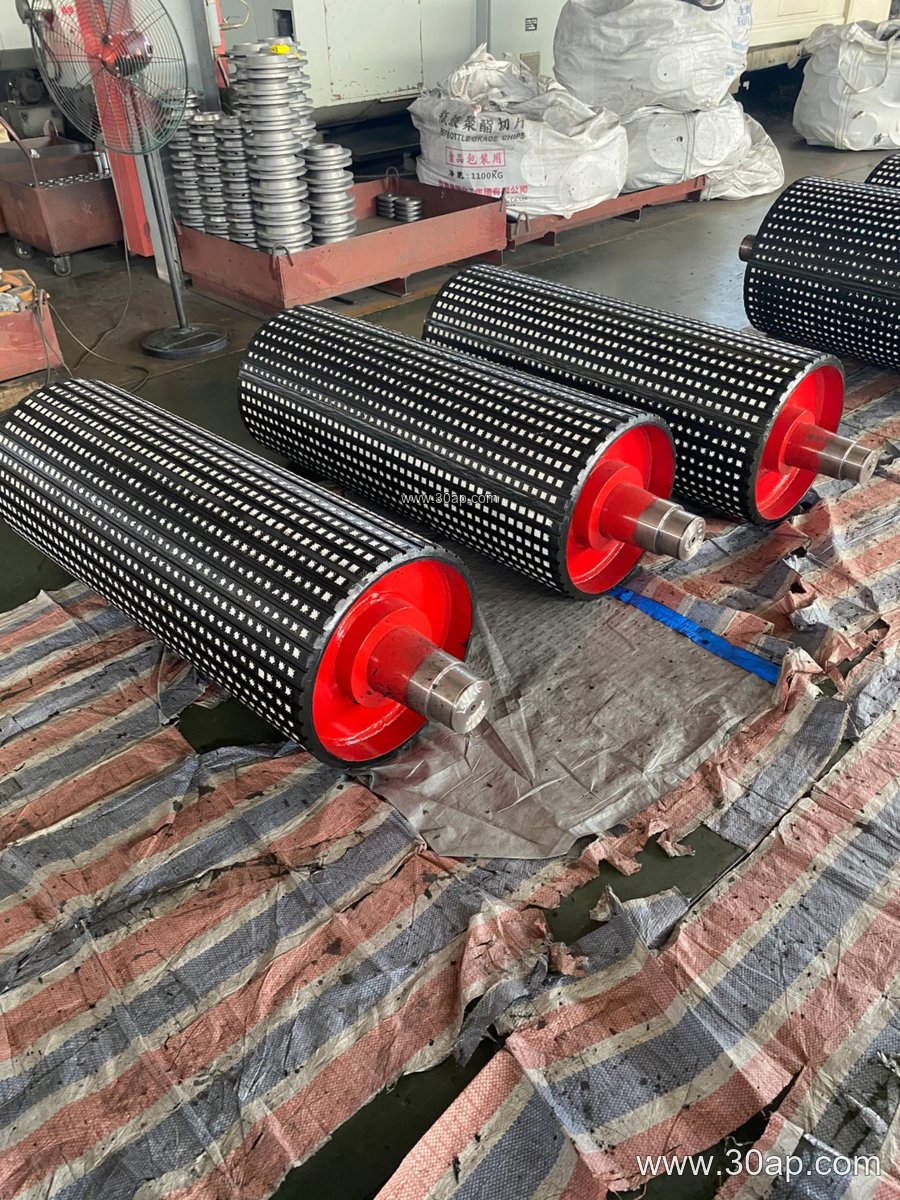
Surface form matters as much as thickness. Plain rubber is the general choice. Diamond grooving improves water and fines evacuation, while chevron or herringbone patterns are used where wet, muddy conditions are routine. Ceramic tiles embedded in rubber are reserved for the most abrasive drive positions, and they cost more than plain lining.
Where It Fits on the Conveyor
At the head or drive position, the rubber-lined pulley transmits torque to the belt. Higher friction allows a lower wrap angle or reduced take-up tension, which is useful on long overland lines and in underground mining conveyors where space is tight. At the tail, a rubber face protects the shell from grit and reduces belt mistracking caused by a polished, slippery surface.
Bend and take-up pulleys see less torque but still benefit from a rubber face when the belt is wet or dusty. A conveyor pulley used only for snubbing may be supplied plain, so the lining decision should follow the duty, not the position name.
Sizes and Design Combinations
Belt width and pulley diameter are separate decisions. Width follows the conveyor belt, and diameter follows torque, belt tension, and the shaft. Typical shell widths run slightly wider than the belt, as the table below suggests; these are common references, not fixed rules.
- B400 belt: shell around 500 mm
- B650 belt: shell around 750 mm
- B800 belt: shell around 950 mm
- B1000 belt: shell around 1150 mm
- B1200 belt: shell around 1400 mm
- B1400 belt: shell around 1600 mm
- B1600 belt: shell around 1800 mm
Diameter options often include Ø200, Ø315, Ø400, Ø500, Ø630, Ø800, Ø1000, and Ø1250. A B800 × Ø500 unit and a B1200 × Ø1000 unit are both normal, and one belt width can pair with several diameters. Shaft size is set by torque and load, with Ø80, Ø100, Ø120, and Ø140 among the common values; it should never be guessed from belt width alone.
Buyer Checklist
Confirm the pulley position first: drive, tail, bend, or take-up. Then state belt width, belt type, and operating tension. A steel cord conveyor belt or a heavy-duty mining conveyor belt pulls harder than a light fabric carcass, and the pulley and shaft must reflect that. Mention the environment: coal dust, cement powder, salt spray, or washdown all affect lining choice.
Ask for the lining thickness, rubber grade, surface pattern, and bonding method in writing. Check that the shell width, diameter, shaft, bearing housing, and conveyor bracket mounting dimensions match the existing frame. For a replacement, measure the old pulley rather than working from the belt alone.
Maintenance Notes
Inspect the rubber face for cuts, glazing, and lifted edges. A polished, shiny lining usually means slip, and slip leads to heat and premature failure. Keep the belt tracking straight and the conveyor pulley clean; material build-up on a rubber face can cause uneven wear. When the lining wears through to the shell, re-lining is usually more economical than replacing the whole pulley, provided the shell and shaft are sound.
Rubber lining is a small part of the conveyor cost but a large part of its reliability. Matching the lining to the position, the material, and the belt is the practical route to fewer stoppages in mines, power plants, and aggregate operations alike.