What a Five-Roll Idler Set Is
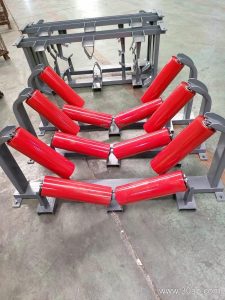
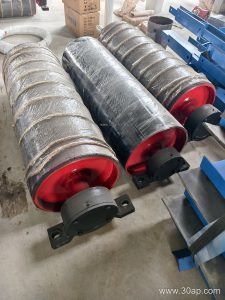
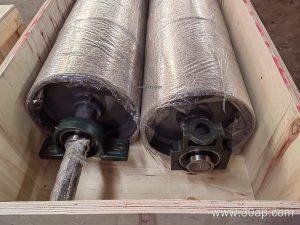
A five-roll idler set is a troughed carrying assembly in which five idler rollers support the conveyor belt across the load profile. Instead of the usual three rolls, the set adds two extra rolls, giving a smoother, more continuous cradle under the belt. This arrangement is often chosen where the belt is wide, the material is heavy, or the transition from flat to troughed shape needs to be gentle. It is a distinct assembly type, not a replacement name for a drive pulley, tail pulley or bend pulley, which are conveyor pulleys with entirely different duties.
The set is used on the carrying side of a bulk handling conveyor, commonly in quarry, iron ore, copper ore, cement and power plant coal handling circuits. Because the load is shared over more rolls, belt sag between supports is reduced and the belt is guided more evenly.
How the Assembly Is Built
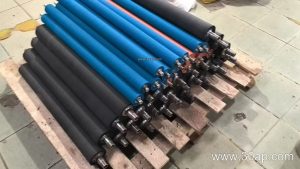
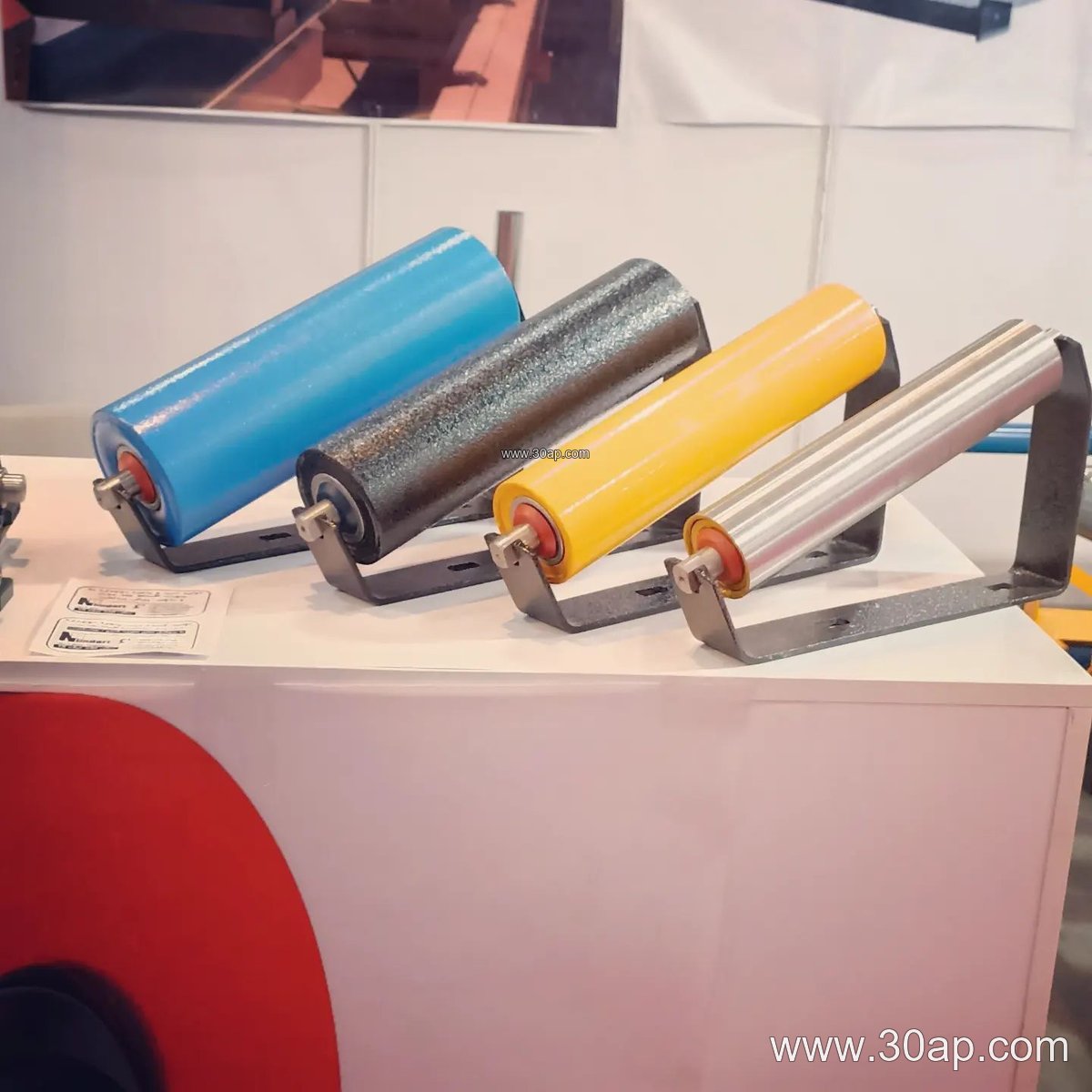
Each five-roll idler set consists of five idler rollers mounted in a frame, usually with two outer rolls set at a steeper angle and intermediate rolls forming the trough. Rollers are commonly steel tube with bearing housings at each end, and shaft ends sit in the frame brackets. Surface options include plain steel, nylon, ceramic and rubber rings, the last often used where impact or build-up is a concern.
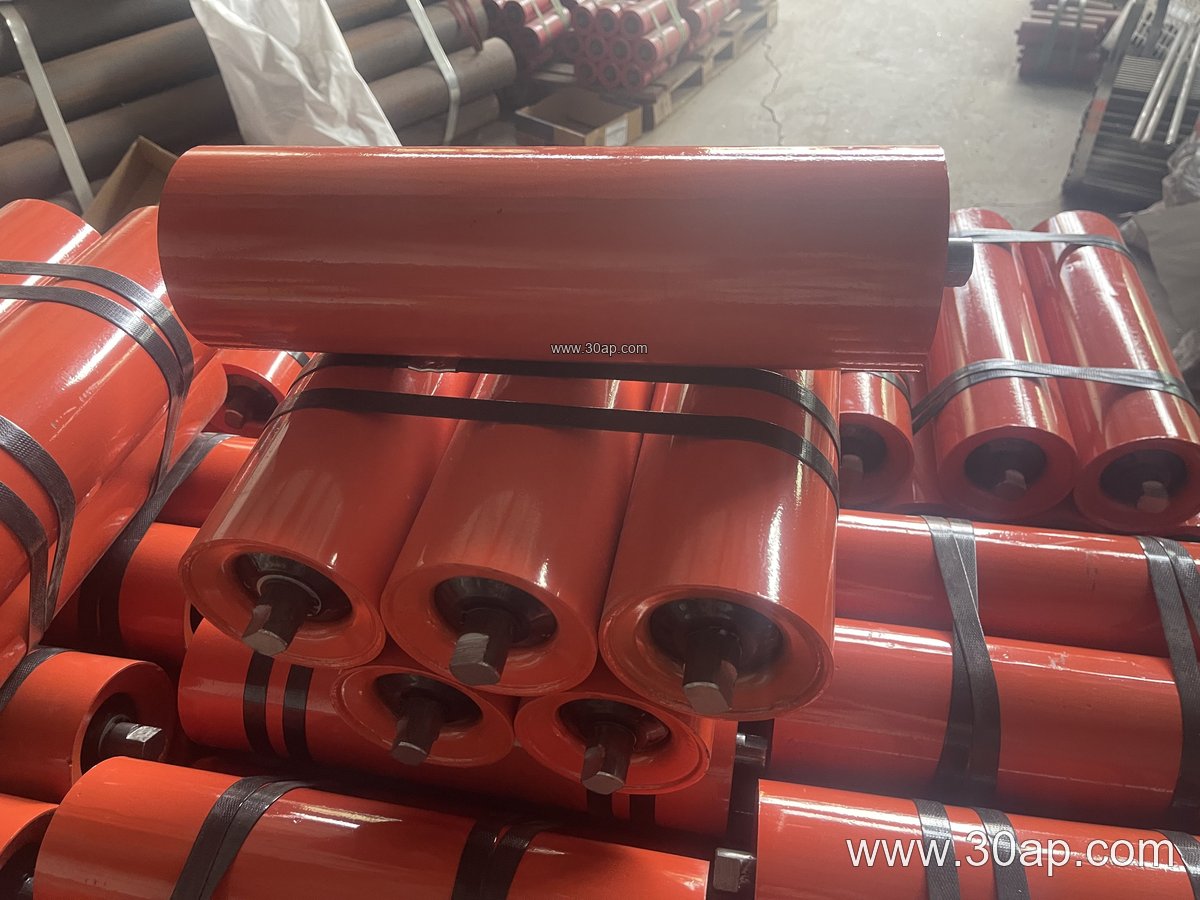
Common roller diameters include Ø89, Ø108, Ø127, Ø133, Ø159 and Ø178 mm, while bearings such as 6204, 6205, 6305, 6306, 6308 and 6310 appear across different roller sizes. These are reference values, not fixed pairings; the correct bearing depends on load, speed and roller design. Trough angles are usually 20, 30, 35 or 45 degrees, and the five-roll layout allows a wider belt to be supported without an abrupt fold at the edges.
Typical reference data
| Item | Common range or example |
|---|---|
| Roller diameter | Ø89 to Ø178 mm |
| Belt width | B800, B1000, B1200, B1400, B1600, B1800, B2000 |
| Trough angle | 20°, 30°, 35°, 45° |
| Roll surface | Steel, nylon, ceramic, rubber ring |
| Bearing example | 6205, 6305, 6306, 6308 |
Roll length changes with belt width, trough angle and frame design. For three-roll sets, common roll lengths are roughly 315 mm at B800 and 465 mm at B1200, but a five-roll set splits that support differently, so side and intermediate rolls may each be shorter. Buyers should confirm roll length and frame geometry with the supplier rather than assuming one belt width matches one roll size.
Where It Fits on the Conveyor
This assembly belongs on the carrying run, usually in the main troughing section as well as at transition zones where the belt opens from flat to troughed. In a stone crushing line or aggregate conveyor, the extra rolls help spread the load of coarse rock. In a cement plant or coal mining conveyor, they can reduce edge stress on a heavy belt. The return run still needs return idlers, and impact zones may call for buffer or rubber-ring impact idlers, but those are separate positions and not interchangeable with the five-roll carrying set.
Selection should consider belt width, material lump size, belt speed, load per meter and the conveyor bracket spacing. A wide, heavy-duty belt such as a steel cord conveyor belt or a thick EP conveyor belt may justify the extra support, while a light fabric core conveyor belt on a short run may not need it. Abrasion resistant conveyor belt and flame retardant conveyor belt specifications also influence roller choice in mining and power applications.
Buyer Checklist
- Confirm belt width, trough angle and frame mounting dimensions.
- Check roller diameter, wall thickness and bearing size against the actual load.
- Match roller surface to the material, for example rubber rings for impact or ceramic for sticky fines.
- Verify sealing and lubrication arrangement for dusty quarry or coal conditions.
- Ask for roll length and bracket layout drawings before ordering.
A well-matched five-roll idler set supports the belt evenly and keeps the trough profile steady, which helps extend roller life and protect the belt edge. For more conveyor components, visit www.beltconveyorparts.com for idler roller and conveyor bracket information, or review conveyor pulley options separately when the drive, tail or bend positions are being planned.