What Conveyor Pulley Machining Involves
Conveyor pulley machining is the process of turning a raw cylinder into a precise, balanced component that guides and drives a conveyor belt. While the term often brings to mind the drive pulley at the head of the system, machining is equally critical for tail, bend, and take-up pulleys. Each subtype has its own role: the drive pulley transmits torque, the tail pulley maintains belt tension at the return end, and the bend pulley changes the belt path without driving it. Machining ensures the pulley runs true, minimizes vibration, and extends the service life of both the pulley and the belt.
The work typically starts with a seamless steel tube or a rolled and welded shell. The shell is cut to the required face width, then machined on a lathe to achieve concentricity and the correct diameter. End discs or hubs are welded in place, and the shaft is pressed or keyed into position. After welding, the pulley undergoes stress relief and final machining of the shaft journals, keyways, and bolt holes. Dynamic balancing is often performed, especially for larger diameters and higher-speed applications.
Key Machining Steps and Tolerances
Accuracy in conveyor pulley machining directly affects belt tracking and splice life. Common steps include:
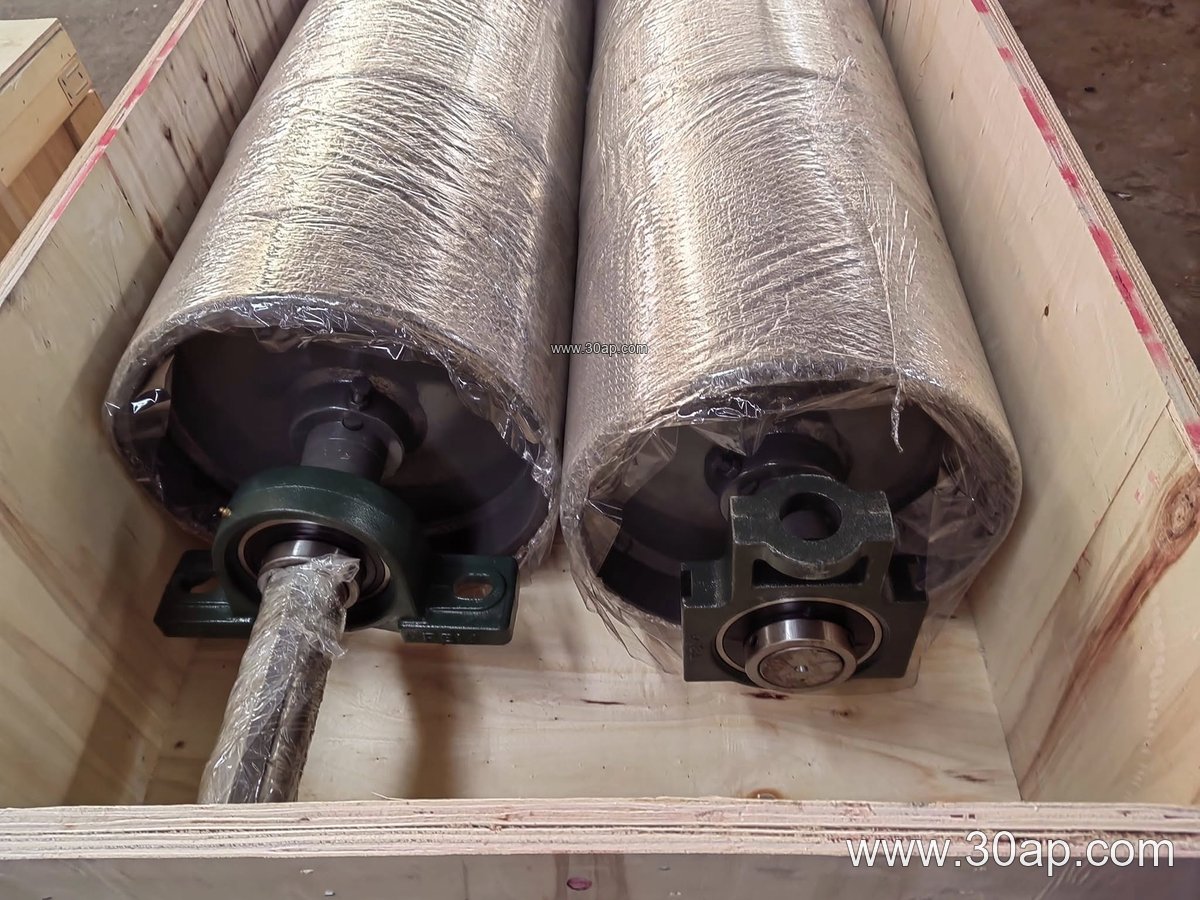
- Shell preparation: Cutting to width and machining the outer diameter to a consistent surface.
- Shaft machining: Turning journals to fit bearings, cutting keyways, and drilling tap holes for end caps.
- Welding and stress relief: Attaching hubs and end discs, followed by heat treatment to reduce distortion.
- Final machining: Finishing the shaft and shell to tight tolerances, often within 0.05 mm for critical fits.
- Balancing: Static or dynamic balancing to reduce vibration at operating speeds.
These steps are adapted to the pulley type. A drive pulley may require a larger shaft and a keyed hub for high torque, while a bend pulley can have a lighter design. The table below shows typical reference dimensions, but final values are always determined by the conveyor design.
Typical Reference Dimensions
| Belt Width (B) | Pulley Face Width (approx.) | Common Diameter Range | Shaft Diameter Range |
|---|---|---|---|
| B400 | 500 mm | Ø200–Ø400 | Ø50–Ø80 |
| B500 | 600 mm | Ø250–Ø500 | Ø60–Ø90 |
| B650 | 750 mm | Ø315–Ø630 | Ø70–Ø100 |
| B800 | 950 mm | Ø400–Ø800 | Ø80–Ø120 |
| B1000 | 1150 mm | Ø500–Ø1000 | Ø90–Ø140 |
| B1200 | 1400 mm | Ø630–Ø1250 | Ø100–Ø160 |
| B1400 | 1600 mm | Ø800–Ø1400 | Ø120–Ø180 |
| B1600 | 1800 mm | Ø1000–Ø1600 | Ø140–Ø200 |
| B1800 | 2000 mm | Ø1250–Ø1800 | Ø160–Ø200 |
These ranges are for reference only. A B1200 belt might use a Ø1000 drive pulley, while a B800 conveyor could have a Ø500 tail pulley. The shaft diameter is never chosen from belt width alone; it depends on torque, radial load, and bearing selection.
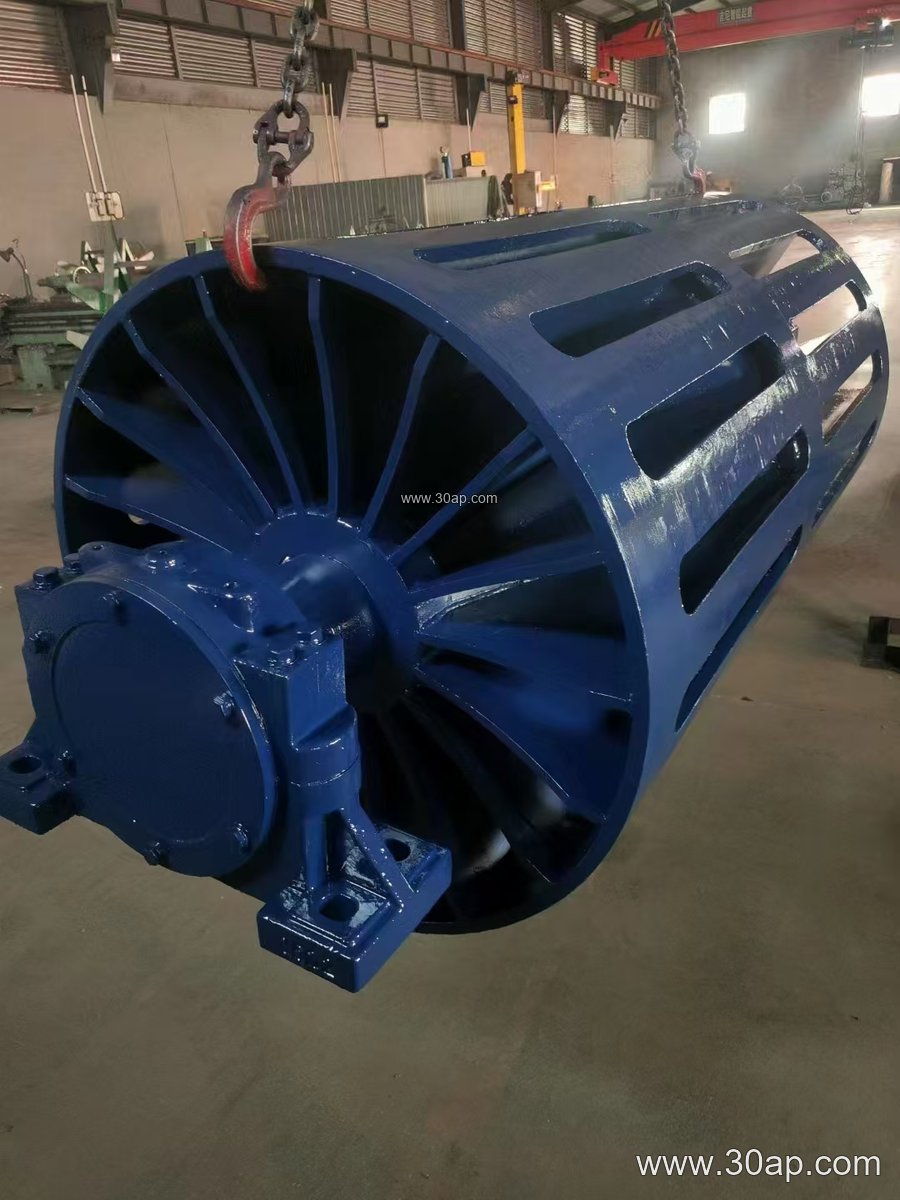
Surface Options and Their Machining
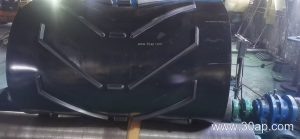
After the base pulley is machined, the surface may be left plain or covered with rubber, ceramic, or other materials. Plain pulleys are common for bend and take-up positions. Drive pulleys often receive lagging to increase friction. Machining for lagging includes preparing the shell for bonding and, in some cases, cutting grooves for diamond or chevron patterns. Common lagging thicknesses are 8, 10, 12, 15, and 20 mm. The choice depends on the belt type and environmental conditions. For example, a heavy-duty mining conveyor belt handling abrasive ore may use thick rubber lagging, while a food-grade application might require a smooth, cleanable surface.
Where Machined Pulleys Are Used
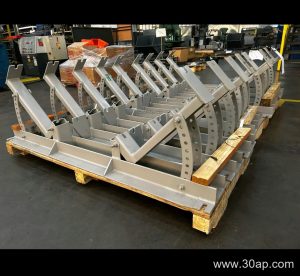
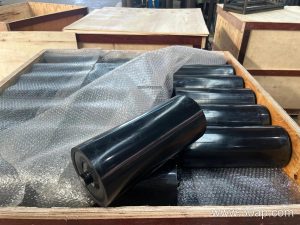
Machined pulleys are found in nearly every bulk material handling system. In a quarry or aggregate plant, they keep a crusher conveyor belt running smoothly. In a coal preparation plant, flame retardant conveyor belts rely on properly machined pulleys to maintain tension and alignment. Cement plants use them on clinker conveyors, and power plants depend on them for coal handling. Port facilities use large pulleys on ship loading conveyors, where precise machining reduces downtime. The pulley works together with idler rollers and conveyor brackets to support the belt and maintain its path.
What Buyers Should Know
When specifying conveyor pulley machining, buyers should provide the belt width, expected tension, pulley type, and environmental conditions. It is important to clarify whether the pulley is a drive, tail, or bend unit, as they are not interchangeable. Ask for dimensional reports and balancing certificates. Check that the shaft diameter is calculated from torque and load, not simply matched to belt width. For harsh environments, consider the compatibility of the pulley surface with the conveyor belt. For instance, an abrasion resistant conveyor belt may pair well with ceramic lagging, while a heat resistant conveyor belt requires lagging that can withstand temperature. Finally, confirm that the pulley face width is slightly wider than the belt to prevent edge damage.