What a Steel Cord Conveyor Belt Is
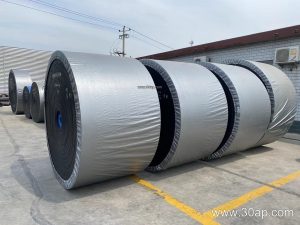
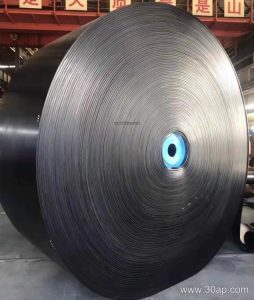
A Steel Cord Conveyor Belt is a heavy-duty rubber conveyor belt whose tension member is a single layer of parallel steel cords running longitudinally through the carcass. Instead of multiple fabric plies, the cords carry the pulling load, which allows very long center-to-center distances, high tonnage, and low stretch in service. In plant language it is often shortened to steel cord belt, and it is the standard choice for trunk conveyors in mines, cement works, power stations, ports, and large crushing and screening plants.
How the Belt Is Built
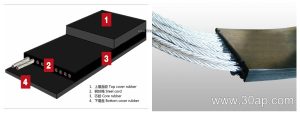
The construction is relatively simple in principle but demanding in process control. Bare brass-plated steel cords are spaced at a defined pitch, calendered with core rubber, and then sandwiched between top and bottom cover rubber during vulcanization. The covers protect the cords from abrasion, moisture, and impact; the core rubber bonds cord to cord and cord to cover so the load is shared evenly.
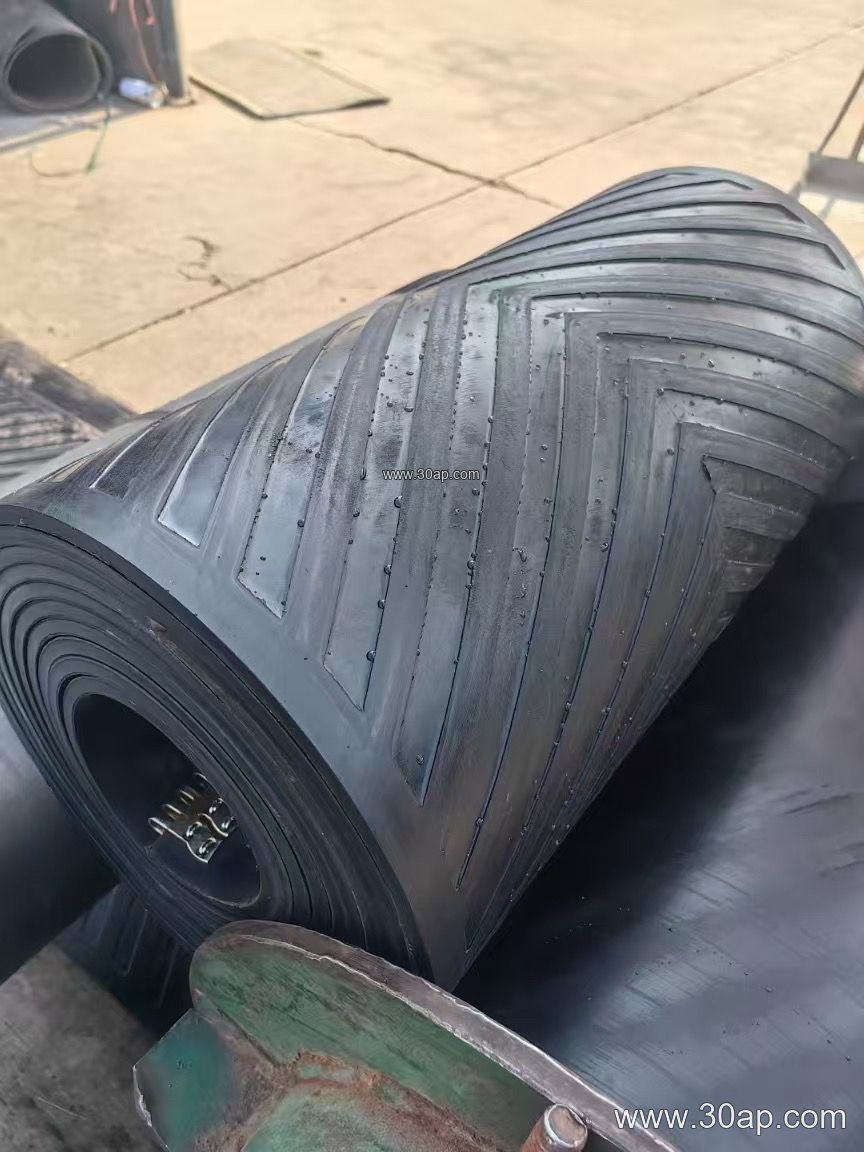
- Cord layer: high-carbon steel cords, usually brass coated for rubber adhesion, arranged in one plane.
- Core rubber: fills the spaces between cords and prevents cord-to-cord chafing.
- Covers: top and bottom rubber grades selected for abrasion, heat, oil, or flame resistance.
- Edges: cut or moulded edges, with edge rubber protecting the outermost cords.
Because there is only one cord layer, splice quality matters far more than on a fabric belt. A stepped splice with matched cord pitch, correct cord tensioning, and proper vulcanizing pressure is what preserves full strength at the joint.
Common Strength Grades and Dimensions
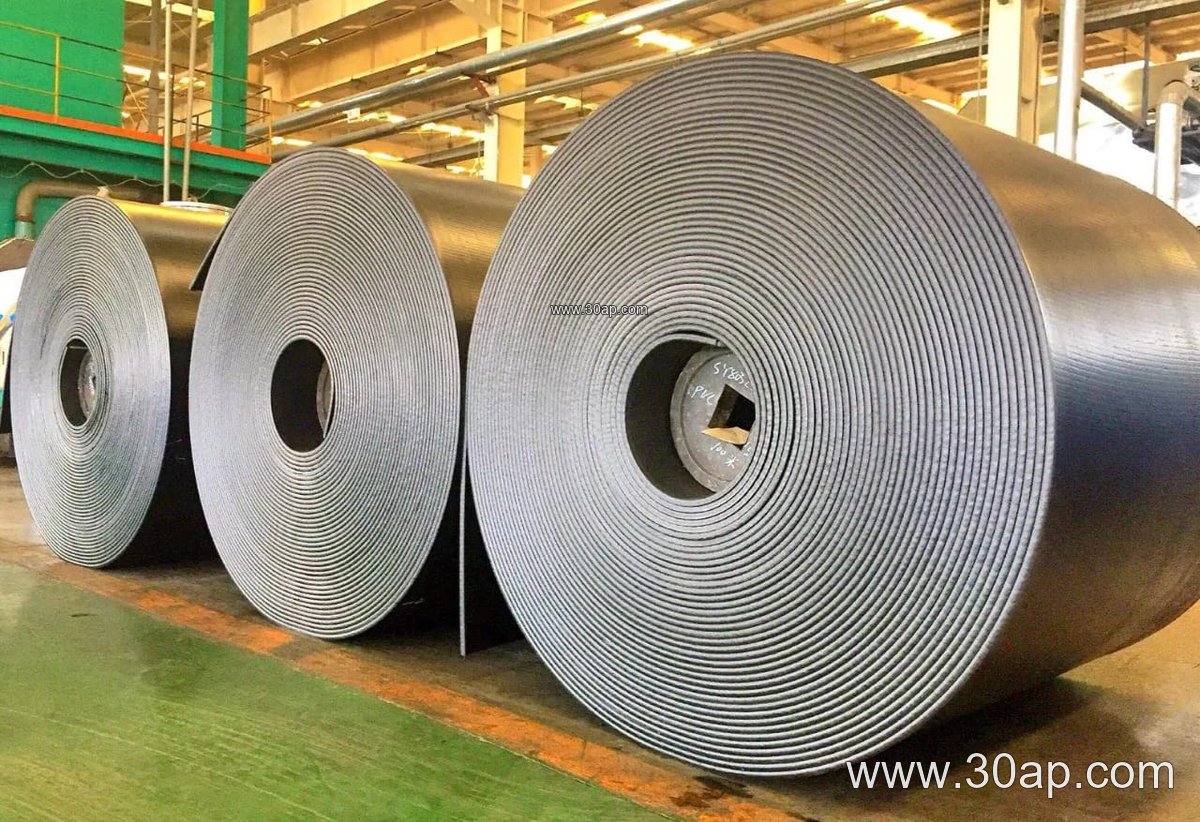
Steel cord belts are usually designated by nominal tensile strength per unit width, for example ST1000, ST1250, ST1600, ST2000, ST2500, or ST3150. These figures are reference grades offered by manufacturers, not universal guarantees; actual construction, cord diameter, pitch, and cover thickness are set by the conveyor design. Belt width is matched to the tonnage, lump size, and troughing arrangement rather than to a single pulley size.
| Property | Typical range (reference) |
|---|---|
| Strength grade | ST1000, ST1250, ST1600, ST2000, ST2500, ST3150 |
| Belt width | B800, B1000, B1200, B1400, B1600, B1800, B2000 |
| Top / bottom cover | 6+2 mm, 8+3 mm, and heavier by design |
| Cord layer | single plane of parallel steel cords |
Widths such as 1200 mm, 1400 mm, or 1800 mm are common on main-line conveyors, but the final figure comes from the belt conveyor calculation, not from a catalogue default.
Where It Fits in the Plant
The product earns its place where a fabric belt would need too many plies or too many transfer points. In an underground coal mine it may run as a flame retardant conveyor belt on the main haulage drift; in an open-pit iron ore or copper ore operation it links the crusher to the stockpile; in a cement plant it moves clinker and limestone over long distances; in a power plant it feeds coal from the yard to the bunkers; in a port it works on ship loading and bulk material handling lines.
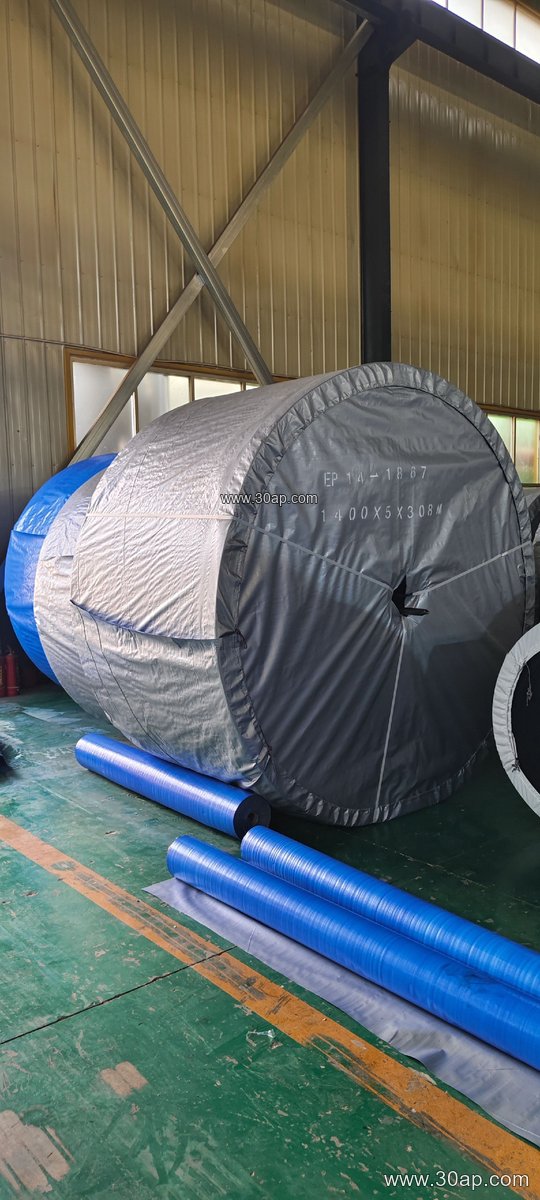
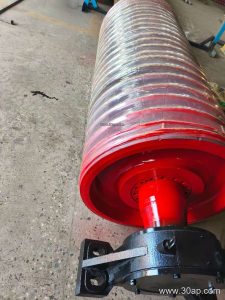
Because the belt is stiff in the longitudinal direction but flexible across the width, it troughs well on three-roll idler sets and tracks steadily on long spans. It is less tolerant of very small pulley diameters and tight transitions than thin fabric belts, so the conveyor pulley arrangement and the transition distance need to be checked at the design stage.
Selection Points for Buyers
Start with the duty, not the price list. Confirm the required tensile grade against the calculated belt tension with a sensible safety factor, then fix cover compound and thickness from the material: sharp rock and sinter need high abrasion resistance, cement and clinker may need heat resistance, coal service usually calls for flame retardant and anti-static properties, and oily or chemical environments call for oil resistant or acid resistant covers.
- Check cord pitch and splice method with the belt supplier before ordering, and ask for a splice drawing.
- Verify minimum pulley diameters and trough transition lengths against the selected belt construction.
- Review impact zones at transfer points; impact resistant covers or impact cradles may be needed under large lump sizes.
- Confirm whether the joint will be vulcanized on site or supplied as an endless conveyor belt from the factory.
- Plan inspection of edges, cords at splices, and cover wear as part of routine maintenance.
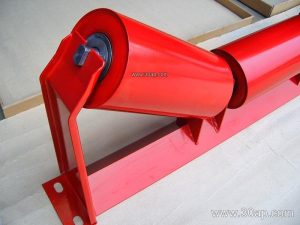
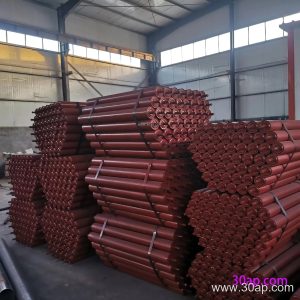
For comparison only, an EP conveyor belt or NN conveyor belt with multiple fabric plies suits shorter, lighter conveyors, while a steel cord belt takes over when length and tonnage climb. A chevron conveyor belt or corrugated sidewall belt solves inclined or confined-space duties that a flat steel cord belt cannot handle. Matching the belt to the duty keeps the whole conveyor, from idler roller to conveyor pulley and conveyor bracket, working as one system. More reference material on belt, idler, and pulley selection can be found at conveyorbeltingventures.com.