What a Four-Roll Idler Bracket Does
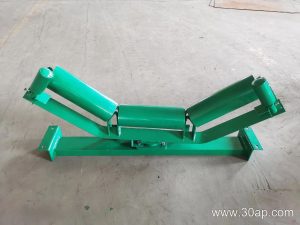
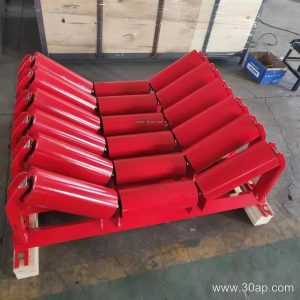
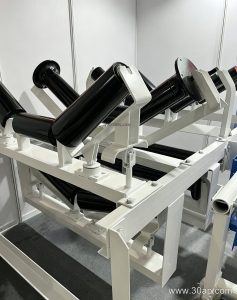
A four-roll idler bracket is a conveyor support frame that carries four idler rollers under the belt, usually arranged as two centre rolls and two outer rolls set at a larger trough angle. This arrangement gives the belt a deeper, more stable trough than a conventional three-roll set, which helps contain bulk material on wide belts and on lines with heavy loading. In a quarry or a crushing and screening circuit, the extra contact points reduce the chance of material spilling over the edges, and the load is shared across more rollers.
The bracket is often called a four-roll troughing bracket or a four-roll idler support frame. It is a support component, not a roller and not a pulley, and it should not be confused with drive, tail or bend pulleys, which transmit or redirect belt tension rather than support the carrying run.
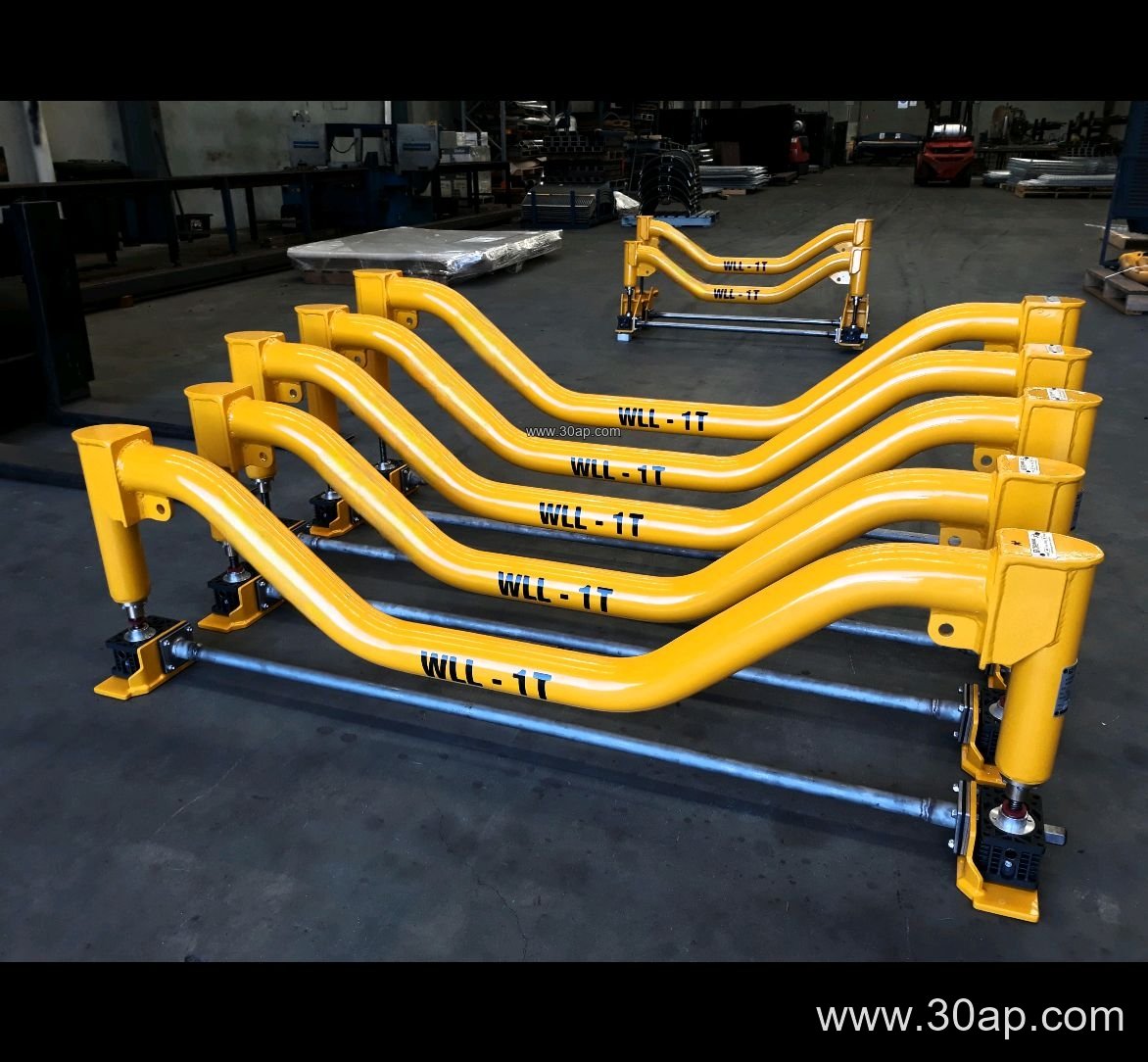
How the Bracket Is Built
Most four-roll idler brackets are fabricated from angle steel, channel steel or folded steel plate, then drilled and welded into a rigid frame. The frame holds the roller shafts at the designed trough angle and keeps spacing consistent along the conveyor line. Common materials are painted carbon steel and galvanized steel; the choice usually follows the environment, since a washdown area in a sand and gravel plant has different demands from a dry cement plant.
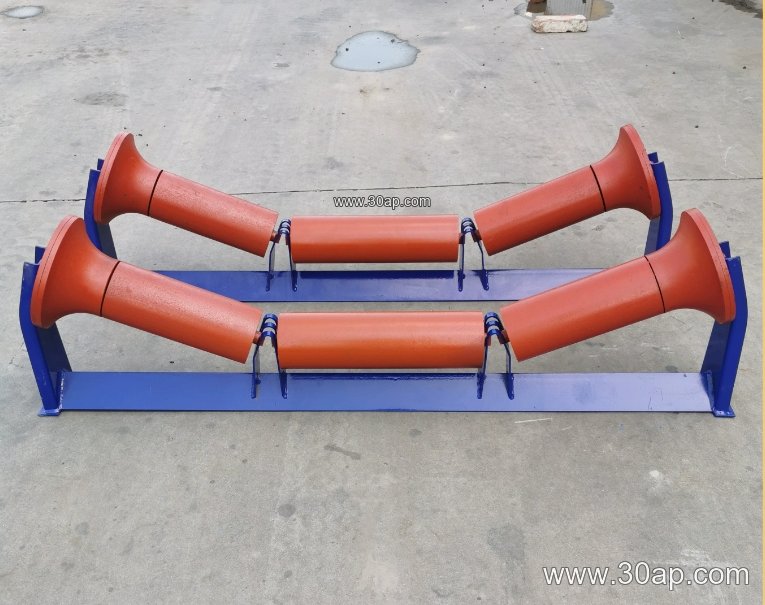
Typical reference dimensions, to be confirmed by design, include:
| Parameter | Common Reference Range |
|---|---|
| Belt width | B500, B650, B800, B1000, B1200, B1400, B1600, B1800, B2000 |
| Trough angle | 20°, 30°, 35°, 45° |
| Roller diameter | Ø89, Ø108, Ø133, Ø159, Ø194 |
| Mounting hole spacing | Determined by belt width and trough angle |
Because the hole spacing and crossbeam length change with belt width and trough angle, a bracket for B800 at 35° with Ø108 rollers is not a drop-in match for a B1200 frame at 45° with Ø133 rollers. Buyers should match the bracket drawing to the actual roller shaft and frame layout.
Where Four-Roll Support Fits
Four-roll brackets are useful where belt width is large or where the material is heavy and abrasive. In an iron ore or copper ore handling line, a deeper trough keeps lump ore centred. In a coal preparation plant or a power plant coal yard, the wider support pattern can improve belt tracking on long carrying runs. They also appear in limestone mines and aggregate plants feeding a crusher, where impact and spillage control matter.
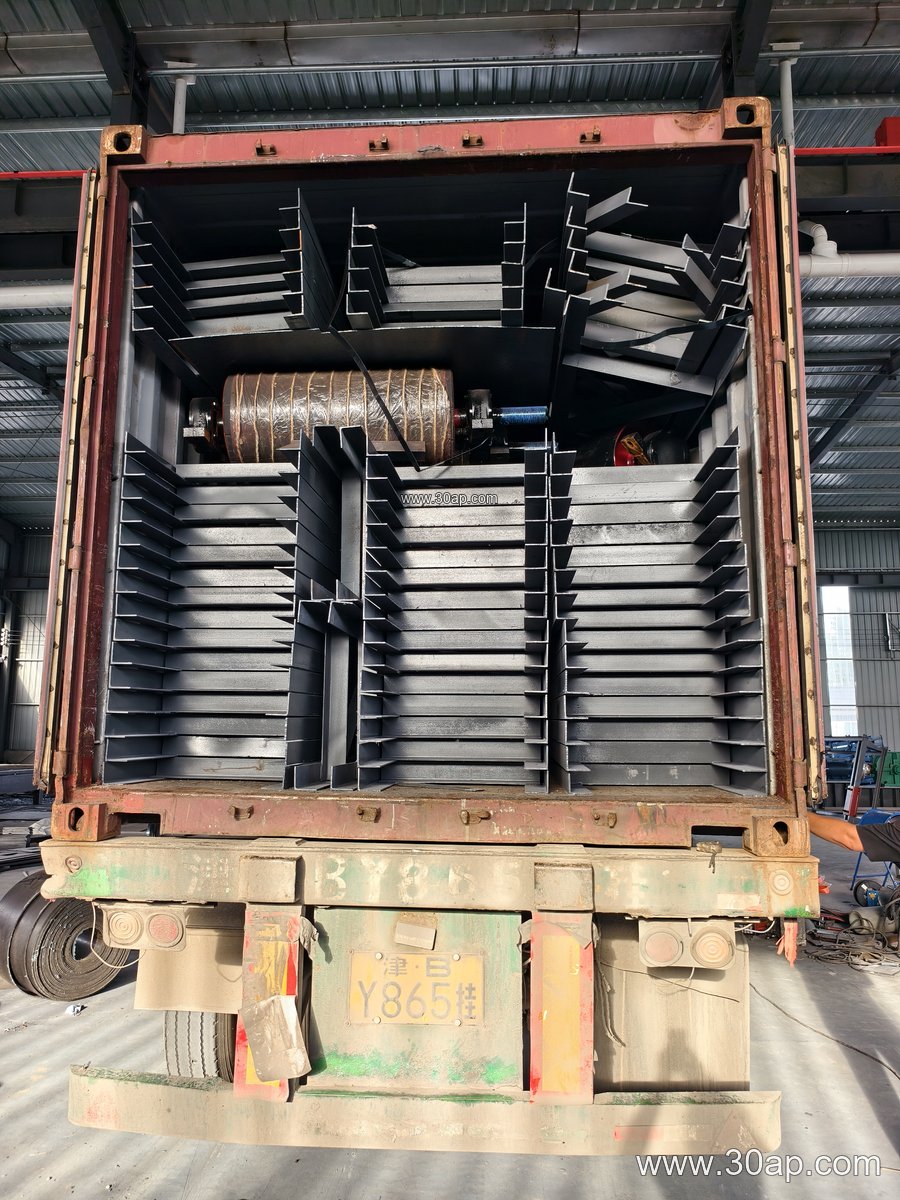
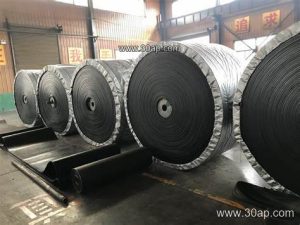
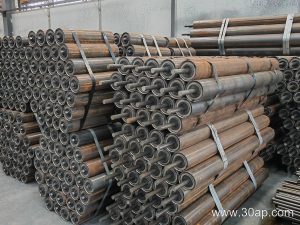
The bracket works together with the conveyor belt, the idler roller set and the surrounding conveyor bracket system. On the same conveyor, the belt might be an abrasion resistant conveyor belt or a flame retardant conveyor belt for underground mining service, while the return side may use a V-return bracket. Those are different support types, and each has its own role.
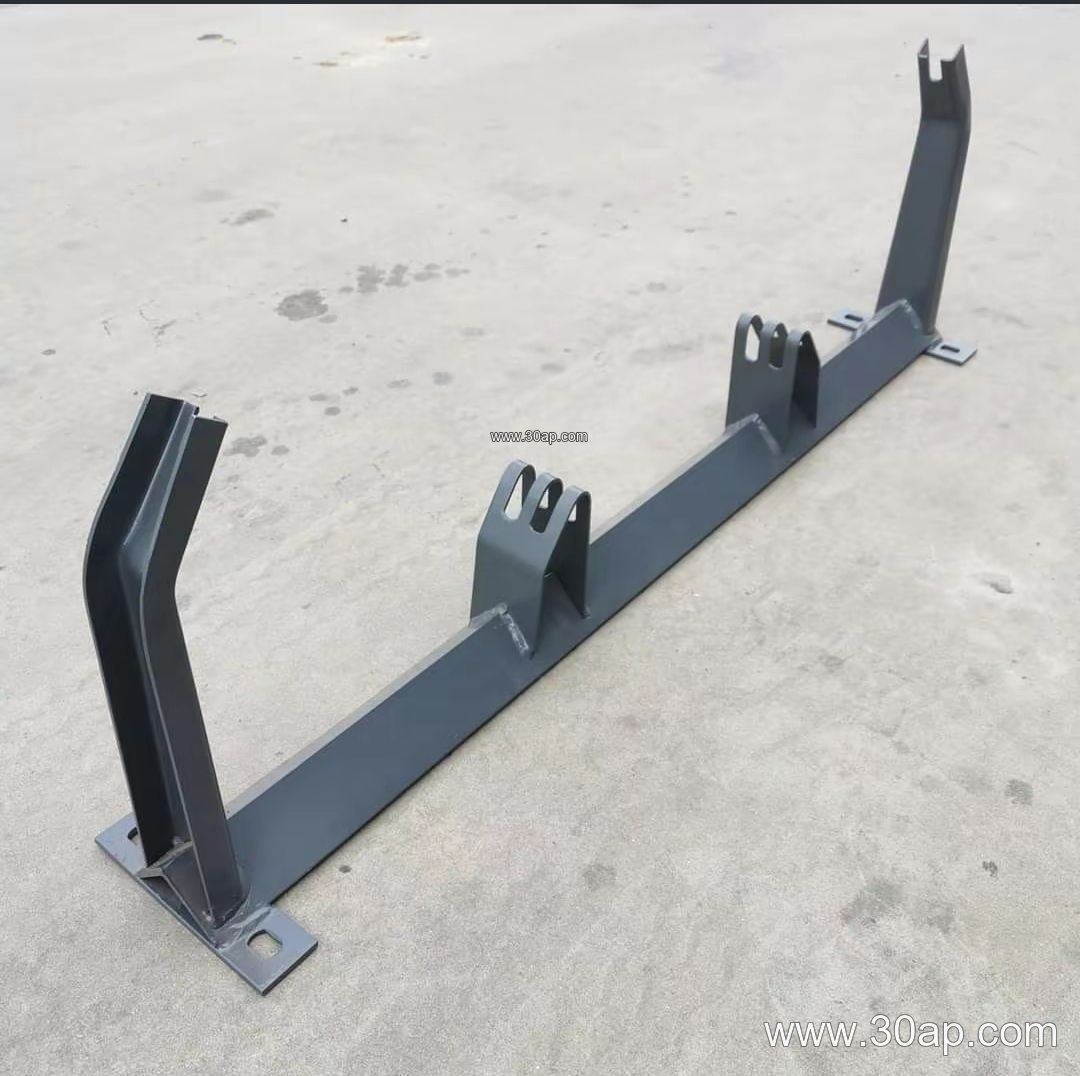
Selection Points for Buyers
- Confirm belt width, trough angle and roller diameter as a set, not as separate items.
- Check the roller shaft diameter and the bracket slot or hole size before ordering.
- Decide whether a fixed or adjustable bracket suits the line; adjustable frames allow the trough angle to be changed within a range.
- Match the surface finish and material to the site, such as a dusty cement plant or a wet sand and gravel wash plant.
- Ask for the frame drawing with hole spacing, since these values follow the design and are not universal.
On a long overland line carrying EP conveyor belt or steel cord conveyor belt, a four-roll bracket is often specified together with a careful roller spacing plan. The extra roller in the set changes the load per roller, so the roller bearing and seal rating should be reviewed at the same time. For a food grade conveyor belt line, stainless or coated frames may be preferred, while a coal mining conveyor belt installation may call for robust painted steel and flame retardant components.
Installation and Maintenance Notes
Install the bracket square to the belt centreline and at the same height as adjacent frames, otherwise the belt will run to one side. After installation, check that all four rollers touch the belt evenly; a single high roller will carry most of the load and wear quickly. During routine inspection, look for loose bolts, bent frame members and worn roller seats. Replacing a worn idler roller is easier when the bracket is undamaged, so avoid using the frame as a step or a lifting point.
For a new project, provide the conveyor specification, belt width, material type and expected throughput so the supplier can propose a suitable four-roll idler bracket rather than a generic frame. A bracket that fits the belt, the rollers and the structure is the simplest way to keep a carrying run steady in mining, cement, power and aggregate operations.