What a Mining Belt Conveyor Idler Does Underground and on the Surface
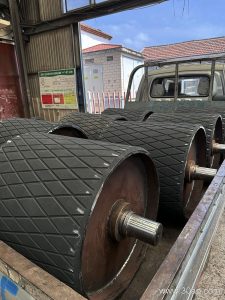
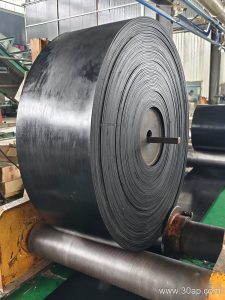
In a quarry, coal preparation plant, or iron ore stockyard, the conveyor belt carries the load while the idler roller carries the belt. A mining belt conveyor idler is the rotating support that controls belt sag, keeps material centered, and reduces friction along the entire run. Unlike a conveyor pulley, which drives or redirects the belt at the ends, the idler works continuously along the carrying and return sides. That distinction matters when specifying parts: drive, tail, and bend pulleys are not interchangeable with idlers, and neither are the different idler subtypes.
At sites handling abrasive rock or wet coal, the idler set often determines how often maintenance crews stop the line. A well-chosen troughing idler on a heavy-duty mining conveyor belt can extend belt life, while a poorly sealed bearing in a dusty crusher circuit can seize within weeks.
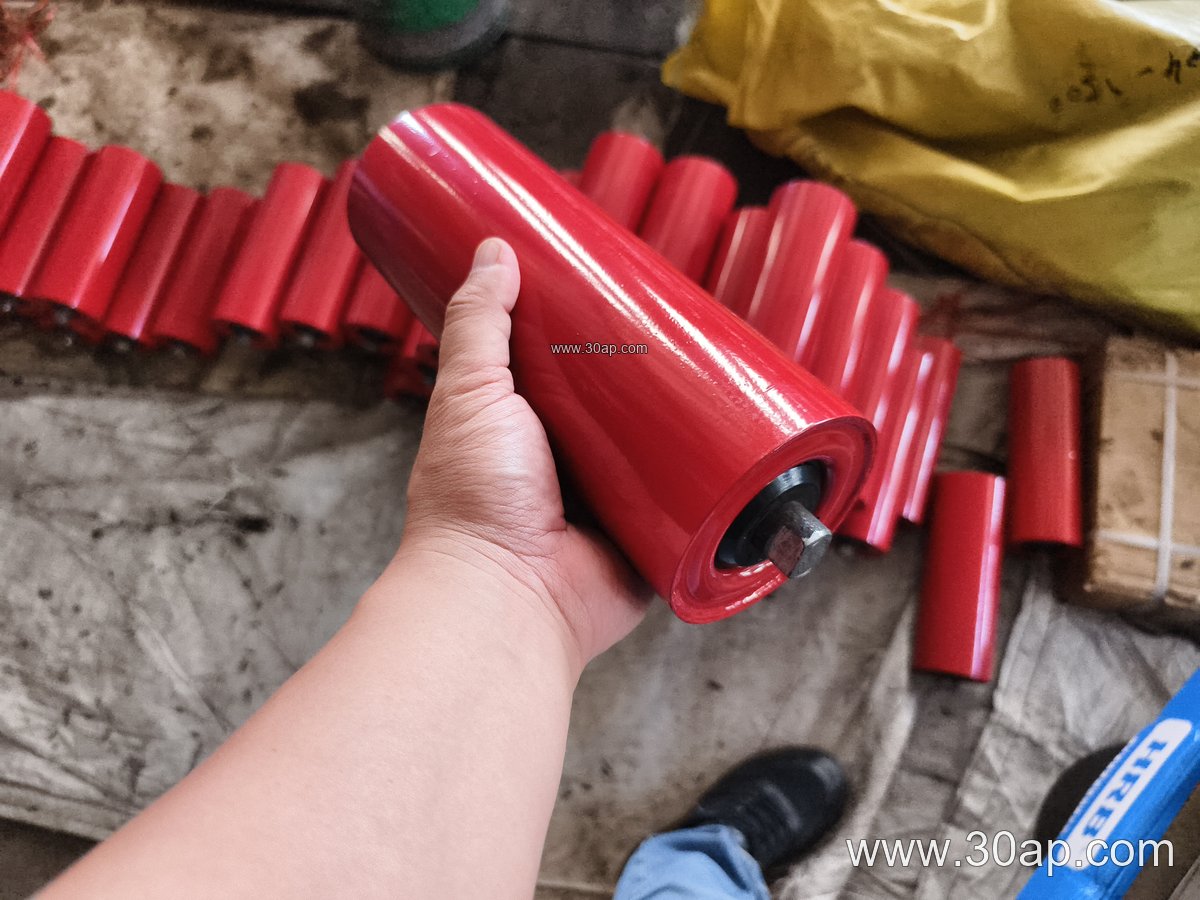
Construction Details That Affect Service Life
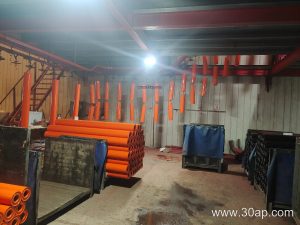
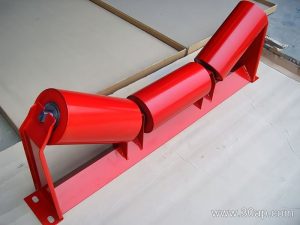
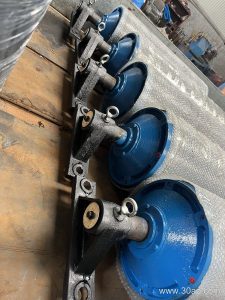
A typical idler roller consists of a steel tube shell, bearing housings, a shaft, and a sealing arrangement. Roller surfaces may be plain steel, nylon, ceramic, or rubber rings. Rubber-disc impact idlers are common below crusher discharge points, while plain steel troughing idlers handle the long carrying stretches.
The bearing size is matched to the roller diameter and load, not chosen by belt width alone. Common bearing numbers include 6204, 6205, 6305, 6306, 6308, and 6310. Sealing quality matters as much as bearing grade in coal mining conveyor belt applications where fine dust and moisture are present.
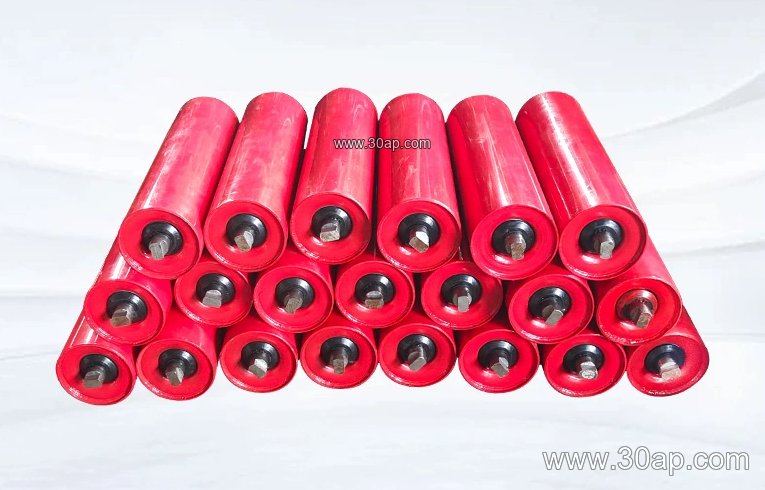
Common Idler Diameters and Belt Width Ranges
The following values are reference examples, not fixed pairings. Final selection depends on load, speed, and support spacing.
| Idler Diameter (mm) | Typical Belt Width Range |
|---|---|
| Ø63, Ø76, Ø89 | B400 to B800 |
| Ø102, Ø108, Ø127, Ø133 | B650 to B1400 |
| Ø159, Ø178, Ø194 | B1200 to B2000 |
| Ø219 | B1800 to B2400 |
Roller length changes with belt width, trough angle, and idler arrangement. For a three-roll troughing set, common roller lengths are roughly 200 mm for B500, 250 mm for B650, 315 mm for B800, 380 mm for B1000, 465 mm for B1200, 530 mm for B1400, 600 mm for B1600, 670 mm for B1800, and 750 mm for B2000. Side rollers and center rollers can differ, so these are examples rather than universal matches.
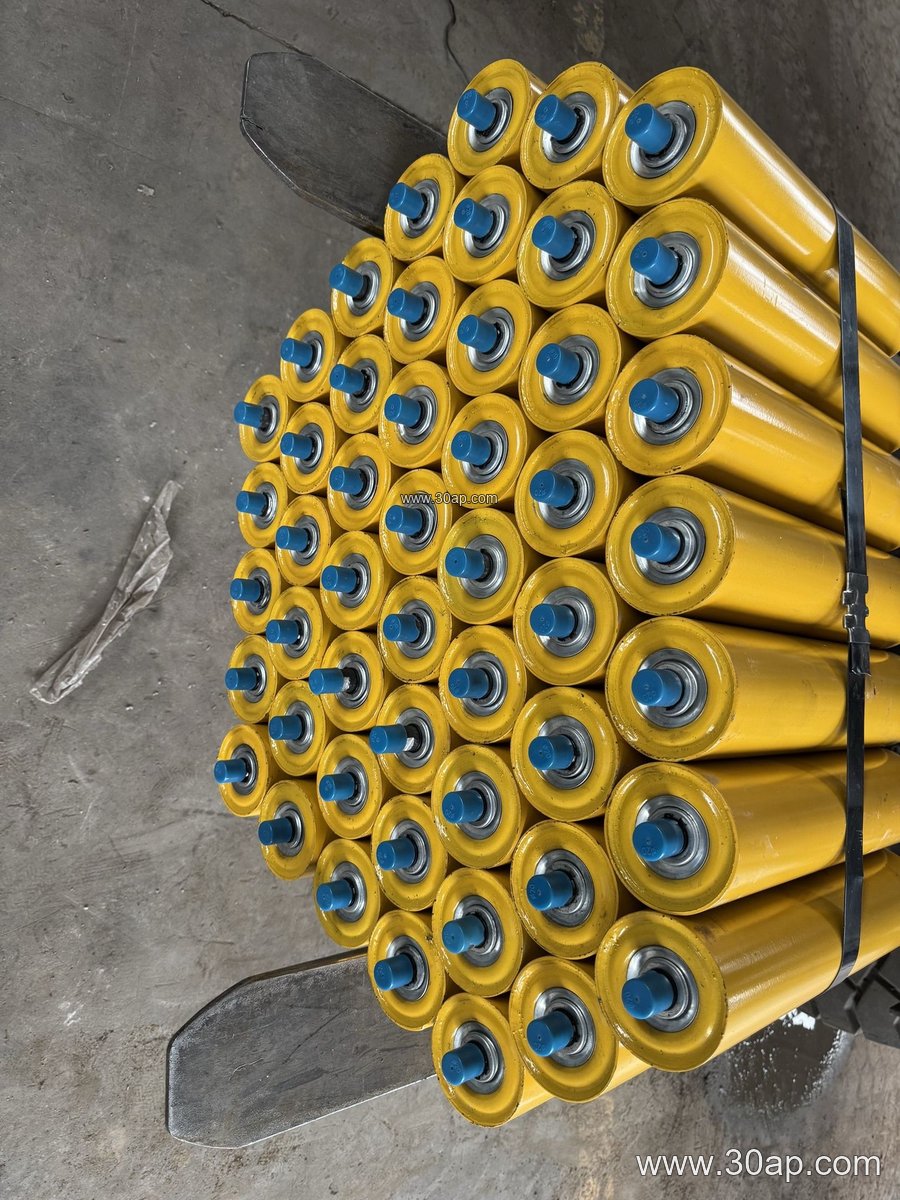
Matching the Idler Type to the Conveyor Section
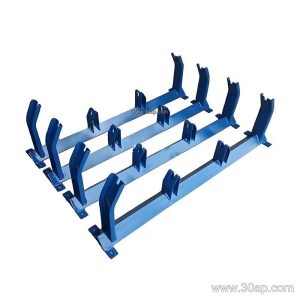
Carrying idlers are usually three-roll troughing sets with a 20, 30, 35, or 45 degree trough angle. A steeper trough angle helps center a bulk material conveyor belt load in a limestone mine, while a 20 degree set may suit wider, flatter belts. Transition idlers ease the belt from flat to troughed profile near the tail.
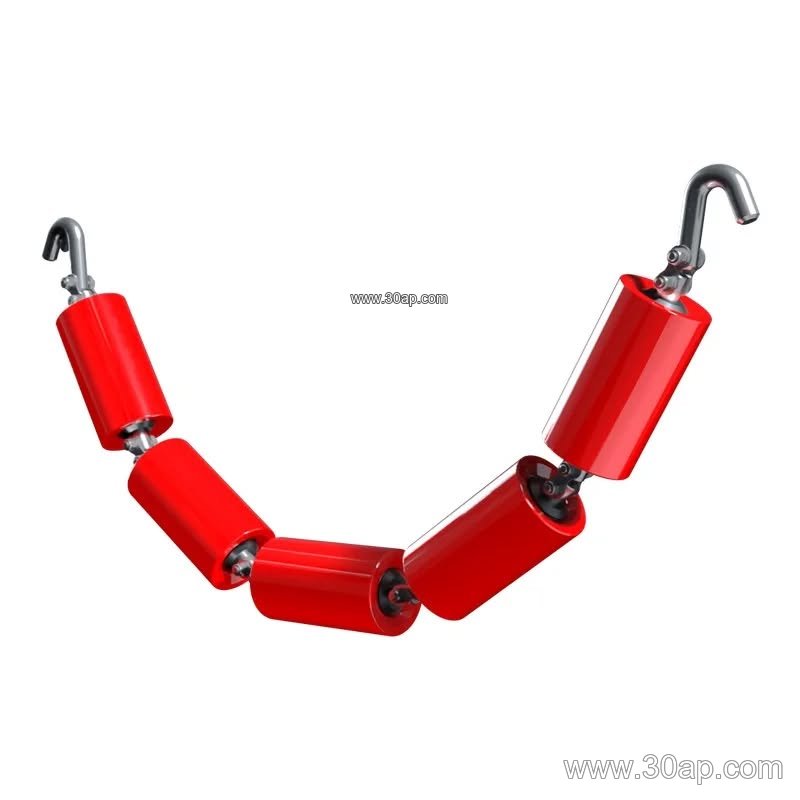
On the return side, flat return idlers or V-type return idlers support the empty belt. Self-aligning idlers, including friction and tapered types, correct minor belt wander. Impact idlers with rubber rings absorb shock at transfer points. Spiral idlers can reduce material buildup on the return strand in sticky applications.
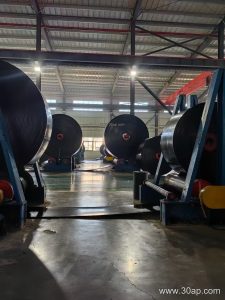
When comparing a carrying idler to a conveyor pulley, remember that the pulley provides traction and direction change, while the idler only supports. For a fabric core conveyor belt such as an EP conveyor belt or NN conveyor belt, idler spacing and roll diameter influence belt sag and splice fatigue. Steel cord conveyor belt systems often use larger diameter idlers and wider spacing because the belt is stiffer and carries higher tension. A flame retardant conveyor belt used in an underground coal mining conveyor belt system may require idlers with anti-static properties and tight seals.
Buyer Checklist for Mining Duty
- Confirm belt width and trough angle before ordering idler frames and rollers.
- Check the bearing number and seal type for the actual dust and moisture level.
- Specify roller surface: steel for general duty, rubber rings for impact, ceramic or nylon where buildup is a concern.
- Verify shaft diameter from the idler manufacturer’s drawing, not from belt width alone.
- Plan spare sets for high-wear zones such as crusher discharge and transfer points.
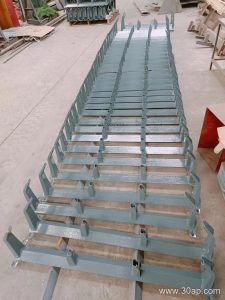
For a quarry conveyor belt or an ore conveyor belt handling sharp rock, abrasion resistant idler shells and well-protected bearings reduce downtime. In a power plant or cement plant, heat resistant conveyor belt sections may need idlers rated for elevated temperatures. A buyer should also confirm that the idler frame fits the existing conveyor bracket and that the roller length matches the belt width and troughing configuration.
Routine inspection of idler rotation, seal condition, and frame alignment is often more valuable than any single specification. A seized idler can wear through a conveyor belt quickly, so maintenance teams in mining and aggregate operations usually keep a small stock of common diameters and bearing sizes on hand.