What a Conveyor Idler Frame Does on the Line
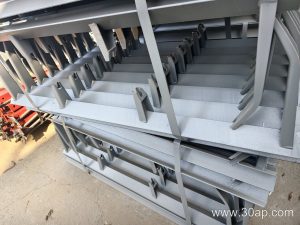
A conveyor idler frame is the structural element that holds idler rollers at the correct position and angle beneath or above the belt. While the rollers do the turning, the frame carries the load path from the belt and material into the conveyor stringer. In a quarry, a cement plant, or a power plant coal yard, a poorly matched frame shows up quickly as belt wander, edge wear, or uneven roller contact. This is why the idler frame is treated as a wear-critical component rather than a simple bracket.
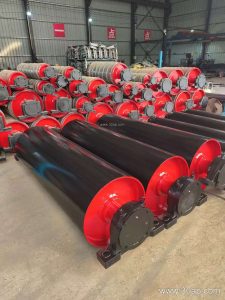
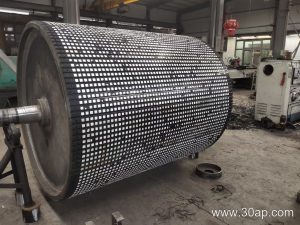
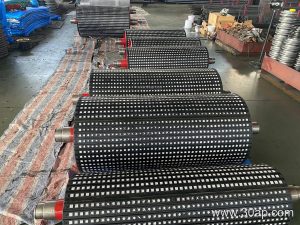
The frame is often called a conveyor idler support or idler station frame. It is not a pulley: drive pulleys, tail pulleys, and bend pulleys serve completely different functions at the ends and curves of the conveyor. The frame belongs to the carrying and return sections along the run.
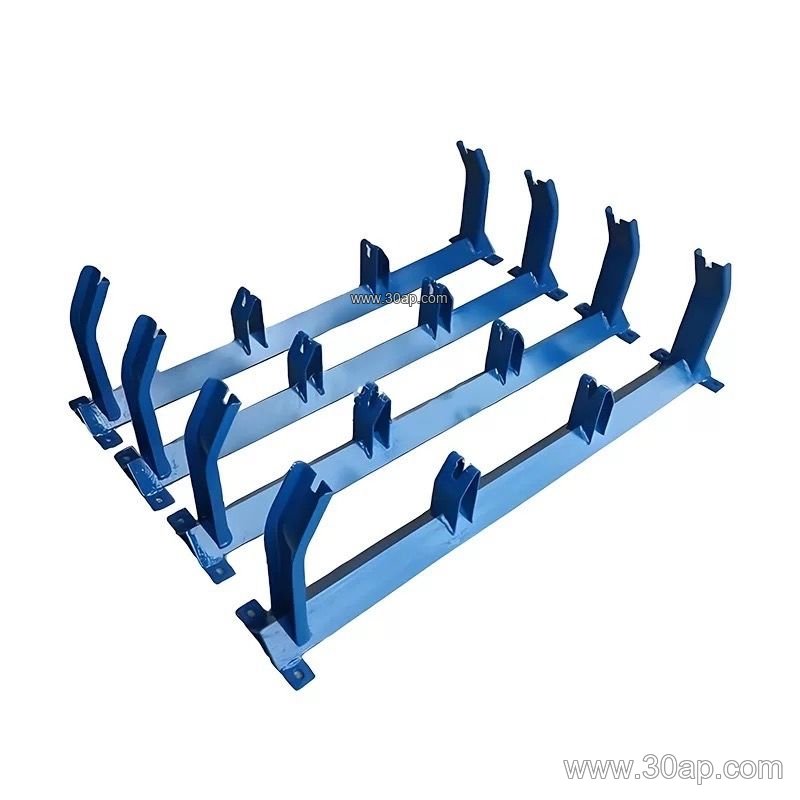
How the Frame Is Built
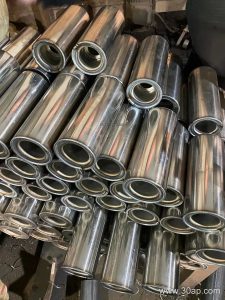
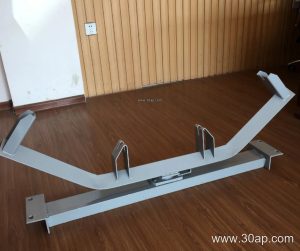
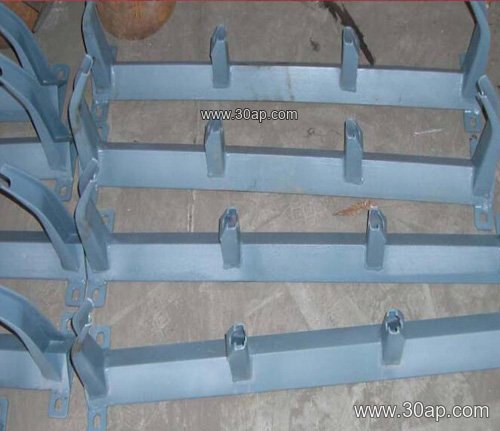
Most frames are fabricated from angle steel, channel steel, or folded steel plate. The crossbeam length and mounting hole spacing usually change with belt width and trough angle, so they are confirmed per design rather than taken as fixed numbers. Typical shop details include welded roller seats, slotted adjustment holes, and painted or galvanized surfaces.
Common frame types include trough frames for the carrying side, transition frames near pulleys, return frames with flat or V-shaped roller arrangements, impact frames under loading points, self-aligning frames, and suspended or adjustable versions. Each type is matched to a position, not swapped freely with another.
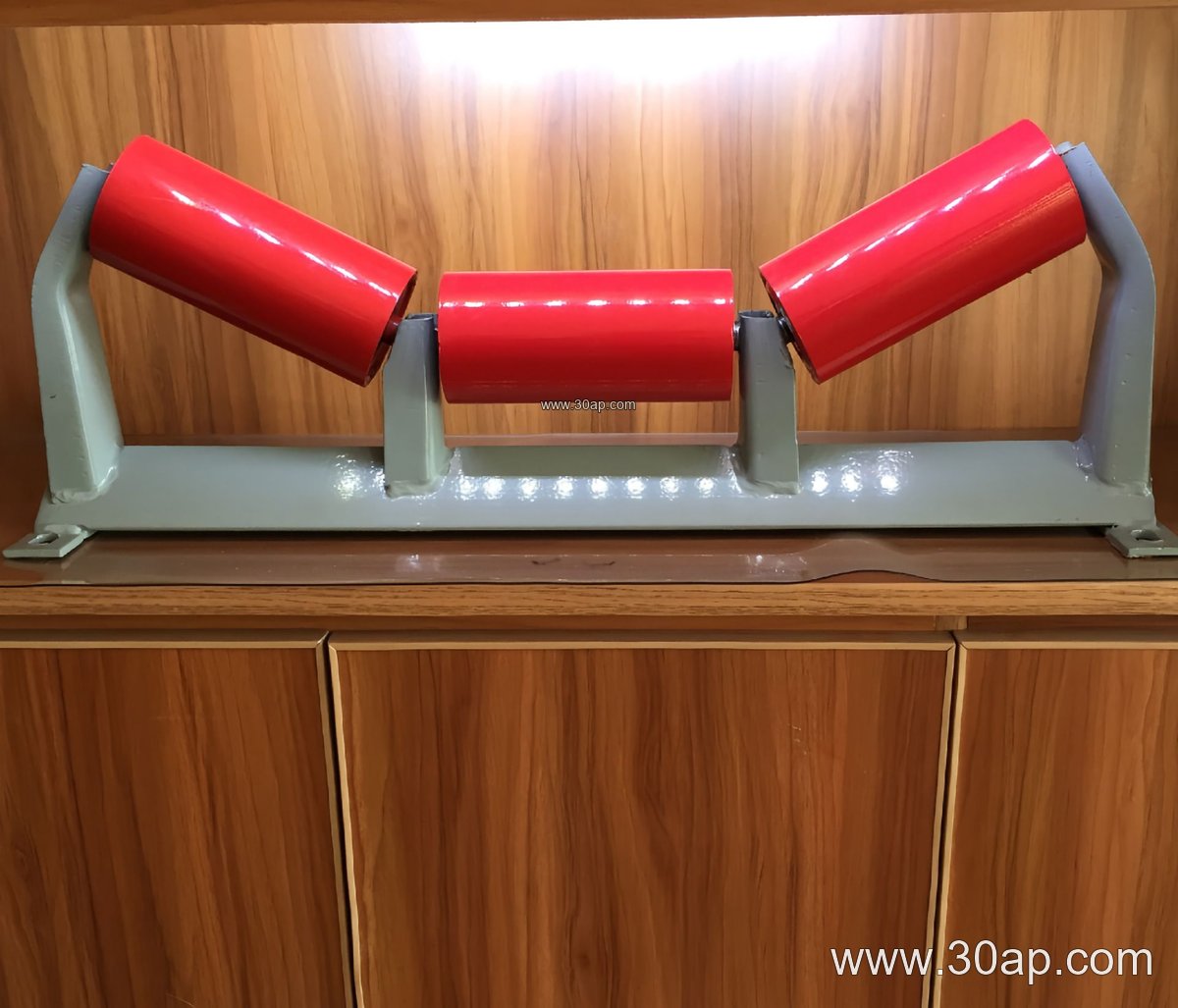
Trough Angle and Roller Diameter Choices
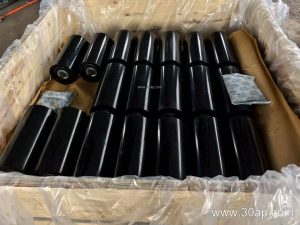
Trough angle affects material containment and belt stress. Common angles are 20, 30, 35, and 45 degrees, and adjustable frames allow changes within that range. Forward-leaning frames are usually set around 1.5 to 2 degrees to help belt tracking. Roller diameters commonly include Ø89, Ø108, Ø133, Ø159, and Ø194, chosen with belt width, load, and speed in mind.
There is no fixed rule that one belt width must use one trough angle or one roller diameter. A B800 line may run 35 degrees with Ø108 rollers in one plant and a different combination elsewhere. Example ranges below are for orientation only.
- B500 to B650: often 20 to 30 degrees, Ø89 rollers
- B800 to B1000: often 30 to 35 degrees, Ø108 or Ø133 rollers
- B1200 to B1400: often 35 to 45 degrees, Ø133 or Ø159 rollers
- B1600 to B2200: trough angle and roller size confirmed by design
Where These Frames Are Used
In a limestone quarry or aggregate crushing line, trough frames support the belt under coarse rock, while impact frames sit below the crusher discharge. In a coal washing plant or power plant coal handling system, flame retardant and anti-static belt grades are common, and the frame must align with the belt path through transfer towers. Similar frames appear in cement plants, steel plants, port loading systems, and tunnel muck removal lines.
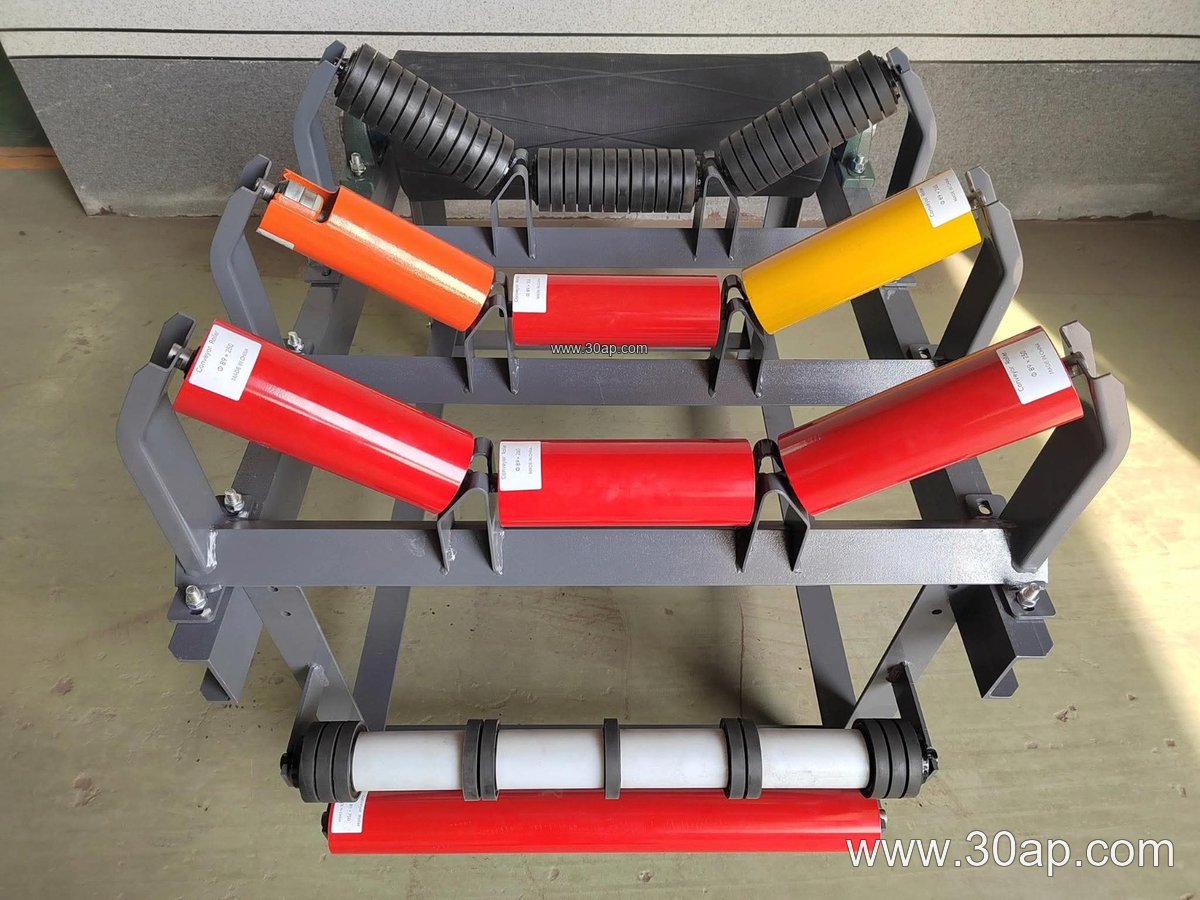
The frame works together with the conveyor belt, idler roller, conveyor pulley, and conveyor bracket. Belt choice is separate but related: an EP conveyor belt or steel cord conveyor belt needs a frame layout that keeps the belt supported without pinching.
What Buyers Should Check Before Ordering
Buyers should confirm belt width, trough angle, roller diameter, mounting hole spacing, crossbeam length, and frame material. It also helps to state the application, since a heavy-duty mining conveyor belt and a food grade conveyor belt may need different frame finishes and cleanliness levels. Ask for drawings showing roller seat position and adjustment range.
Installation quality matters as much as the frame itself. Frames should be set square to the belt centerline, at consistent height, and with fasteners tightened to the supplier’s recommendation. During maintenance, check for bent beams, elongated holes, and worn roller seats. Replacing a damaged frame early prevents belt edge damage and reduces downtime.
For a complete conveyor layout, the idler frame, rollers, and pulleys should be reviewed as one system. A frame that fits the belt width but not the load profile will still cause problems.