What a Coal Conveyor Pulley Does
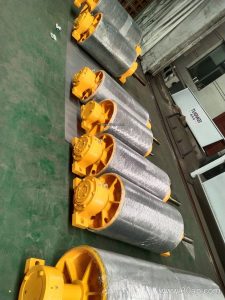
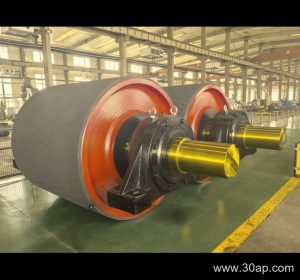
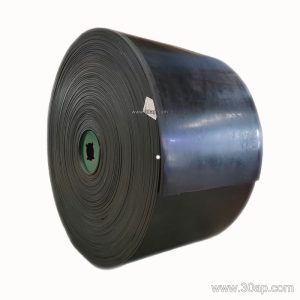
A coal conveyor pulley is the rotating drum that transmits motion to the belt and controls its path in a coal handling system. Unlike a simple idler roller that only supports the belt, this component carries the full tension load and must be built for heavy-duty service. In coal mining, power plant coal yards, and port bulk terminals, the pulley works with a flame retardant conveyor belt to move material safely and continuously. The performance of the pulley directly affects belt tracking, energy consumption, and maintenance intervals.
Core Construction
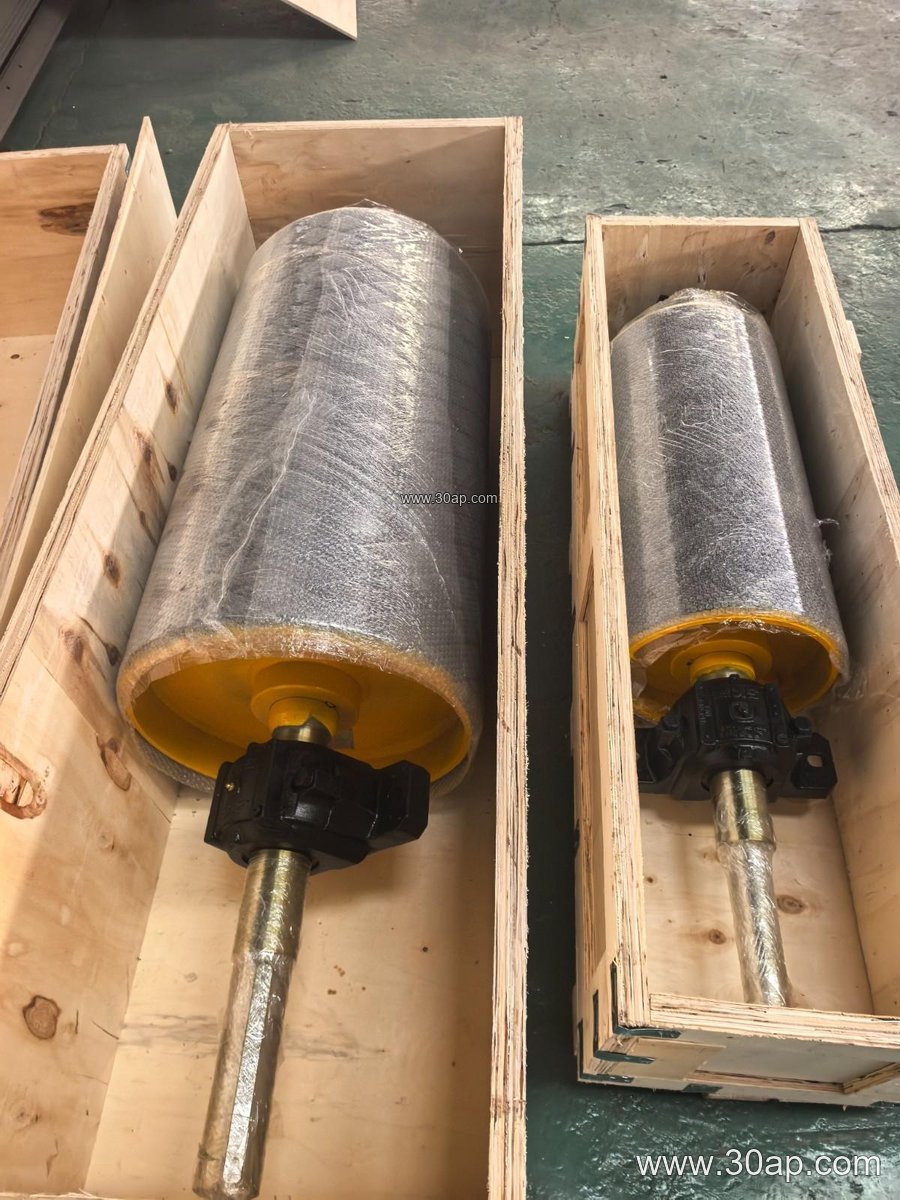
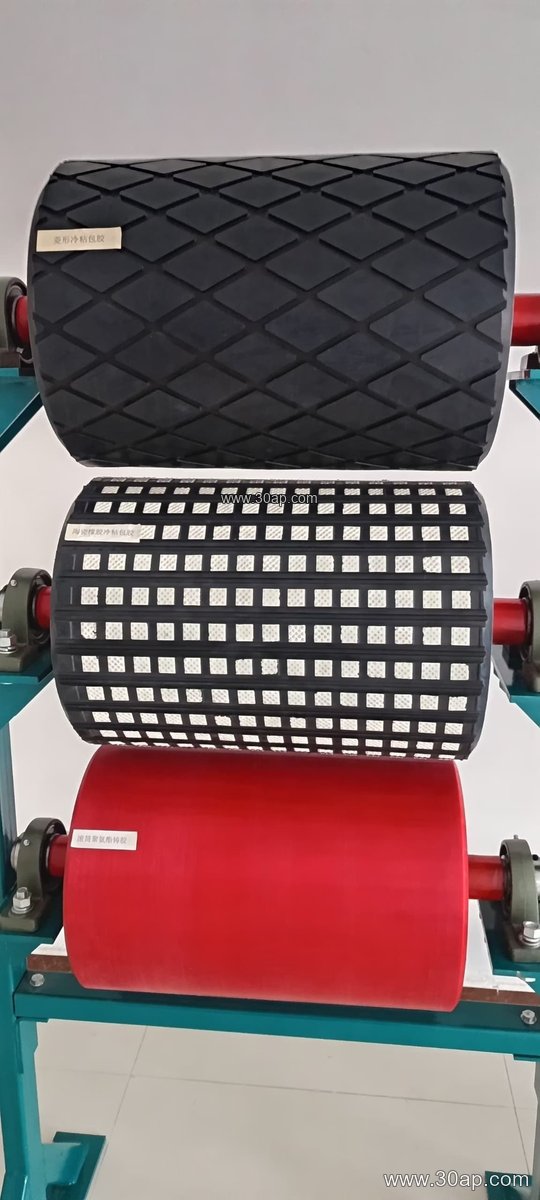
Most pulleys are fabricated from steel tube or rolled plate, with welded end discs and a through shaft. The shaft is sized by torque and radial load, not by belt width alone. Common shaft diameters include Ø80, Ø100, Ø120, and Ø160 mm, but the final value is determined by the conveyor designer. Bearing housings are bolted to the end discs or to a separate hub, and the whole assembly is mounted in a conveyor bracket or tension take-up frame. Surface treatment ranges from plain steel to rubber lagging, ceramic lagging, or diamond grooving, depending on the grip needed.
Where It Fits in Coal Handling
Coal conveyor pulleys appear at several positions along the line. The drive pulley, often the head pulley, is connected to the gearbox and motor and delivers the pulling force. Tail pulleys return the belt at the loading end, while bend pulleys redirect the belt around take-up systems or transfer points. For a coal mining conveyor belt, a common arrangement is a B1200 × Ø1000 drive pulley with hot vulcanized rubber lagging, paired with a B1200 × Ø800 tail pulley. These are reference combinations, not fixed rules. In a coal preparation plant or a power plant coal yard, the same drum may be specified with flame retardant lagging to reduce static and fire risk.
Lagging and Surface Options
The surface form influences friction and wear life. Rubber lagging in 8, 10, 12, or 15 mm thickness is common for general coal service. Diamond or herringbone grooving helps shed water and fine coal dust, while ceramic lagging is chosen when slip is a concern on high-tension drives. Plain finish may be acceptable on bend and snub pulleys where traction is not critical. Buyers should match lagging to the belt type: an abrasion resistant conveyor belt may need a harder lagging compound, and a fire resistant conveyor belt should be paired with lagging that meets the same fire performance intent. Note that drive, tail, and bend pulleys are not interchangeable names; each has a different duty and should be specified separately.
Sizes and Selection Notes
Pulley diameter is usually selected to give adequate belt wrap and to limit bending stress in the belt. Face width is normally slightly wider than the belt. The table below lists common reference values, not mandatory combinations.
| Belt width | Typical pulley face width | Diameter range (reference) |
|---|---|---|
| B650 | about 750 mm | Ø315 to Ø500 |
| B800 | about 950 mm | Ø400 to Ø630 |
| B1000 | about 1150 mm | Ø500 to Ø800 |
| B1200 | about 1400 mm | Ø630 to Ø1000 |
| B1400 | about 1600 mm | Ø800 to Ø1250 |
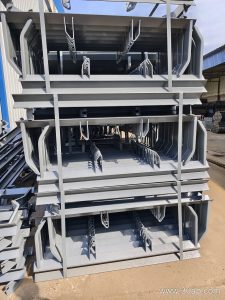
When reviewing a quotation, ask for the shaft diameter, bearing type, lagging thickness, and balancing grade. A pulley for a 1200mm wide conveyor belt is not automatically fitted with a Ø1000 drum; the diameter depends on belt tension, speed, and the space available. For heavy-duty mining conveyor belt systems, larger diameters reduce belt flex fatigue, but they also require more space and stronger brackets. Always confirm the pulley drawing against the conveyor profile before installation.
Maintenance and Buyer Checklist
- Check lagging wear at every belt splice inspection; worn grooves reduce grip and can cause slip.
- Verify bearing lubrication intervals and monitor for temperature rise.
- Confirm that the pulley is balanced for the intended belt speed.
- Match the pulley surface to the coal characteristic: wet, dusty, or high-impact loading.
- Review the shaft and hub connection for the expected torque.
In coal mining and bulk material handling, a well-chosen pulley extends belt life and keeps the system running. For more details on related components such as conveyor belt, idler roller, and conveyor bracket selection, consult your conveyor designer. A properly specified coal conveyor pulley is a long-term investment in reliable coal transport.