What an Assembled Pulley Actually Is
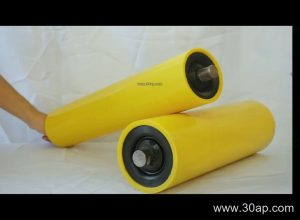
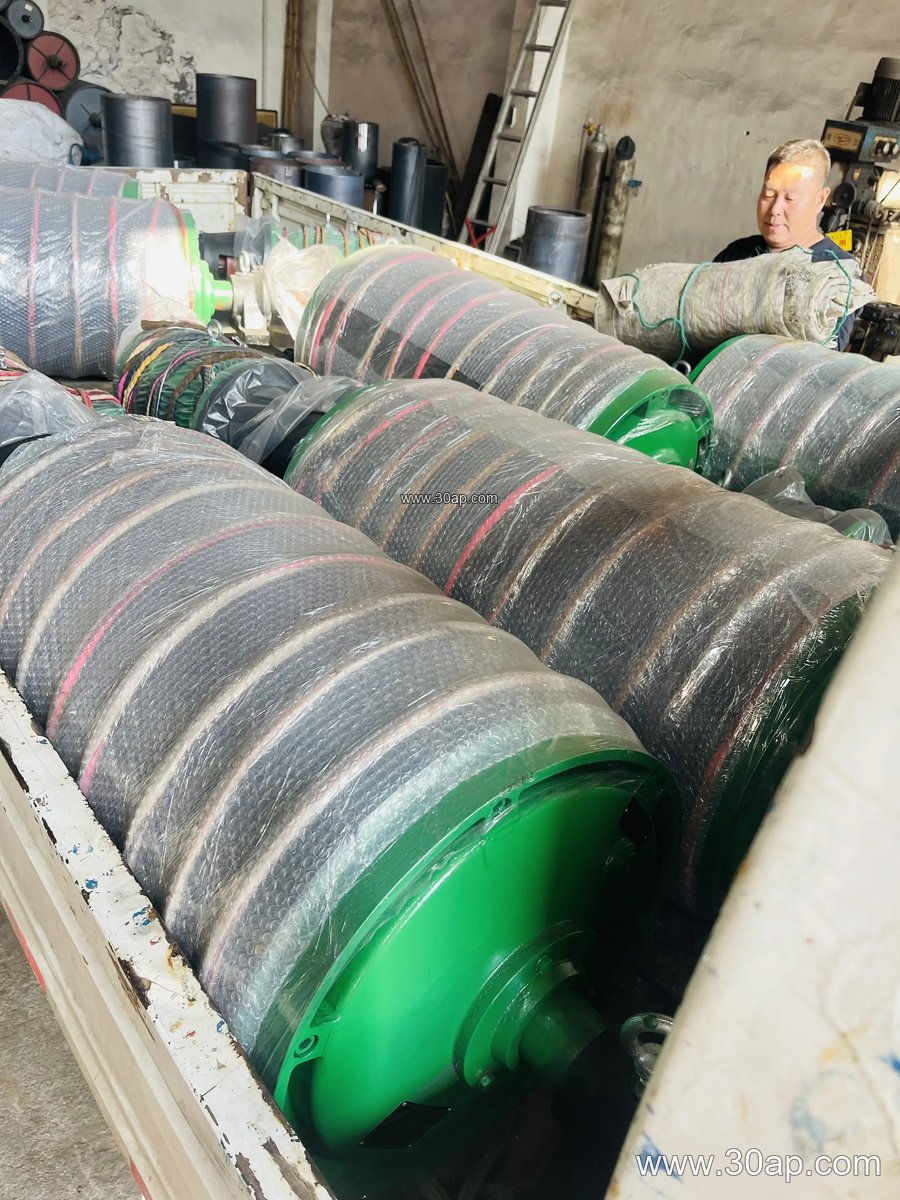
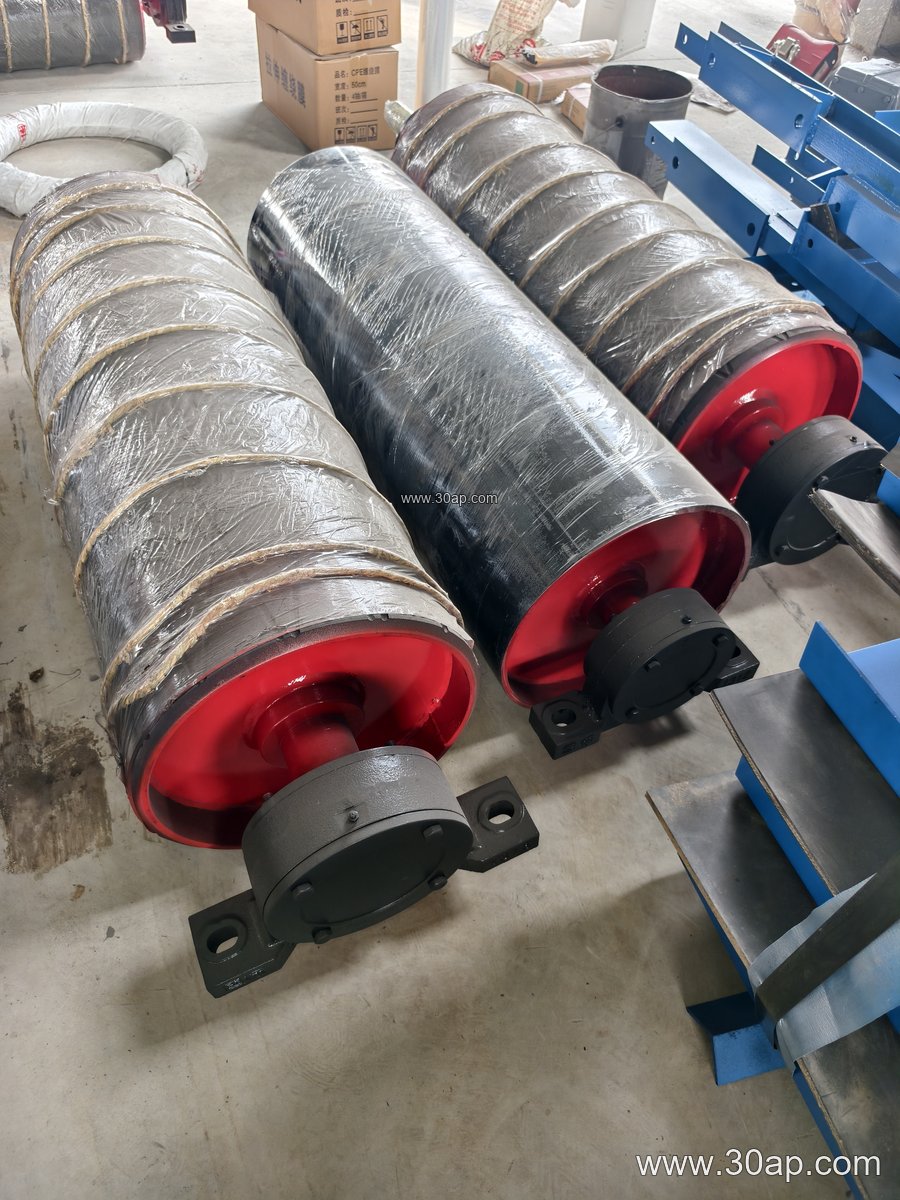
An assembled pulley is a conveyor pulley supplied as a complete, ready-to-mount unit rather than as loose components. The shell, shaft, end discs, hubs, bearing housings, and locking elements are matched and assembled by the manufacturer, so the maintenance team receives one item to lift into the conveyor bracket and align. In a quarry, a coal washing plant, or a power station coal yard, that difference matters when a head station is stripped down during a short shutdown window.
The accurate equivalent name is a pulley assembly or conveyor pulley assembly. Both describe the same finished product. It is not the same thing as a drive pulley, tail pulley, or bend pulley; those are positions in the conveyor layout, and an assembled unit can serve any of them depending on how the station is designed.
How the Assembly Is Built
A typical unit combines a rolled steel shell, a through shaft or stub shafts, dished or flat end discs, and self-aligning bearing housings bolted to the shell ends. The surface may be plain, or it may carry lagging applied as cast rubber, cold-bonded rubber, hot-vulcanized rubber, diamond grooving, herringbone grooving, ceramic tiles, or plain sheet rubber. Lagging thickness commonly falls in the 8 to 20 mm range.
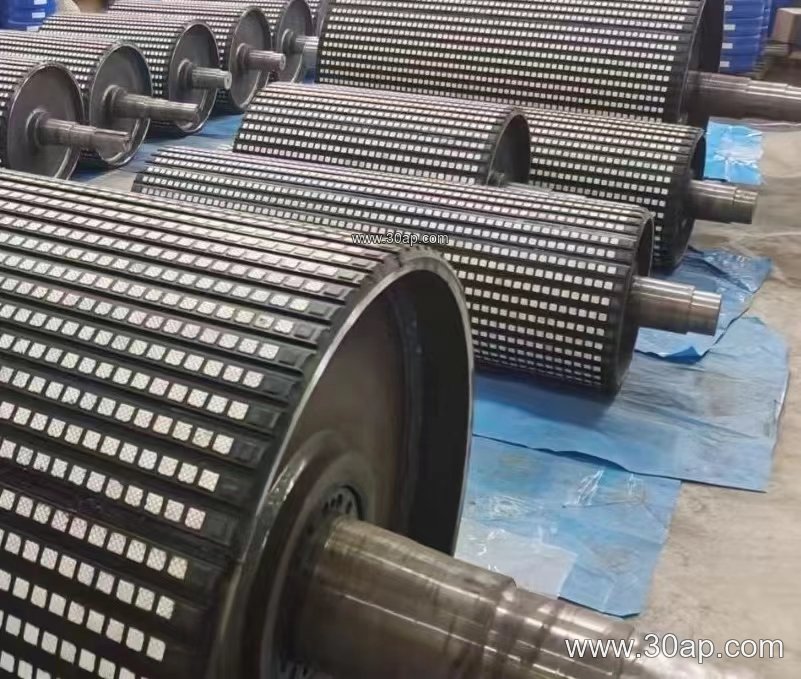
- Shell and end disc welded and machined as one body
- Shaft keyed or shrink-fitted, with bearing blocks pre-fitted
- Lagging bonded, vulcanized, or bolted on before dispatch
- Balanced and rotation-checked before packing
Because the unit arrives pre-assembled, shaft alignment and bearing preload are set at the works. The site team still has to check foundation flatness, bolt torque, and belt tracking after installation.
Where Assembled Pulleys Are Used
These units appear at head discharge points, tail take-up stations, snub positions, and bend locations. In an iron ore concentrator they may form the discharge pulley under a crusher screen; in a cement plant clinker line they handle hot, abrasive material behind a heat resistant conveyor belt; in a port bulk terminal they sit under wide belts carrying ore or grain. A gold mining conveyor, an aggregate conveyor, and a limestone stockyard line all rely on the same principle: a matched pulley and belt path.
Position changes the duty. A head pulley transmits the most torque and usually needs the heaviest lagging. A tail pulley sees material impact and fines ingress. A bend or snub pulley runs with a small wrap angle and often uses a plain or lightly lagged face. Matching the unit to the position is more important than picking the largest available size.
Sizing Notes for Buyers
Face width is normally wider than the belt. Common references include B650 with roughly 750 mm face, B800 with about 950 mm, B1000 with about 1150 mm, B1200 with about 1400 mm, and B1400 with about 1600 mm. Diameter is chosen from belt tension, wrap angle, and space, not from belt width alone. A B800 x Ø500 unit and a B1200 x Ø1000 unit are both realistic, and one belt width can accept several diameters.
| Parameter | Common Reference Range |
|---|---|
| Belt width | B400 to B2400 |
| Pulley diameter | Ø200 to Ø1800 |
| Shaft diameter | Ø50 to Ø200, by torque and load |
| Lagging thickness | 8, 10, 12, 15, 20 mm |
| Surface form | Plain, rubber lagged, diamond, herringbone, ceramic |
Shaft diameter should be confirmed from drive torque and bearing load. It is not fixed by belt width. Ask the supplier for the calculation basis rather than accepting a default.
Selection and Maintenance Checks
Before ordering, confirm the belt width, the required face width, the pulley position, the lagging type, and the shaft and bearing arrangement. Check that the conveyor bracket bolt pattern matches the bearing housing. On abrasive duty such as a crusher conveyor or a rock conveyor, ceramic or thick rubber lagging may extend service life; on a food grade or oil resistant belt line, the lagging compound must suit the environment.
During operation, watch for shell wear at the belt edges, lagging separation, bearing temperature rise, and belt mistracking. A pre-assembled pulley simplifies replacement, but it does not remove the need to inspect the belt, idler roller, and conveyor bracket at the same time. For belt selection alongside the pulley, review options such as EP conveyor belt, steel cord conveyor belt, flame retardant conveyor belt, and abrasion resistant conveyor belt with the same duty in mind.