What the Drive Pulley Does on a Conveyor
The conveyor drive pulley is the powered drum at the head of a belt conveyor. It grips the inside of the belt and pulls the loaded strand toward the discharge point, while the return strand travels back underneath. In a quarry, a coal washing plant, or a power station coal yard, this single component carries the entire pull of the system, so its grip, strength, and alignment matter more than almost anything else on the frame.
It is not the same as the tail pulley, which turns freely at the loading end, or a bend pulley, which only redirects the belt. Those parts guide; the drive drum transmits torque. Mixing them up in a purchase enquiry usually leads to the wrong specification.
How It Is Built
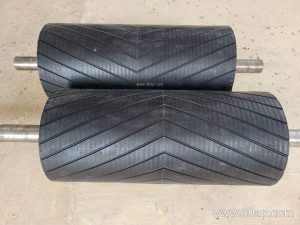
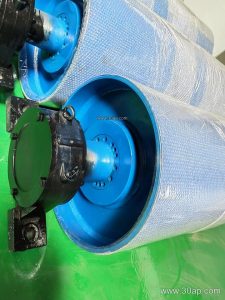
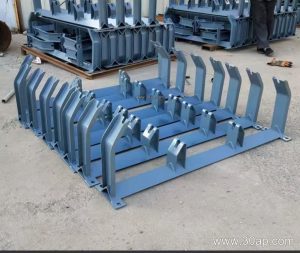
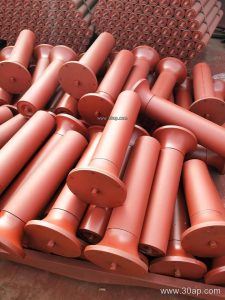
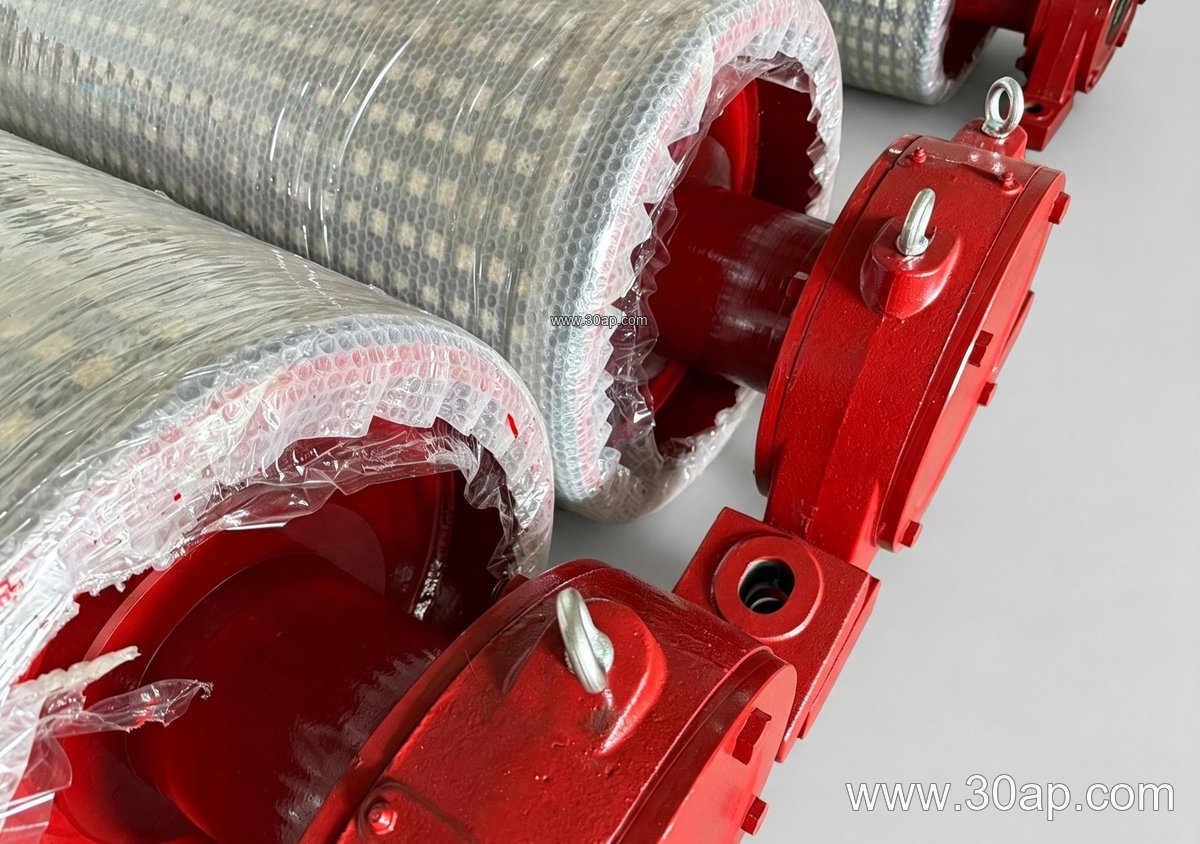
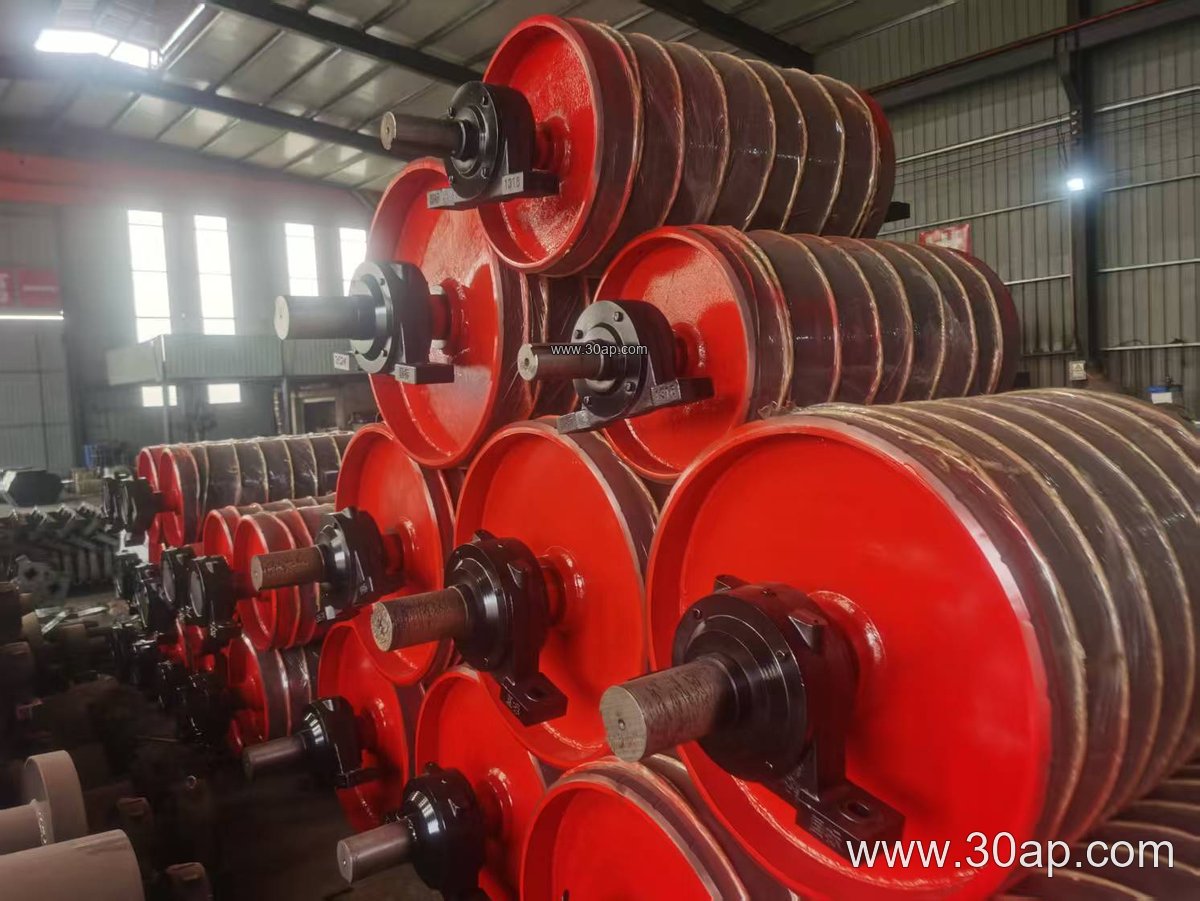
Most units start as a welded steel shell with dished or flat end plates, machined hubs, and a through shaft. The shell surface is often left plain, or covered with rubber lagging applied by hot vulcanizing, cold bonding, or cast-in place. Diamond and herringbone patterns improve friction and shed water; ceramic lagging suits very abrasive duty. Shaft ends are keyed for the gearbox coupling or motorized pulley arrangement, and bearing housings sit in conveyor brackets bolted to the main frame.
Balance and concentricity are checked after machining, because any runout shows up as belt tracking drift at speed. The belt itself, whether a heavy-duty mining conveyor belt or a lighter EP conveyor belt, will wear quickly against a poorly finished drum face.
Common Sizes and Surface Options
Dimensions follow the belt width and the duty. Shell width is normally a little wider than the belt, and diameter grows with tension and wrap angle. The values below are typical reference points, not fixed rules; final geometry is set by the conveyor designer.
- Belt widths: B400, B500, B650, B800, B1000, B1200, B1400, B1600, B1800
- Diameters: Ø200, Ø250, Ø315, Ø400, Ø500, Ø630, Ø800, Ø1000, Ø1250
- Lagging thickness: 8, 10, 12, 15, 20 mm
- Shaft diameters: Ø50 to Ø200 depending on torque and load
A practical pairing might be B800 with Ø500, or B1200 with Ø1000, but the same belt width can work with more than one drum diameter. Shaft size is calculated from drive torque and bearing loads, never copied from the belt width alone.
Reference Combinations
Typical shell widths run about 100 to 200 mm wider than the belt, for example roughly 950 mm for B800 and about 1400 mm for B1200. Lagging is usually 10 to 15 mm on medium duty and up to 20 mm on high-tension drives.
Where It Fits in the Plant
In a limestone quarry or an aggregate crushing line, the drive drum sits at the discharge end of the main haulage belt, often handling wet, gritty stone. In a coal preparation plant or underground coal mining conveyor, flame retardant and anti-static properties of the belt are critical, and the drum must be earthed and free of build-up. Cement plants use large diameters on clinker belts where heat and abrasion combine.
Whatever the site, matching the drum to the belt type helps: a steel cord conveyor belt needs a larger diameter than a fabric core belt at the same tension, while a chevron or corrugated sidewall conveyor belt may require a relieved or specially profiled face so the cleats clear the drum.
What Buyers Should Check
Before ordering, confirm the belt width, the required diameter, the lagging pattern and thickness, the shaft diameter and keyway, and the bearing type. Ask how the lagging is bonded, since hot-vulcanized rubber usually outlasts cold-bonded covers in wet conditions. Confirm the drum is dynamically balanced and that the face is machined true.
On site, inspect lagging wear, check bolt torque on the bearing housings and conveyor brackets, and watch for belt slip or misalignment. Re-lagging a worn drive drum is far cheaper than replacing a damaged conveyor belt, especially on abrasion resistant or heat resistant belts that represent a significant investment.