What a Fixed Conveyor Bracket Does
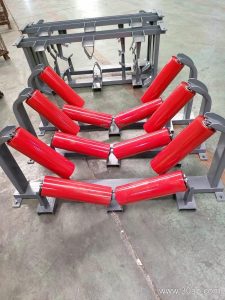
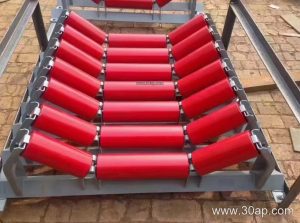
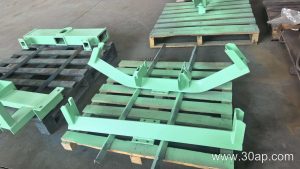
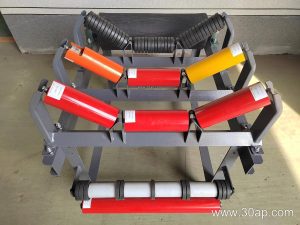
A fixed conveyor bracket is the stationary support that holds idler rollers at a set angle and height along a conveyor frame. Unlike adjustable designs, its geometry is locked at fabrication, so the trough angle, roller spacing and mounting height stay constant through the life of the installation. In a quarry, cement plant or coal handling line, this predictability keeps the conveyor belt tracking steadily and reduces the number of variables a maintenance team has to check.
The bracket usually carries the troughing idlers on the carrying side and flat or V-return idlers on the return side. It is a structural part, not a wear part, so it is normally built from angle steel, channel steel or folded steel plate and finished to suit the site environment.
Construction and Mounting Details
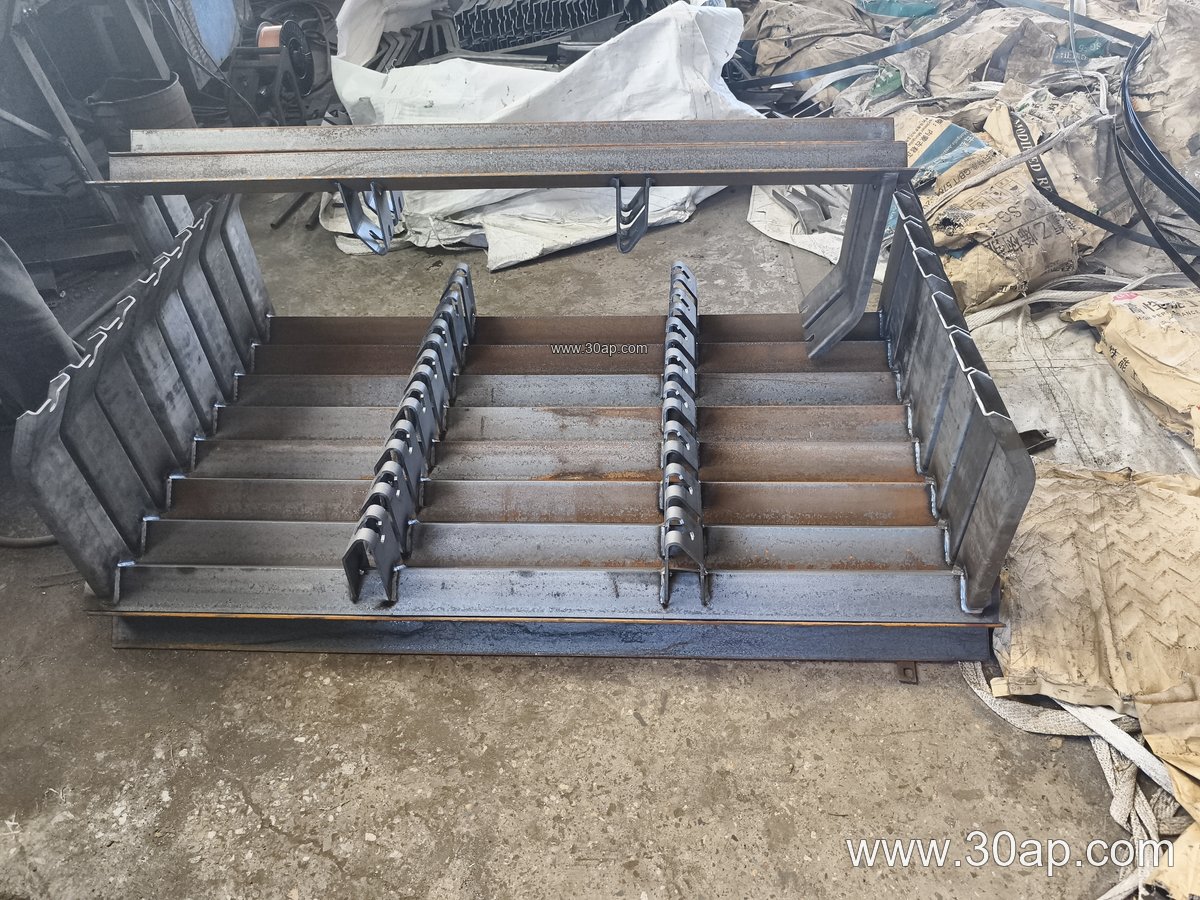
Fabrication starts with the frame section, which is cut and drilled to match the conveyor stringer spacing. The roller cradle or saddle plates are then welded or bolted on at the specified trough angle. Powder coating, galvanizing or painting follows, depending on whether the site is dusty, humid or exposed to washdown.
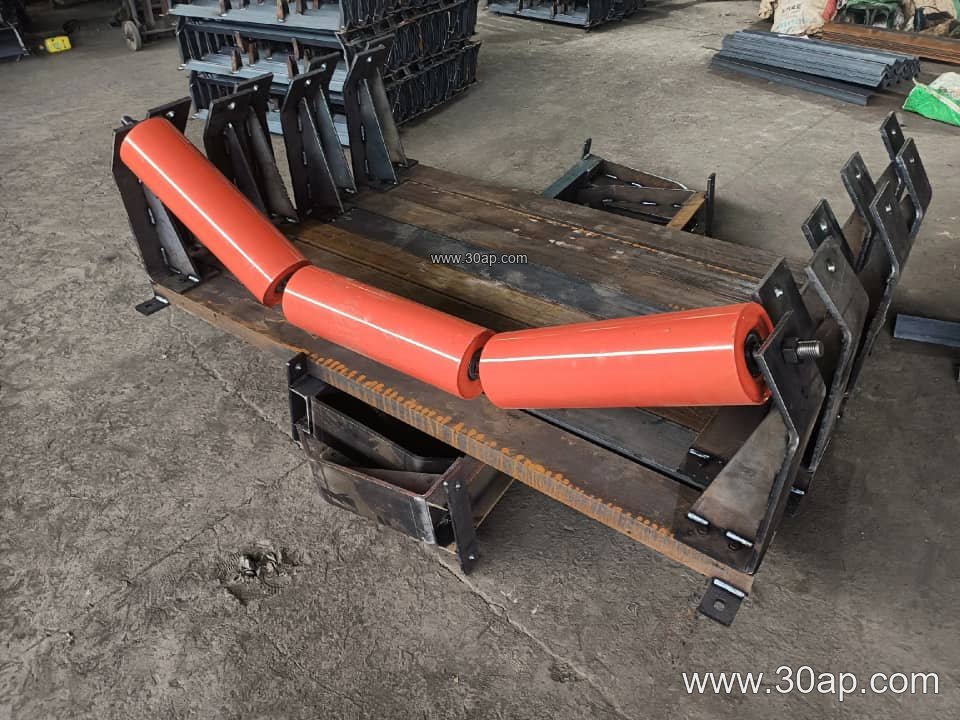
Mounting hole spacing and crossbeam length vary with belt width and trough angle, so they are confirmed against the conveyor drawing rather than taken as universal figures. A bracket that is drilled for one frame will not necessarily bolt onto another, even when both carry the same belt width.
Common reference combinations
The table below shows typical pairings used when specifying a fixed bracket. These are reference values, not fixed rules, and final selection follows the conveyor design.
- B650 with 30 degree trough angle and Ø89 rollers
- B800 with 35 degree trough angle and Ø108 rollers
- B1000 with 35 degree trough angle and Ø133 rollers
- B1200 with 45 degree trough angle and Ø133 rollers
- B1400 with 35 degree trough angle and Ø159 rollers
- B1600 with 45 degree trough angle and Ø159 rollers
- B1800 with 35 degree trough angle and Ø194 rollers
- B2000 with 45 degree trough angle and Ø194 rollers
Belt width does not dictate a single roller diameter or trough angle. A B1200 conveyor may run 35 or 45 degrees depending on material surcharge and capacity, and the roller diameter follows load and speed calculations.
Where Fixed Brackets Fit Best
Fixed brackets suit lines with a stable, known duty. A limestone crushing and screening circuit, for example, runs a consistent feed size and belt speed, so there is little reason to change troughing geometry after commissioning. The same applies to a power plant coal conveying gallery or a fertilizer blending plant where the material profile does not shift.
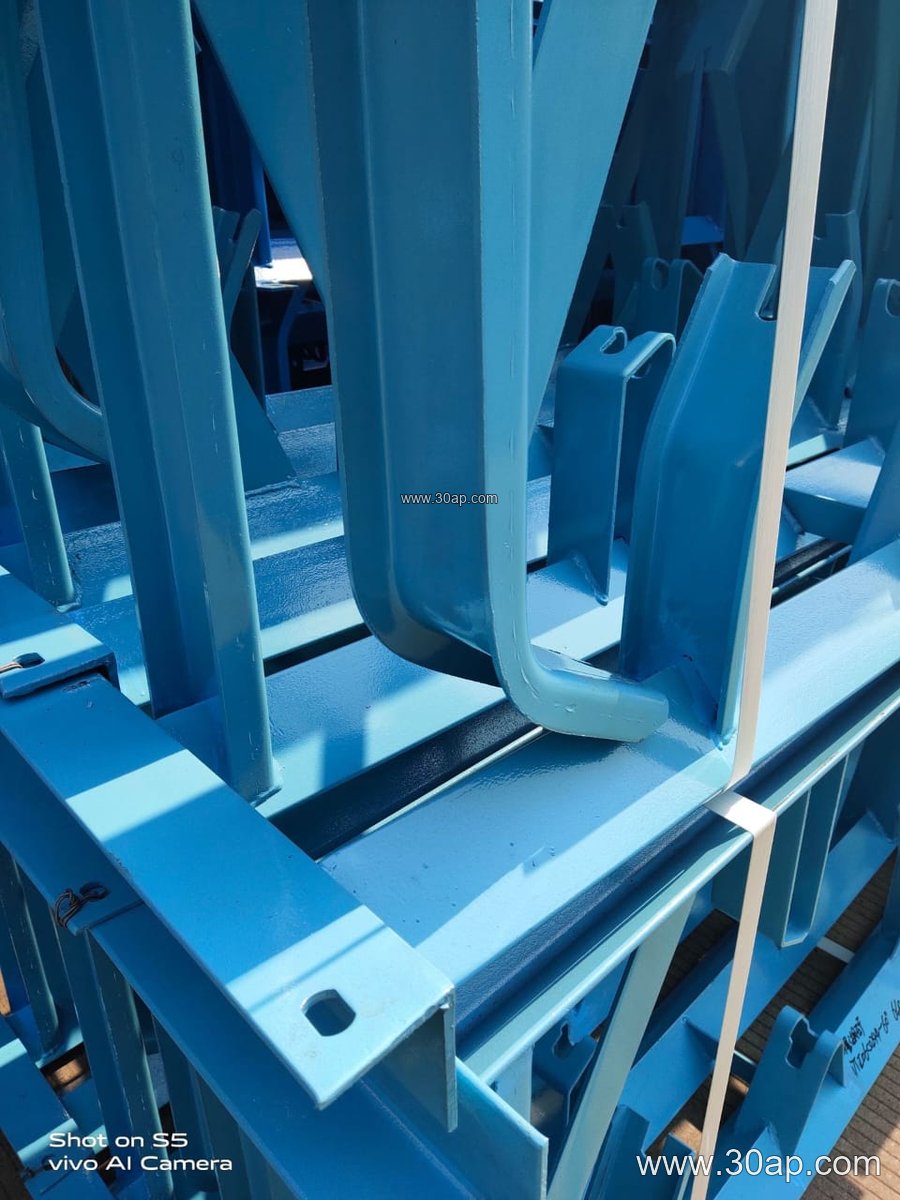
On a heavy-duty mining conveyor carrying abrasive ore, the bracket must resist vibration and occasional impact from lumpy feed. Reinforced channel sections and close weld inspection matter more here than fine angle adjustment. In these installations the bracket works together with an abrasion resistant conveyor belt and heavy-duty idler roller set to keep the line running.
Fixed Versus Adjustable Brackets
An adjustable bracket allows the trough angle to be changed between positions such as 20, 30, 35 and 45 degrees, which helps during commissioning or when a line handles mixed materials. A fixed bracket gives up that flexibility in exchange for greater stiffness, fewer fasteners to loosen and lower fabrication cost.
Transition and impact brackets are separate subtypes with their own geometry and should not be treated as substitutes for a standard fixed troughing bracket. The same applies to self-aligning and forward-tilt designs, which serve different tracking duties.
Buyer Checklist
- Confirm belt width, trough angle and roller diameter against the conveyor drawing.
- State the frame type and stringer spacing so mounting holes are drilled correctly.
- Specify the material and finish for the site: dusty, wet, coastal or washdown.
- Ask for the load rating and confirm it matches the idler and material load.
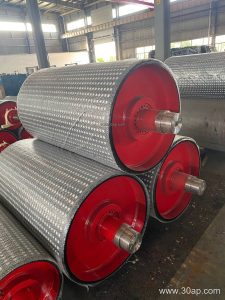
- Check that the bracket is compatible with the conveyor pulley and take-up arrangement at each end of the line.
- For replacement orders, supply a photo or drawing of the existing bracket to avoid mismatches.
Matching the bracket to the belt and roller set is the practical route to fewer tracking problems and longer service intervals. For cement plant, steel plant or port conveyor projects, buyers can review bracket options alongside conveyor belt and roller selections at www.morningbelt.com to keep the whole support system consistent.