What a Bend Pulley Does on a Conveyor
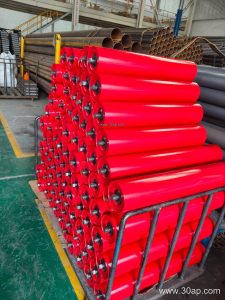
A bend pulley is a non-driven roller that changes the direction of a conveyor belt without transmitting drive torque. It is usually placed where the belt needs to turn, such as before a tension take-up, at a transition between structural sections, or where the return strand must be guided around an obstruction. In a typical conveyor layout, the bend pulley works alongside the drive pulley, the tail pulley, and the carrying and return idler rollers, but it has its own job: redirecting belt travel with minimal friction and stable alignment.
Because it does not pull the belt, the bend pulley is sized and built around the belt path rather than around drive power. It still carries significant radial load from belt tension, so its shaft, bearings, and shell must match the actual conveyor design. A unit that is too light for the applied tension may deflect or run hot; one that is oversized adds unnecessary weight and cost.
Construction and Surface Options
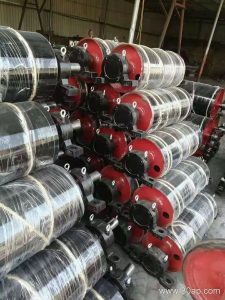
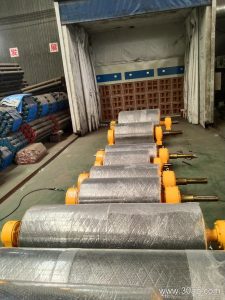
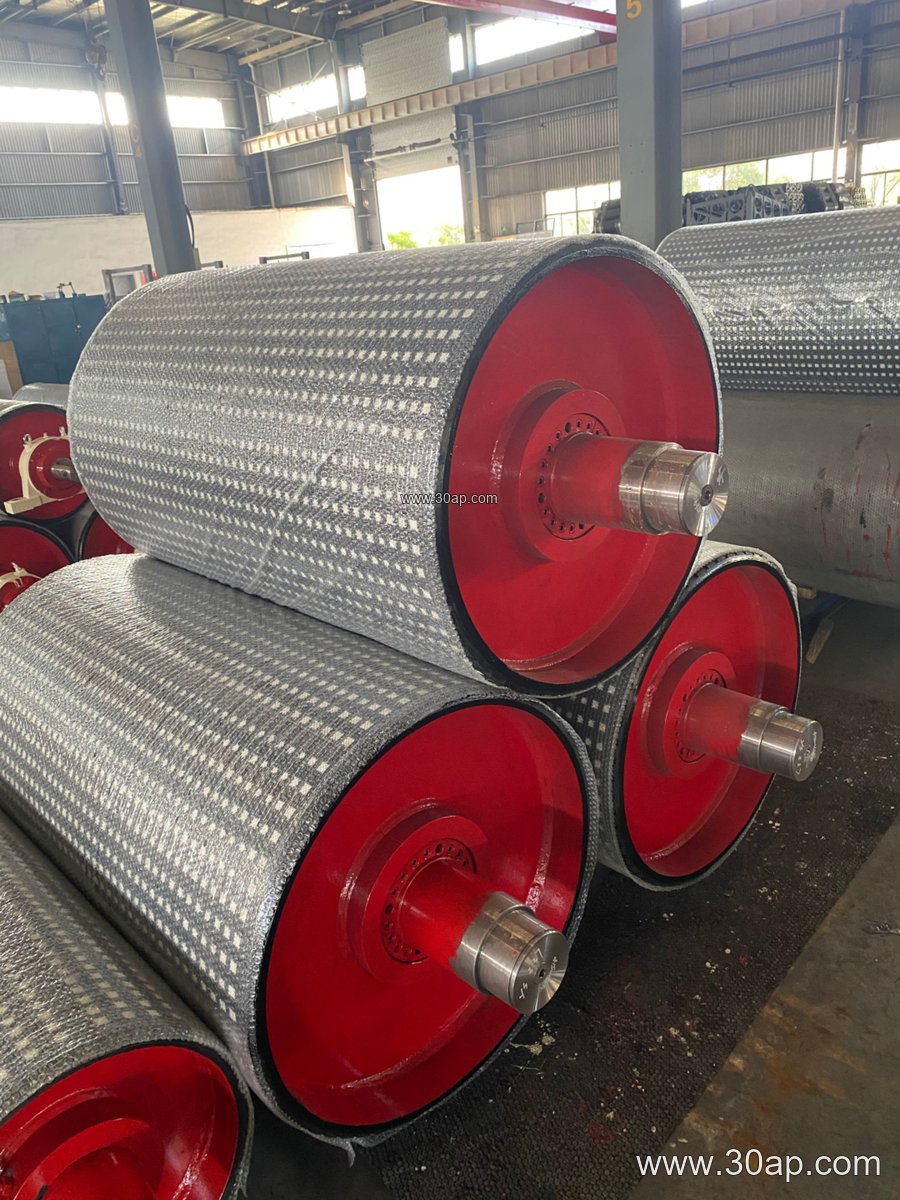
The core of a bend pulley is a cylindrical shell, usually made from rolled steel, fitted with end discs and a through shaft or stub shafts. Bearings are mounted in housings on the shaft ends, and the whole assembly is fixed to the conveyor frame through bearing blocks or a conveyor bracket. The shell face may be plain or covered, depending on whether grip and wear protection are needed.
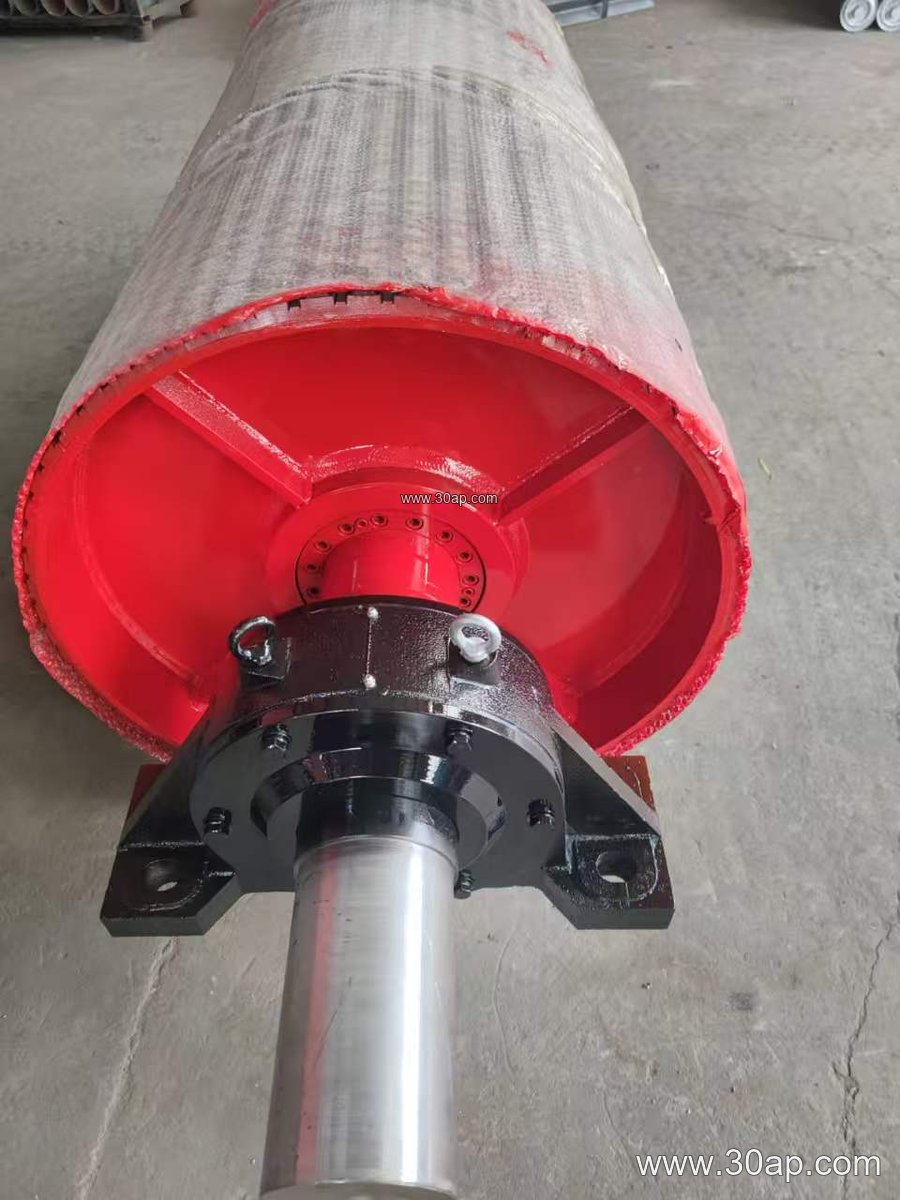
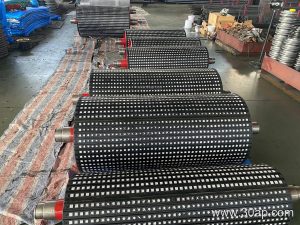
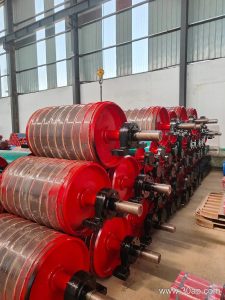
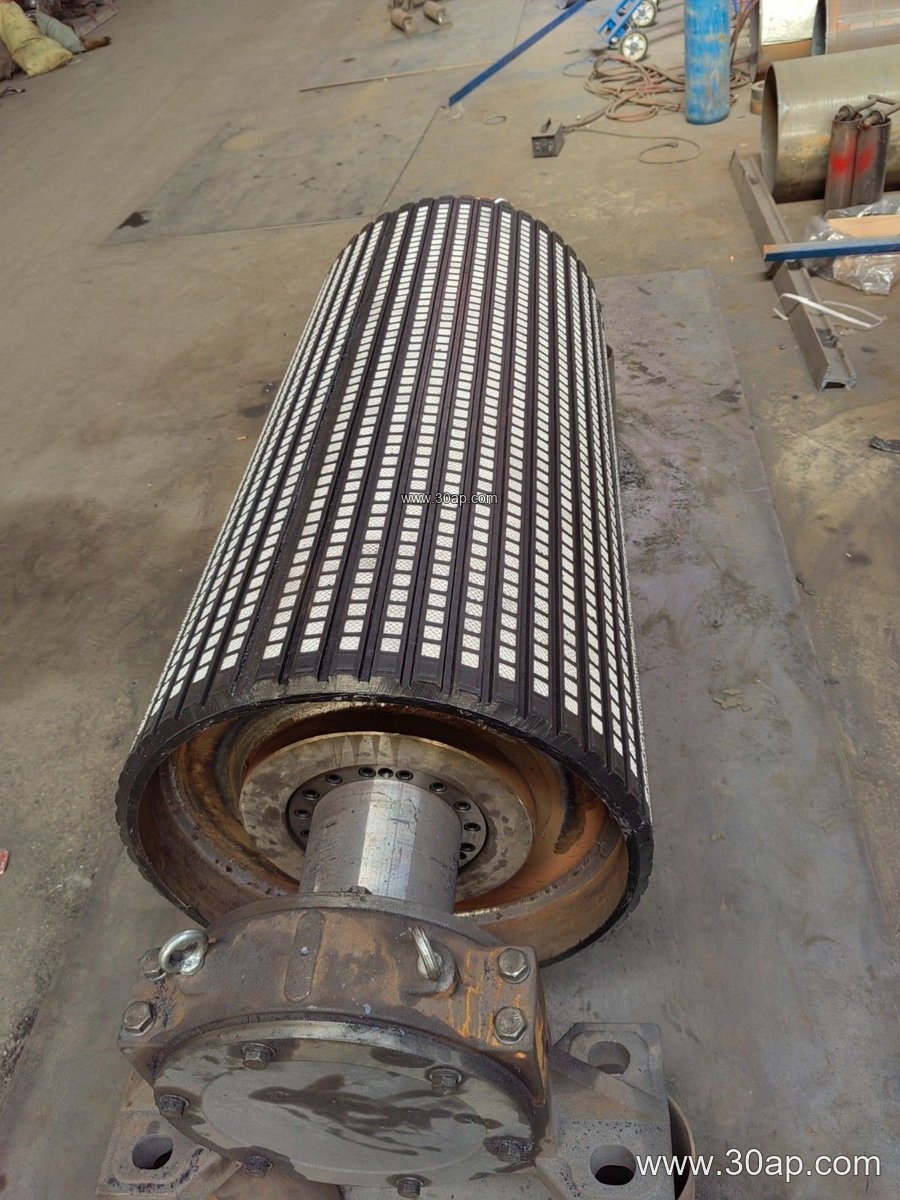
Common surface forms include plain finish, hot-vulcanized rubber, cold-bonded rubber, diamond grooving, herringbone grooving, and ceramic lagging. Lagging thickness is often selected from 8, 10, 12, 15, or 20 mm, but the final choice should follow belt tension, contact angle, and site conditions. On a bend pulley that only guides the return belt, a plain or lightly lagged face may be sufficient; where the belt wraps at a large angle or the environment is wet and dusty, a rubber or grooved cover can help maintain traction and shed material.
- Shell: rolled steel, machined for concentricity
- Shaft: through shaft or stub shaft, sized by torque and load
- Bearings: sealed pillow block or flange types
- Surface: plain, rubber lagged, grooved, or ceramic
- Mounting: fixed to the conveyor frame with bearing supports
Sizing by Belt Width and Duty
Bend pulleys are commonly described by belt width and diameter, such as B800 × Ø500, B1200 × Ø1000, or B1400 × Ø800. These combinations are reference points, not fixed rules; the same belt width can use different pulley diameters depending on belt thickness, wrap angle, speed, and tension. Face width is normally a little wider than the belt, for example about 950 mm for B800 and about 1400 mm for B1200, so the belt is supported across its full width.
| Reference | Typical Range |
|---|---|
| Belt width | B400 to B2400 |
| Pulley diameter | Ø200 to Ø1800 |
| Shaft diameter | Ø50 to Ø200, by design |
| Lagging thickness | 8 to 20 mm |
Shaft diameter should never be chosen from belt width alone. It depends on the bending moment from belt tension, the bearing span, and the allowable stress. A B650 bend pulley and a B1800 bend pulley may both use a Ø100 shaft in different designs, or may differ widely; only the conveyor calculation settles the value.
Where It Fits in Bulk Handling
In a quarry or aggregate line, a bend pulley may route the return belt around a transfer tower or back toward the tension frame. In a coal preparation plant or power plant coal yard, it helps keep the belt path compact where space is tight. Cement plants use bend pulleys on clinker and raw material conveyors, and port bulk terminals use them on long shuttle and loading conveyors. The pulley must tolerate the same environment as the belt: abrasive dust, moisture, and occasional spillage.
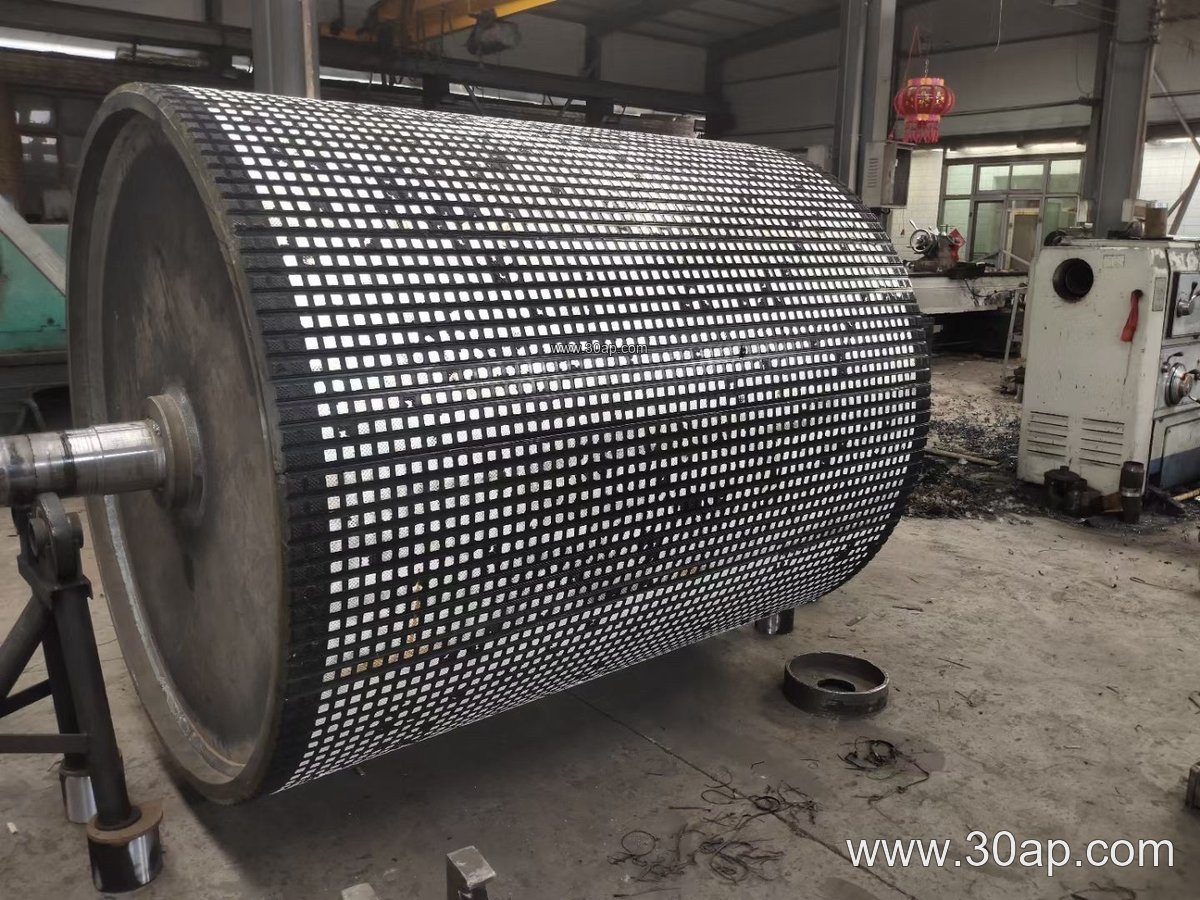
Belt selection and pulley selection go together. A heavy-duty mining conveyor belt, an abrasion resistant conveyor belt, or a heat resistant conveyor belt all impose different demands on the pulley face and bearings. When the belt is a steel cord conveyor belt or a multi-ply fabric core conveyor belt, the minimum pulley diameter is usually set by belt construction to avoid excessive bending stress. Matching the bend pulley to the belt type protects both components.
Buyer Checklist
- Confirm the installation position: return-side redirect, transition, or tension area.
- Provide belt width, belt type, and expected tension so the diameter and shaft can be checked.
- State the environment: dust, water, temperature, or oil exposure.
- Choose the surface form based on wrap angle and traction needs, not habit.
- Check bearing type and lubrication access before ordering.
- Plan inspection of lagging wear, bearing temperature, and alignment during maintenance stops.
A bend pulley is a simple component, but it is part of the belt line’s geometry. Getting the diameter, face width, shaft, and surface right keeps the conveyor tracking smoothly and reduces wear on the belt and on nearby idler roller and bracket assemblies.