What a Custom Conveyor Bracket Really Is
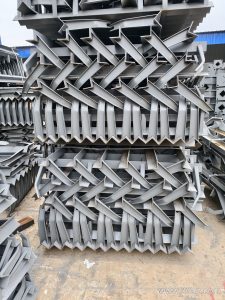
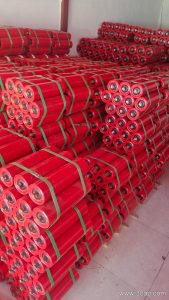
A custom conveyor bracket is a made-to-fit support component that positions idlers, rollers, or pulley assemblies on a conveyor frame. Rather than forcing a standard bracket onto an existing structure, the part is fabricated around the actual mounting hole spacing, beam width, and trough angle of the line. In a limestone quarry or a cement plant, that difference often decides whether a belt runs true or keeps drifting. The bracket is not the belt and not the roller; it is the interface that holds them at the right geometry.
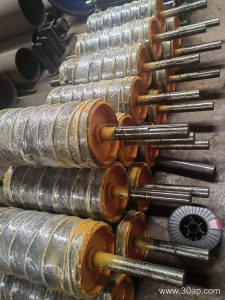
Buyers sometimes confuse the term with a conveyor pulley support or a frame section. It is neither. A drive pulley, tail pulley, and bend pulley each need their own bearing housings and base plates, and those are not interchangeable with idler brackets. When a project mixes up these parts, installation slows down and alignment suffers.
How the Bracket Is Built
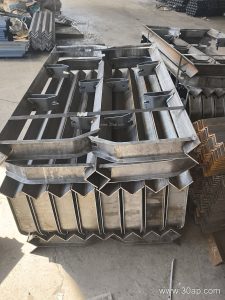
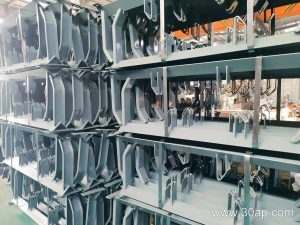
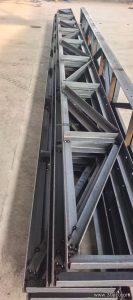
Most units are formed from angle steel, channel steel, or bent steel plate. The fabrication route usually includes cutting, punching or drilling the mounting holes, bending to the required trough angle, and then welding gussets or end plates where the load path demands it. A well-made bracket keeps the idler axis square to the belt centerline, because even a small twist shows up as edge wear on the conveyor belt.
Common configurations include:
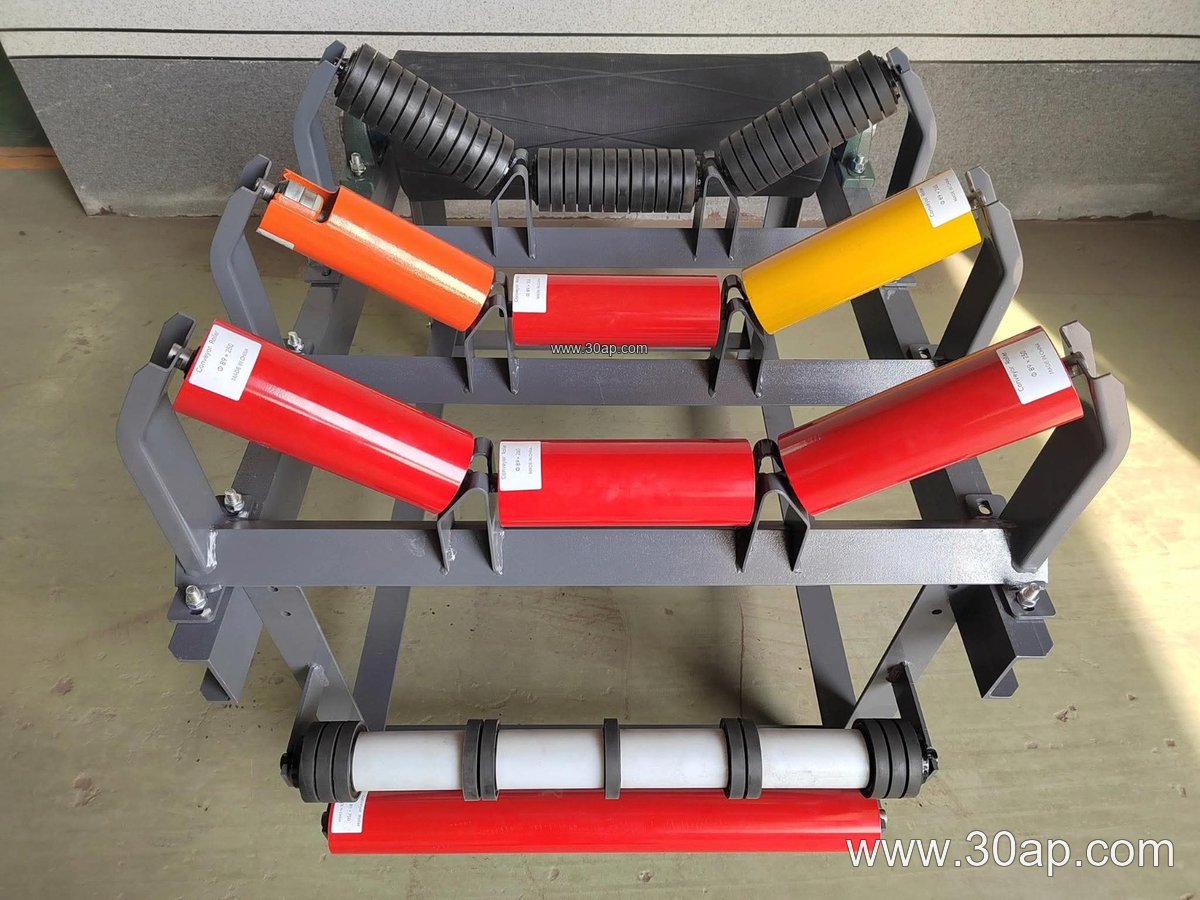
- Troughing brackets for carrying idlers on the top run
- Transition brackets near pulleys, where the belt changes profile
- Return brackets and V-return brackets for the bottom run
- Impact brackets under loading points, often paired with impact idlers
- Self-aligning and forward-tilted brackets for tracking control
- Suspended and adjustable brackets for lines that need field tuning
Adjustable versions let maintenance crews shift the trough angle between common settings such as 20, 30, 35, and 45 degrees. Forward tilt is usually around 1.5 to 2 degrees, which gently steers the belt back toward center.
Matching Bracket Geometry to Belt Width and Roller Diameter
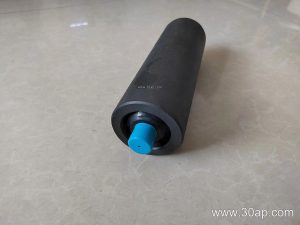
There is no single rule that ties one belt width to one trough angle or one roller diameter. A B800 line may run at 30 or 35 degrees with Ø89 or Ø108 idlers, depending on capacity and material. A B1200 line in an iron ore transfer station might use 45 degrees and Ø133 rollers, while a B650 aggregate line could stay at 30 degrees with Ø89. Installation hole spacing and crossbeam length change with belt width and trough angle, so these dimensions are confirmed per design rather than taken from a catalog line.
| Parameter | Typical Range |
|---|---|
| Belt width | B500 to B2200 |
| Trough angle | 20°, 30°, 35°, 45° |
| Idler diameter | Ø89, Ø108, Ø133, Ø159, Ø194 |
| Material | Angle steel, channel steel, bent plate |
These are reference values, not fixed pairings. The bracket drawing should always follow the confirmed idler and frame dimensions.
Where These Brackets Earn Their Keep
In a coal washing plant, a set of custom conveyor brackets can correct a transition zone where a standard frame left the belt pinched. In a power plant coal yard, adjustable troughing brackets help fine-tune loading without cutting and re-welding the frame. Similar work shows up in sand and gravel lines, crushing and screening circuits, and port ship-loading conveyors.
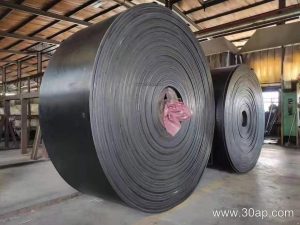
The bracket also has to suit the belt it carries. A heavy-duty mining conveyor belt with a thick cover needs stable roller support, and a steel cord conveyor belt is less forgiving of misalignment than a fabric core belt. Where a skirted conveyor belt or corrugated sidewall belt runs, the bracket layout must leave clearance for the cleats and sidewalls. Heat resistant conveyor belt and flame retardant conveyor belt installations in cement or coke areas also benefit from brackets that hold position under thermal cycling.
What to Confirm Before Ordering
A practical inquiry includes the frame drawing, belt width, required trough angle, roller diameter, mounting hole pattern, and the material and finish. State whether the bracket is fixed or adjustable, and whether it sits on the carrying side, return side, or at a transition. Mention any nearby conveyor pulley or conveyor bracket interface that constrains the fit. For high-abrasion duty, such as an ore conveyor belt line, thicker plate and reinforced gussets are worth discussing.
Ask for dimensional drawings before fabrication, and check that the bracket matches the actual idler roller ends. A small mismatch in hole centers creates a large tracking problem later. On site, keep spare brackets for the loading zone, since impact and spillage wear out that area first.