What a Coal Conveyor Idler Does on the Line
A coal conveyor idler is the rotating support that carries the loaded conveyor belt between the head and tail of a conveyor. In a coal handling system, these idler rollers hold the belt in a stable trough, absorb the weight of the coal, and keep the belt tracking in line. The idler itself does not drive or tension the belt; it is a passive component that rotates with belt movement. For this reason, the quality of the idler bearings, seals, and shell has a direct effect on starting resistance, power draw, and belt life. When the belt is a heavy-duty mining conveyor belt or a flame retardant conveyor belt used underground, the idler group must match the belt width and the load profile rather than being chosen by habit.
How the Idler Is Built
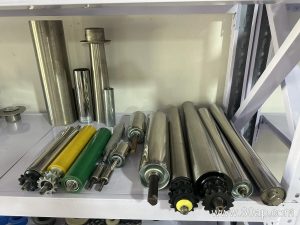
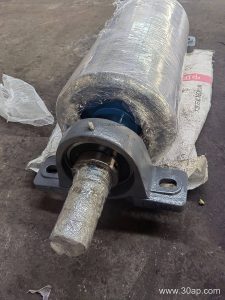
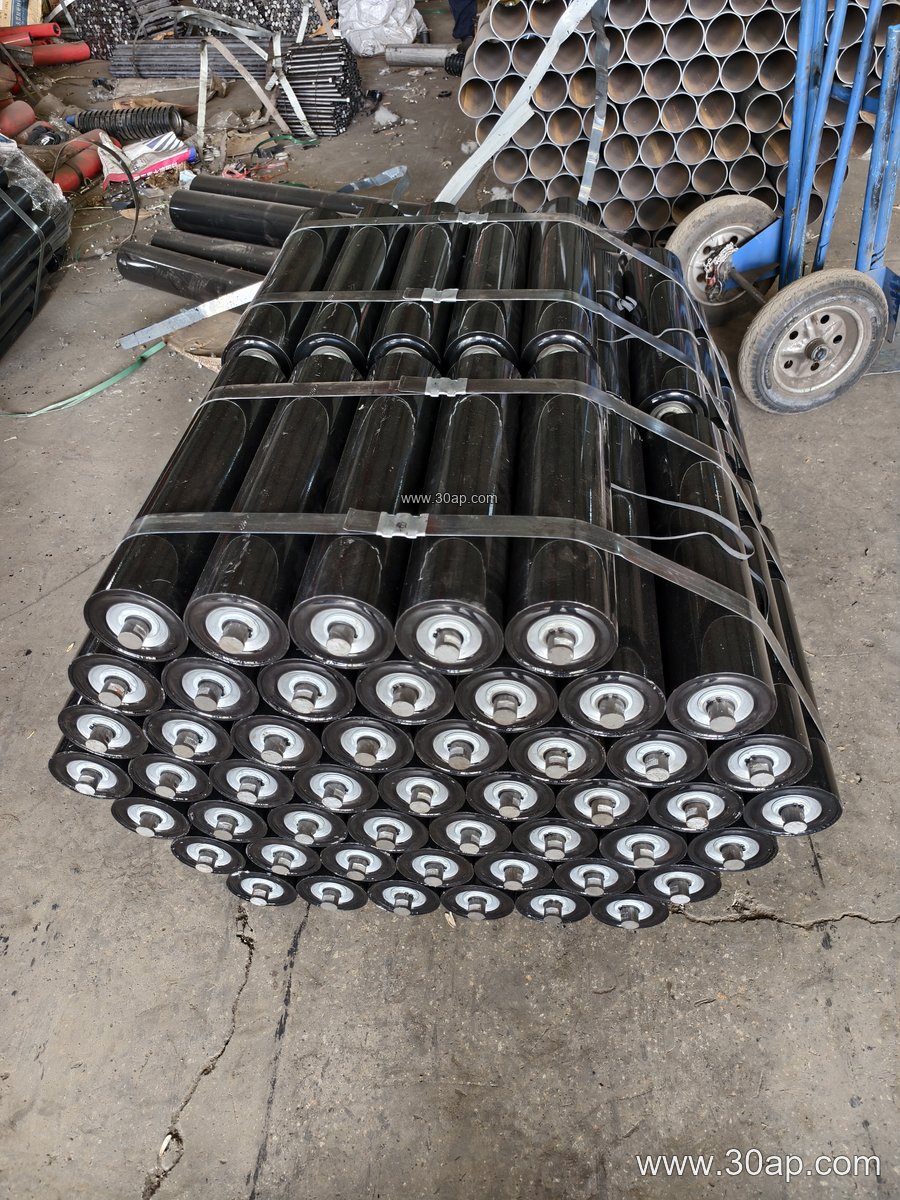
Most coal conveyor idlers share a simple structure: a steel tube shell, a through shaft, bearing housings at each end, and a sealing arrangement. The shell may be plain steel, nylon coated, ceramic faced, or fitted with rubber rings for impact absorption. Common bearing sizes include 6204, 6205, 6305, 6306, 6308, and 6310, with the final choice depending on load, speed, and expected service life. Sealing is often the deciding factor in dusty coal yards, since fine coal dust and moisture attack bearings quickly. A well-made idler roller should spin freely by hand, run without wobble, and keep its grease inside the housing.
Where Coal Conveyor Idlers Are Used
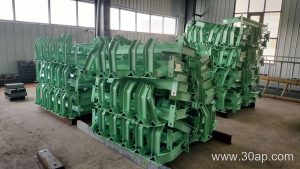
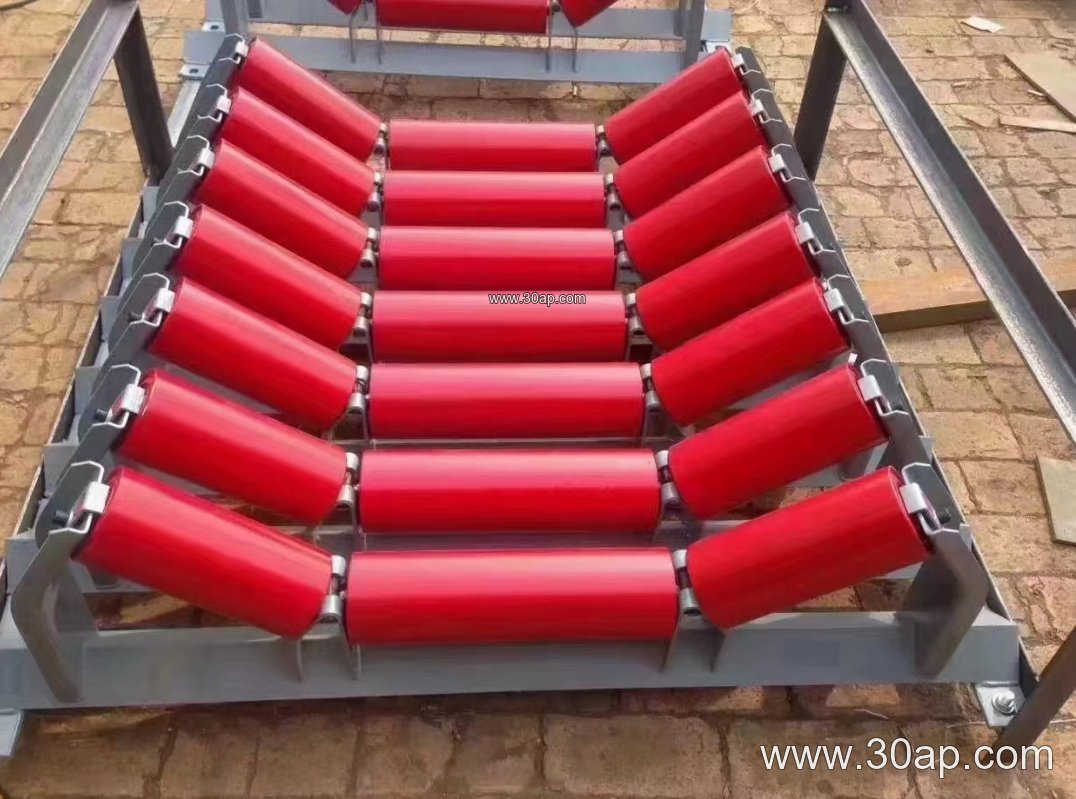
The most common setting is a coal handling conveyor in a power plant, a coal preparation plant, or a coal mine. In a power plant coal yard, long overland conveyors move fuel from stockpile to bunker, and the carry side usually runs three-roll troughing idlers at 30 or 35 degrees. In a coal preparation plant, belts transfer washed coal between screens and stockpiles, where dust control and belt tracking matter. Underground coal mining conveyors need flame retardant and anti-static belt constructions, and the idler frame and roller finish should suit the same environment. Similar arrangements appear in cement plants, quarries, and port loading systems that handle bulk material with an abrasion resistant conveyor belt.
Idler Types and Where They Sit
- Troughing idlers carry the loaded strand, usually in two-roll or three-roll sets.
- Impact idlers with rubber rings sit under the loading point to cushion lump coal.
- Return idlers support the empty belt; flat or V-shaped return sets are common.
- Transition idlers ease the belt from flat to full trough near the head and tail.
- Self-aligning idlers with tapered or friction rolls help correct belt drift.
- Spiral idlers reduce material build-up on the return side in sticky conditions.
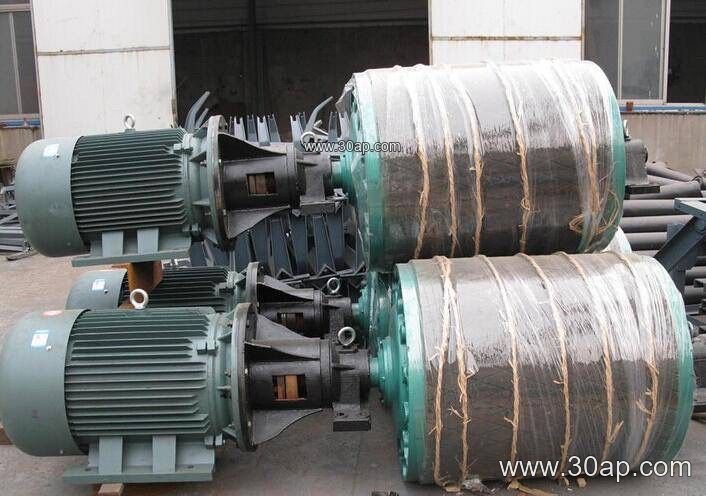
These are different idler types, not replacements for one another. A drive pulley, tail pulley, or bend pulley is a separate component on the same conveyor and should never be confused with an idler. The conveyor pulley pulls the belt, while the idler roller only supports it.
Common Reference Dimensions
The table below gives typical reference values, not fixed matches. Roll length changes with belt width, trough angle, and roll arrangement, and the side rolls of a three-roll set may differ from the center roll.
| Belt Width | Typical Roll Length (Three-Roll Trough) | Common Idler Diameter |
|---|---|---|
| B500 | about 200 mm | Ø63 to Ø89 mm |
| B650 | about 250 mm | Ø76 to Ø102 mm |
| B800 | about 315 mm | Ø89 to Ø108 mm |
| B1000 | about 380 mm | Ø102 to Ø133 mm |
| B1200 | about 465 mm | Ø108 to Ø159 mm |
| B1400 | about 530 mm | Ø127 to Ø178 mm |
| B1600 | about 600 mm | Ø133 to Ø194 mm |
| B1800 | about 670 mm | Ø159 to Ø219 mm |
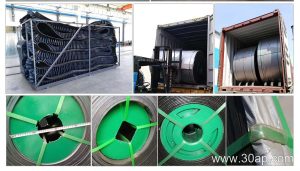
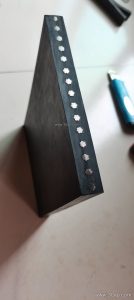
Trough angles of 20, 30, 35, and 45 degrees are all used in coal service. A 35-degree trough is common for high-capacity lines, while a 20-degree set may suit wider belts or material that should not be over-compressed. Forward tilt of about 1.5 to 2 degrees is sometimes used on troughing rolls to assist tracking. On the belt side, matching fabric core conveyor belt, steel cord conveyor belt, or chevron conveyor belt grades to the idler spacing keeps the whole system balanced.
What a Buyer Should Check
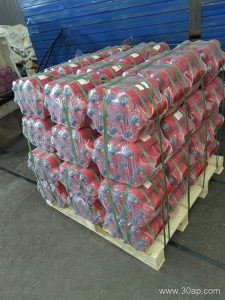
Start with the belt width, belt speed, and the load per meter, then confirm the idler diameter and bearing size with the conveyor designer. Check the shaft end fixing, since conveyor bracket dimensions vary between frames. Ask about seal type and grease retention for dusty coal service, and confirm that the roller finish suits the site. For underground work, verify that the belt and idler materials meet flame retardant and anti-static requirements. Spare parts should be ordered by the full description, for example a Ø108 mm troughing idler for a B1000 belt with a 35-degree frame, rather than by belt width alone. A consistent idler standard across a coal conveyor line reduces maintenance surprises and keeps the belt running true.