What Conveyor Bracket Fabrication Involves
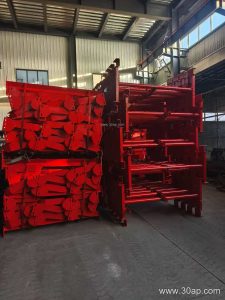
Conveyor bracket fabrication is the process of cutting, forming, and welding steel into the structural supports that hold idler rollers and keep a conveyor belt in its intended profile. These brackets, often called idler frames or stands, are the interface between the roller and the conveyor stringer. A well-fabricated bracket keeps the roller axis square to the belt, maintains the correct trough angle, and absorbs the loads that come from material weight and belt tension. In a quarry or a coal handling plant, a poorly made bracket shows up quickly as belt misalignment, edge wear, and spillage.
The work is not just bending metal. It combines material selection, accurate hole placement, and controlled welding so that the finished assembly fits the conveyor structure without shimming or forcing. For anyone specifying or buying brackets, understanding how they are built helps in judging whether a supplier can deliver consistency across a batch.
Materials and Build Methods
Fabricators typically work from angle iron, channel steel, or folded steel plate. The choice depends on the load and the environment. Angle sections are common for lighter duty and simpler frames, while channel and folded plate offer more stiffness for wider belts and heavier material. In a cement plant or a power plant coal yard, brackets may be galvanized or painted after fabrication to resist corrosion, though the base steel grade is usually a weldable structural carbon steel.
Fabrication steps usually include:
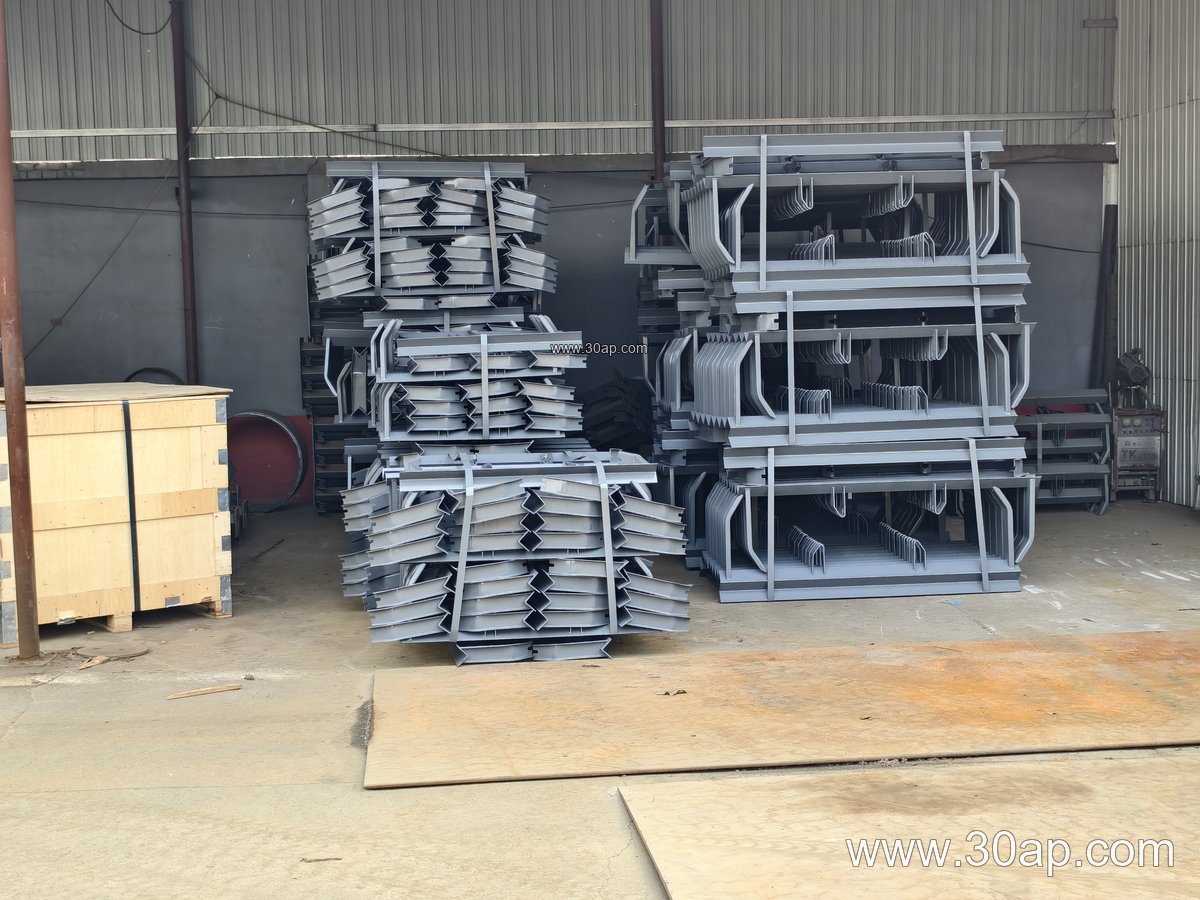
- Cutting members to length according to the belt width and trough angle.
- Punching or drilling mounting holes for the idler roller shafts and for fixing to the conveyor frame.
- Jig-based assembly to keep the roller seats aligned and the trough angle consistent.
- Welding, followed by cleaning and a check on dimensions and squareness.
For adjustable brackets, the design includes slotted holes or movable arms so the trough angle can be set on site. Fixed brackets are welded or bolted in a single configuration. Neither is universally better; the choice depends on whether the conveyor will be re-tensioned or re-profiled during its life.
Where These Brackets Are Used
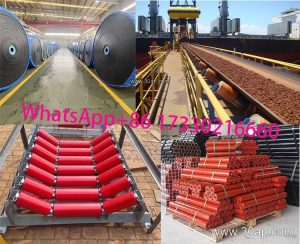
You will find fabricated conveyor brackets in almost any bulk handling circuit. In a limestone quarry, they carry the troughing idlers under a 1200mm wide conveyor belt moving crushed rock. In a coal washing plant, they support rollers on a coal mining conveyor belt that may be flame retardant and anti-static. In a port ship loading system, heavy-duty brackets hold rollers beneath a steel cord conveyor belt running at high tension. The same fabrication approach applies, but the plate thickness, weld size, and hole tolerances change with the duty.
Brackets also appear on the return side, where a V-return or flat return bracket holds the belt in a stable path. In a tunnel boring or shaft operation, compact brackets may be used where space is tight around an underground conveyor belt. The common thread is that the bracket must match the roller diameter, the belt width, and the structure it bolts to.
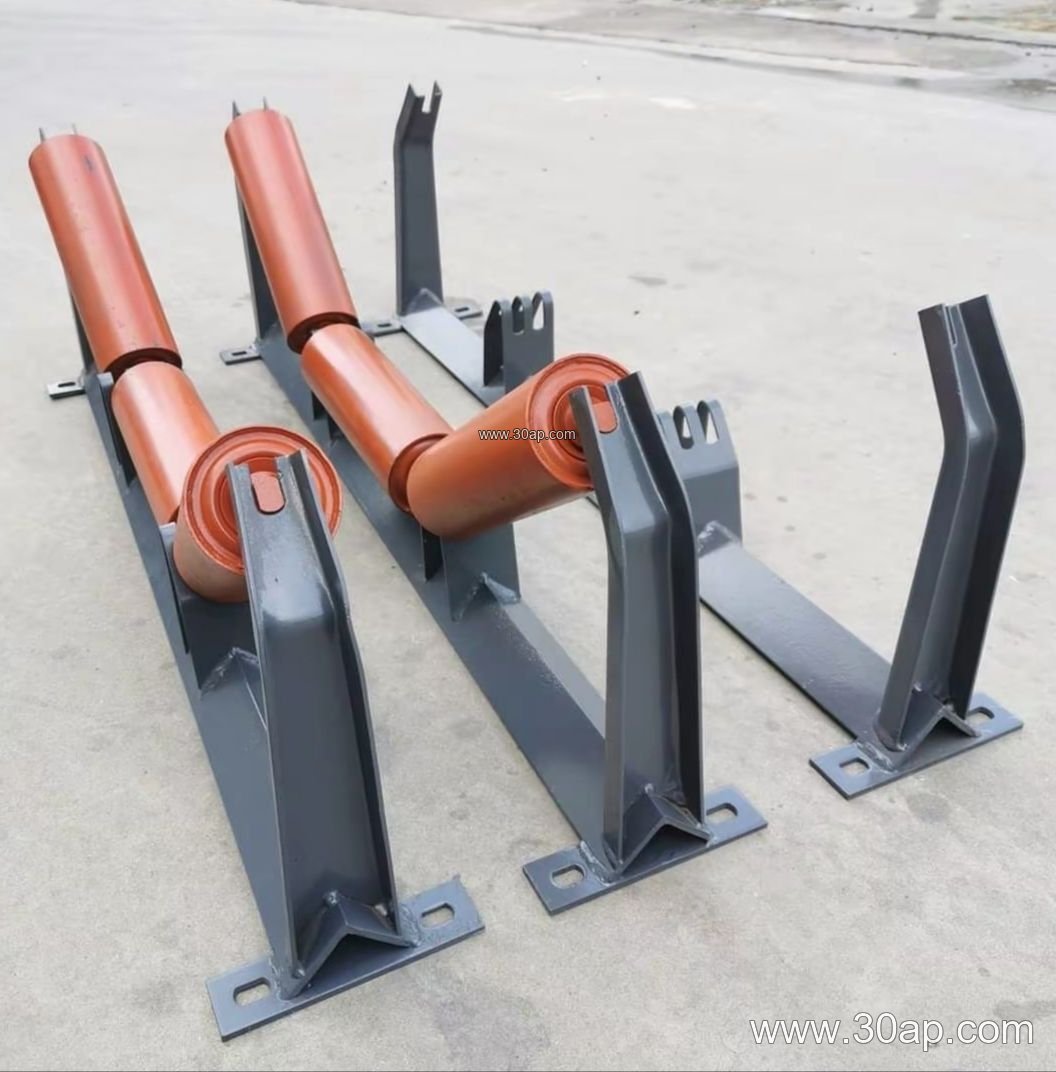
Matching Brackets to Belt Width and Roller Size
There is no single bracket size that fits every conveyor. The table below shows common reference combinations for troughing brackets; these are examples, not fixed rules. A B800 belt might run with a 30-degree trough and Ø108 rollers, while a B1200 belt could use 35 or 45 degrees with Ø133 rollers. The bracket’s mounting hole spacing and crossbeam length are determined by the belt width, trough angle, and roller dimensions, so the fabricator needs those details before cutting steel.
| Belt width (B) | Common trough angle | Common roller diameter |
|---|---|---|
| B650 | 30 degrees | Ø89 |
| B800 | 30 or 35 degrees | Ø108 |
| B1000 | 35 degrees | Ø108 or Ø133 |
| B1200 | 35 or 45 degrees | Ø133 |
| B1400 | 35 or 45 degrees | Ø133 or Ø159 |
| B1600 | 35 or 45 degrees | Ø159 |
| B1800 | 35 or 45 degrees | Ø159 or Ø194 |
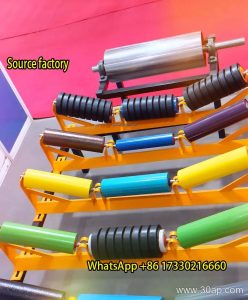
Forward-leaning brackets, common on high-speed conveyors, may be set at about 1.5 to 2 degrees to help with belt tracking. Self-aligning brackets use a pivot to correct minor misalignment. Impact brackets are built heavier for loading points under a crusher conveyor belt or a rock conveyor belt. Each subtype has its own fabrication details, but all rely on accurate hole placement and stiff frames.
Buyer Checklist for Fabricated Brackets
When sourcing conveyor bracket fabrication, ask for the drawing or a sample that shows hole centers, overall height, and the trough angle. Confirm the steel section and finish, and whether the bracket is fixed or adjustable. If the conveyor uses an EP conveyor belt or a multi-ply fabric core belt, the bracket still only needs to match the roller and structure, but the roller spacing may differ from a steel cord installation. For a coal mining conveyor belt or a heat resistant conveyor belt in a cement kiln area, mention the environment so the fabricator can advise on coating or material thickness.
Check that the bracket will accept the idler roller you plan to use, and that the mounting holes match the conveyor stringer. A small batch trial before a full order is a practical way to confirm fit. Finally, keep spare brackets for high-wear zones such as transfer points and tail areas, where impact and spillage shorten service life.