What a Galvanized Conveyor Bracket Does
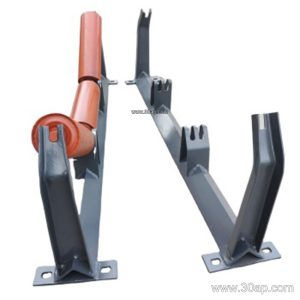
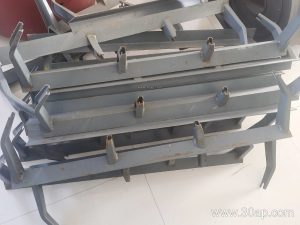
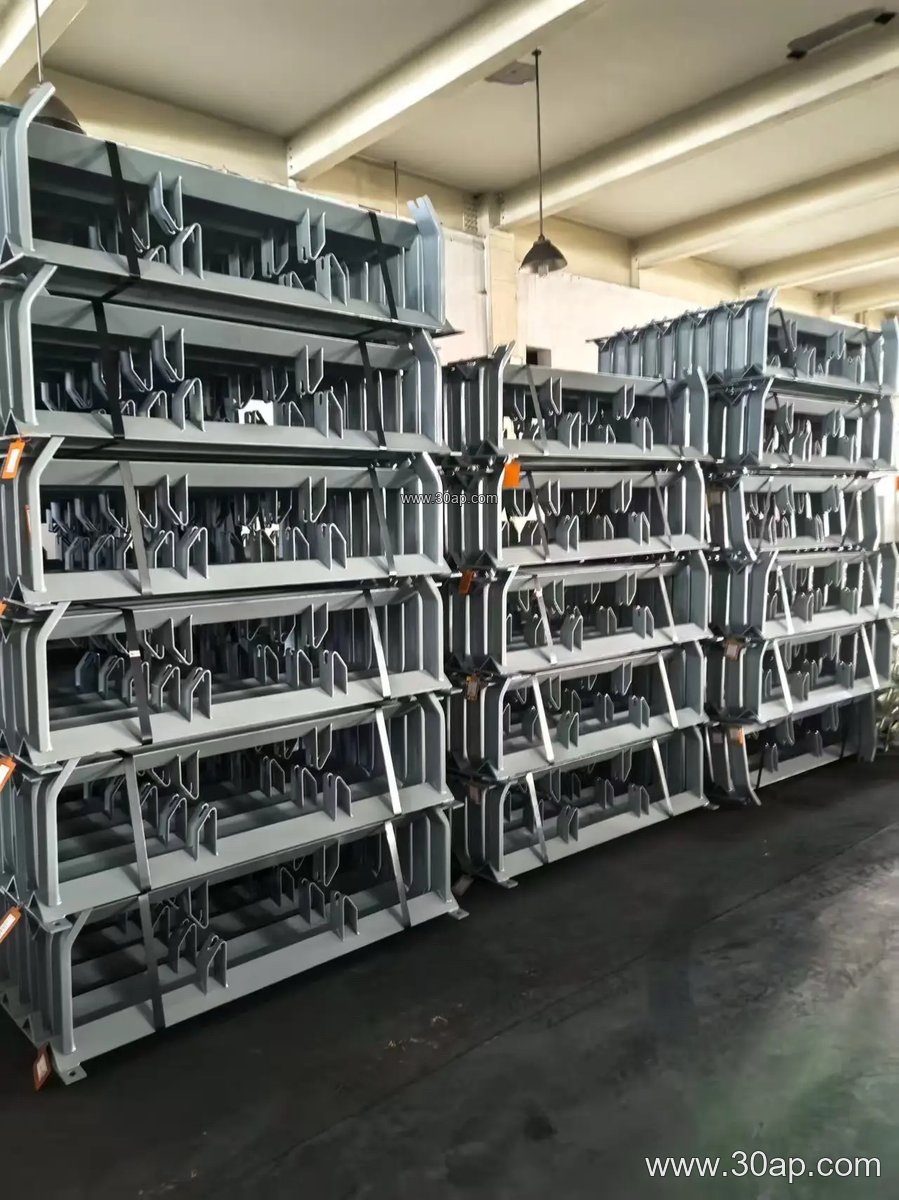
A galvanized conveyor bracket is the structural support that holds idler rollers in place on a belt conveyor. It keeps the conveyor belt at the correct profile, whether that is a trough, a flat return run, or a transition zone. The galvanized finish — usually hot-dip or pre-galvanized steel — resists corrosion in damp, dusty, and outdoor conditions, making it a practical choice for quarries, coal preparation plants, and port bulk terminals.
In a typical conveyor frame, these brackets are bolted to the stringers and carry the idler roller shafts. The bracket determines the trough angle, the roller spacing, and the height of the belt line. Without a rigid, well-aligned bracket, the belt can mistrack, spill material, or wear unevenly.
How It Is Built
Most brackets are fabricated from angle steel, channel steel, or folded steel plate. The galvanizing layer is applied after cutting, punching, and welding so that the coating covers the entire surface, including bolt holes and edges. Common forms include:

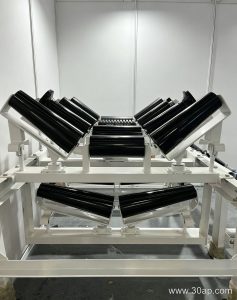
- Trough brackets for carrying idlers, often set at 20°, 30°, 35°, or 45°.
- Return brackets for flat or V-return idlers.
- Impact brackets reinforced for buffer idlers at loading points.
- Transition brackets that guide the belt from flat to troughed.
- Adjustable brackets that allow the trough angle to be changed on site.
Fabrication tolerances matter. Hole spacing and beam length are usually determined by the belt width, the trough angle, and the roller diameter — not by a single fixed dimension. For example, a B800 conveyor at 35° with Ø108 idlers will use a different bracket geometry than a B1200 conveyor at 45° with Ø133 idlers.
Where It Fits in the Conveyor
Galvanized brackets appear along the entire length of a conveyor. On the carrying side, they support the troughing idlers that shape the belt into a trough. On the return side, they hold the return idlers that keep the belt from sagging. At the tail pulley and head pulley, transition brackets help the belt change from flat to troughed without stress. In coal mining and underground mining conveyors, flame retardant conveyor belts and anti-static belts are common, and the brackets must be equally robust to handle constant load and moisture.
In a cement plant, a limestone or clinker conveyor may use abrasion resistant conveyor belts and heavy-duty idler rollers; the brackets here are often galvanized to withstand washdown and dust. In a power plant coal handling system, the bracket works alongside the conveyor pulley and the conveyor belt to maintain a stable material flow. The same principle applies in a sand and gravel line or a crushing and screening plant, where shock loads from large lumps require impact-resistant brackets and buffer idlers.
Selection and Sizing Notes
Buyers should match the bracket to the belt width, the idler diameter, and the intended trough angle. The table below lists common reference combinations; actual mounting hole distances and beam lengths should be confirmed with the conveyor designer.
| Belt Width | Trough Angle | Idler Diameter | Typical Bracket Form |
|---|---|---|---|
| B500 | 20°–30° | Ø89 | Trough bracket, fixed |
| B650 | 30°–35° | Ø89–Ø108 | Trough bracket, fixed or adjustable |
| B800 | 35° | Ø108 | Trough bracket, fixed |
| B1000 | 35°–45° | Ø108–Ø133 | Trough bracket, adjustable |
| B1200 | 45° | Ø133 | Trough bracket, impact version at load zone |
| B1400 | 35°–45° | Ø133–Ø159 | Trough bracket, heavy-duty |
| B1600 | 45° | Ø159 | Trough bracket, heavy-duty |
| B1800 | 35°–45° | Ø159–Ø194 | Trough bracket, heavy-duty |
| B2000 | 45° | Ø194 | Trough bracket, heavy-duty |
Adjustable brackets are useful where the conveyor handles multiple material types or where belt training needs fine-tuning. Fixed brackets are simpler and often preferred in stable, high-tonnage circuits. For inclined conveyors, a slight forward tilt of about 1.5° to 2° can help center the belt, but this depends on the idler type and should not be treated as a universal rule.
Buyer Checklist
- Confirm the belt width and idler diameter before ordering; do not assume one belt width matches only one roller size.
- Specify the trough angle and whether the bracket must be adjustable.
- Check the galvanizing thickness and finish for the site environment — coastal ports and washdown areas need better protection.
- Verify bolt hole spacing and beam length against the conveyor stringer drawing.
- Consider impact brackets at transfer points where ore, rock, or clinker drops onto the belt.
- For underground coal mining, ensure the bracket is compatible with flame retardant and anti-static conveyor belt requirements.
Galvanized conveyor brackets are a small part of the total conveyor cost, but they influence belt life, idler life, and maintenance frequency. A correctly specified bracket keeps the conveyor belt running true, reduces spillage, and supports the idler roller and conveyor pulley alignment that the whole system depends on.