What a Skirted Conveyor Belt Is
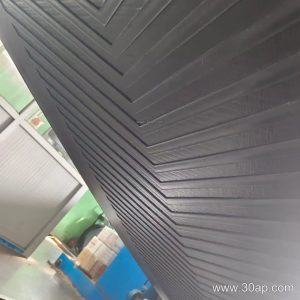
A skirted conveyor belt is a rubber conveyor belt fitted with raised flexible side walls, often called skirts, that run along both edges of the carrying surface. These skirts sit close to or in contact with the belt edge and form a shallow trough or channel that keeps bulk material from spilling off the sides. In many plants the same belt is described as a sidewall belt or a belt with rubber skirts, but the working principle is the same: the belt carries the load, and the skirts contain it.
The skirt is usually made from an abrasion resistant rubber compound, sometimes reinforced with fabric, and is attached to the belt edge by vulcanized bonding or mechanical fixing. On some designs the skirt is a separate strip that can be replaced, while on others it is bonded as part of the belt structure. Because the skirt flexes as the belt passes over pulleys, the quality of the bond and the flexibility of the compound matter as much as the belt’s tensile strength.
Construction Details That Matter
A skirted belt is built on the same carcass options as other fabric or steel reinforced belts. Common carcasses include EP conveyor belt constructions, NN conveyor belt grades, and steel cord designs for long or heavily loaded lines. The cover rubber is selected for the duty: an abrasion resistant conveyor belt compound for sand, gravel and clinker, a heat resistant conveyor belt grade near kilns and dryers, or a flame retardant conveyor belt and anti-static build for coal handling and underground mining conveyor belt systems.
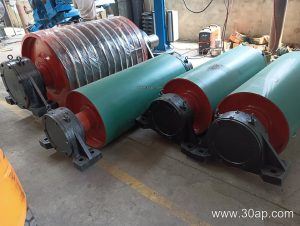
The skirt height and profile are chosen to match the material and the conveyor layout. Taller skirts suit light, dusty cargo, while lower, stiffer skirts reduce drag on heavy lump loads. The belt edge itself is often reinforced so the skirt fixing does not tear out under repeated flexing at the tail pulley and bend pulleys. Drive pulleys, tail pulleys and bend pulleys each impose different bending stress on the skirt zone, so the belt supplier should know the pulley arrangement before the skirt profile is finalized.
Where Skirted Belts Are Used
These belts appear wherever spillage, dust or wind is a problem. Typical settings include:
- Coal mining conveyor belt lines and underground coal mining conveyor belt transfers, where fine coal and dust must stay on the belt.
- Cement plant conveyor belt runs carrying clinker, raw meal and additives.
- Power plant conveyor belt systems handling coal and limestone.
- Quarry conveyor belt and aggregate conveyor belt circuits feeding crushers and screens.
- Port conveyor belt and ship loading conveyor belt operations exposed to wind.
- Fertilizer, recycling and construction industry conveyor belt lines with light or dusty material.
They are also common on mobile crusher conveyor belt units and stone crushing conveyor belt plants, where short centers and frequent transfers make spillage control important.
Specifications and Selection Notes
Skirted belts are available across a wide range of widths and strength grades. The table below shows common reference values; final figures are set by the conveyor design and confirmed by the manufacturer.
| Parameter | Common reference range |
|---|---|
| Belt width | B500, B650, B800, B1000, B1200, B1400, B1600, B1800, B2000 |
| Fabric carcass strength | EP200, EP315, EP400, EP500, EP630, EP800, EP1000, EP1250 |
| Steel cord grades | ST1000, ST1250, ST1600, ST2000 |
| Cover thickness | 3+1.5, 4+2, 5+2, 6+2, 8+3 mm |
| Carcass plies | 2 to 6 layers, depending on grade |
| Skirt height | Usually 50 to 300 mm, by design |
A buyer should confirm the material lump size, bulk density, moisture, temperature and any fire or oil exposure. For coal, a flame retardant conveyor belt with anti-static properties is often required; for hot clinker, a heat resistant conveyor belt cover is needed; for abrasive ore, a high abrasion resistant conveyor belt compound extends service life. The conveyor pulley diameters, trough angle and skirt clearance should be checked together, since a skirt that is too stiff or too tall may rub or crack at the bend pulleys.
Installation and Maintenance Pointers
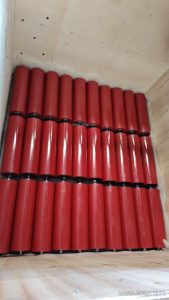
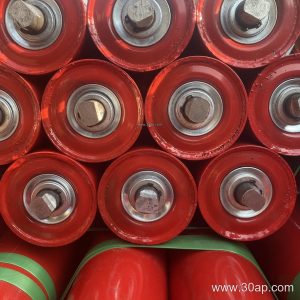
Alignment is critical. A misaligned belt pushes the skirt against the conveyor bracket or the idler roller frame, which wears the skirt edge quickly. Keep the belt centered, check skirt clearance at the tail pulley, and inspect the bond line for cracks or lifting during routine stops. Replace worn skirt sections before they tear the belt edge. Where spillage is heavy, pair the skirted belt with well-aligned idler rollers and a clean conveyor pulley face to reduce tracking problems.
For dusty or wind-exposed lines, a skirted conveyor belt is often a practical alternative to a fully enclosed pipe conveyor belt or a corrugated sidewall conveyor belt, especially where a simple troughing layout is preferred. The right choice depends on the route, the material and the maintenance resources available at the site.