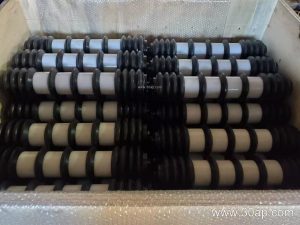
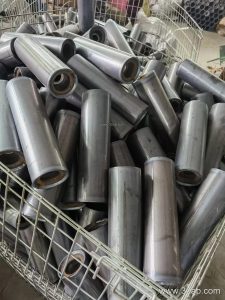
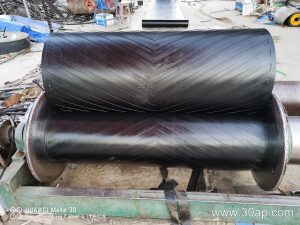
What the Trough Idler Bracket Set Does
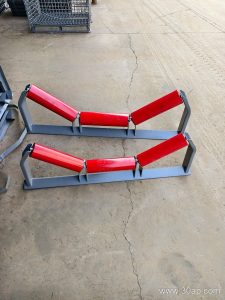
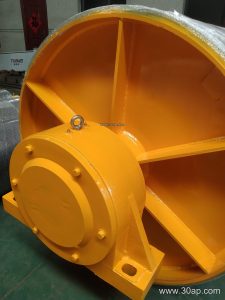
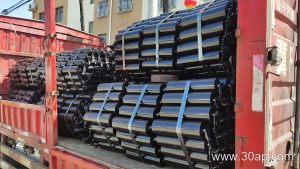
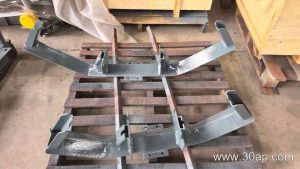
A trough idler bracket set is the steel support assembly that holds the carrying-side idler rollers in a troughed profile beneath a conveyor belt. In everyday plant language, crews may call it a troughing bracket set, troughing frame set, or carrying idler bracket set. It is not a pulley: drive pulleys, tail pulleys, and bend pulleys each do a different job at the ends or along the route, while this bracket set simply keeps the idler rollers at the correct angle and spacing so the belt can carry bulk material without spilling.
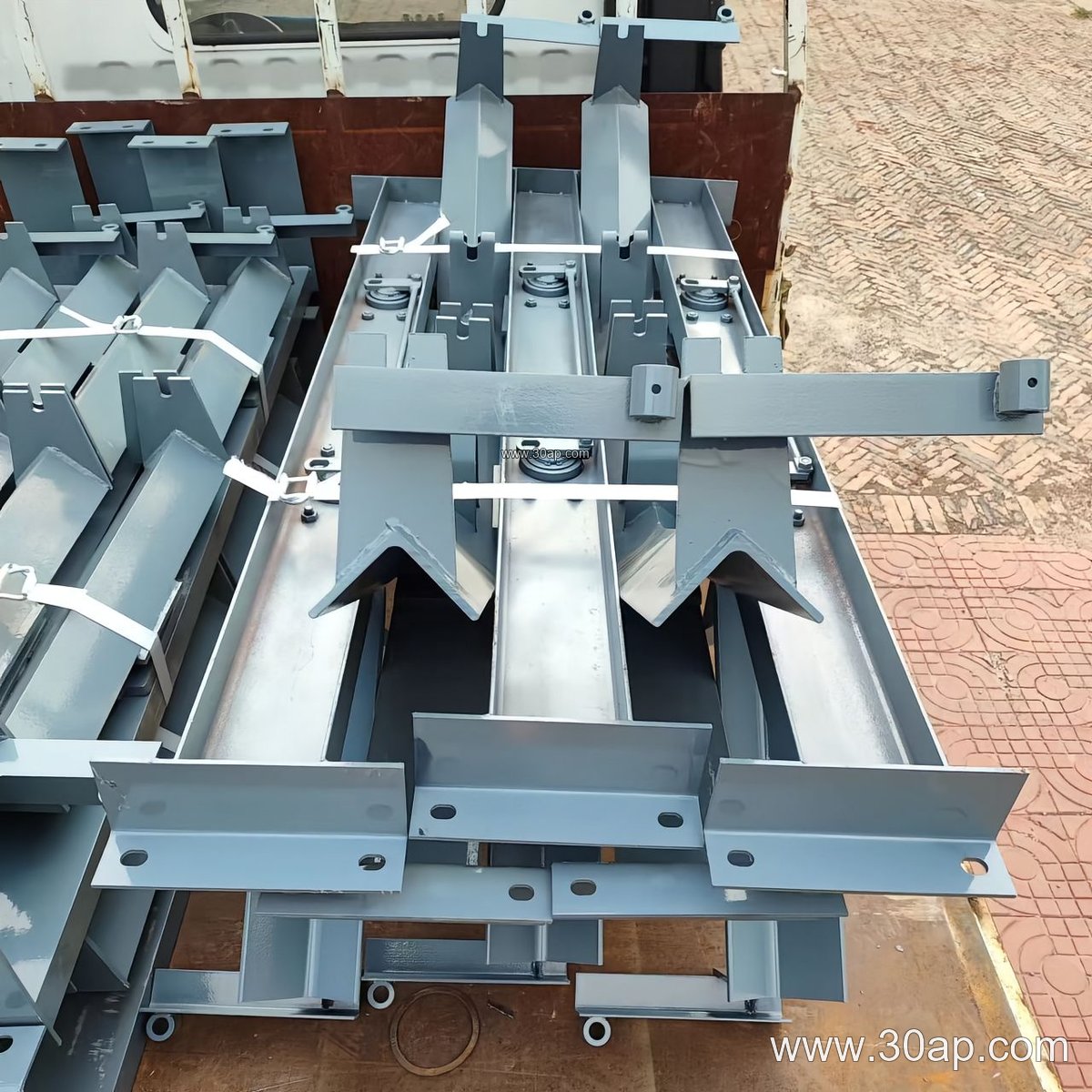
The set usually includes the crossbeam or frame, two or three idler mounting positions, fixing plates, and the mounting holes that connect to the conveyor stringer. Depending on the design, the bracket may be fixed or adjustable, and the angle is set by the position of the outer idler stations.
How a Troughing Bracket Set Is Built
Most sets are fabricated from angle steel, channel steel, or folded steel plate. The material choice follows the load and the environment rather than a single universal rule. In a quarry or a sand and gravel line, dust and grit are constant, so welded joints and hole edges should be clean and free of sharp burrs that could wear the idler shaft or trap material.
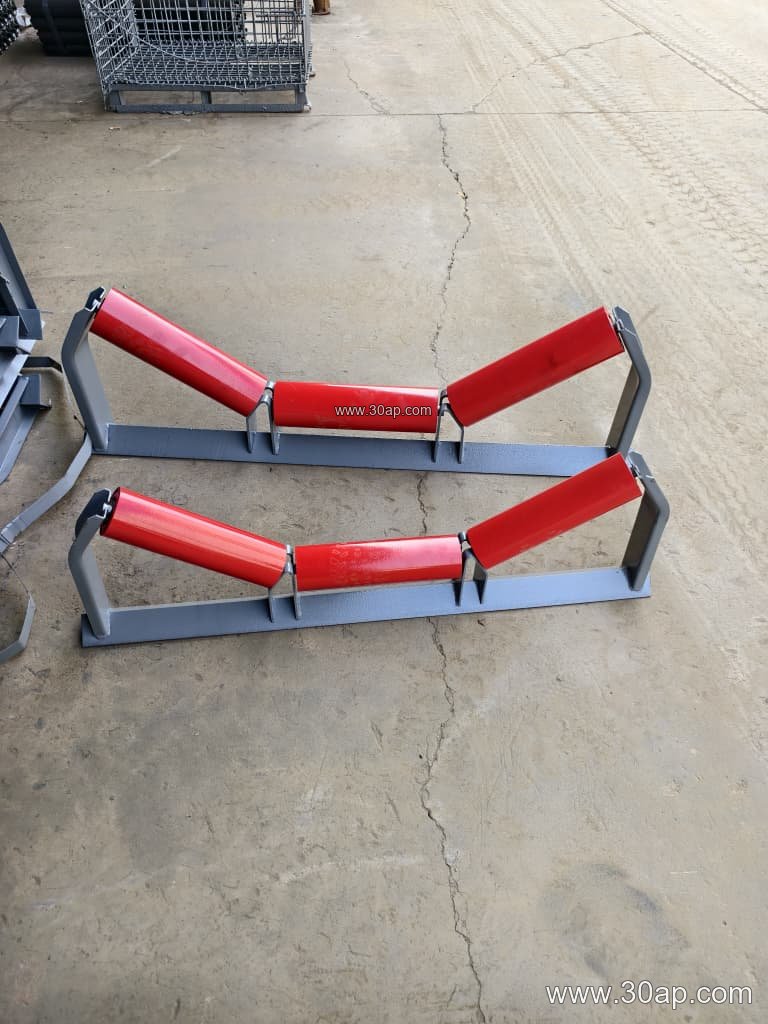
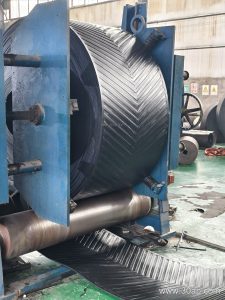
The bracket set works together with an idler roller, the conveyor bracket on the stringer, and the conveyor belt above. A well-aligned set keeps each roller square to the belt path, which reduces edge wear and helps the belt track straight. When the set is loose or bent, the belt can sag, mistrack, or spill material at the transfer point.
Common Sizes and Trough Angles
Bracket sets are normally matched to belt width, trough angle, and roller diameter. The table below shows common reference combinations; final dimensions, hole spacing, and crossbeam length are determined by the conveyor design.
| Belt Width | Trough Angle | Roller Diameter | Typical Use |
|---|---|---|---|
| B500 / B650 | 20° or 30° | Ø89 | Light aggregate and small transfer lines |
| B800 | 30° or 35° | Ø108 | Sand and gravel, cement plant feed |
| B1000 / B1200 | 35° or 45° | Ø133 | Coal handling, power plant coal yards |
| B1400 / B1600 | 35° or 45° | Ø159 | Iron ore, heavy bulk material |
| B1800 / B2000 | 35° or 45° | Ø194 | Large port and mine conveyor systems |
Adjustable brackets can be set between angles such as 20°, 30°, 35°, and 45°. Forward-leaning designs are often set at about 1.5° to 2° to help belt tracking. A wider belt does not automatically require one specific roller diameter, and a given belt width can serve with more than one trough angle depending on capacity and material.
Where These Bracket Sets Are Used
In a coal washing plant, the trough idler bracket set supports the carrying run through dusty, damp conditions, so galvanized or well-painted frames are often preferred. In a cement plant, the same assembly sits under belts moving clinker and raw meal, where vibration and fine dust demand tight bolting.
The bracket set also matters on the receiving side of a crusher conveyor, where impact and heavy loading can shift a poorly fixed frame. On a long overland line carrying ore, consistent bracket alignment across many spans keeps the belt centered and extends roller life. Matching conveyor belt types such as EP conveyor belt, steel cord conveyor belt, or flame retardant conveyor belt to the right bracket geometry helps the whole system run smoothly.
Buyer Checklist
- Confirm belt width, trough angle, and roller diameter before ordering.
- Check whether a fixed or adjustable bracket suits the conveyor.
- Ask for the mounting hole spacing and crossbeam length, since these follow the design.
- Match the frame finish to the site: dusty, wet, or corrosive conditions.
- Verify that the bracket set fits the existing conveyor bracket and stringer.
For more on compatible conveyor components, see www.example.com/trough-idler-bracket-set and the related pages on www.example.com/conveyor-idler and www.example.com/conveyor-pulley. A correctly selected trough idler bracket set is a small part of the conveyor, but it directly affects belt life, material containment, and maintenance intervals in mining, quarrying, cement, and power plant operations.