Why a wet outdoor conveyor bracket needs a different installation sequence
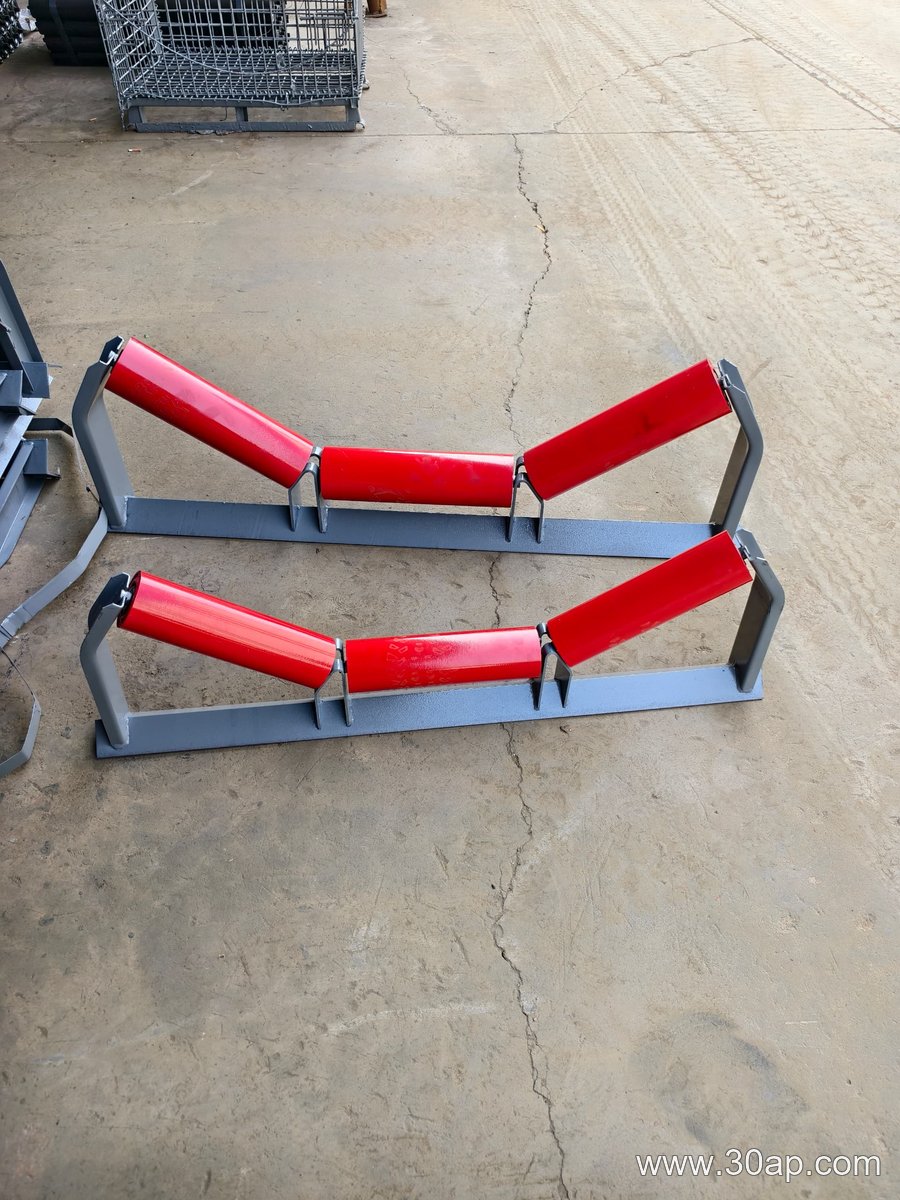
Rain, washdown, and thermal cycling change how a conveyor bracket behaves after installation. A bracket that is perfectly aligned indoors can shift when its mounting surface corrodes or when freeze-thaw cycles loosen bolts. The goal is not just to bolt it down, but to keep the idler axis stable through wet service.
Preparation before mounting
- Verify the stringer surface is flat, dry, and free of scale or old weld spatter where the conveyor bracket will sit.
- Confirm the bracket’s hole pattern matches the stringer without forcing or elongating holes.
- Stage stainless or coated fasteners if the environment is consistently wet.
Mounting and alignment
Set the conveyor bracket loosely, then bring the idler into line with adjacent rollers using a string line or laser. Tighten gradually in a crossing pattern so the bracket does not pull the stringer. In a wet outdoor setting, a slight crown or drainage path away from the bracket base helps prevent standing water.
Commissioning checks
- Run the belt empty and watch for tracking drift near the new bracket.
- Check bolt torque after the first few hours of operation.
- Inspect for water traps or coating damage that could start corrosion.
These steps are illustrative, not a fixed specification. Actual values depend on the conveyor design and site conditions.
Why the Enclosure Decision Comes First
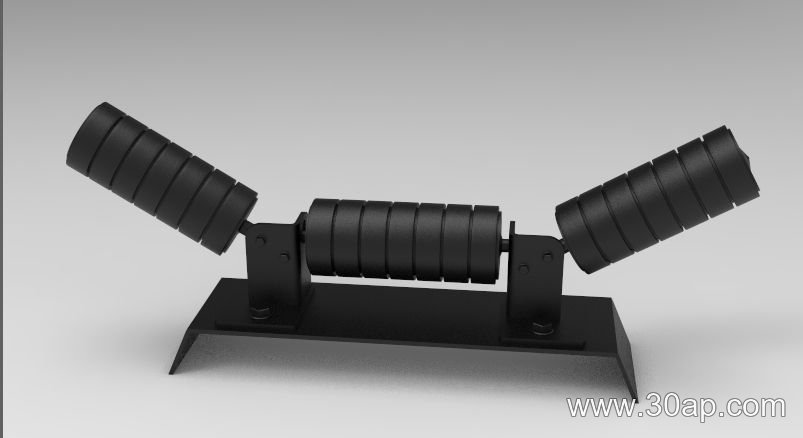
In a dusty quarry, fine rock dust escapes an open troughed conveyor belt at every transfer point. A pipe conveyor belt rolls the belt into a closed tube, so the material is enclosed along the whole route. That single difference drives the comparison.
Where Each Subtype Fits
- Pipe conveyor belt: benefits include dust containment, curve capability and no spillage on the return strand; limitations include higher belt tension, tighter roll requirements and stricter splicing.
- Troughed conveyor belt: benefits include simpler idlers, easier splicing and lower initial complexity; limitations include dust emission and spillage in windy, dry conditions.
Suitable Conditions
Choose a pipe conveyor belt when the route curves, dust control is critical, or the quarry sits near housing. Choose a troughed belt when the path is straight, dust is suppressed by water sprays, and maintenance access matters more than enclosure.
Shell thickness trade-off
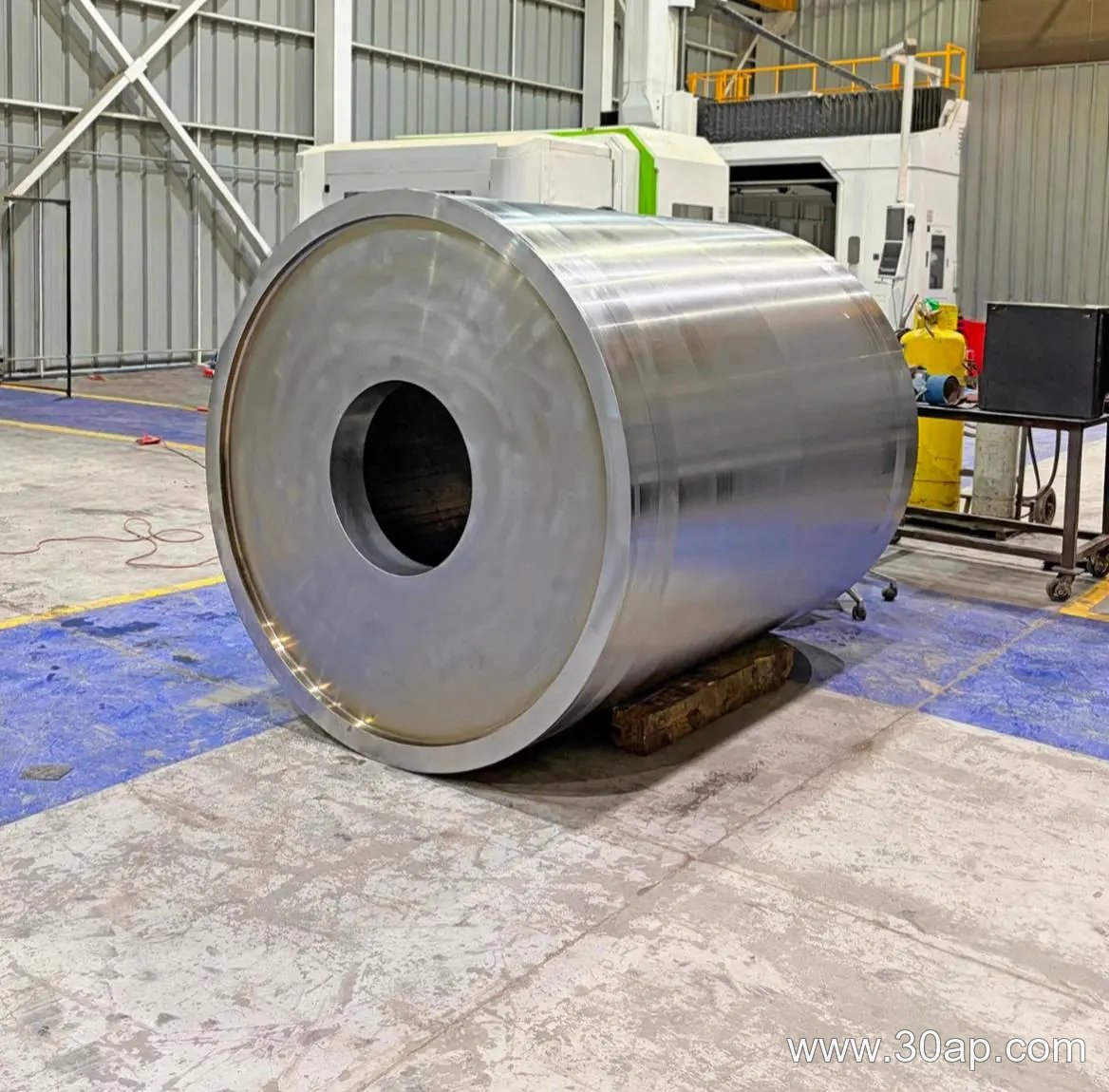
In a dusty quarry, a thicker idler roller shell resists abrasion and impact but raises material and machining cost. The real question is whether longer wear life offsets higher freight and purchase expense.
Cost factors
- Materials: thicker steel or polymer increases unit cost.
- Dimensions: larger diameter and face length use more material and add weight.
- Manufacturing: extra machining and bearing housing reinforcement add labor.
- Freight: heavier rollers raise shipping charges.
Balance wear life against these costs for the specific duty.
Which conveyor pulley dimensions should you check first on a spec sheet?
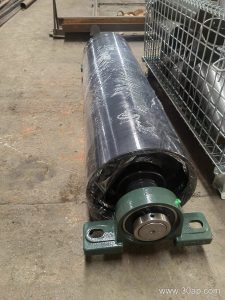
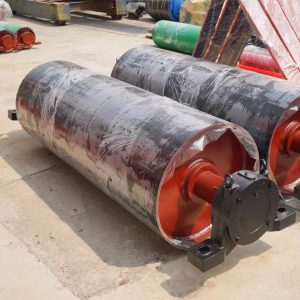
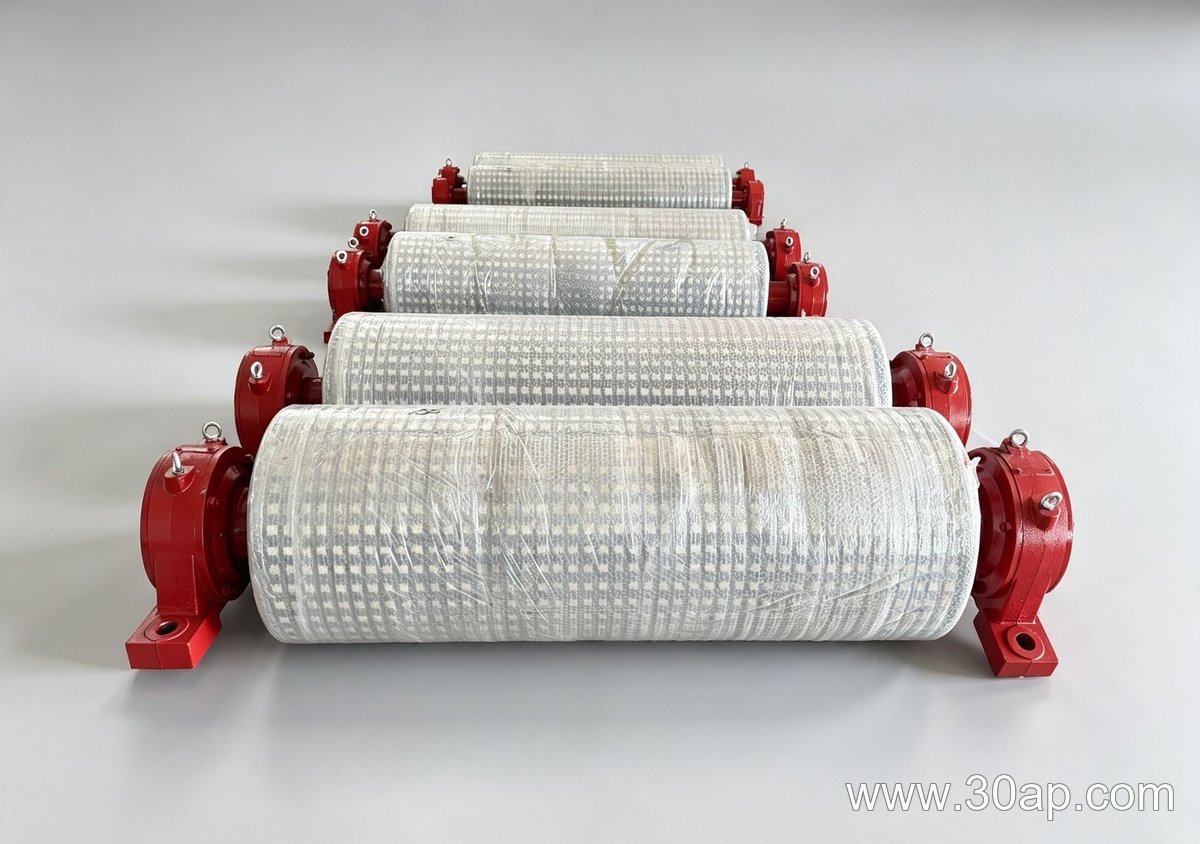
A bulk-material port terminal handles a conveyor pulley as a load-bearing drum, not a catalog line. The sheet lists fields; each field answers one question.
- Shell diameter (mm) sets belt curvature and torque arm.
- Face width (mm) must exceed belt width.
- Shaft diameter (mm) drives bearing bore and stress.
- Working load (kN) is a limit, not a rating you assume.
How do you read load and speed fields without inventing limits?
Read them as declared conditions. If a conveyor pulley sheet shows a working load and a belt speed, those values apply only at the stated wrap angle and tension. Confirm units, then compare with your duty.
Why units and reference conditions change the answer
Mixed units hide errors. A diameter in inches beside a load in kN is workable, but only after conversion. The conveyor pulley itself does not create capacity; the stated reference conditions define it.