What a Composite Idler Is
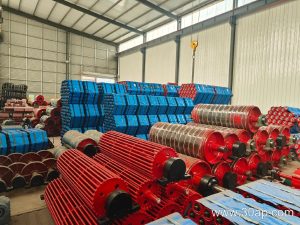
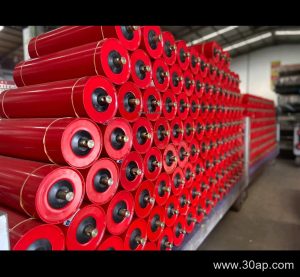
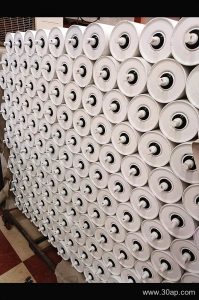
A composite idler is a conveyor idler roller whose barrel is built from composite materials, typically a polymer or reinforced resin body, rather than a conventional steel tube. It performs the same job as any carrying or return idler on a belt conveyor: it supports the conveyor belt and the load moving over it, keeps the belt tracking along the structure, and reduces friction along the line. The composite construction is the distinguishing feature, and it is why these idlers attract attention in dusty, wet, or corrosive service conditions.
The term is often written as composite idler roller, and both names describe the same product. On a typical installation the composite idler sits in a conveyor bracket or frame, with the shaft ends held in the usual fixing arrangement. It is not a conveyor pulley, and it should not be confused with a drive pulley, tail pulley, or bend pulley, which transmit motion or change belt direction rather than support the belt.
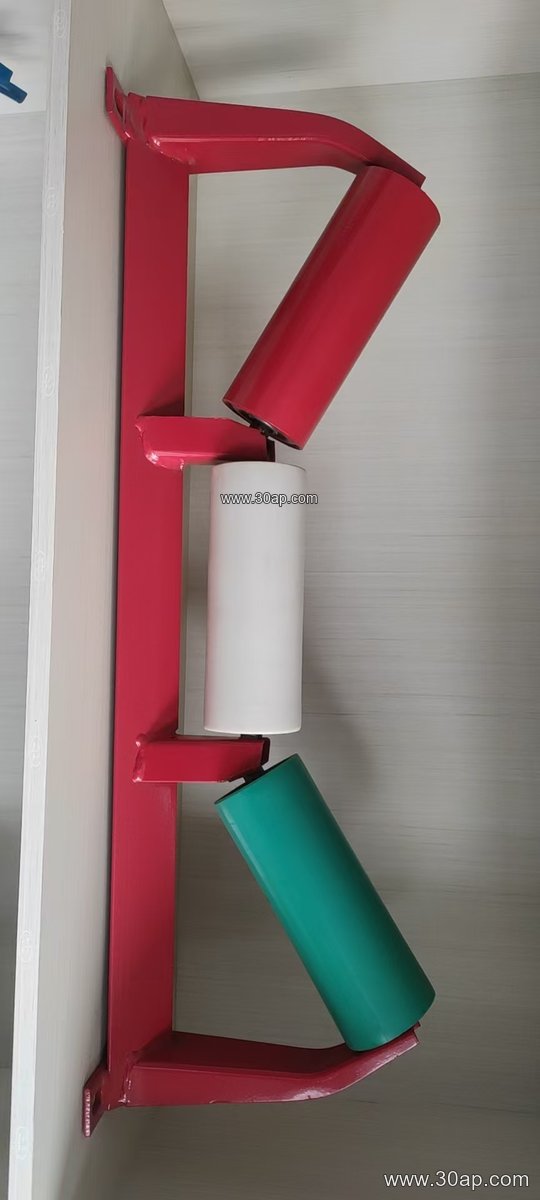
How the Roller Is Built
A composite idler usually combines several elements:
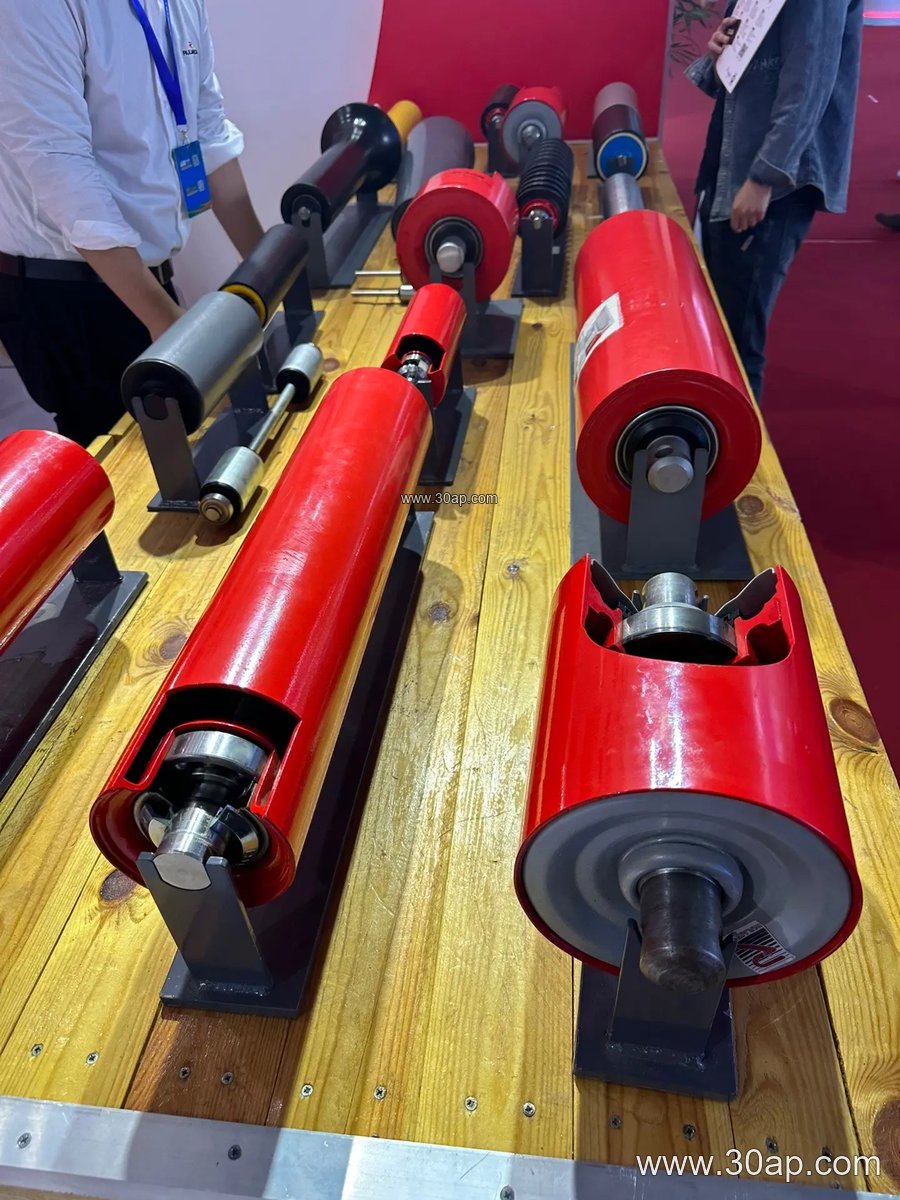
- A composite barrel, formed by winding, molding, or pultrusion, giving a lighter body than a comparable steel roller.
- A through shaft, often steel, with machined ends for mounting.
- Bearing housings at each end, fitted with sealed bearings such as 6204, 6205, 6305, 6306, 6308, or 6310 depending on the load case and roller diameter.
- A sealing arrangement designed to keep out dust, grit, and moisture, which is a common reason buyers choose this style.
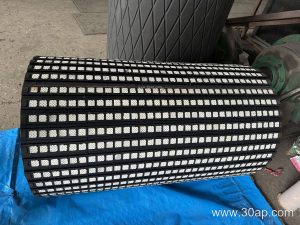
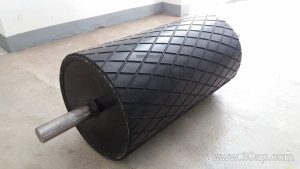
The barrel surface can be plain, or it can be fitted with rubber rings or a similar covering where impact or belt grip matters. Roller diameters for composite designs commonly follow the same range used across conveyor idlers, from about Ø63 up to Ø159 and larger, though the exact size must be confirmed with the supplier for the composite version.
Where Composite Idlers Fit
Composite idlers are chosen where steel rollers would corrode, scale, or add unnecessary weight. Two typical settings:
- Aggregate and quarry lines handling damp sand, gravel, and crushed stone, where washdown and fines attack steel surfaces.
- Port and bulk terminal conveyors exposed to salt air and weather, where corrosion resistance extends service life.
They can be used in troughing positions to carry the belt, in return positions to support the empty strand, and in transition or impact areas where belt support matters. In a cement plant or a power plant coal yard, the same logic applies when dust and moisture are present. A composite idler does not replace a conveyor pulley in any of these duties; it works alongside the belt, the pulleys, and the conveyor bracket as part of the same line.
Matching the Idler to the Conveyor
Selection starts with the belt width and the load. Common belt widths include B400, B500, B650, B800, B1000, B1200, B1400, B1600, B1800, B2000, B2200, and B2400. Roller length changes with belt width, trough angle, and the idler arrangement. For a three-roll troughing set, common roller lengths are roughly 200 mm at B500, 250 mm at B650, 315 mm at B800, 380 mm at B1000, 465 mm at B1200, 530 mm at B1400, 600 mm at B1600, 670 mm at B1800, and 750 mm at B2000. These are examples, not fixed pairings; side rollers and the center roller can differ, and the final length is set by the design.
Trough angles of 20, 30, 35, and 45 degrees are common, and the angle affects how the belt is shaped and how the load sits. A forward tilt of about 1.5 to 2 degrees is used on some training and aligning idlers. Bearing choice should follow the shaft and load, not the belt width alone, so the same roller diameter can carry different bearings in different applications.
| Parameter | Common Reference Range |
|---|---|
| Roller diameter | Ø63 to Ø159 and above, by design |
| Belt width | B400 to B2400 |
| Trough angle | 20, 30, 35, 45 degrees |
| Bearing | 6204, 6205, 6305, 6306, 6308, 6310 |
| Roller surface | Plain, rubber ring, ceramic, nylon options |
What Buyers Should Check
Ask for the composite material specification and the load rating, because composite covers a wide family of products. Confirm the shaft diameter and bearing size against the conveyor bracket and the actual load, and do not assume a bearing type from belt width. Check the sealing design for the site conditions, especially where fine abrasive dust or wet material is present. Where impact is heavy at the loading point, consider a rubber-ring version or a buffer arrangement rather than a plain composite roller.
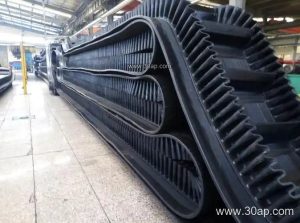
Also confirm compatibility with the belt itself. A heavy-duty mining conveyor belt, an abrasion resistant conveyor belt, or a flame retardant conveyor belt used underground all place different demands on the supporting idlers, and the roller should suit the duty rather than the other way around. For more information on matching idlers with conveyor belts and pulleys, visit conveyoridler.com and review the belt and roller guidance before ordering.