What a Stone Conveyor Idler Does on the Belt Line
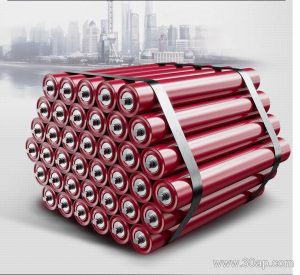
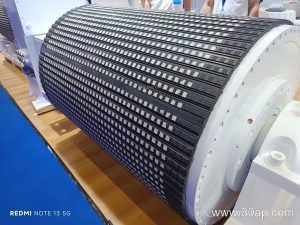
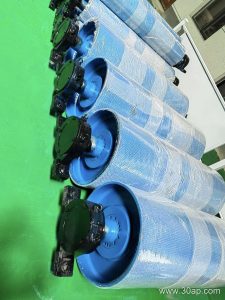
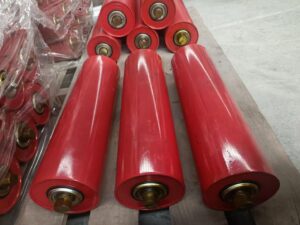
A stone conveyor idler is the rotating support that carries the conveyor belt and the load of crushed rock, gravel, or ore along the length of a conveyor. In quarry and aggregate circuits, these idlers are exposed to sharp edges, abrasive dust, and heavy impact, so their construction matters as much as the belt itself. The stone conveyor idler keeps the belt aligned, reduces friction, and protects the belt from sagging between pulleys. Unlike a conveyor pulley, which drives or redirects the belt at the ends, idlers are distributed along the carrying and return sides of the conveyor structure.
Construction Details That Affect Service Life
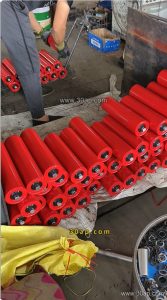
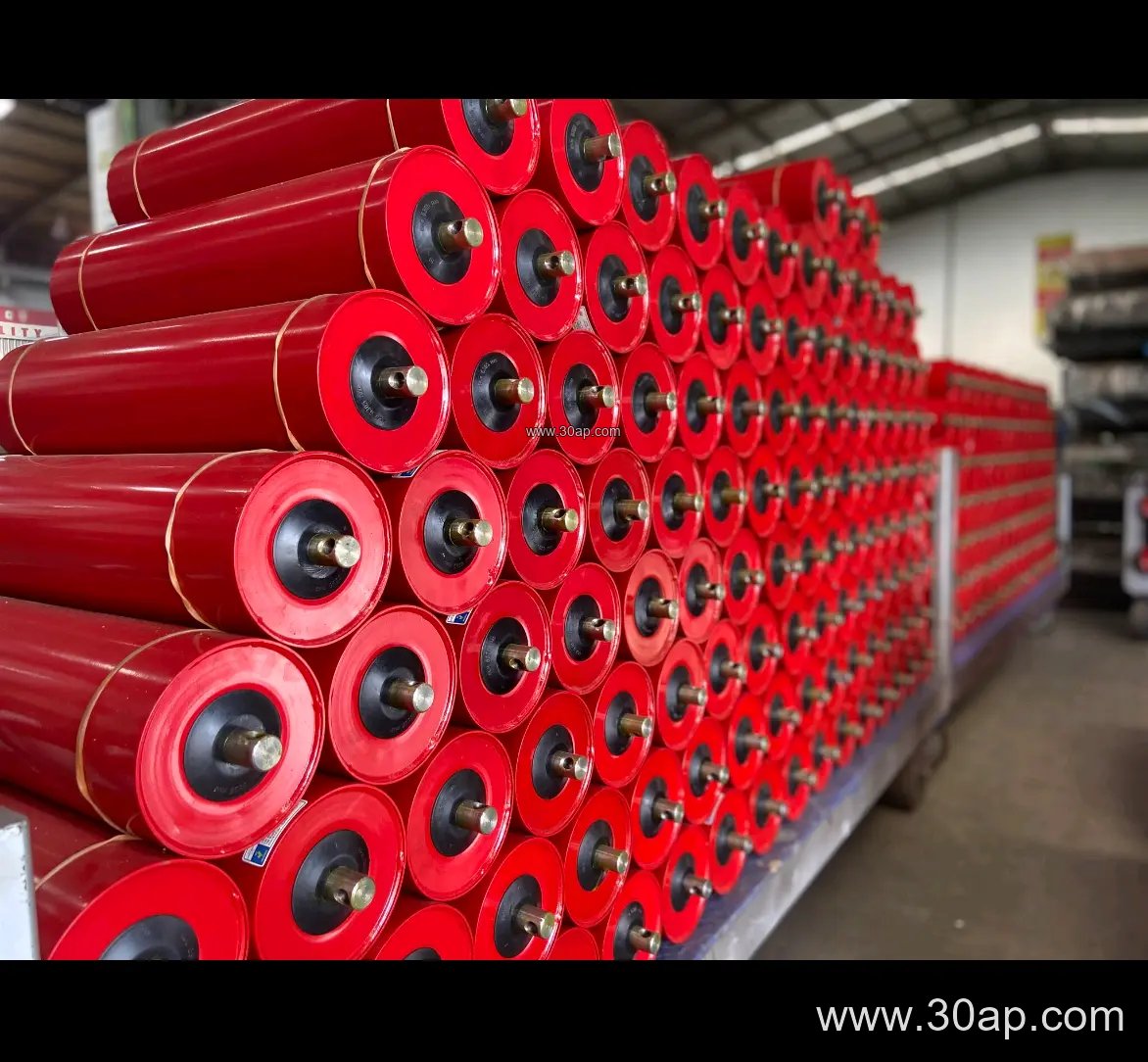
A typical stone conveyor idler uses a steel tube shell, welded end caps, and sealed ball bearings. The roller surface may be plain steel, nylon, ceramic, or rubber rings depending on the duty. Bearing sizes such as 6204, 6205, 6305, 6306, 6308, or 6310 are common, but the bearing choice is matched to the load and speed rather than to a single roller diameter. Sealing is critical in stone handling because fine grit destroys unsealed bearings quickly. Many stone conveyor idlers use labyrinth seals or multi-stage seals to keep dust out and grease in. The shaft is usually cold-drawn steel, and the idler ends are fitted with a conveyor bracket that mounts to the conveyor frame.
Common Types Used in Stone and Aggregate Duty
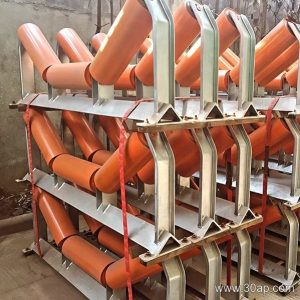
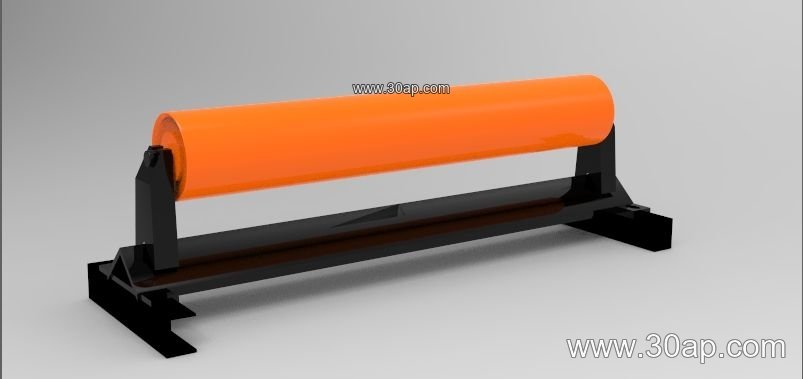
Troughing idlers, also called carrying idlers, are arranged in two or three rolls to form a trough that keeps material centered. A three-roll troughing set is common on wider belts, while a single-roll or two-roll arrangement may appear on smaller units. Return idlers support the empty belt on the lower run; flat return idlers and V-return idlers are both used, with the V shape helping to train the belt. Impact idlers with rubber rings are placed under loading points where stone drops onto the belt. Transition idlers ease the belt from the flat pulley profile into the trough. Self-aligning idlers, including friction and tapered types, correct minor belt drift. Spiral idlers are sometimes used where sticky material tends to build up on the rolls.
Where Stone Conveyor Idlers Are Applied
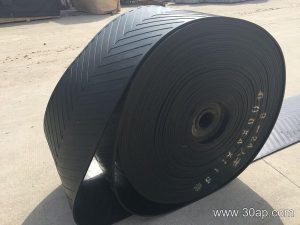
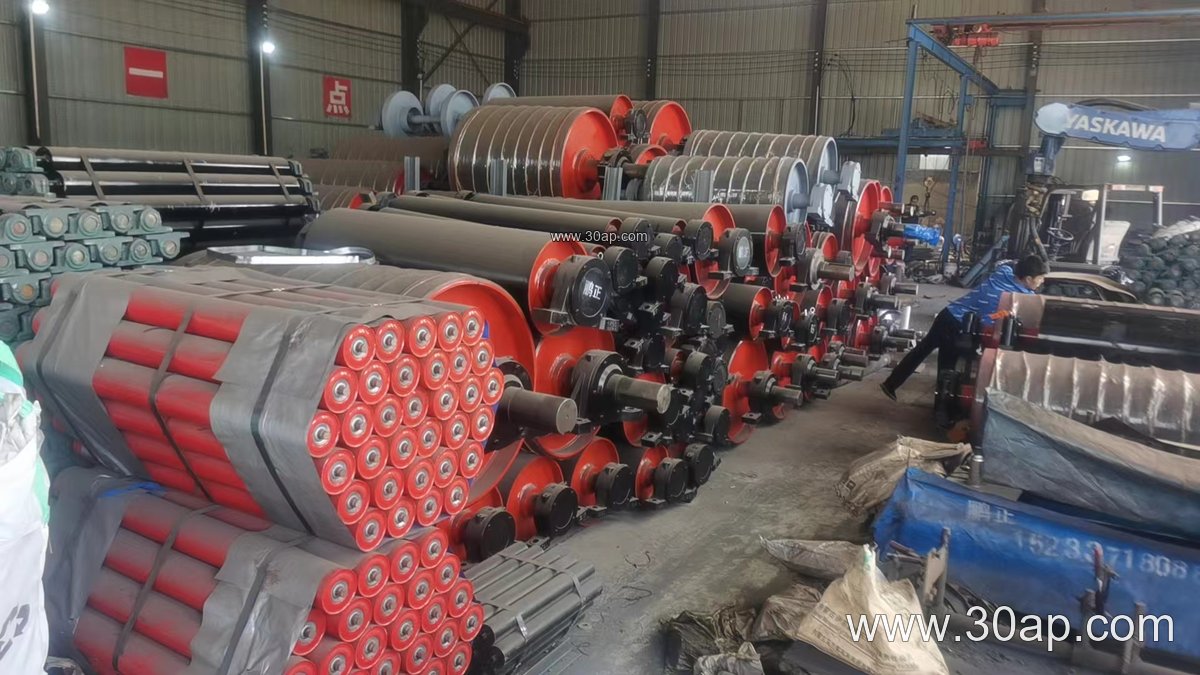
These idlers are found in quarry conveyors, crusher discharge lines, screening plants, and aggregate stockyard systems. In a sand and gravel plant, a stone conveyor idler handles abrasive aggregate and often pairs with an abrasion resistant conveyor belt. In a cement plant, the same idler design may run under limestone or clinker, where heat and dust both matter. Power plant coal handling and iron ore terminals also use heavy-duty idlers, though the belt selection may shift toward a flame retardant conveyor belt or a steel cord conveyor belt for long centers. The idler itself remains a mechanical support component; it does not replace the conveyor pulley at the drive or tail position.
Matching Idler Dimensions to Belt Width and Trough Angle
Trough angle and belt width guide the roll length and diameter. Common trough angles are 20, 30, 35, and 45 degrees. Roll diameter choices include 63, 76, 89, 102, 108, 127, 133, 159, 178, 194, and 219 mm. Belt widths from B400 to B2400 are encountered, but the idler set must be selected by the conveyor designer. The table below shows typical reference values for three-roll troughing sets; side rolls and center rolls can differ, and these are examples rather than fixed matches.
| Belt Width | Typical Roll Length (three-roll set) | Common Trough Angle |
|---|---|---|
| B500 | 200 mm | 20–35 degrees |
| B650 | 250 mm | 20–35 degrees |
| B800 | 315 mm | 20–35 degrees |
| B1000 | 380 mm | 30–35 degrees |
| B1200 | 465 mm | 30–35 degrees |
| B1400 | 530 mm | 30–35 degrees |
| B1600 | 600 mm | 30–45 degrees |
| B1800 | 670 mm | 30–45 degrees |
| B2000 | 750 mm | 35–45 degrees |
Forward tilt of about 1.5 to 2 degrees is sometimes used on training idlers to help center the belt. This is a design detail, not a universal requirement. A wider belt does not automatically dictate a specific pulley diameter, and shaft diameter should be confirmed from the idler manufacturer’s load rating.
Buyer Checklist for Stone Conveyor Idlers
- Confirm the belt width, trough angle, and whether the station is carrying, impact, transition, or return duty.
- Check the roll diameter and shell material against the abrasiveness of the stone; rubber rings help at transfer points.
- Review bearing size and seal type for dust and water exposure.
- Verify the conveyor bracket pattern and frame spacing before ordering.
- Ask for the idler load rating and compare it with the actual belt tension and material weight.
- Plan a spare-parts stock for high-wear positions such as impact and transition idlers.
For a complete conveyor system, the stone conveyor idler works alongside the conveyor belt, conveyor pulley, and frame. In stone crushing and screening plants, selecting the right idler reduces belt wear and downtime, while the wrong seal or bearing can fail within weeks. Buyers should treat idler selection as part of the whole conveyor design rather than an isolated purchase.