What the Head Pulley Does on a Conveying Line
The belt conveyor head pulley sits at the discharge end of a conveyor and does two jobs at once. It drives the belt forward as the powered drum, and it redirects the belt downward after the material has been thrown clear. Because the belt wraps this drum under load, the head pulley is often called the drive pulley or discharge pulley, and those names describe the same component in its usual position. It is not a tail pulley, a bend pulley or a tensioning drum, and it should not be swapped with them when specifying a replacement.
In a quarry, a limestone mine or a cement clinker line, the head pulley is the point where the conveyor belt releases its load onto a chute, a screen or the next stage. Everything upstream, including the conveyor idler rollers and the conveyor brackets, feeds toward it.
How a Head Pulley Is Built
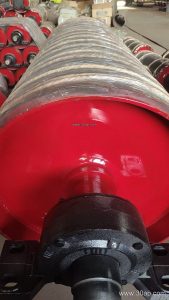
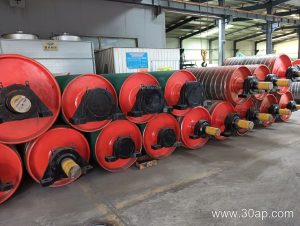
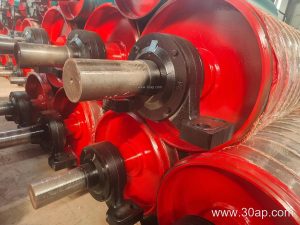
The assembly usually combines a cylindrical shell, two end discs, a shaft, bearing housings and a lagging layer. The shell is machined for balance and concentricity, and the shaft is sized by torque and bearing load rather than by belt width alone. Larger drives often use a keyed shaft coupling to a gearbox, while compact layouts can use a motorized drum.
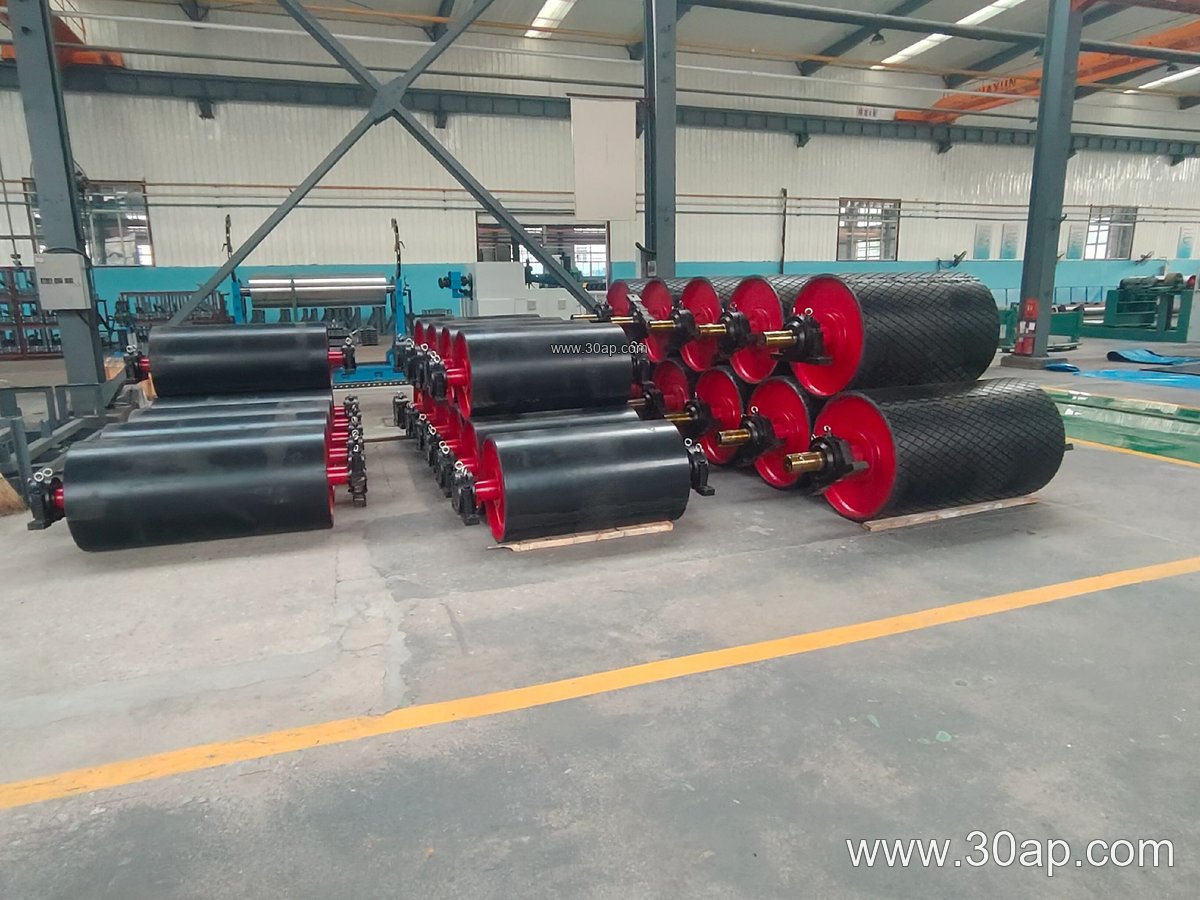
Surface treatment matters as much as the steel. Plain finish suits light duty and low wrap angles. Rubber lagging, applied cold or hot vulcanized, raises friction and protects the shell. Diamond and herringbone grooves help shed water and fines, and ceramic lagging is chosen where abrasive dust wears ordinary rubber quickly.
| Parameter | Common reference range |
|---|---|
| Belt width | B400, B500, B650, B800, B1000, B1200, B1400, B1600, B1800, B2000 |
| Pulley diameter | Ø200, Ø250, Ø315, Ø400, Ø500, Ø630, Ø800, Ø1000, Ø1250, Ø1400 |
| Face width | Typically wider than the belt, for example B800 about 950 mm, B1200 about 1400 mm, B1600 about 1800 mm |
| Shaft diameter | Ø50, Ø60, Ø70, Ø80, Ø90, Ø100, Ø120, Ø140, Ø160 |
| Lagging thickness | 8, 10, 12, 15, 20 mm |
| Surface form | Plain, rubber lagged, diamond lagged, herringbone lagged, ceramic lagged |
These figures are reference values. A B1200 × Ø1000 combination and a B800 × Ø500 combination can both be sound designs, because diameter follows belt speed, wrap angle, tension and material conditions.
Where It Fits in Different Plants
In a coal preparation plant or an underground coal mining conveyor, flame retardant and anti-static properties are expected from the belt, and the head pulley is usually specified with lagging that resists coal dust and moisture. In an iron ore or copper ore concentrator, the duty is heavier and abrasion resistant conveyor belts run alongside robust lagged drums. Power plant coal handling and port bulk terminals use large diameter head pulleys to keep belt stress within limits on long runs. Aggregate lines feeding a crusher conveyor belt often need impact tolerant belts and a head pulley sized for frequent starts.
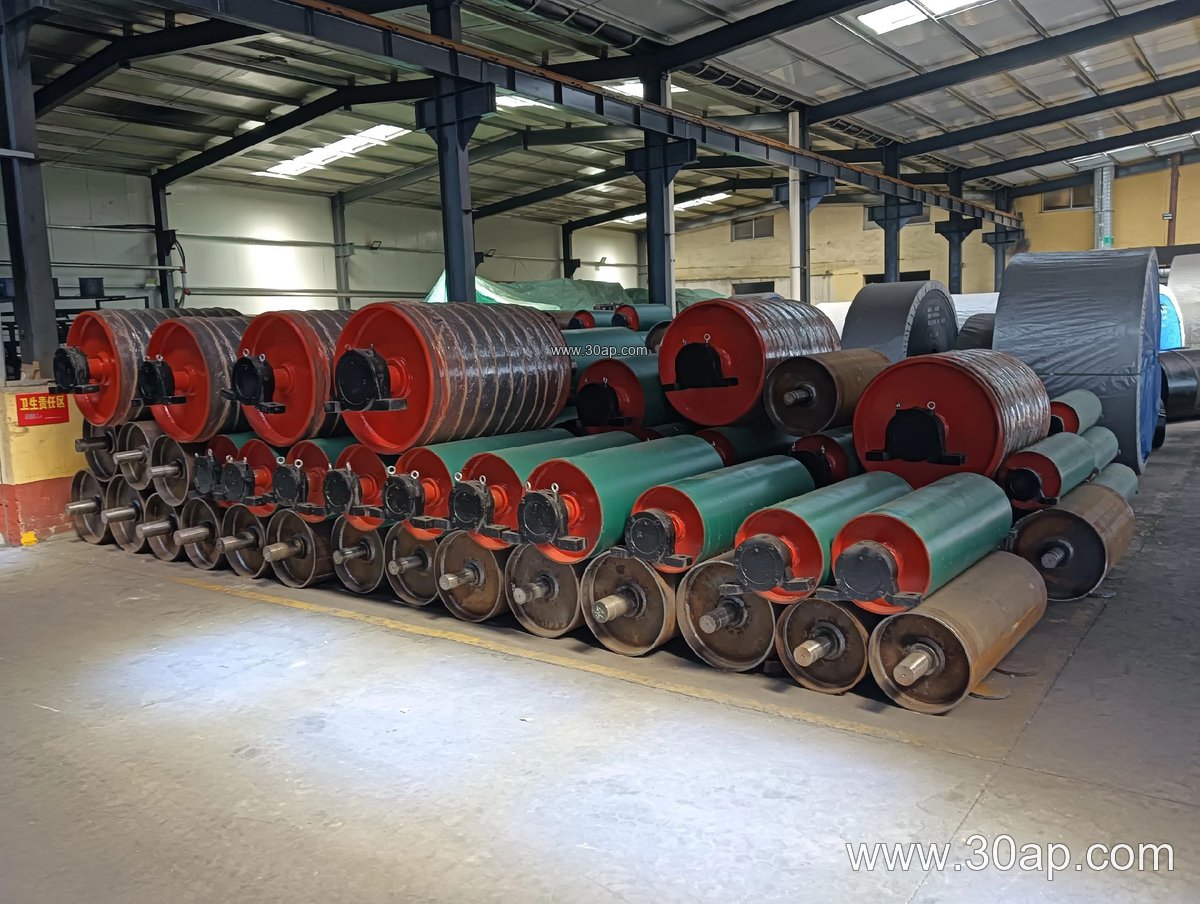
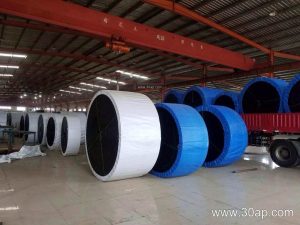
Whatever the site, the head pulley has to match the belt it carries: a chevron conveyor belt, a corrugated sidewall belt or a pipe conveyor belt each imposes its own tracking and wrap requirements. Matching pulley face width and lagging to the belt type avoids edge damage and slippage.
What Buyers Should Check Before Ordering
- Confirm the actual duty: drive, discharge or both, and the belt speed and motor power.
- Provide the belt width and belt type, for example an EP conveyor belt, an NN conveyor belt or a steel cord conveyor belt, because tension affects shell and shaft design.
- State the required lagging form and thickness rather than assuming rubber is enough.
- Check that bearing housings and the conveyor bracket interface match the existing structure.
- Ask for the shaft diameter and material grade to be calculated for the load case, not copied from an old drawing.
Maintenance is straightforward when planned: inspect lagging wear, check bearing temperature and alignment, and keep the belt tracking centered on the drum. A worn head pulley with polished lagging is a common cause of slip and belt edge damage. Replacing lagging on schedule is cheaper than replacing the shell.
For a reliable quotation, send the belt width, pulley diameter, face width, shaft size, lagging preference and the environment the unit will work in. Designers of conveying systems at cdtconveyor can review those details against the belt and the surrounding equipment before a head pulley is built.