What the Three-Roll Idler Bracket Does
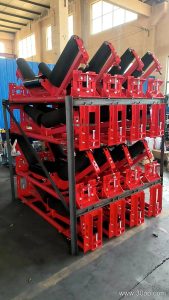
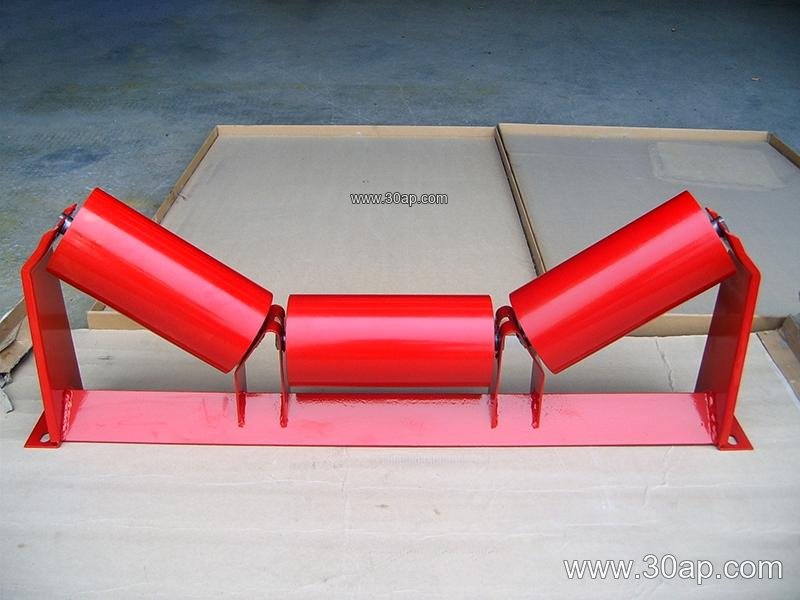
A three-roll idler bracket is the support frame that holds three idler rollers in a trough shape beneath a conveyor belt. On a typical troughed carrying side, the bracket positions one center roller horizontally and two side rollers at an incline, so the belt forms a channel that keeps bulk material from spilling. The same assembly is often called a troughing idler bracket or troughing bracket, and it is one of the most common components on a bulk handling conveyor.
The bracket does not carry the load alone. It transfers the weight of the belt, the material, and the rollers into the conveyor stringer or frame. That makes its angle, spacing, and mounting method important for belt training and for keeping the belt edge from rubbing.
How It Is Built
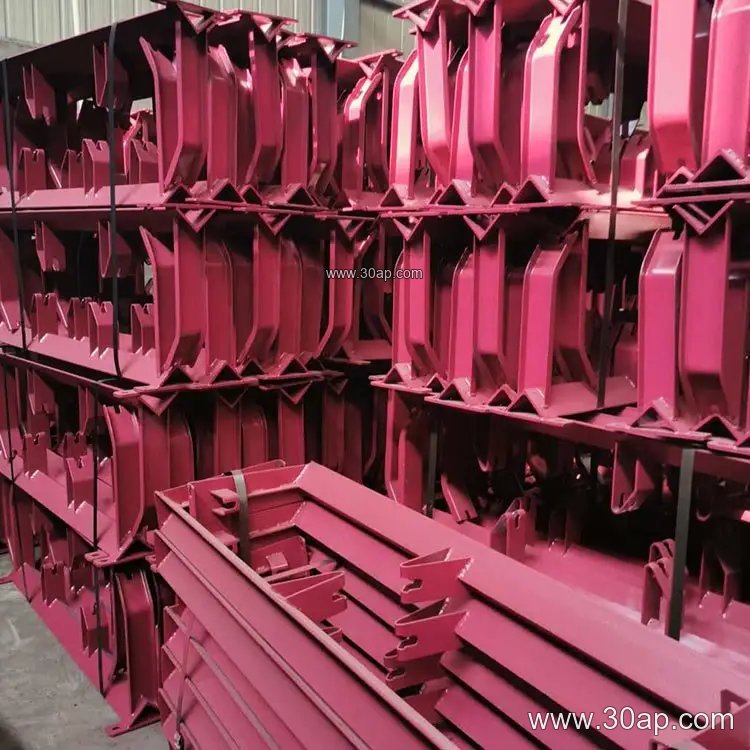
Most three-roll idler brackets are fabricated from angle steel, channel steel, or formed steel plate. The two side arms are bent or welded at a fixed trough angle, while the center seat holds the middle roller. On adjustable versions, the side arms pivot so maintenance crews can change the trough angle to suit the material and belt behavior.
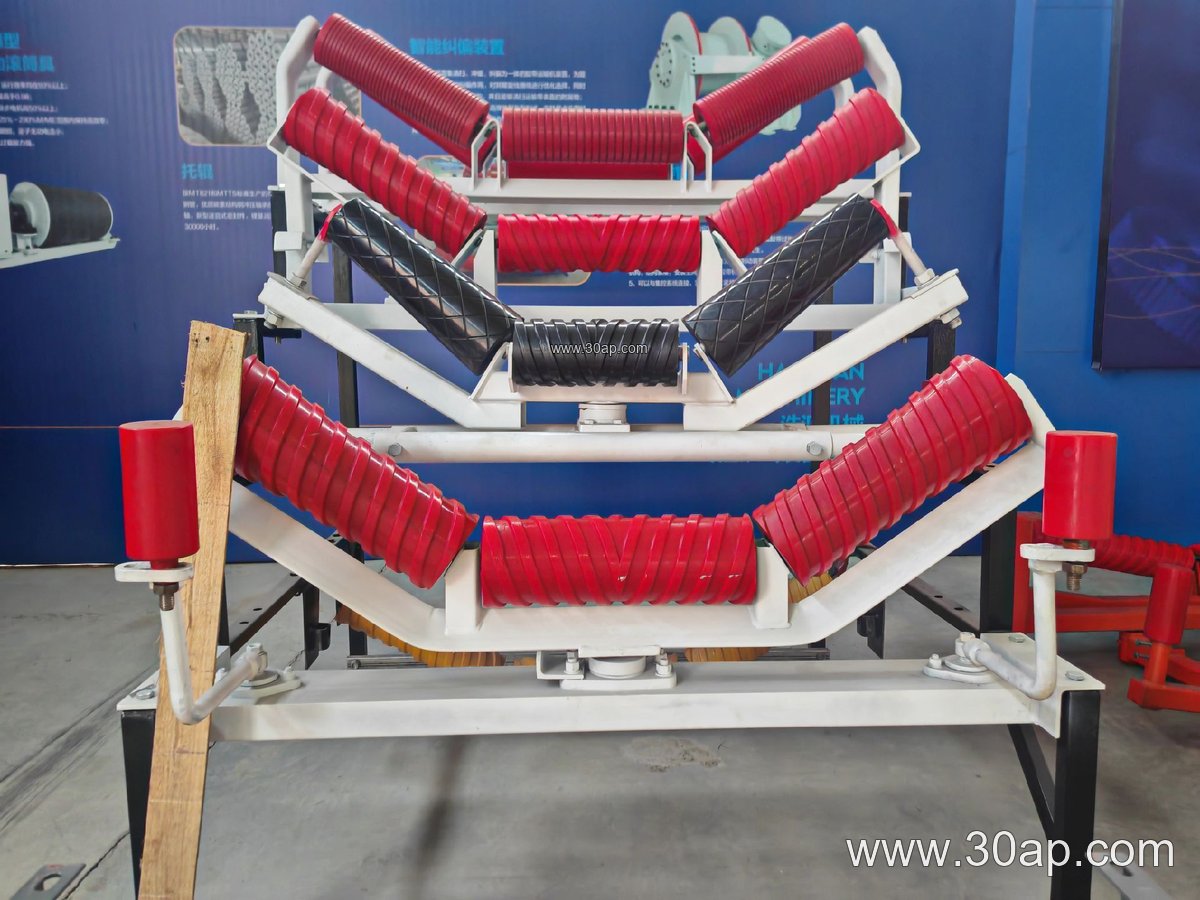
Common trough angles include 20, 30, 35, and 45 degrees. A 35-degree setup is widely used for mixed bulk loads, while 45 degrees suits fine, free-flowing material that needs a deeper channel. Adjustable brackets usually allow movement between these common angles. Forward-leaning brackets, often set at about 1.5 to 2 degrees, give a slight lead to the side rollers to help center the belt.
Typical Reference Combinations
The values below are common reference points, not fixed rules. Hole spacing and crossbeam length change with belt width and trough angle.
| Belt Width | Trough Angle | Roller Diameter | Typical Use |
|---|---|---|---|
| B500 | 30 degrees | Ø89 | Light aggregate lines |
| B650 | 35 degrees | Ø89 or Ø108 | Sand and gravel conveyors |
| B800 | 35 degrees | Ø108 | Cement plant feed belts |
| B1000 | 35 or 45 degrees | Ø108 or Ø133 | Power plant coal handling |
| B1200 | 45 degrees | Ø133 | Iron ore and quarry duty |
| B1400 | 35 or 45 degrees | Ø133 or Ø159 | Heavy bulk transport |
| B1600 | 45 degrees | Ø159 | Large mining conveyors |
| B1800 | 35 or 45 degrees | Ø159 or Ø194 | High-capacity terminals |
One belt width can work with more than one roller diameter or trough angle. Selection should follow the conveyor design, belt stiffness, load density, and the roller series chosen for the line.
Where It Fits on the Conveyor
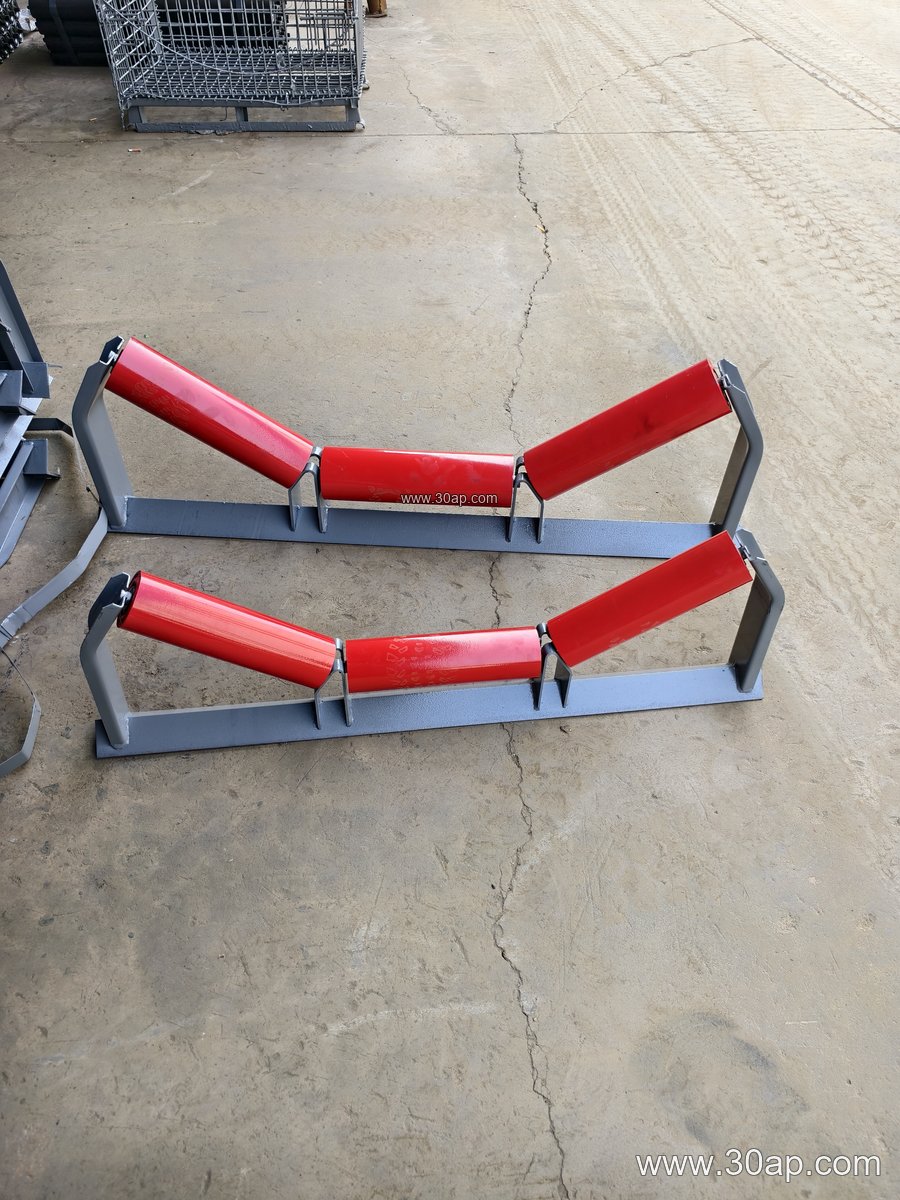
The three-roll idler bracket belongs on the carrying side of the conveyor. It is mounted on the stringer or frame at regular intervals, and the idler rollers drop into its seats. The belt rides on the rollers, not on the bracket itself, so the bracket must keep the rollers aligned and evenly spaced.
In a coal mining conveyor or a power plant coal handling system, the bracket works with a flame retardant conveyor belt and impact-rated rollers near the loading point. In a quarry or sand making plant, it may sit under an abrasion resistant conveyor belt that carries sharp rock. Cement plants and steel plants often use it on long transfer belts where dust and heat are present. Even a food grade conveyor belt line in a grain silo can use a troughing bracket, though the roller and frame finish must suit the hygiene requirement.
The same conveyor also uses a tail pulley, a drive pulley, and bend pulleys at the ends and curves. Those pulleys are separate components and are not interchangeable with the idler bracket. Return-side support is handled by a return bracket or a V-return bracket, not by the three-roll carrying bracket.
Buyer Checklist
- Confirm belt width, such as B800 or B1200, and the required trough angle.
- Match the bracket seats to the roller diameter, for example Ø108 or Ø133.
- Check whether the frame is fixed or adjustable, and whether a forward-leaning design is needed for belt training.
- Confirm the mounting hole pattern and crossbeam length against the existing stringer.
- Review the steel grade and surface treatment for dusty, wet, or corrosive sites.
- For heavy-duty mining conveyor belt lines, ask about reinforced arms and thicker plate.
A well-chosen three-roll idler bracket keeps the belt in a stable trough, reduces spillage, and extends roller life. Buyers should treat published sizes as a starting point and confirm the final bracket drawing against the actual conveyor frame before ordering.