What a Rubber Impact Idler Does
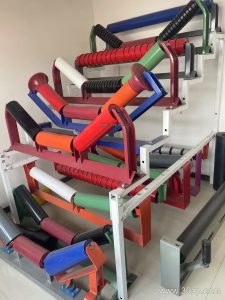
A rubber impact idler is a conveyor idler roller built to absorb the force of falling material at a transfer point. Instead of a bare steel shell, the roller carries a series of rubber rings or a rubber-covered surface that cushions the load as it lands on the conveyor belt. This makes it a buffer idler in the truest sense: it protects both the belt and the idler frame from repeated shock loading.
In a quarry, a limestone mine, or a crusher discharge, the material often drops from a considerable height. A standard troughing idler would take that hit directly, and the conveyor belt would flex sharply against a hard surface. The rubber impact idler spreads the impact over a wider area and a longer time, reducing point stress on the belt carcass.
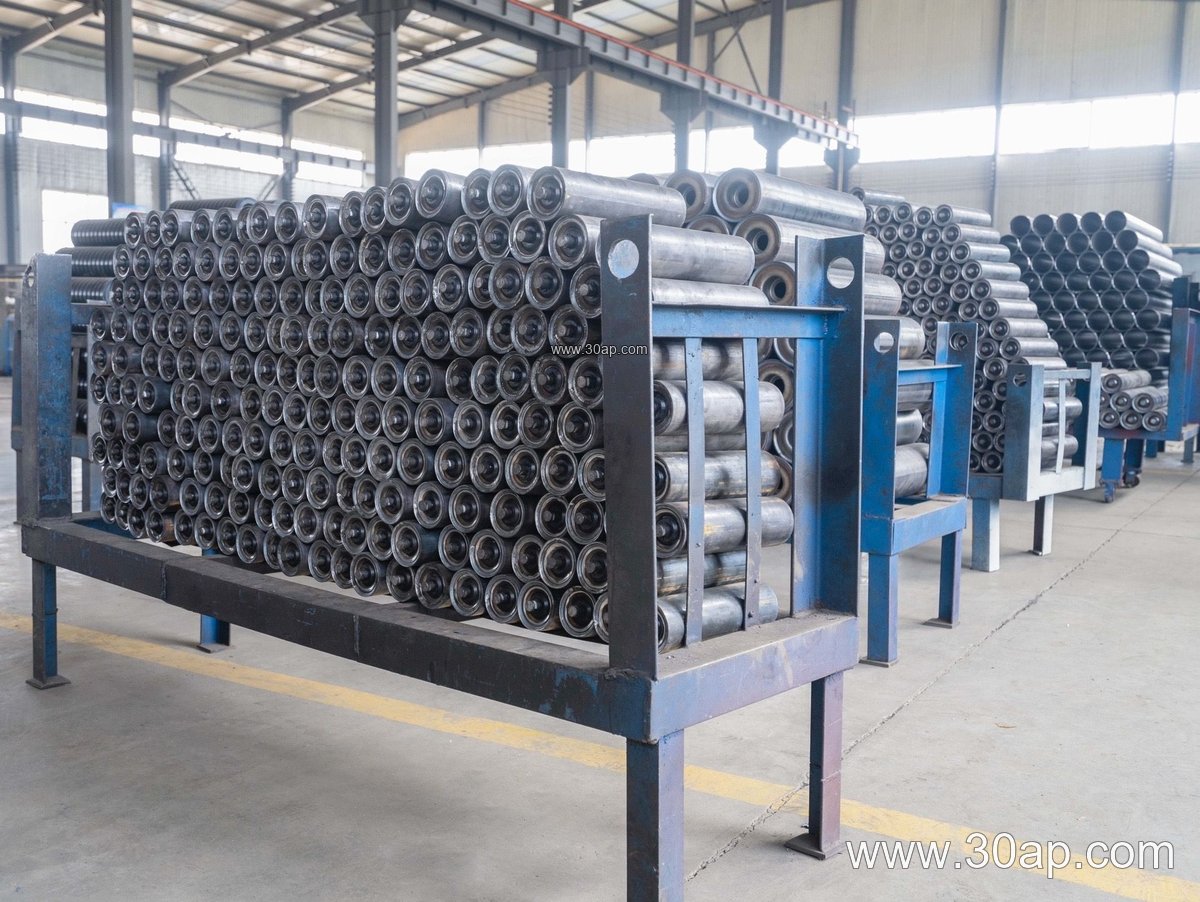
How the Roller Is Built
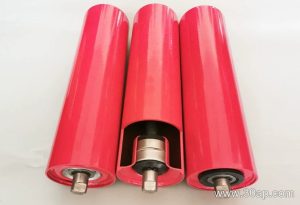
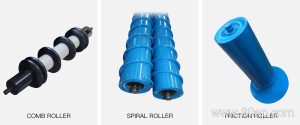
The core is usually a steel tube with a shaft, bearings, and a sealing arrangement similar to other idlers. What sets it apart is the outer layer. Rubber rings, often molded with a rounded profile, are fitted along the roller body. The rings may be spaced to allow fines to fall through, or they may form a more continuous cushion depending on the design.
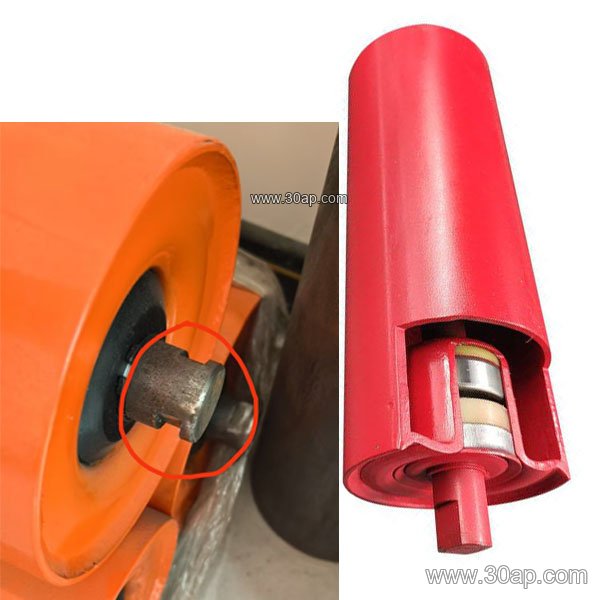
Bearing sizes follow the usual idler practice, with common options such as 6204, 6205, 6305, 6306, 6308, and 6310. The correct bearing for a given application depends on load, speed, and roller diameter, not on belt width alone. Roller diameters commonly include Ø89, Ø108, Ø127, Ø133, Ø159, and Ø178, while larger sizes such as Ø194 and Ø219 appear in heavy-duty stations.
Common Reference Data for Impact Idler Stations
| Item | Typical Range or Example |
|---|---|
| Roller diameter | Ø89, Ø108, Ø127, Ø133, Ø159, Ø178, Ø194, Ø219 |
| Belt width | B500, B650, B800, B1000, B1200, B1400, B1600, B1800 |
| Trough angle | 20°, 30°, 35°, 45° |
| Roller surface | Rubber rings, rubber-covered shell |
| Bearing | 6204, 6205, 6305, 6306, 6308, 6310 (selected by design) |
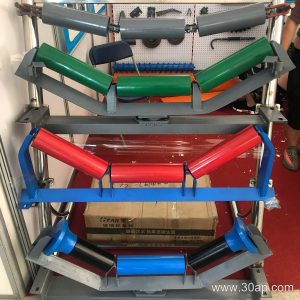
| Station form | Two-roll or three-roll troughing, sometimes single roll |
These values are reference points, not fixed combinations. Roller length changes with belt width, trough angle, and station type. For a three-roll troughing set, common roller lengths are roughly 200 mm at B500, 250 mm at B650, 315 mm at B800, 380 mm at B1000, 465 mm at B1200, 530 mm at B1400, 600 mm at B1600, and 670 mm at B1800. Side rollers and center rollers can differ, so the station should be confirmed against the conveyor design.
Where Impact Idlers Are Used
The loading zone is the natural home for this idler. In a sand and gravel plant, the belt under the primary crusher sees sharp, heavy rock. In a coal washing plant or a power plant coal yard, the material may be wet and lumpy. A rubber impact idler helps the belt ride over the load instead of being hammered by it.
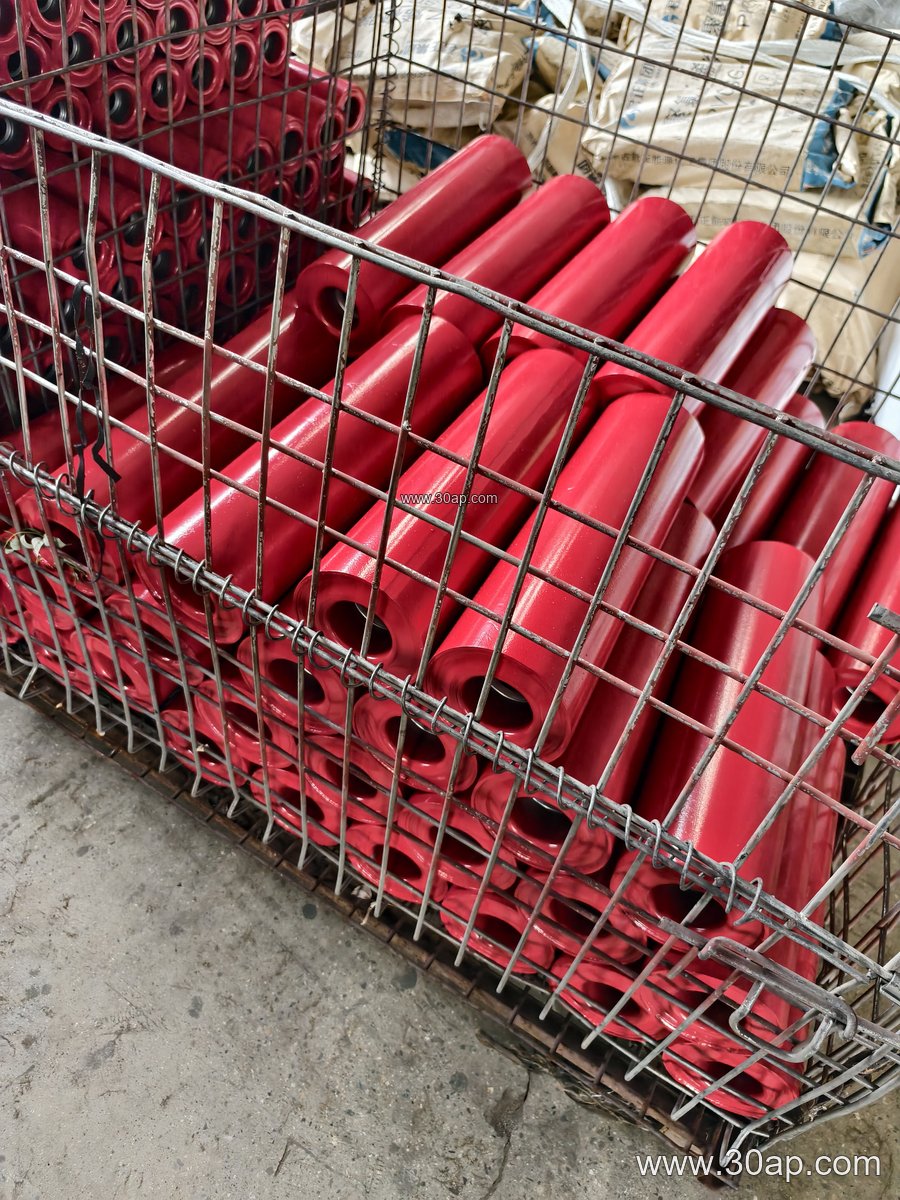
Heavy-duty mining conveyor belts and high abrasion resistant conveyor belts often work alongside impact idlers at transfer chutes. The idler does not replace belt cover quality, but it reduces the mechanical punishment at the point where damage often starts. In the same way, a steel cord conveyor belt on a long overland line benefits from cushioning at each transfer, while an EP conveyor belt or NN conveyor belt on a shorter yard conveyor may use a lighter impact station.
Buyer Checklist
- Confirm the belt width and the actual trough angle before selecting the station.
- Check the drop height and lump size, since these drive the rubber ring thickness and spacing.
- Match roller diameter and bearing to the calculated load, not to a rule of thumb.
- Review the sealing system for dusty or wet conditions; fine material is the usual enemy of idler bearings.
- Ask how the rubber rings are retained on the shell, and whether replacement rings are available.
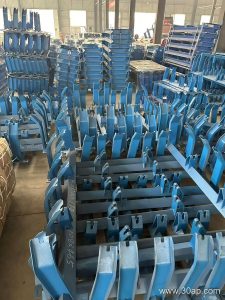
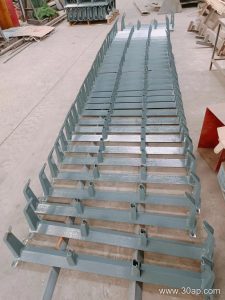
- Consider the conveyor bracket and frame dimensions so the impact station fits the existing structure.
A rubber impact idler is a small part of a conveyor system, but it sits at one of the most demanding points. Choosing it with the belt, the load, and the structure in mind keeps the loading zone quieter and the belt running longer.