What a Rubber Disc Return Idler Does
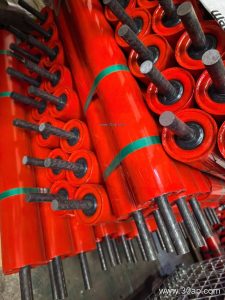
A rubber disc return idler is a return-side roller built with a series of rubber discs or rings mounted along a steel shaft, rather than a plain steel shell. It supports the empty carrying side of the belt on the way back to the tail pulley while also helping to shed sticky material that clings to the belt cover. In a quarry, a limestone mine, or a cement plant, that combination of support and cleaning is often the reason this roller type is specified instead of a standard flat return roller.
The product is sometimes called a rubber ring return roller or rubber disc return roller. These are accurate equivalent names for the same item. It is not a troughing idler, not a buffer idler, and not a drive, tail, or bend pulley; those components sit in different positions and perform different duties.
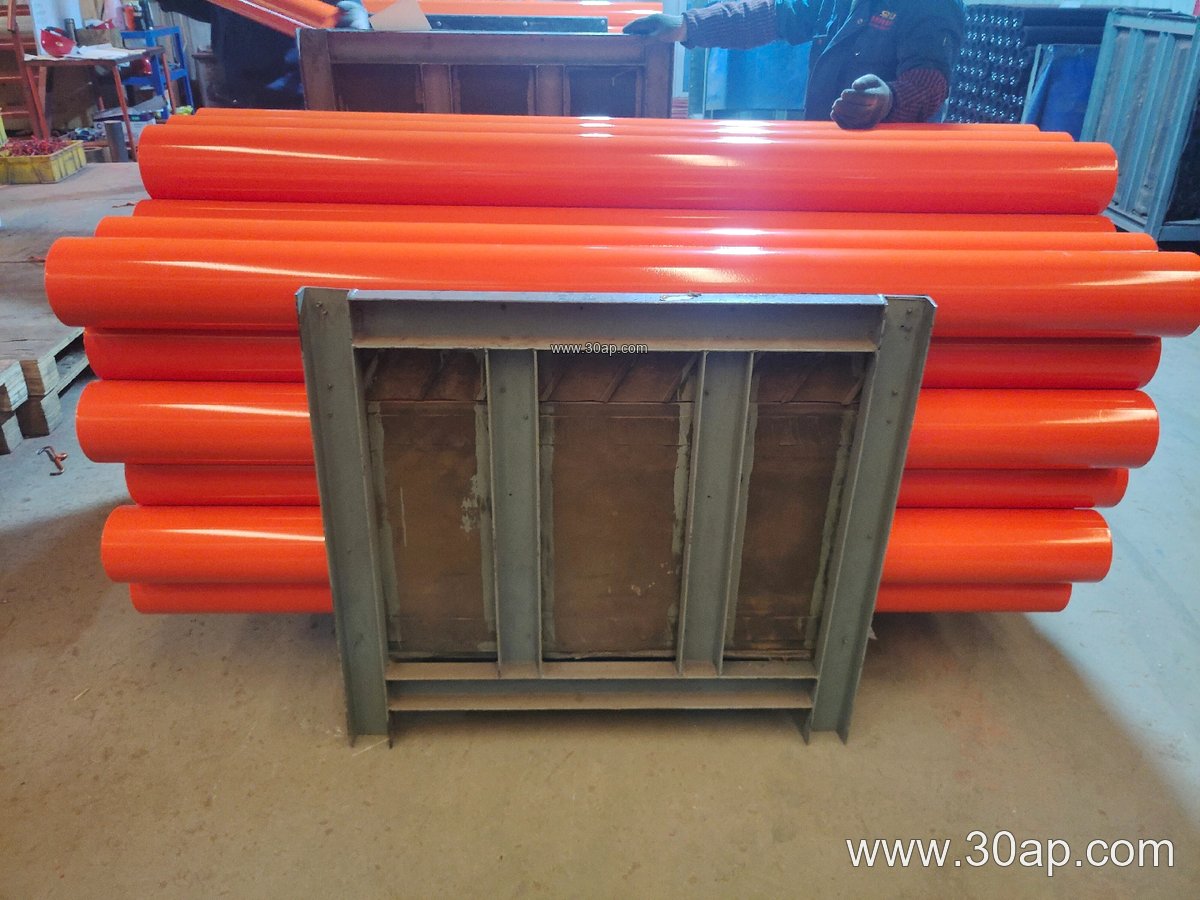
How the Roller Is Built
The core is usually a steel shaft fitted with stamped or machined discs. Rubber rings are pressed onto the discs, and the assembly is held between end caps with sealed bearings. Because the rubber rings protrude slightly beyond the disc edges, the belt rests on a series of small contact points instead of a continuous steel surface. That geometry lets fines and damp material fall away rather than build up on the shell.
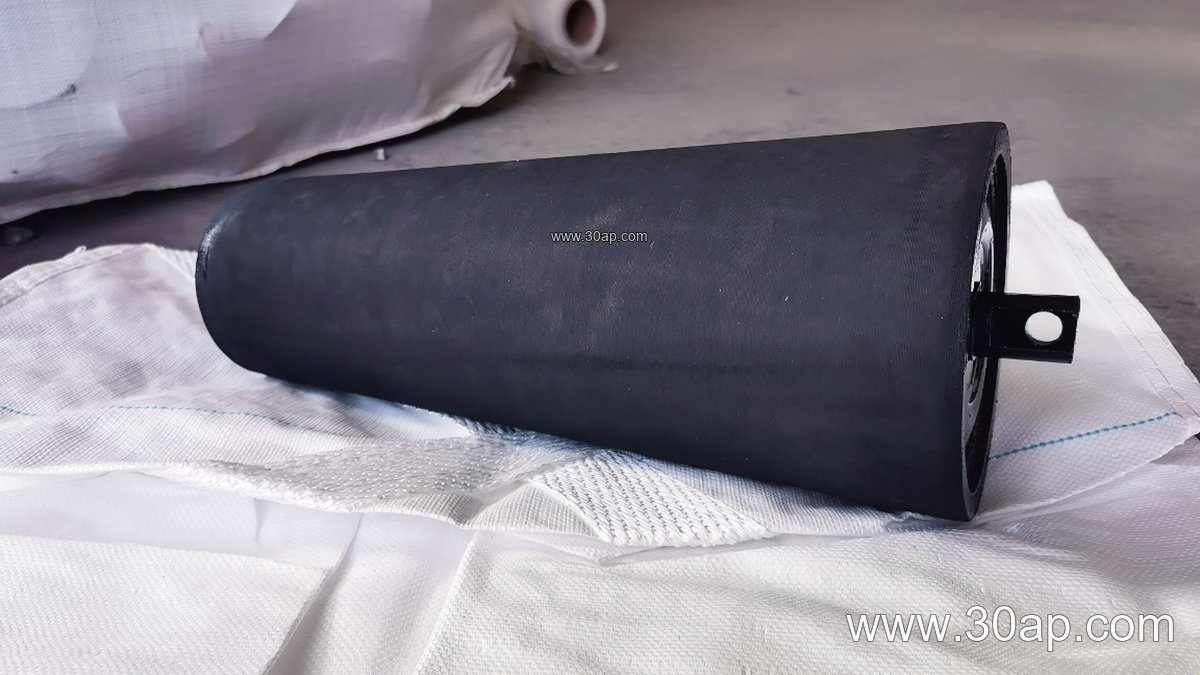
Key construction points a buyer should confirm:
- Disc spacing and ring thickness, which affect how well the roller self-cleans;
- Rubber hardness and abrasion resistance, important in sand and aggregate lines;
- Bearing size and sealing arrangement, since return rollers often run in dusty or wet conditions;
- Shaft end type, to match the conveyor bracket and frame mounting.
Common bearing numbers used across idler production include 6204, 6205, 6305, 6306, 6308 and 6310. A given shaft diameter may accept more than one bearing style depending on the frame design, so the bearing should be selected with the roller manufacturer rather than assumed from belt width alone.
Where It Fits on the Conveyor
The roller is installed on the return strand, normally in the same run as flat return idlers or V-return idlers. It is a common choice in stone crushing and screening plants, power plant coal handling, and fertilizer or grain terminals where carryback is a nuisance. On a conveyor fitted with an abrasion resistant conveyor belt or a heavy-duty mining conveyor belt, the return side can collect a fine layer of dust and moisture; rubber disc rollers reduce that buildup and, in many cases, run more quietly than steel-shell rollers.
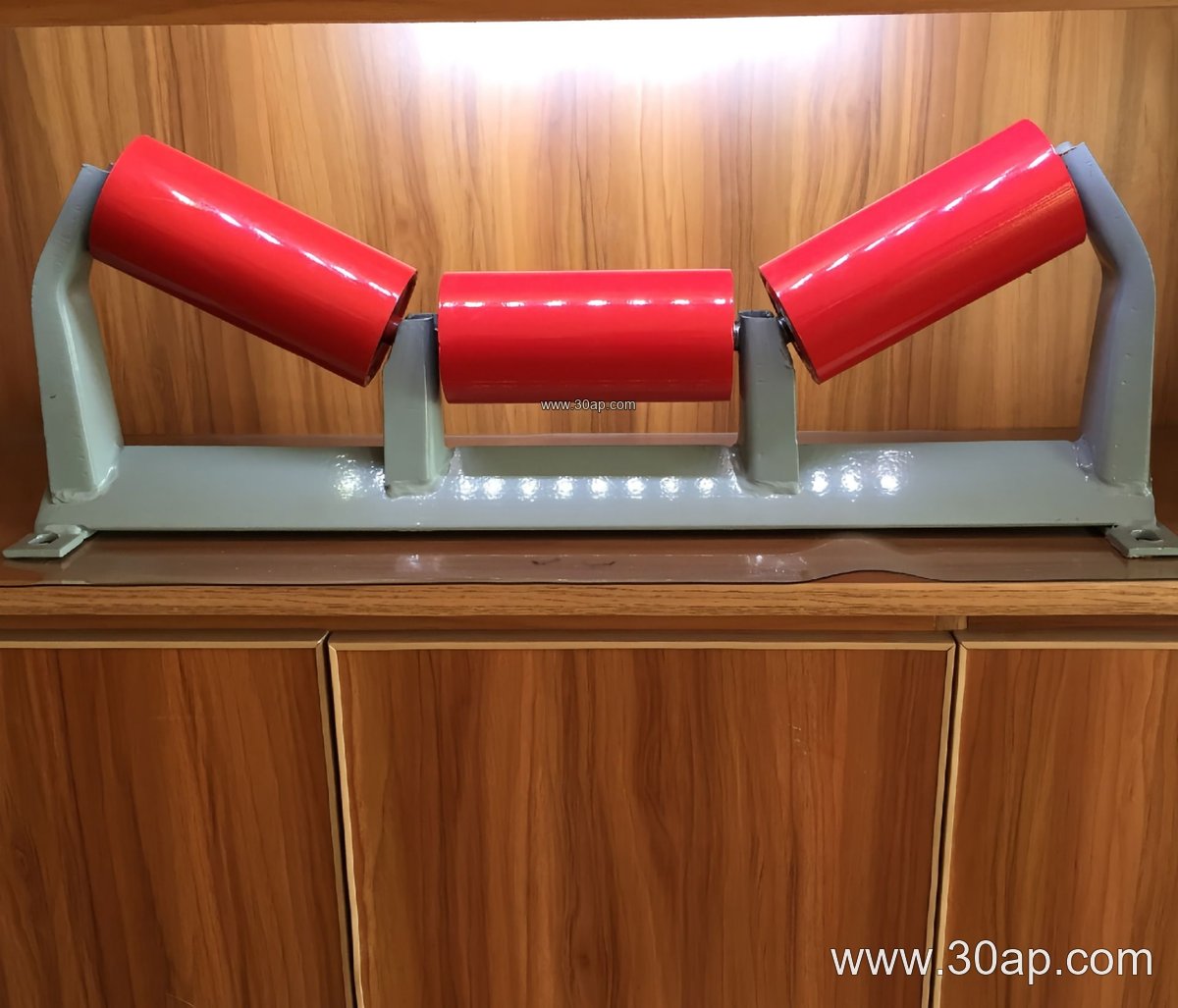
It can also be used behind a crusher conveyor belt or a bulk material conveyor belt where the belt surface is damp. In a coal mining conveyor belt installation, flame retardant grades of rubber may be requested for the rings, so the roller specification should be discussed together with the belt specification.
Sizing and Selection Notes
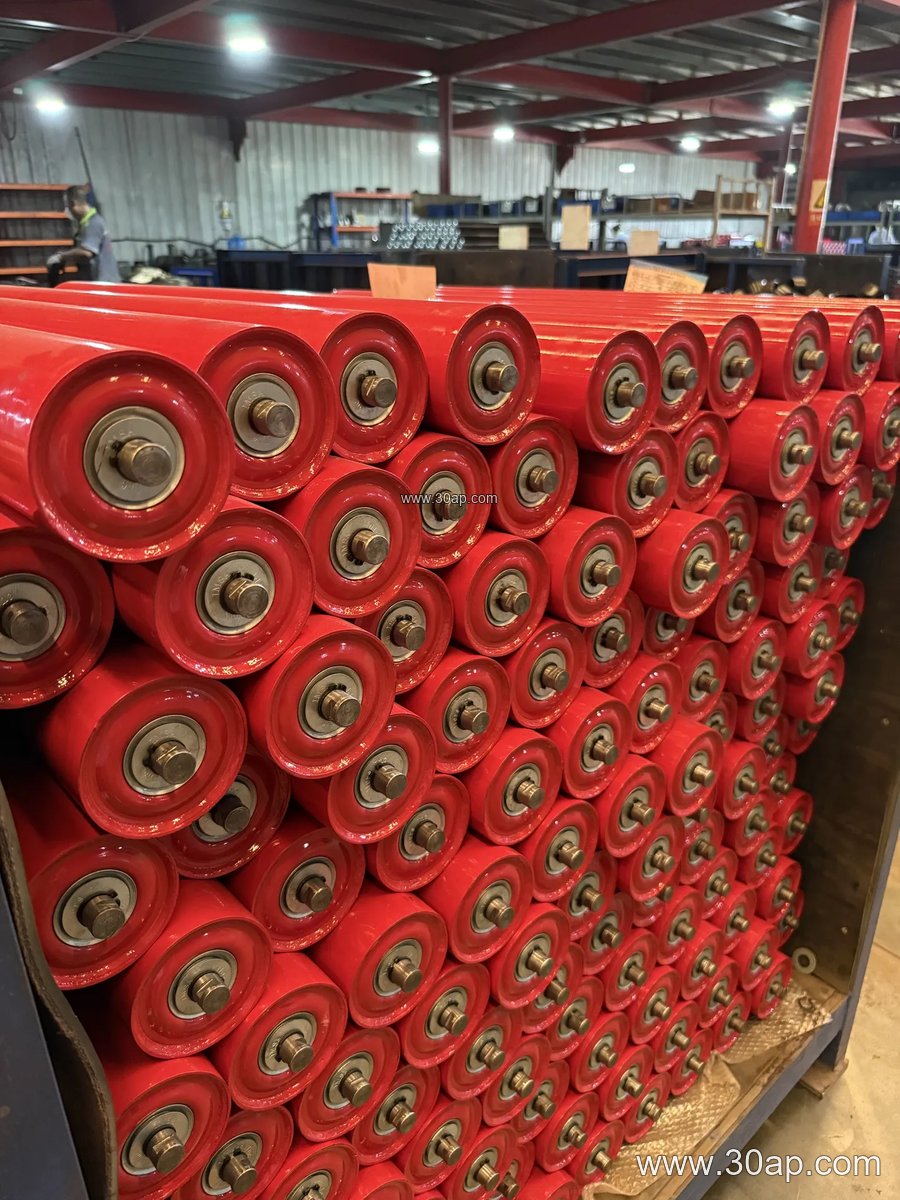
Roller diameter and belt width are related but not locked together. A B800 belt may run with Ø89, Ø102 or Ø108 rollers depending on load, speed and frame design; a B1200 belt may use Ø127 or Ø133, and wider belts such as B1400 or B1600 often call for larger diameters. The values below are typical reference ranges, not fixed matches.
| Belt width | Common roller diameter | Typical return roller length |
|---|---|---|
| B500 | Ø63 to Ø89 | About 600 mm |
| B650 | Ø76 to Ø102 | About 750 mm |
| B800 | Ø89 to Ø108 | About 950 mm |
| B1000 | Ø102 to Ø127 | About 1150 mm |
| B1200 | Ø108 to Ø133 | About 1400 mm |
| B1400 | Ø127 to Ø159 | About 1600 mm |
| B1600 | Ø133 to Ø159 | About 1800 mm |
| B1800 | Ø159 to Ø178 | About 2000 mm |
| B2000 | Ø159 to Ø194 | About 2200 mm |
Return roller length is measured over the belt contact face and must clear the conveyor bracket and frame. For a three-roll troughing set the side and center rolls differ, but a return roller is normally a single-roll unit. If the belt is wide and the load is heavy, a V-return idler may be used for training, while the rubber disc roller handles cleaning and support; the two are complementary, not interchangeable.
Buyer Checklist
Before ordering, confirm belt width, belt speed, material type and the amount of carryback. Ask for the rubber compound data, the bearing seal type, and the shaft end dimensions. On a steel cord conveyor belt line or a high-strength conveyor belt system running at speed, balance and bearing quality matter as much as the rubber rings. For coal or underground applications, request flame retardant and anti-static options and check them against the belt. Always match the roller to the actual frame drawing, because a roller that fits one bracket may not fit another.