What a Heavy-Duty Ceramic Lagged Pulley Is
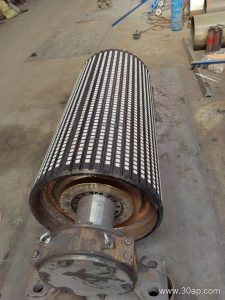
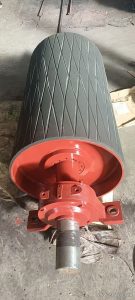
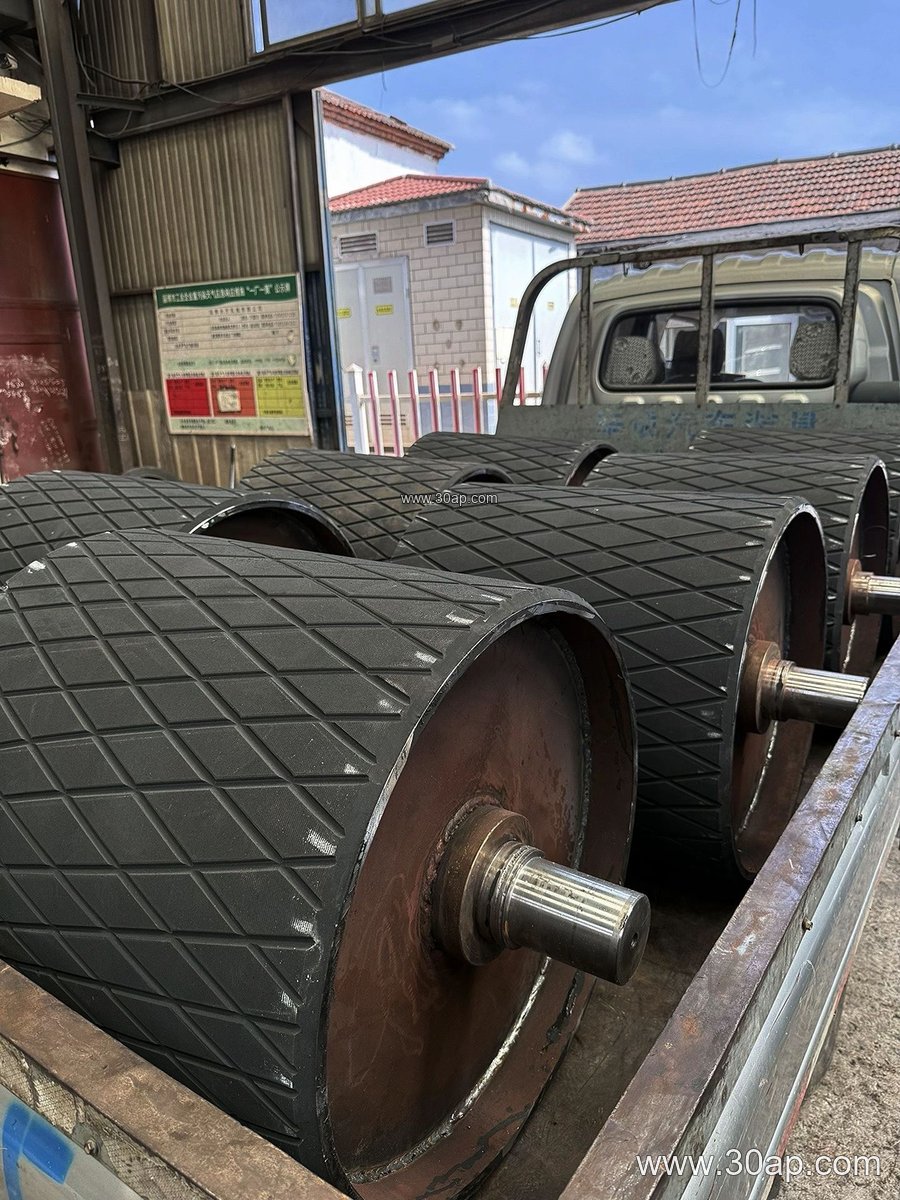
A heavy-duty ceramic lagged pulley is a conveyor pulley whose shell carries a bonded ceramic lagging instead of plain rubber or bare steel. The ceramic tiles sit in a tough rubber or polymer matrix, giving the drum a hard, gritty surface that grips the belt under high tension. In practice, this is a ceramic lagged conveyor pulley built for the drive position, where torque transfer and slip control matter most. It is not a tail or bend pulley by default; those positions call for their own designs, and the three should not be treated as interchangeable.
Plants handling abrasive bulk material often specify this drum because standard rubber lagging wears quickly when the belt carries sharp, heavy loads. A quarry line running an abrasion resistant conveyor belt, or a cement plant moving clinker on a heavy-duty conveyor belt, is a typical place to find one.
How the Ceramic Lagging Is Built
The shell is usually machined steel tube, welded to end discs and a shaft hub. Lagging is applied in one of two common ways: tiles set into uncured rubber that is then vulcanized onto the shell, or pre-formed ceramic sheets cold-bonded with a high-strength adhesive. Both produce a surface of raised ceramic pads separated by rubber channels. The channels let water and fine dust escape so the grip does not depend on a perfectly clean belt.
Typical lagging thickness runs 8, 10, 12, 15 or 20 mm, with the thicker builds chosen for high-torque drives. Tile pattern, tile size and rubber hardness are design choices, not universal standards. Shaft diameter is determined by torque and load, commonly falling in the Ø50 to Ø200 range, and should never be picked from belt width alone.
Where It Fits on the Conveyor
The main home for this drum is the drive or head position. It is also used on tension pulleys where slip would cause belt damage. For comparison, a bend pulley redirects the belt and usually carries lower wrap torque, so a plain or lightly rubber-lagged drum is often enough there. A tail pulley at the loading point may need impact protection rather than ceramic grip.
Industries that rely on it include:
- Iron ore and copper ore handling, where fines are sharp and wet
- Coal preparation plants and power station coal conveying
- Crushed stone and aggregate lines fed by a crusher conveyor belt
- Port bulk terminals using wide belts such as 1800mm or 2000mm
- Steel plants and sinter plants with hot, gritty material
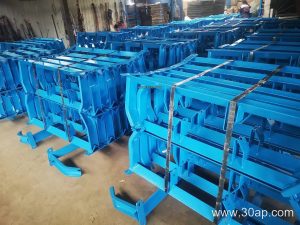
It works alongside the conveyor belt, idler roller, conveyor bracket and frame, so alignment of the whole assembly affects how long the lagging lasts.
Sizing and Matching to the Belt
Shell width normally exceeds belt width so the belt is fully supported. The table below shows common reference pairings; these are typical starting points, not fixed rules.
| Belt width | Typical shell face width | Common diameter range |
|---|---|---|
| B650 | about 750 mm | Ø400 to Ø630 |
| B800 | about 950 mm | Ø500 to Ø800 |
| B1000 | about 1150 mm | Ø630 to Ø1000 |
| B1200 | about 1400 mm | Ø800 to Ø1250 |
| B1400 | about 1600 mm | Ø800 to Ø1400 |
| B1600 | about 1800 mm | Ø1000 to Ø1600 |
A B1200 × Ø1000 unit and a B800 × Ø500 unit are both reasonable combinations, but the final choice depends on belt tension, wrap angle and shaft load. Higher-tension belts such as steel cord conveyor belt or high strength conveyor belt grades usually push the design toward larger diameters and heavier shafts.
Buyer Checklist
- Confirm the pulley position: drive, head, tension or bend. Each has different demands.
- State belt type and tension, for example EP conveyor belt, NN conveyor belt or steel cord construction.
- Specify lagging thickness and tile pattern, and ask how tiles are bonded.
- Check shaft diameter, bearing size and hub design against calculated torque.
- Ask about balance and runout, since a heavy drum at speed punishes poor balance.
- Plan inspection: worn or missing tiles reduce grip and should be replaced before the belt slips.
For harsh duty, ceramic lagging usually outlasts plain rubber, but it is not a substitute for correct belt tracking or proper loading. Pair it with well-chosen idlers and a straight frame, and the drive will hold grip through wet, dusty and abrasive conditions.