What the EP1500 Conveyor Belt Is
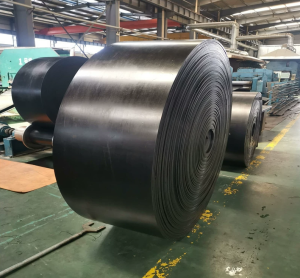
The EP1500 Conveyor Belt is a fabric-core rubber belt built around polyester-polyamide (EP) reinforcement. The number 1500 refers to the nominal tensile strength of the carcass, commonly expressed as 1500 N/mm. In practical terms, this is a high-strength fabric belt positioned near the top of the EP range, above EP1000 and EP1250, and it is chosen where a steel cord belt would be heavier and less forgiving to splice. Buyers will also see the product described as an EP1500 rubber conveyor belt or an EP fabric core conveyor belt, and these refer to the same item.
The EP carcass combines polyester warp yarns with polyamide weft yarns. This pairing gives low elongation under load, good resistance to fatigue, and a strong mechanical splice. Compared with an NN conveyor belt, the EP1500 keeps its length more stable on long, inclined runs, which matters in mines and cement plants where take-up travel is limited.
Construction and Typical Specifications
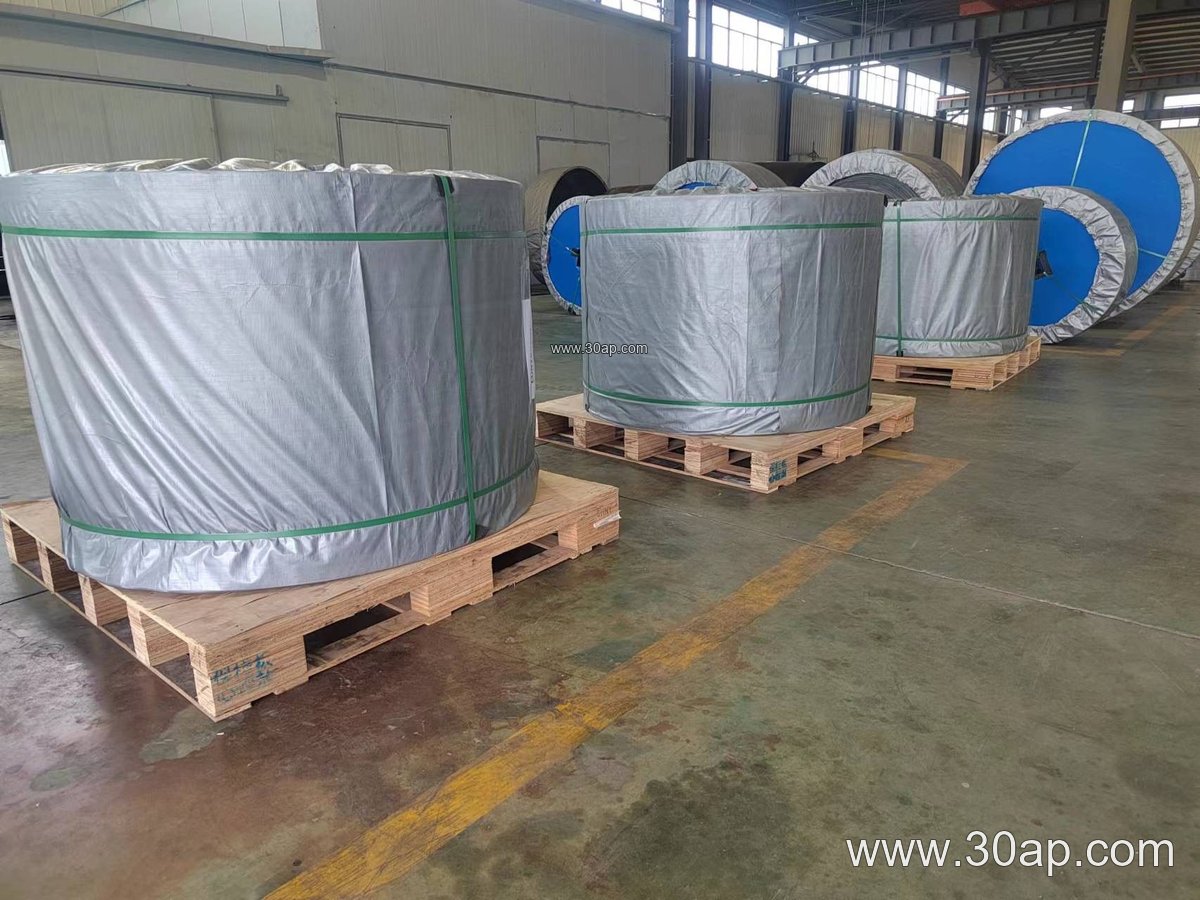
An EP1500 belt is normally supplied as a multi-ply fabric core conveyor belt. The carcass plies are bonded with skim rubber, protected top and bottom by cover rubber, and finished with edges that may be cut or moulded. Cover thickness is selected for the duty, not fixed by the strength grade.
- Carcass: EP fabric plies, usually 2 to 6 layers depending on design
- Nominal strength: 1500 N/mm
- Common belt widths: B650, B800, B1000, B1200, B1400, B1600
- Cover combinations seen in practice: 4+2, 5+2, 6+2, 8+3 mm
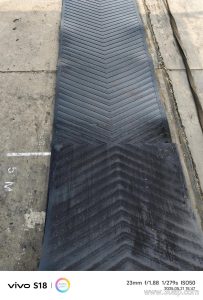
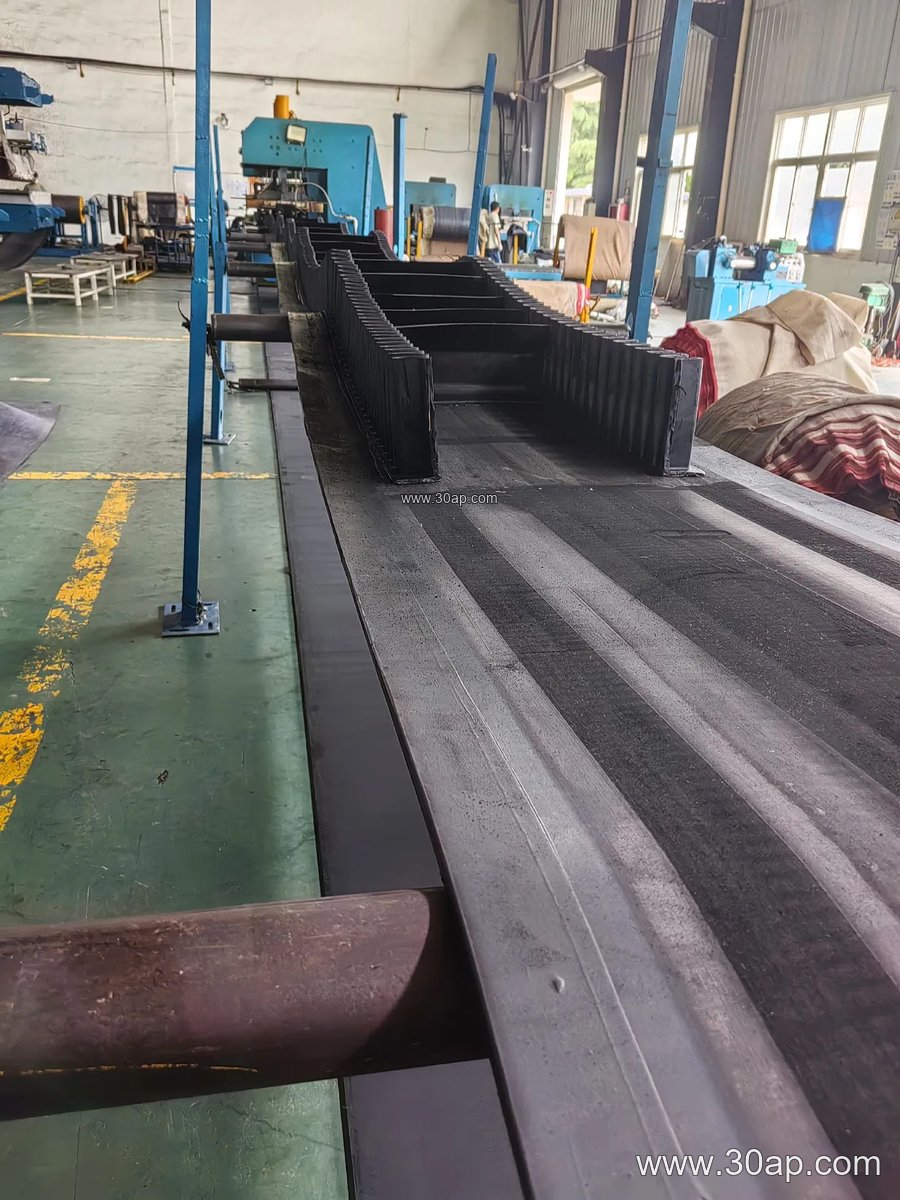
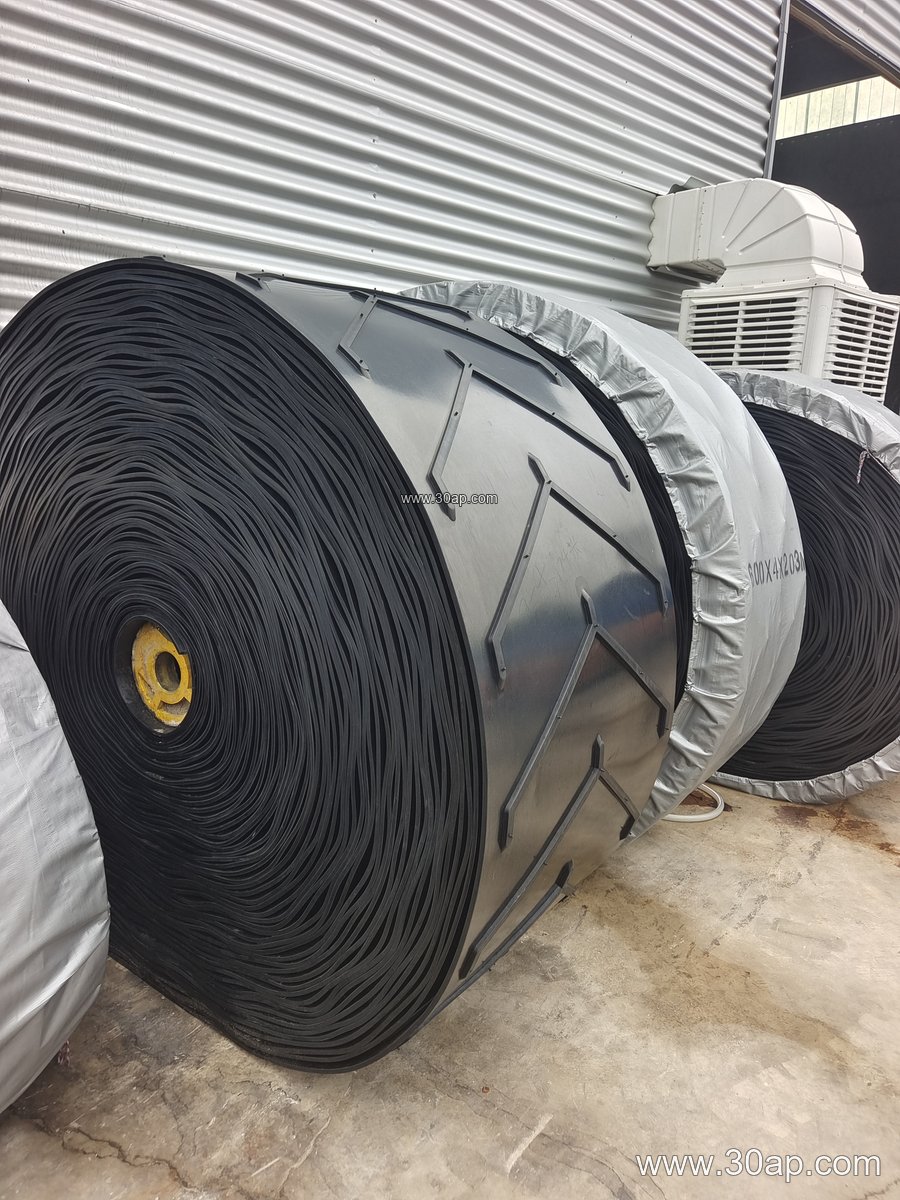
- Surface options: plain, abrasion resistant, flame retardant, heat resistant, chevron or corrugated sidewall on request
The figures above are reference ranges, not a universal specification. Each manufacturer sets its own ply count, cover compound and edge design, so confirm the data sheet before ordering. Belt width and pulley diameter are separate design decisions and are matched through the conveyor layout, not by a fixed rule.
Where It Fits in the Plant
The EP1500 grade suits main haulage and transfer duties in mining conveyor belts, quarry and aggregate lines, cement plants, power plant coal handling, steel plants, and port or ship loading systems. It handles bulk material conveyor belt duty such as crushed rock, ore, clinker, limestone and coal where impact is moderate and the route is long or steep.
Because the carcass is fabric rather than steel cord, the belt tolerates repeated flexing over smaller pulleys and is easier to repair on site. That makes it a common choice for underground mining conveyor belts and for secondary crushing circuits feeding a crusher conveyor belt. In dusty or gassy conditions, a flame retardant conveyor belt or anti-static conveyor belt version may be specified for coal mining conveyor belt service.
For hot clinker or sinter, a heat resistant conveyor belt compound is used; for oily scrap or recycled material, an oil resistant conveyor belt cover helps. Where the route climbs sharply, a chevron conveyor belt profile or a corrugated sidewall conveyor belt can retain the load. These are cover and profile choices applied to the same EP carcass, not different product families.
Selection Points for Buyers
Start with the actual duty: tonnage per hour, lump size, incline angle, drive arrangement and ambient temperature. Then check the following.
- Confirm the required tensile grade. EP1500 is often the upper limit for fabric belts on a given layout; above it, a steel cord conveyor belt such as ST1250 or ST1600 may be more economical on very long runs.
- Match cover thickness to abrasion and impact. A high abrasion resistant conveyor belt cover protects the carcass in rock and ore duty.
- Check pulley and idler roller compatibility with the belt thickness and splice type.
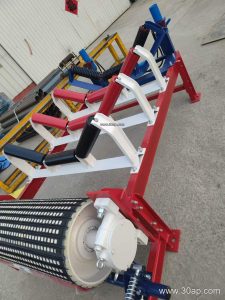
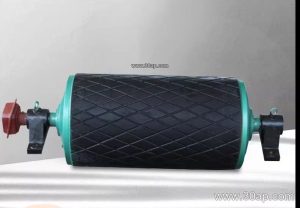
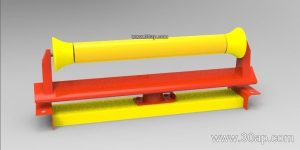
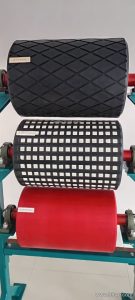
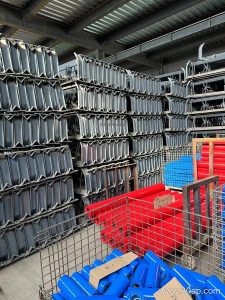
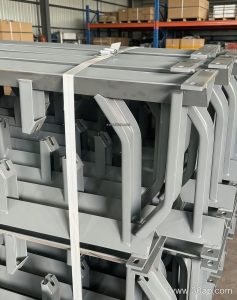
- Review the conveyor pulley, conveyor bracket and idler roller condition, since worn components shorten belt life more than grade choice alone.
- Ask for the splice method and minimum pulley diameter recommended for the specific construction.
For a quick comparison, an NN conveyor belt of similar strength can work in lighter duty, while a steel cord belt handles higher tension with less stretch. The EP1500 sits between them as a practical heavy-duty conveyor belt for mixed plant layouts.
Installation and Maintenance Notes
Store belts off the ground, keep them dry, and avoid sharp bends in the roll. During installation, align the conveyor pulley and idler roller set before tensioning, and check that the conveyor bracket supports are square. Track the belt at low speed first, then load gradually. Inspect edges, splices and cover wear at regular intervals; small edge damage on an abrasion resistant conveyor belt can be repaired before moisture reaches the carcass. In cold climates, a cold resistant conveyor belt cover reduces cracking at start-up.
For more information on EP1500 conveyor belt options and matching components, visit belt233.com or check the roller and pulley ranges at belt233.com before finalising the specification.