What a Metallurgical Conveyor Pulley Does
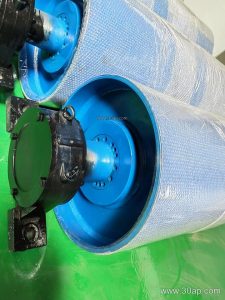
A metallurgical conveyor pulley is the rotating drum that turns a conveyor belt, sets its tension and shapes its path at the head, tail or a bend in the line. In sinter plants, pelletizing circuits, coke wharves and metal smelters the duty is rarely gentle: hot fines, sharp scale, abrasive ore and dust-laden air all reach the drum face. That is why engineers often call the same component a metallurgical conveyor drum or metallurgical pulley, and why the specification usually starts with the environment rather than the catalogue.
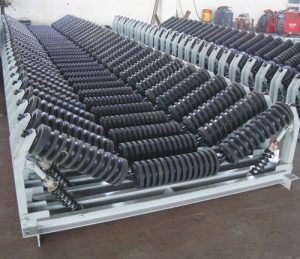
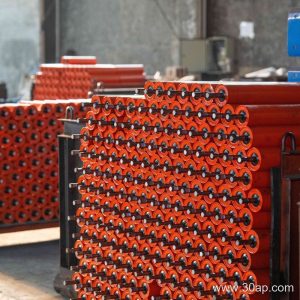
The pulley is not a stand-alone item. It works with the conveyor belt, the conveyor pulley bracket that carries the shaft, the idler roller train that supports the carrying run, and the drive arrangement. A well-matched drum keeps belt tracking stable; a poor one accelerates edge wear and splice fatigue.
Construction and Surface Options
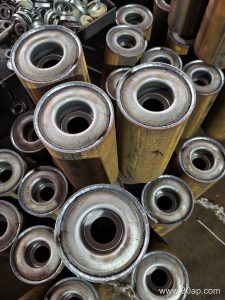
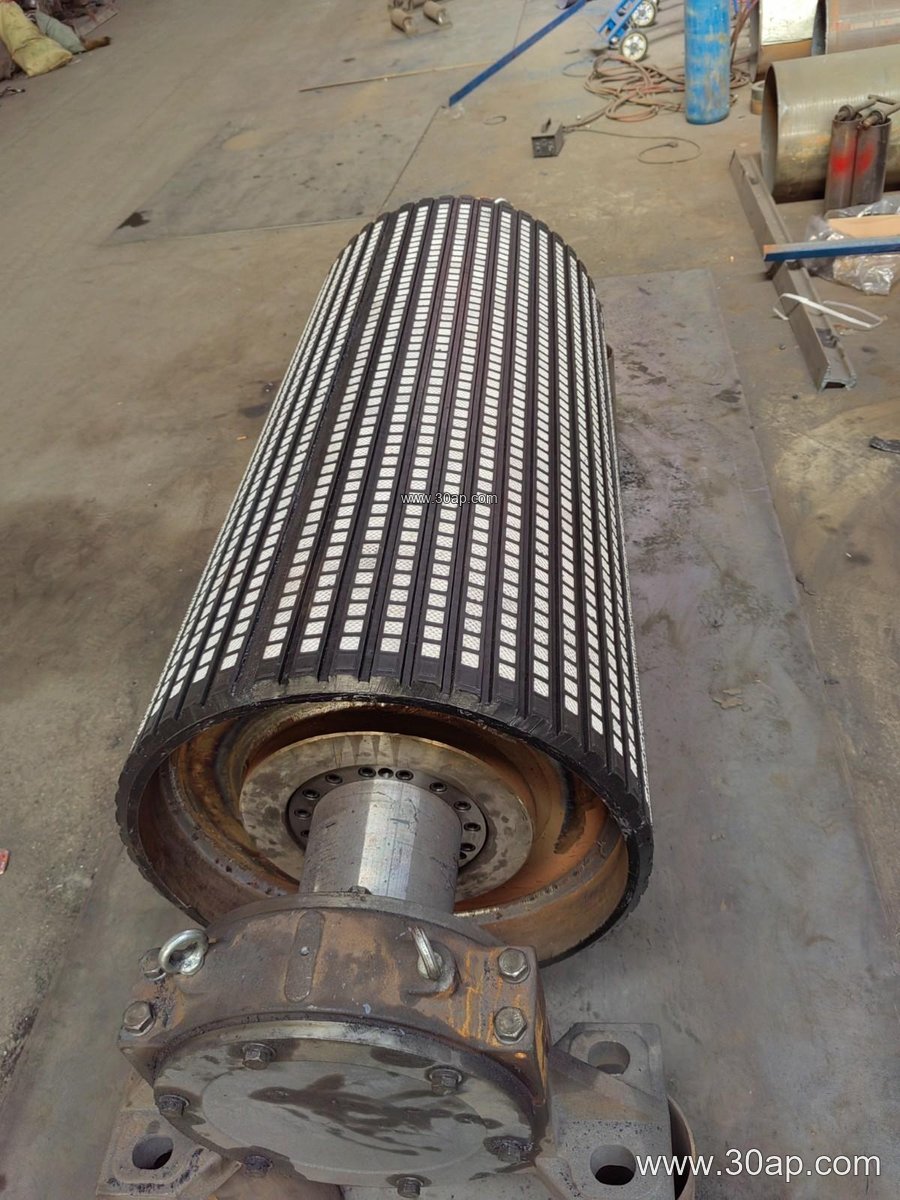
Most metallurgical drums combine a rolled or machined shell, welded end discs, a shaft sized by torque and radial load, and bearing housings. Locking assemblies or keyed hubs transfer drive torque. Shell thickness and the shaft diameter are design decisions, not values that can be read from belt width alone.
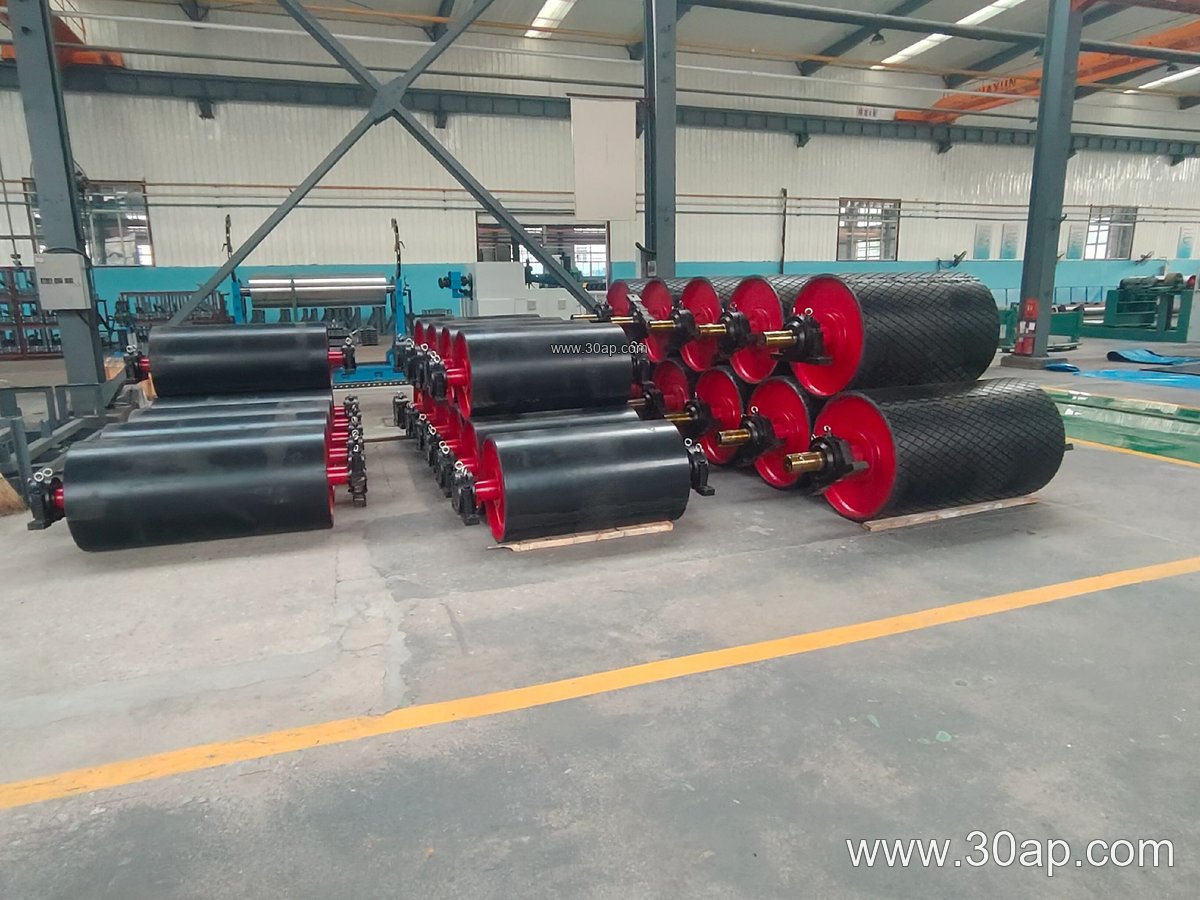
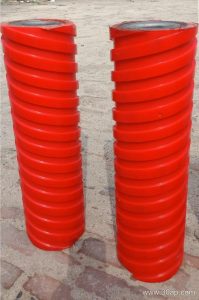
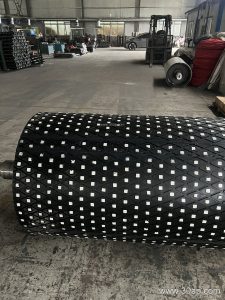
Surface treatment matters as much as the shell. Plain finish suits light, clean duties. Rubber lagging, applied by cold bonding or hot vulcanizing, raises friction and cushions impact. Diamond or herringbone grooving improves grip in wet or dusty conditions, while ceramic lagging is chosen where abrasion is severe. Lagging thickness is commonly 8, 10, 12, 15 or 20 mm depending on the wear allowance the plant wants.
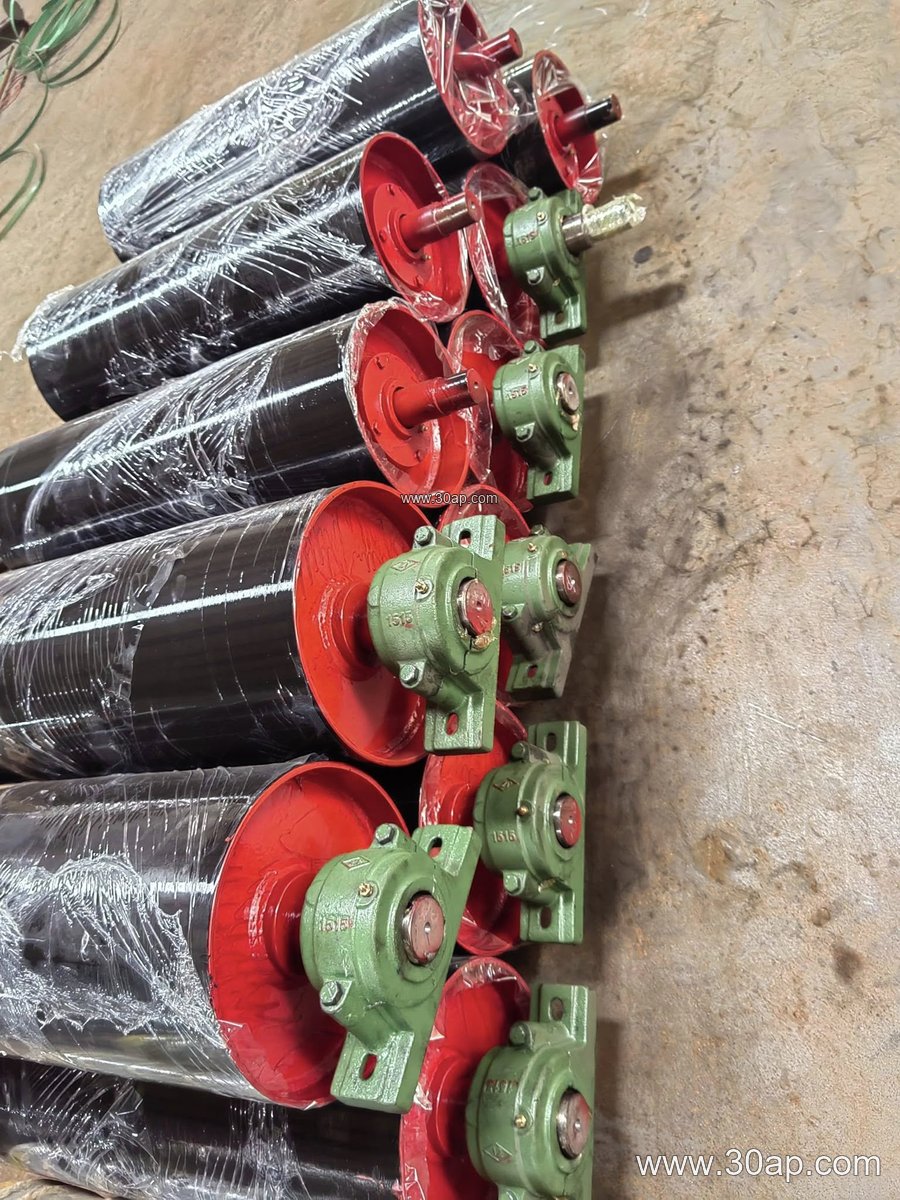
Typical reference combinations include B800 x Ø500, B1200 x Ø1000 and B1400 x Ø800. These are examples of how belt width and drum diameter are paired in practice, not fixed rules; a wider belt may use a larger diameter to limit bend stress in the belt, and a smaller one where space is tight.
Where It Fits in the Line
The position of the drum defines its job. A drive or head pulley transmits power and discharges material. A tail pulley returns the belt and often carries a tensioning function. A bend pulley changes direction without driving, and a snub pulley increases wrap angle on the drive. These roles are not interchangeable, and a bend pulley should never be substituted for a drive drum simply because the diameters look similar.
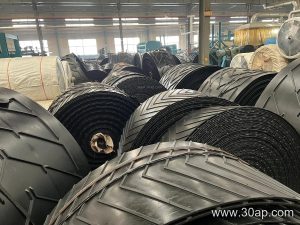
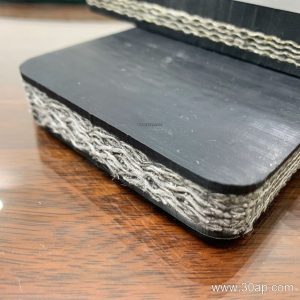
Selection also depends on the belt itself. A heavy-duty mining conveyor belt or a steel cord conveyor belt with high tension needs a drum with adequate shell stiffness and a well-supported shaft. Heat resistant conveyor belt grades used near sinter coolers call for heat-tolerant lagging and bearing protection. In coal preparation plants, a flame retardant conveyor belt may be paired with anti-static lagging and grounded frames. Quarries and aggregate lines handling sharp rock often favour abrasion resistant conveyor belt constructions and ceramic or thick rubber lagging.
Sizes and Reference Data
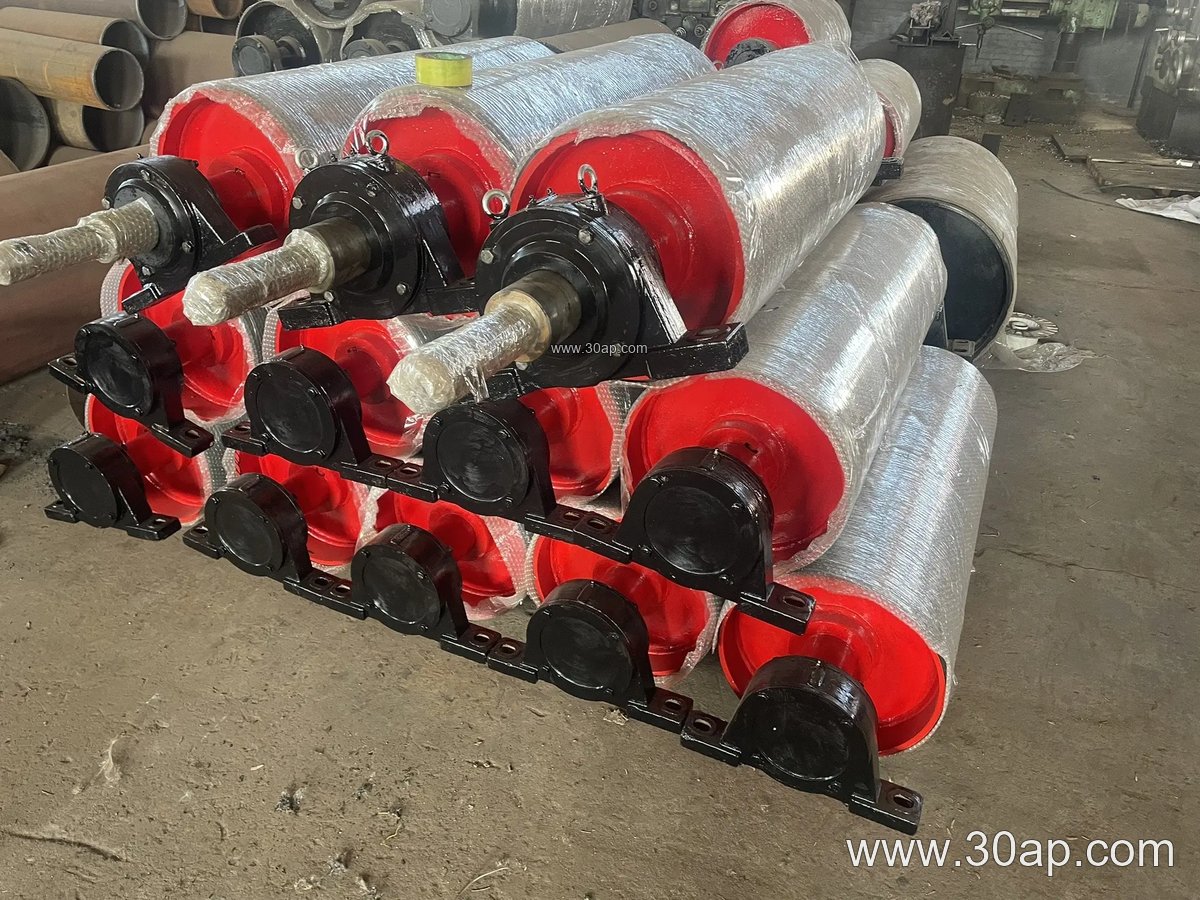
Standard belt widths run from B400 up to B2400, and pulley face width is usually a little wider than the belt, for example about 500 mm for B400, about 950 mm for B800, about 1150 mm for B1000, about 1400 mm for B1200 and about 1800 mm for B1600. Diameters commonly range from Ø200 to Ø1800. Shaft diameters such as Ø80, Ø100, Ø120 or Ø160 are determined by torque and bearing load, not by belt width alone.
| Reference item | Common range | Note |
|---|---|---|
| Belt width | B400 to B2400 | Face width slightly larger |
| Pulley diameter | Ø200 to Ø1800 | Set by belt bend limits and space |
| Shaft diameter | Ø50 to Ø200 | By torque and load |
| Lagging thickness | 8 to 20 mm | Wear allowance dependent |
| Surface form | Plain, rubber, diamond, herringbone, ceramic | Matched to grip and abrasion |
What Buyers Should Check
- Confirm the drum role first: drive, tail, bend, snub or take-up. Each has different load and friction requirements.
- Provide the belt type and tension, not just the width. An EP conveyor belt and a steel cord belt impose very different loads on the shell and shaft.
- State the material and temperature. Hot sinter, moist coal and oily scrap need different lagging compounds.
- Check bracket and bearing housing dimensions against the existing conveyor bracket and frame before ordering.
- Ask for the balancing grade, runout and lagging bond method, since these affect vibration and belt life.
- Plan inspection: check lagging wear, bolt torque and bearing condition at each shutdown, and keep a spare drum for critical lines.
For plant engineers comparing suppliers, the practical question is not which drum is cheapest but which one matches the belt, the duty and the maintenance window. A correctly specified metallurgical conveyor pulley keeps the belt centred, protects the splice and reduces unplanned stops in the toughest part of the bulk handling circuit.