What a Belt Conveyor Bracket Does
A belt conveyor bracket is the structural link between the rotating support elements and the conveyor frame. It holds the idler roller in position, sets the trough angle of the carrying side, and keeps the belt tracking within the frame line. In a quarry, a limestone mine, or a cement plant, the bracket is often the least visible part of the conveyor, yet it decides how well the belt is supported along the entire run. When the bracket is weak, the rollers deflect, the belt sags between stations, and spillage increases at the transfer points.
The bracket is not a single product. The same frame can carry a troughing bracket on the carrying side, a transition bracket near the pulleys, and a return bracket underneath. Each one has its own geometry and load path, so the choice should follow the duty rather than a single catalogue number.
Construction and Common Materials
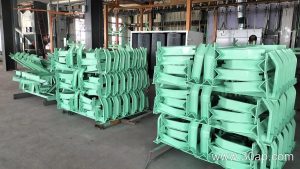
Most brackets are fabricated from angle steel, channel steel, or folded steel plate. The material is selected for stiffness and corrosion exposure rather than for appearance. A wash plant or a coastal port conveyor may call for a heavier coating, while a dry cement plant can usually work with a standard painted finish.
Typical dimensions are expressed together with the belt width and roller diameter, for example B800, 35 degrees, and a diameter of 108 mm. These are common reference combinations, not fixed rules. The mounting hole spacing and the crossbeam length are determined by the belt width and trough angle in the actual design.

Reference bracket and roller combinations
| Belt width | Common trough angle | Common roller diameter | Typical position |
|---|---|---|---|
| B500 | 20 to 30 degrees | 89 mm | Small aggregate line |
| B650 | 30 degrees | 89 mm | Sand and gravel transfer |
| B800 | 35 degrees | 108 mm | Cement plant, power plant coal yard |
| B1000 | 35 to 45 degrees | 108 or 133 mm | Iron ore, crushing and screening |
| B1200 | 35 to 45 degrees | 133 mm | Wash coal plant, port loading |
| B1400 | 35 to 45 degrees | 133 or 159 mm | Heavy bulk material main line |
| B1600 | 35 to 45 degrees | 159 mm | Large ore and coal handling |
| B1800 | 35 to 45 degrees | 159 or 194 mm | High capacity trunk conveyor |
The angle of the side rollers is usually fixed on a standard troughing bracket, while an adjustable bracket can be set between 20 and 45 degrees to suit the material. Forward-leaning brackets are commonly about 1.5 to 2 degrees, which helps the belt centre itself during running.
Where Different Bracket Types Fit
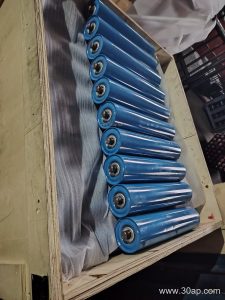
On the carrying side, a troughing bracket supports three rollers and forms the belt into a trough. A transition bracket sits between the last troughing station and the head or tail pulley, gradually flattening the belt so it enters the pulley without stress. A return bracket supports the empty strand, and a V-shaped return bracket helps centre the belt on the return run. Buffer brackets are used under loading points where impact is high, and self-aligning brackets correct small tracking errors on long lines.
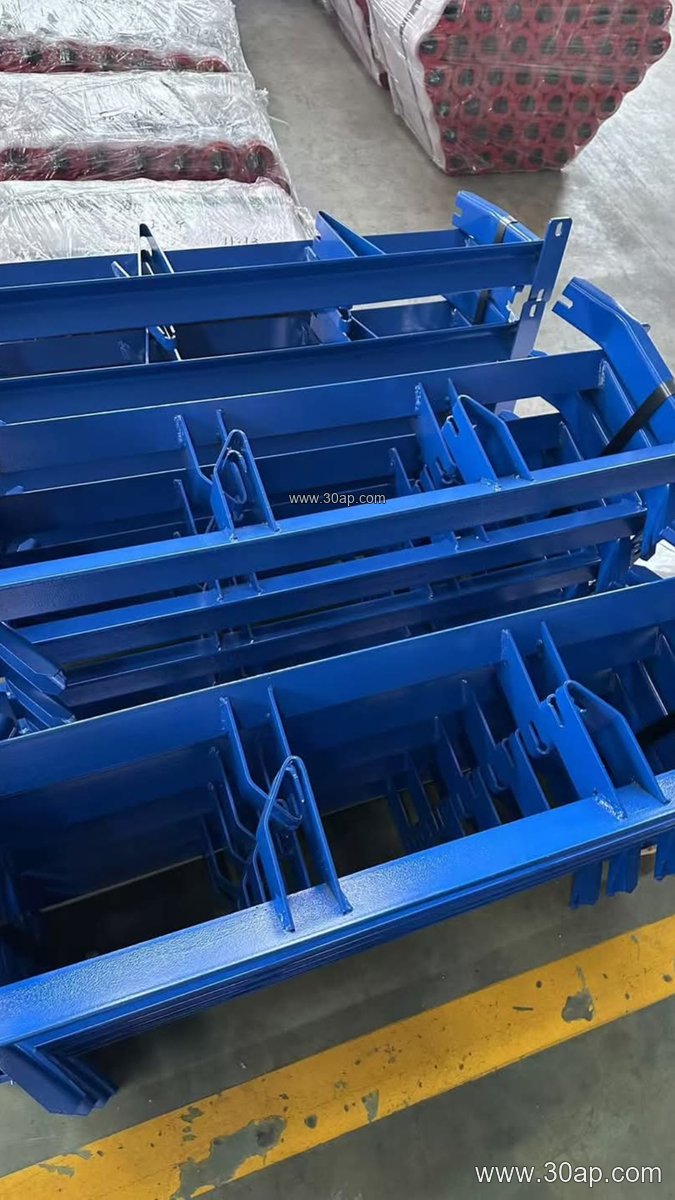
On a crusher conveyor or a quarry conveyor belt, the loading zone is where bracket damage appears first. Impact resistant rollers and buffer brackets reduce the shock from large lumps, and this is often more effective than simply increasing the steel thickness of a standard bracket.
Matching the Bracket to the Belt and Duty
The bracket should be chosen together with the belt type and the roller. A heavy-duty mining conveyor belt with a steel cord construction, such as an ST1600 or ST2000 belt, carries high tension and needs a stiff frame with well-aligned stations. A multi-ply fabric core belt such as an EP200 or NN300 belt is more forgiving, but it still needs correct trough angles to avoid edge stress. Heat resistant conveyor belt and flame retardant conveyor belt used in a coal mining conveyor belt system should be paired with brackets that keep the belt clear of hot material build-up.
Width matters as much as strength. A 1200mm wide conveyor belt and a 1800mm wide conveyor belt do not share the same crossbeam, even when both use a 35 degree trough. Buyers should confirm the belt width, the roller diameter, the trough angle, the mounting hole spacing, and the frame hole pattern before ordering. It is not correct to assume that one belt width matches only one roller diameter or one trough angle.
Buyer Checklist
- Confirm the belt width, such as B650, B1000, or B1400, and the actual frame hole spacing.
- State the trough angle and whether the bracket must be adjustable.
- Specify the roller diameter, for example 89 mm, 108 mm, 133 mm, 159 mm, or 194 mm.
- Describe the environment, such as a wash coal plant, a power plant coal yard, or a port conveyor.
- Ask for the material and finish, since angle steel, channel steel, and folded plate behave differently under load.
- Check the transition and return stations, not only the carrying side.
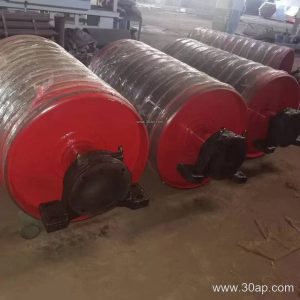
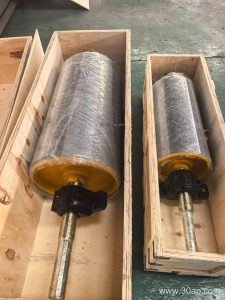
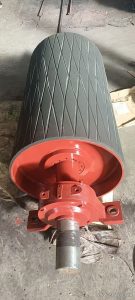
For more information on matching support frames with conveyor belt, idler roller, and conveyor pulley components, visit conveyor-bracket.com. A bracket that is correctly sized for the line will keep the belt stable, extend roller life, and reduce maintenance stops in the toughest bulk handling conditions.