What Pulley Lagging Actually Does
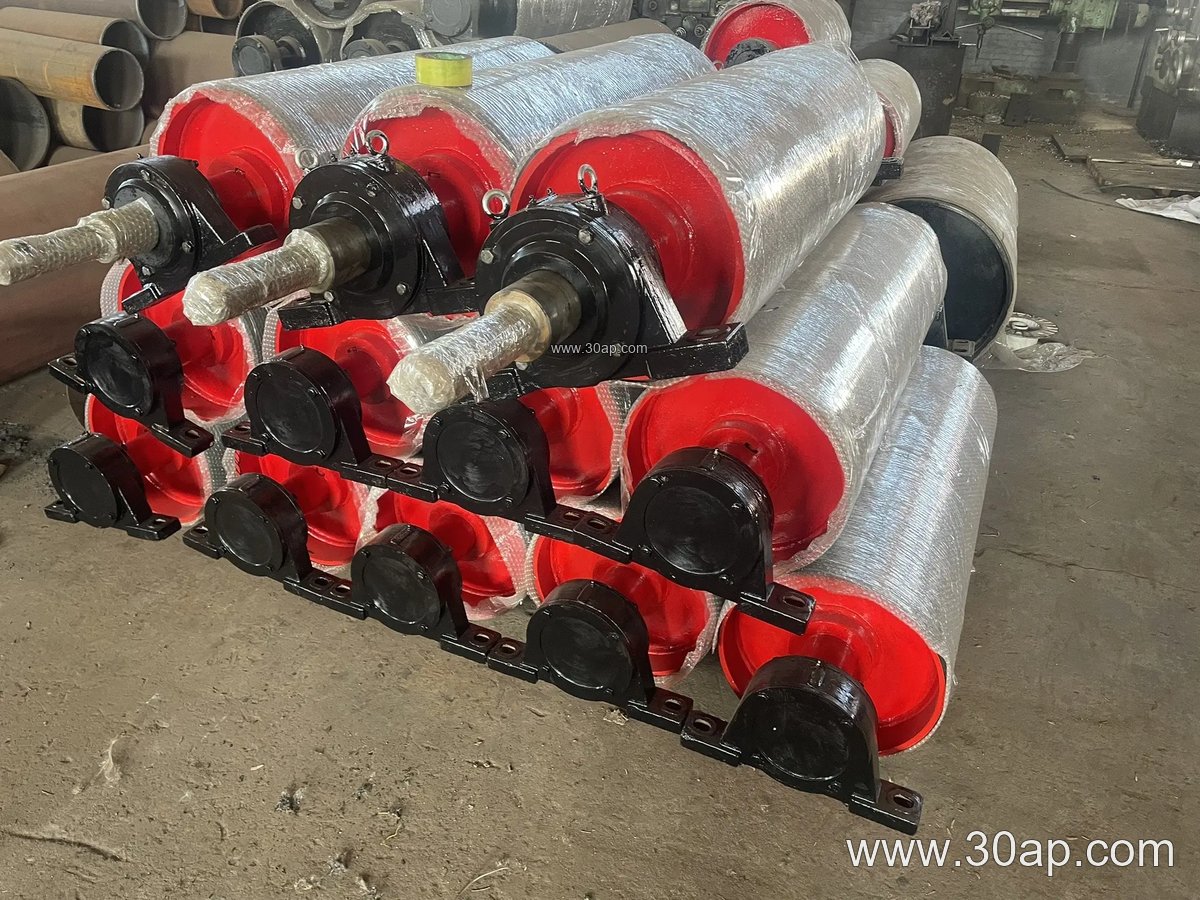
Pulley lagging is the rubber or composite layer bonded to a conveyor pulley shell to raise friction between the drum and the conveyor belt. Without it, a bare steel shell in a damp limestone quarry or a dusty coal handling plant can slip, polish itself smooth, and wear the belt cover faster than anyone expects. The lagging becomes the sacrificial contact surface: it grips, cushions, and takes the abrasion that would otherwise attack the pulley and the belt carcass.
It is used on the drum that transmits torque, not as a substitute for idler rollers or conveyor brackets. The component is a conveyor pulley fitted with a renewable surface, and the surface is what the term refers to.
How a Lagged Pulley Is Built
A typical assembly starts with a machined steel shell, welded end discs, and a shaft sized by torque and load rather than belt width alone. The lagging is then applied in one of several ways:
- Vulcanized rubber — uncured rubber sheet wrapped and cured onto the shell, giving a strong bond for high-tension drives.
- Cold-bonded rubber — pre-cured sheet attached with adhesive, practical for on-site replacement.
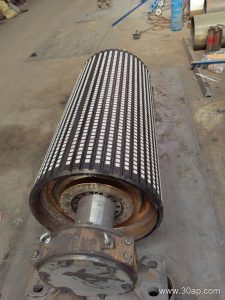
- Ceramic tiles — embedded in a rubber matrix for wet, gritty duty where fine particles act like grinding paste.
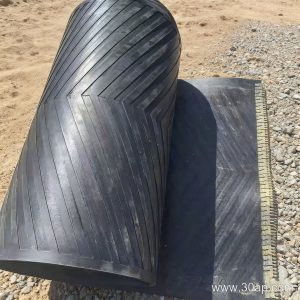
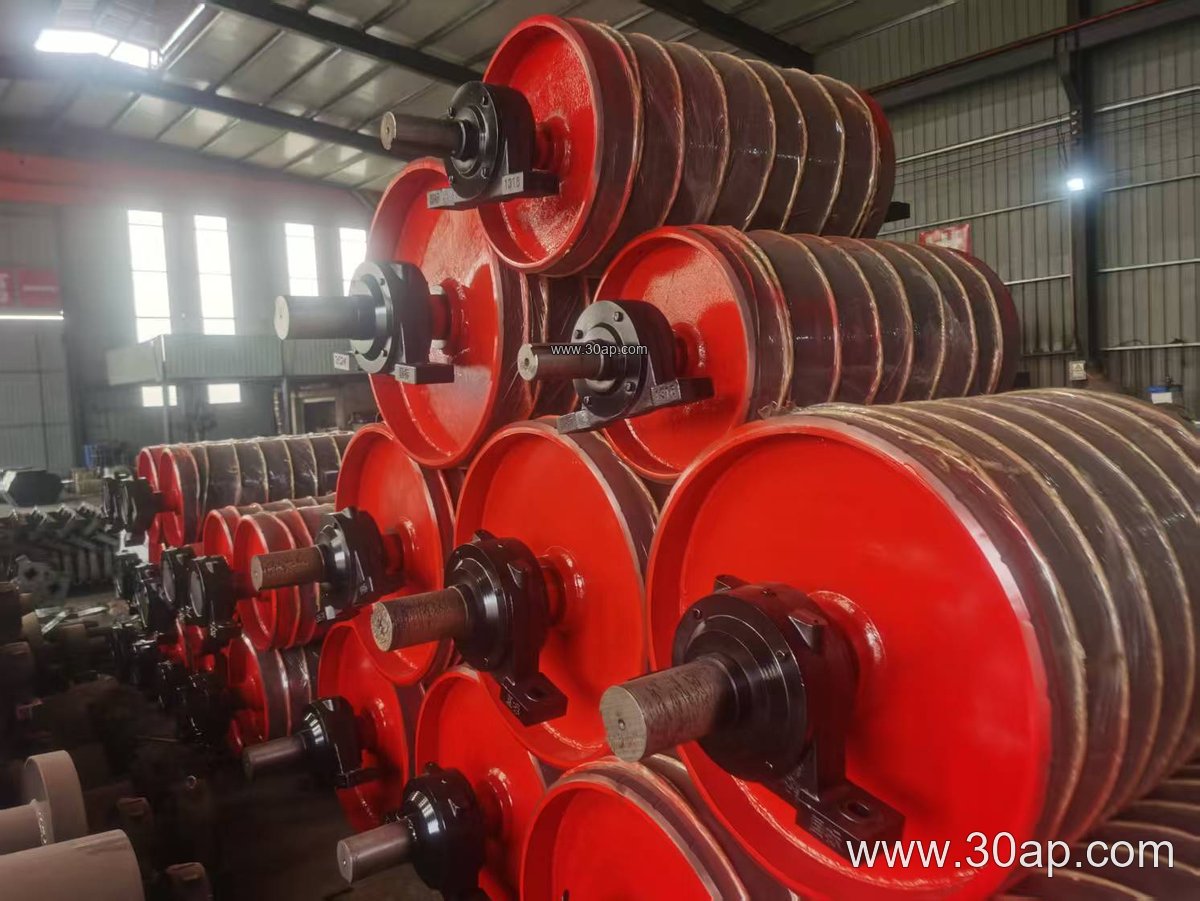
- Diamond or herringbone profiles — molded patterns that channel water and debris away from the contact patch.
Common lagging thicknesses run about 8, 10, 12, 15, and 20 mm. Shell face width normally exceeds belt width so the belt is fully supported, for example B800 with roughly 950 mm face, or B1200 with about 1400 mm face.
Where the Grip Matters Most
In a sand and aggregate line, the drive pulley on a crusher discharge conveyor often runs wet and dusty; a diamond rubber surface sheds water and keeps traction. In a power plant coal yard, a flame retardant conveyor belt and anti-static properties in the surrounding equipment matter, so the lagging compound is usually selected to match that environment rather than chosen on hardness alone.
At a copper or iron ore concentrator, the head pulley may see a steel cord conveyor belt carrying dense, sharp material. Here a thicker, harder lagging resists grooving, while the tail pulley may only need a plain or lightly profiled rubber to help centering. The two positions are not interchangeable, and each is specified on its own duty.
Port terminals handling bulk material often combine long centre distances with high belt tensions, so vulcanized lagging with a machined groove pattern is common. Food and grain silo operations may prefer smooth, easily cleaned surfaces.
Matching the Surface to the Duty
Surface choice drives performance more than many buyers expect:
- Plain rubber for general dry service and easy cleaning.
- Diamond or herringbone grooving for wet or dusty conditions.
- Ceramic for abrasive slurry and fine ore where rubber alone wears quickly.
- Thicker sections for high-torque drives and heavy-duty mining service.
The rubber compound itself should suit the site: oil resistant where hydraulic leaks are possible, heat resistant near sinter or clinker, cold resistant in winter yards.
Buyer Checklist Before Ordering
Ask for the pulley role, since a drive pulley, tail pulley, and bend pulley each place different demands on the surface. Provide belt width, shell diameter, shaft diameter, and the face width you need. A combination such as B1400 with Ø800 and a 15 mm diamond lagging is a normal way to describe a unit, but the diameter and shaft size should follow the conveyor design calculation, not a rule of thumb.
Confirm the bonding method, whether replacement will be done in the workshop or on site, and how the lagging will be inspected later. A lagging that can be re-treaded extends pulley life and protects both the conveyor belt and the pulley shell. Buyers sourcing through a supplier of conveyor pulley and lagging components at www.wodeconveyor.com can specify the surface form and thickness together with the drum dimensions on one data sheet.
Installation and upkeep
Alignment and belt tension still decide whether lagging survives. A misaligned belt concentrates load on one edge and wears the lagging unevenly, while over-tensioning accelerates groove formation. Inspect for embedded stones, cuts, and polished patches; a polished surface signals slip and should be addressed before the shell is exposed. Keeping idler roller frames and conveyor brackets square helps the belt track centrally and spreads contact evenly across the lagged face.