What a Rust-Resistant Idler Is
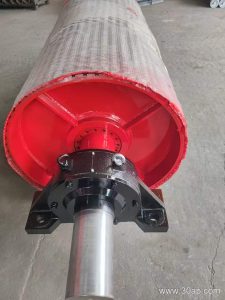
A rust-resistant idler is a carrying or return roller built so that moisture, wash water, salt spray, and corrosive dust do not turn its shell and frame into a scale-covered failure point. In a conveyor line, the idler roller supports the belt and the load, so any pitting on the roller surface quickly becomes belt wear, tracking problems, and seized bearings. The rust-resistant version addresses that by combining a protected steel shell with sealed bearing housings and coated or non-metallic contact surfaces.
The same product is also described as a corrosion-resistant conveyor idler or anti-corrosion idler roller. Those names refer to the same item; they are not a different roller type. A rust-resistant idler still follows the normal duty of its position on the conveyor, whether that is a troughing run, a return run, or a transition zone.
How the Roller Is Built to Resist Corrosion
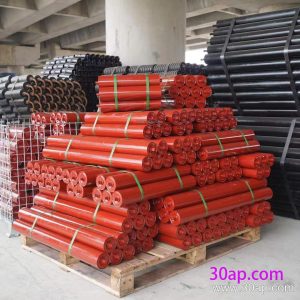
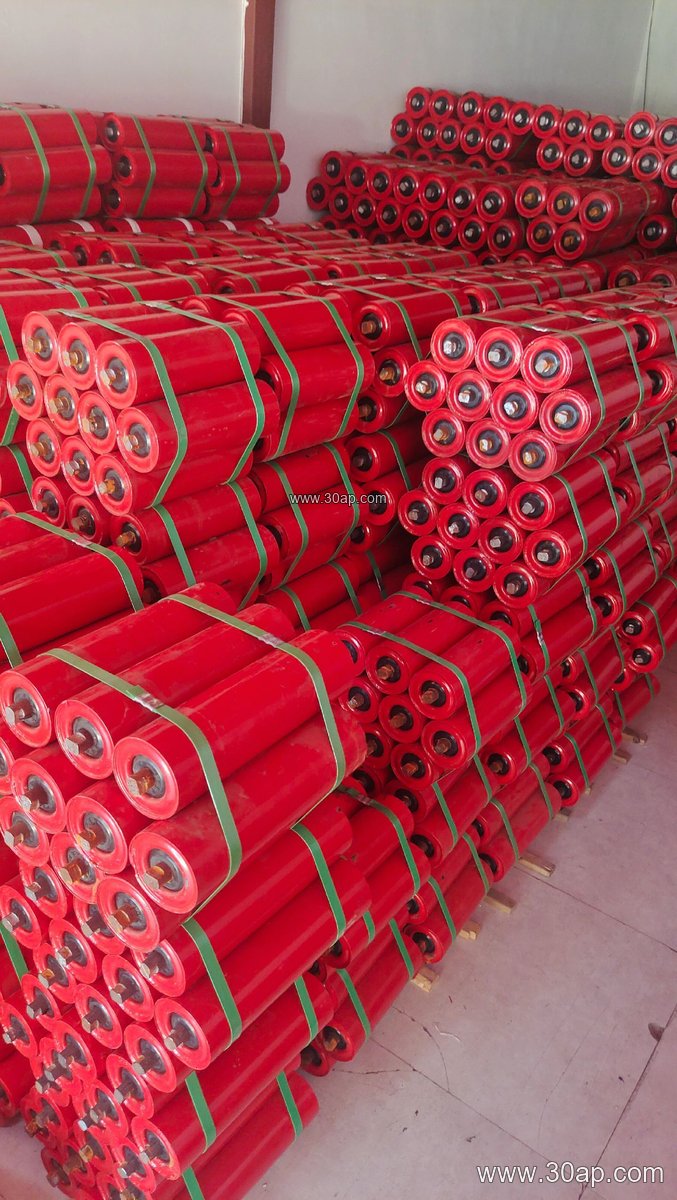
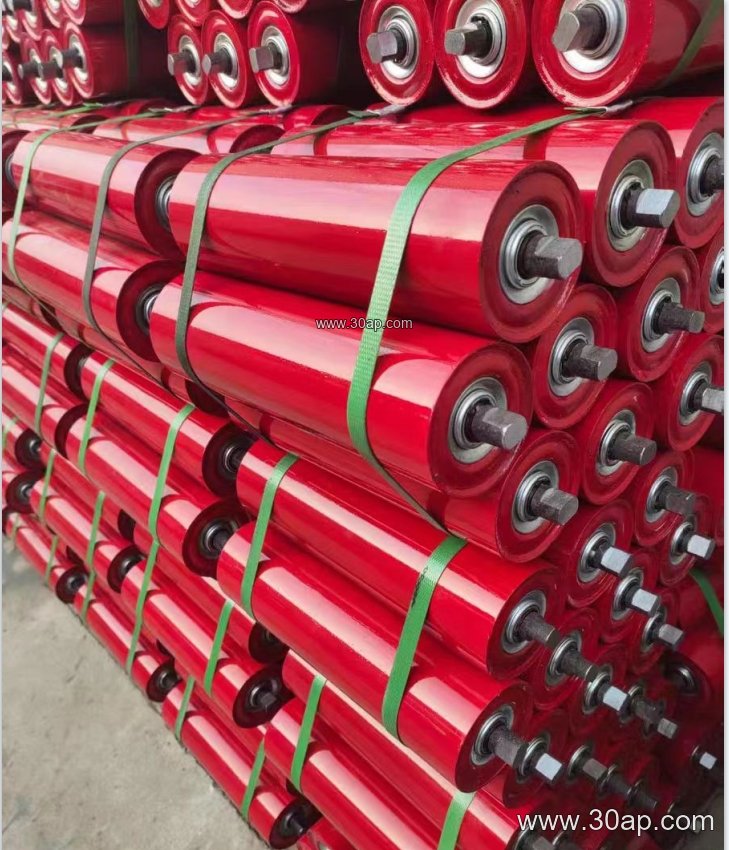
Protection usually starts at the shell. Common approaches include hot-dip galvanized tube, painted or coated steel, stainless steel for aggressive service, and polymer or rubber-covered surfaces where the belt needs grip or impact cushioning. Bearing housings are the second line of defense: labyrinth seals, grease-filled cavities, and tight end caps keep fine wet dust away from the bearing races.
Typical roller diameters for this family include Ø89, Ø108, Ø127, Ø133, and Ø159, with larger sizes such as Ø178 and Ø194 used on heavy runs. Bearing selection follows load and speed rather than a fixed rule; 6205, 6305, 6306, and 6308 are common in general duty, while heavier stations may use 6310. A given shaft or bearing size should always be confirmed against the actual load calculation, not assumed from belt width.
Common surface and sealing options
- Galvanized steel shell with sealed end caps for general wet duty
- Stainless steel shell for chemical or coastal exposure
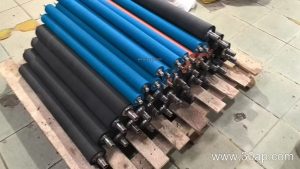
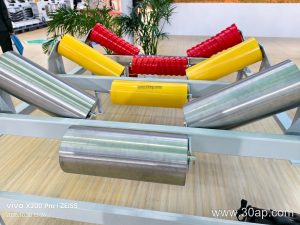
- Rubber-ring impact rollers at transfer points, where wet lumps strike the belt
- Ceramic or nylon-faced rollers where sticky material builds up on plain steel
Where Rust-Resistant Idlers Are Used
Corrosion is not limited to outdoor yards. Wash-down areas in a sand and gravel plant, dust-laden transfer towers at a cement works, and coal handling galleries at a power station all keep rollers damp for long periods. A rust-resistant idler is a sensible choice on the return side of a conveyor belt that carries wet aggregate, and on troughing stations near a dewatering screen or a spray bar.
In a limestone quarry or an iron ore concentrator, fine wet dust settles on the roller body and works into the seals. On a port loading line, salt air adds another attack route. Even in a tunnel mucking operation, seepage water and abrasive fines combine to shorten roller life. Selecting a protected roller in these positions reduces downtime and protects the belt from a seized, flat-spotted roller.
Matching the Idler to the Conveyor
The idler must fit the belt width, the trough angle, and the station form. Roll length changes with all three: a three-roll troughing set on B800 typically uses a roll around 315 mm long, B1000 around 380 mm, and B1200 around 465 mm, but side rolls and center rolls can differ, so the drawing governs. Trough angles of 20, 30, 35, and 45 degrees are common, and a 1.5 to 2 degree forward tilt is sometimes used on training stations.
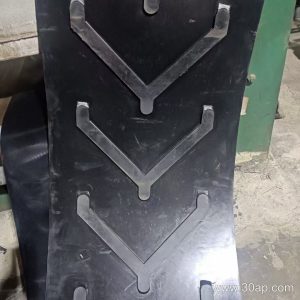
Belt width and roller diameter are separate decisions. A 500 mm or 650 mm belt does not dictate one shaft size, and a wide 1800 mm or 2000 mm belt does not automatically require the largest bearing. Load, speed, spacing, and the material being carried decide the bearing and shaft. When the line uses a heavy-duty mining conveyor belt or a steel cord conveyor belt, the idler load is higher, so the roller schedule should be checked against the actual tension and capacity.
Reference dimensions for planning
| Item | Common range | Note |
|---|---|---|
| Roller diameter | Ø63 to Ø219 | Selected by load and belt speed |
| Belt width | B400 to B2400 | Roll length follows station design |
| Trough angle | 20°, 30°, 35°, 45° | Matches material and belt stiffness |
| Bearing | 6204 to 6310 | Confirm by calculation |
| Surface | Steel, galvanized, stainless, rubber, ceramic | Chosen for the environment |
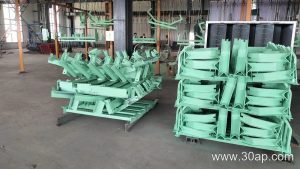
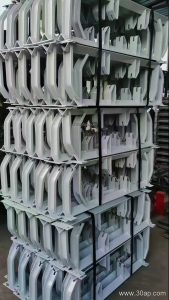
These are reference values, not a fixed selection table. A conveyor bracket and frame should be checked for the same corrosion exposure, because a protected roller on a rusting frame still loses alignment.
Buyer Checklist
- State the environment: wash-down, salt air, acid mist, or wet dust.
- Give the belt width, trough angle, and station type so roll length is correct.
- Ask for the sealing arrangement and bearing brand or grade, not just the shell coating.
- Confirm the roller diameter and shaft against the load, not against belt width alone.
- Check that the return-side rollers match the belt, especially when a flame retardant conveyor belt or an abrasion resistant conveyor belt is used in the same gallery.
A rust-resistant idler pays back where moisture is constant. Specify it for the wet zones of a quarry, a coal yard, or a cement plant, and keep standard rollers for the dry sections where corrosion is not a factor.