What a Conveyor Frame Does on a Running Line
A conveyor frame is the structural backbone that holds the idler roller sets, pulleys and belt in alignment along the length of a conveyor. It carries the weight of the loaded belt, keeps the trough shape stable and transfers vibration and impact loads into the supporting structure. In a quarry, a cement plant or a power plant coal yard, the frame is often the part that decides whether the belt tracks cleanly or wanders.
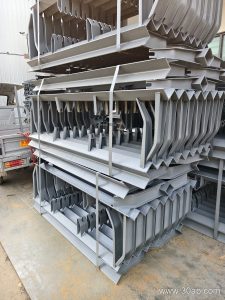
The frame is not a single item. It is a family of brackets and beams arranged by function: carrying frames on the top run, return frames underneath, transition frames near the pulleys, and impact or self-aligning frames where the load is difficult. Each position has its own geometry, so a carrying bracket should never be swapped for a return bracket.
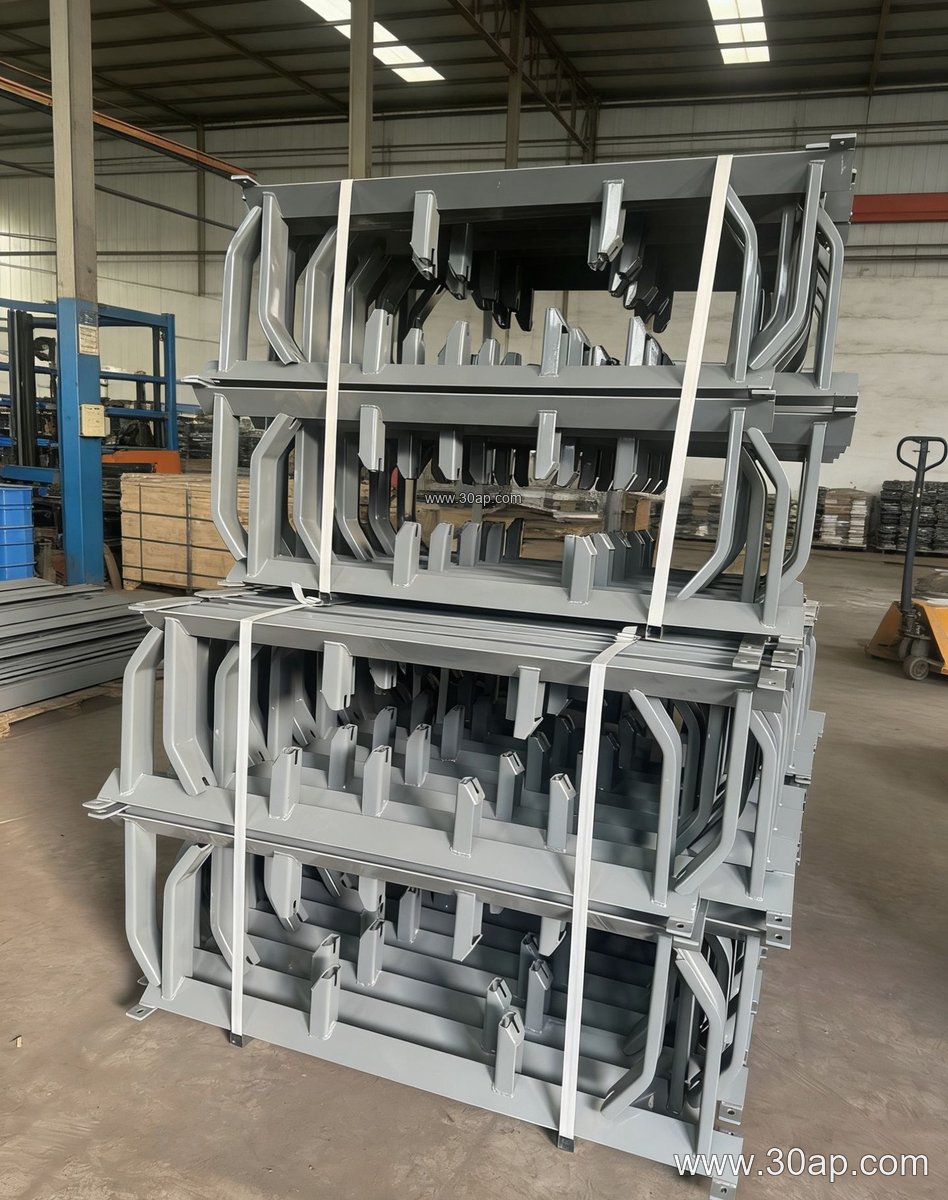
How the Frame Is Built
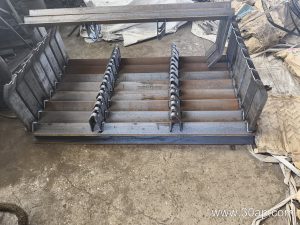
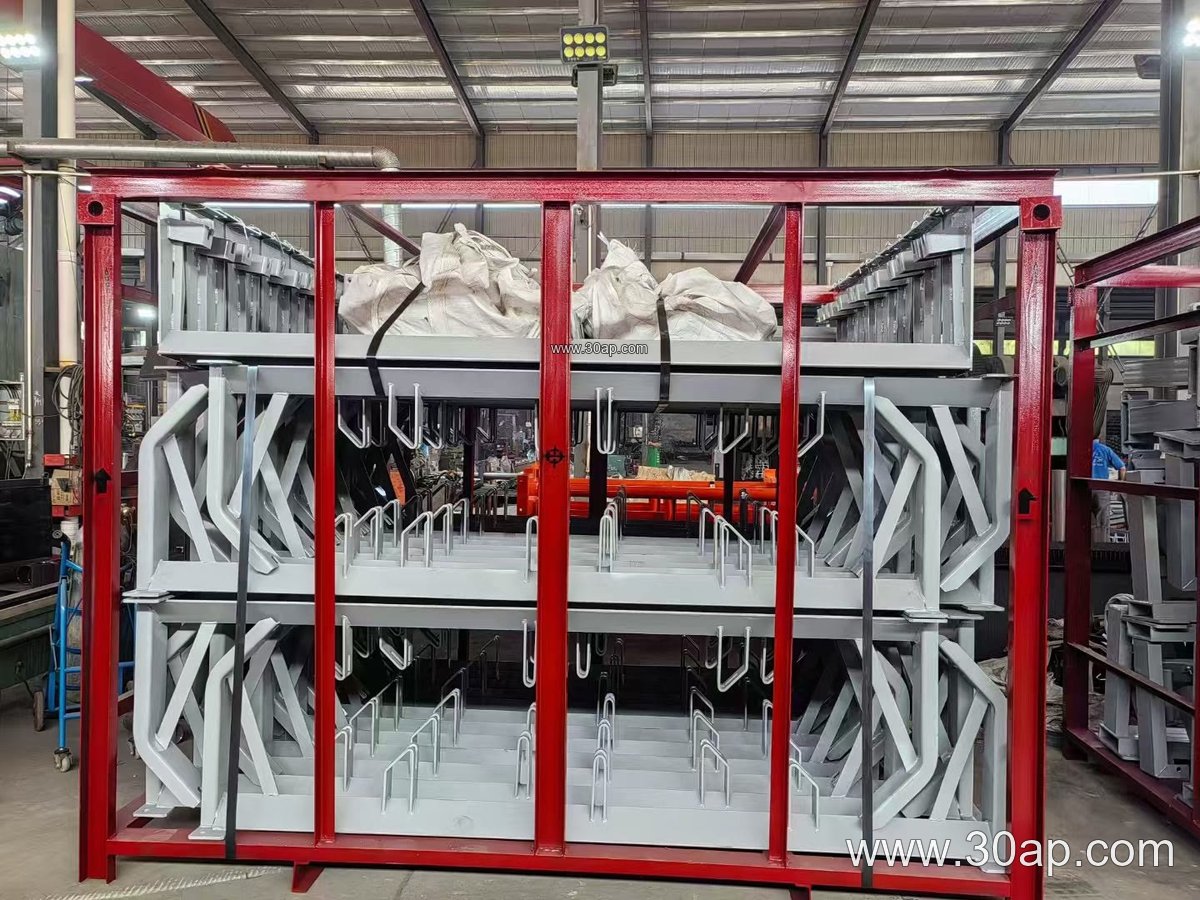
Most frames are fabricated from angle steel, channel steel or folded steel plate, then drilled and welded to suit a specific belt width and idler diameter. Common materials are carbon steel with a painted or galvanized finish; galvanized versions are often chosen for port and outdoor installations where moisture is present.
Key dimensions are set by the belt width, the trough angle and the idler diameter. Installation hole spacing and crossbeam length vary with these inputs and are normally confirmed by design rather than taken from a fixed table.
Typical reference combinations
- B650 with 30 degree trough and Ø89 idlers, common on small aggregate lines
- B800 with 35 degree trough and Ø108 idlers, a frequent choice in crushing and screening plants
- B1000 with 35 degree trough and Ø133 idlers, often used in cement and power plant conveying
- B1200 with 45 degree trough and Ø133 idlers, used where high capacity and deep troughing are needed
- B1400 to B1800 with 35 or 45 degree trough and Ø159 or Ø194 idlers, seen in heavy bulk terminals
These are reference examples only. A given belt width can work with more than one trough angle or roller diameter, and the final match depends on belt stiffness, load and transition length.
Frame Types and Where They Sit
Carrying frames support the upper belt and set the trough angle. Transition frames are placed between the last troughing station and the pulley, gradually flattening the belt so it does not overstress at the terminal. Return frames support the empty side; V-type return frames help center the belt, while flat return frames are simpler and common on shorter lines.
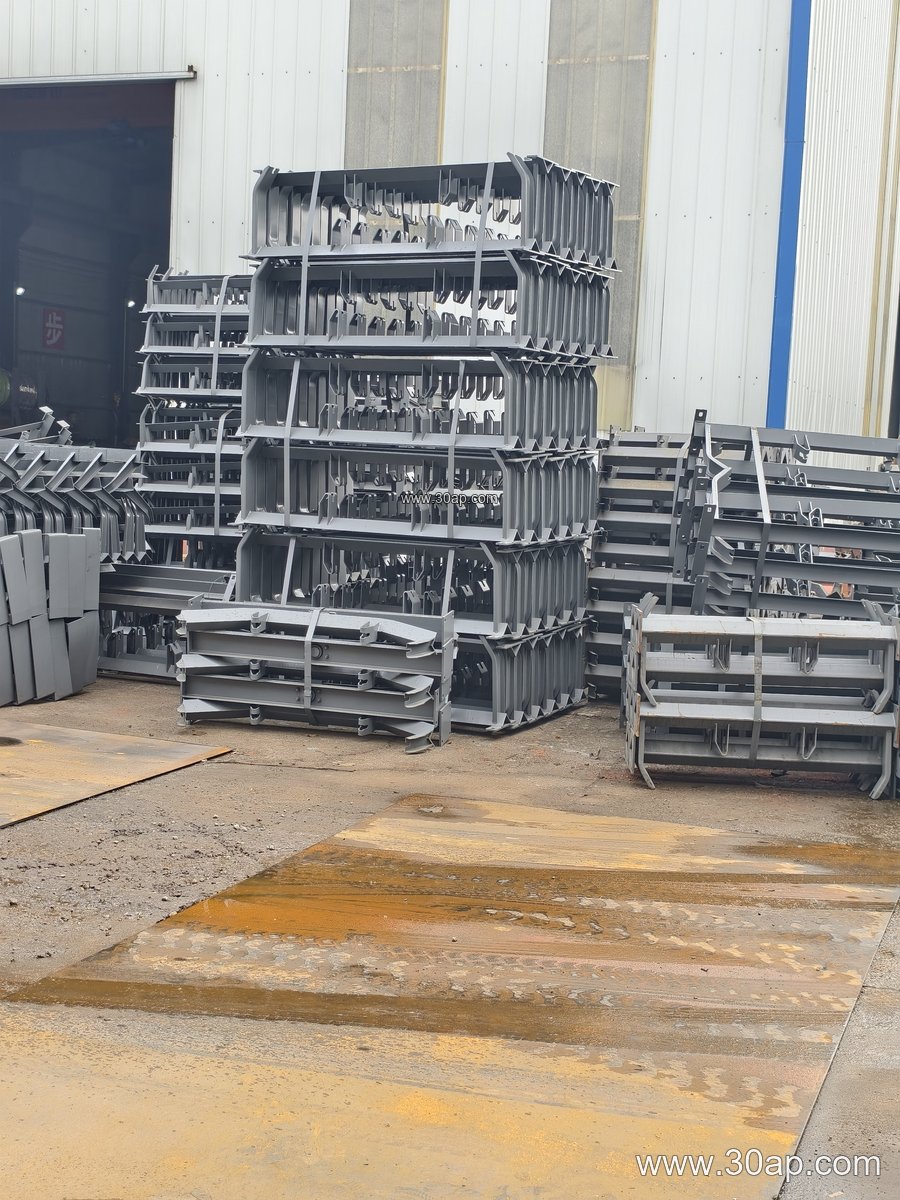
Impact frames with cushioning idlers are installed under the loading point, and self-aligning frames are used on long runs where belt misalignment is likely. Adjustable frames allow the trough angle to be changed on site, which is useful during commissioning.
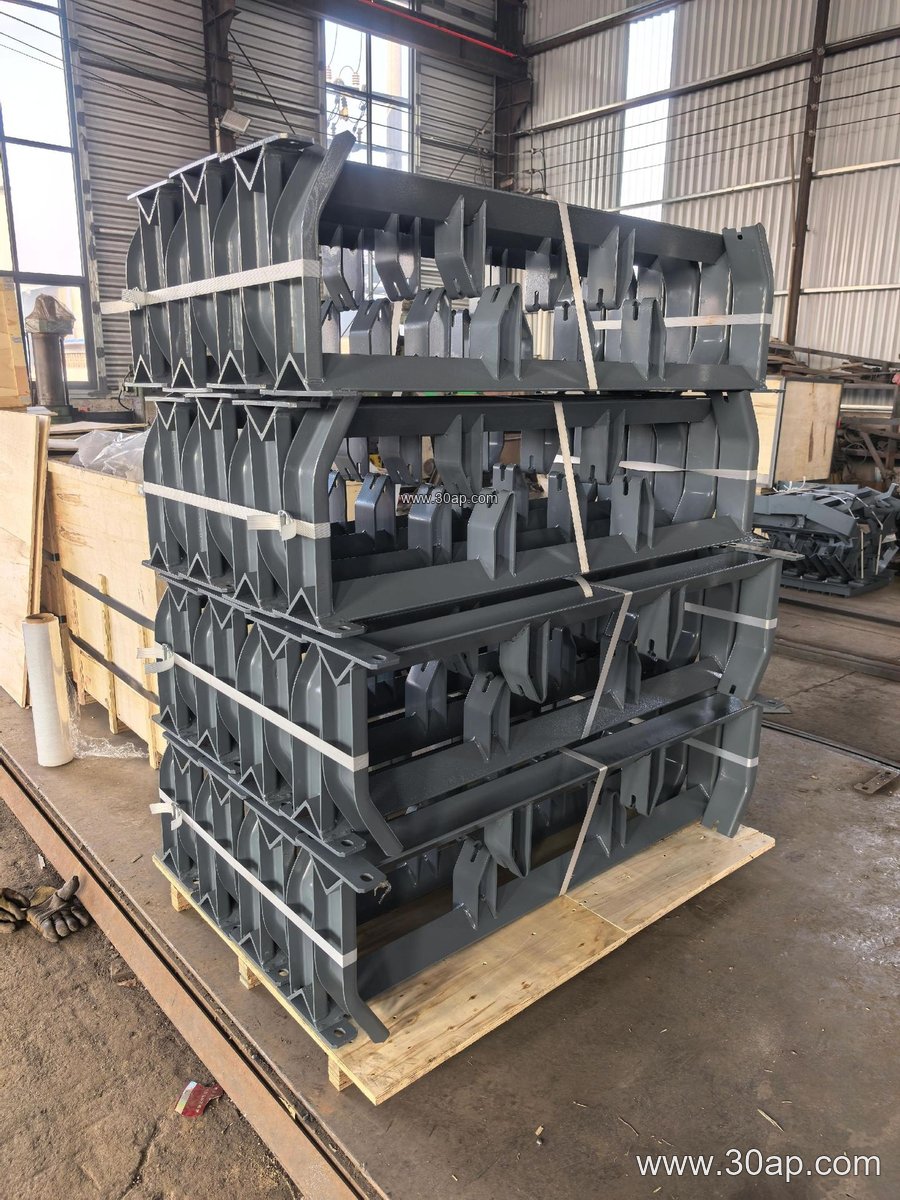
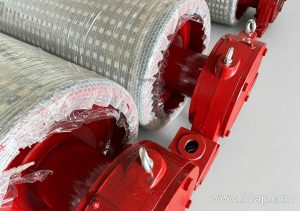
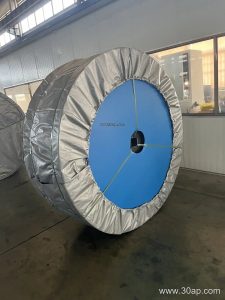
Frames work together with the conveyor pulley at the head and tail, and with the conveyor bracket that fixes the assembly to the trestle. A poorly aligned frame will shorten the life of any belt, whether it is an EP conveyor belt, an NN conveyor belt or a steel cord conveyor belt.
Applications Across Bulk Industries
In a limestone mine, frames carry heavy, abrasive rock and are usually built from channel steel with reinforced impact sections. In a coal washing plant, flame retardant conveyor belt and anti-static conveyor belt are common, and the frame layout must leave room for belt covers and cleaning devices. Cement plants prefer sturdy frames around crusher discharge, while port ship loaders use long, straight frame runs with careful alignment control.
Other users include steel plants handling sinter, fertilizer plants with chemical resistant conveyor belt, and tunnel projects where space is tight and frames are often bolted rather than welded.
What Buyers Should Check
- Belt width and trough angle, confirmed against the conveyor drawing
- Idler diameter and the matching bracket height, so the belt line stays level
- Hole spacing and crossbeam length, which change with width and trough angle
- Material and finish, especially for coastal, underground or wet conditions
- Whether adjustable or fixed frames suit the project, and whether transition frames are included
Ask for a frame schedule that lists position, type and dimensions rather than a single generic part number. For related components, matching the frame to the conveyor idler and pulley drawings early avoids rework at installation.