What a Four-Roll Idler Bracket Does
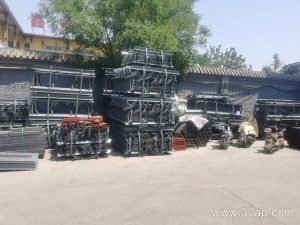
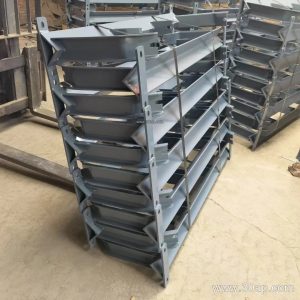
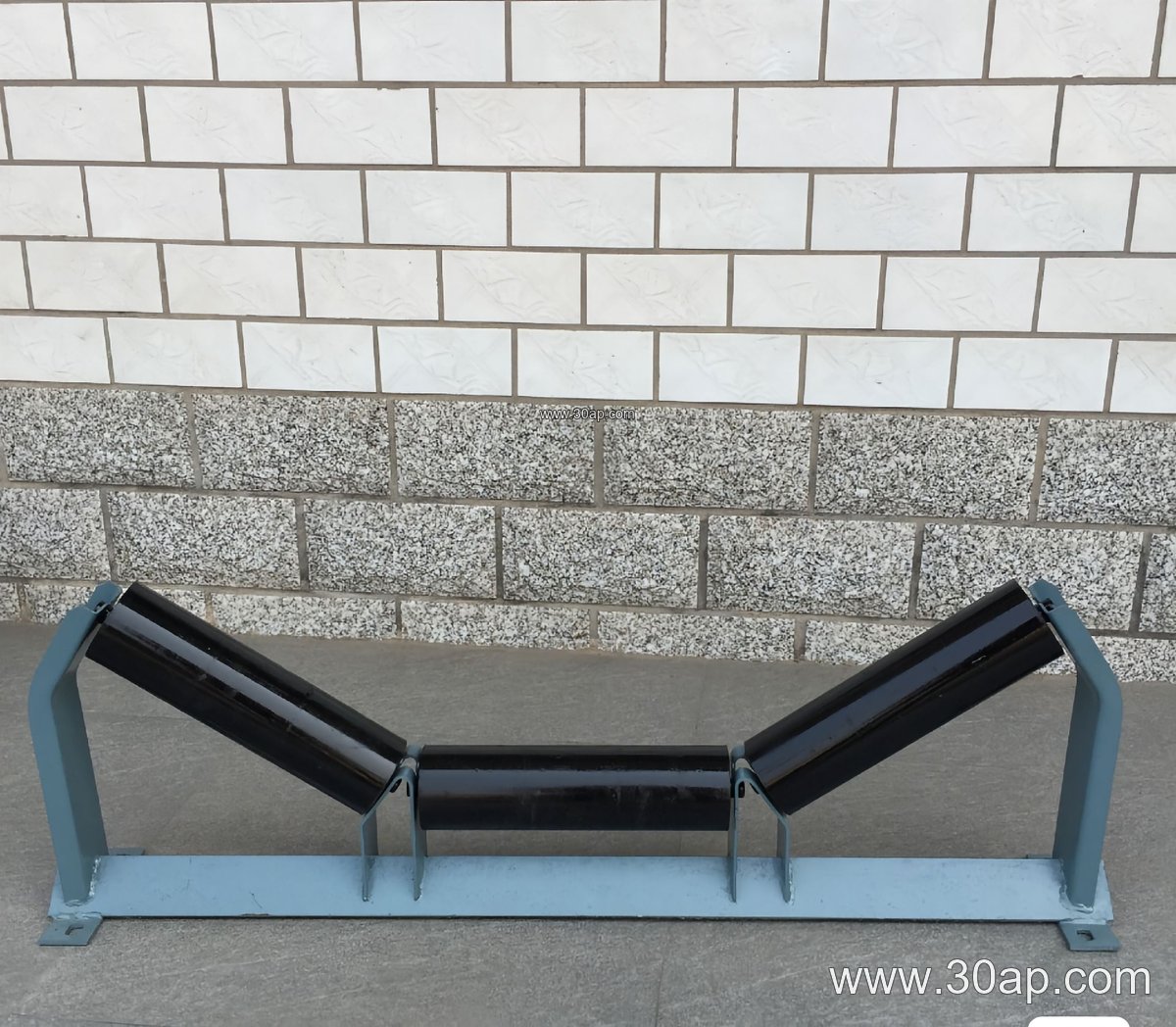
A four-roll idler bracket is a support frame that holds four idler rollers in a specific arrangement to shape and guide a conveyor belt. Unlike a conventional three-roll troughing set, this bracket uses two side rolls and two center rolls, often forming a deeper or more controlled trough profile. It is commonly found on bulk material conveyors where belt stability and load containment matter, such as in a quarry, a limestone mine, or a cement plant handling raw meal and clinker. The bracket keeps the idler rollers at the correct angles so the belt carries material without spillage and with less edge stress.
The same product is also called a four-roll idler frame or four-roll troughing bracket. These are accurate equivalent names for the same assembly, not different products.
Construction and Key Dimensions
Most four-roll idler brackets are fabricated from angle steel, channel steel, or folded steel plate. The frame includes mounting slots or holes for the idler shafts, cross beams sized to the belt width, and often a base plate for fixing to the conveyor stringer. The trough angle is a defining feature: common configurations include 20, 30, 35, and 45 degrees. The bracket may be fixed or adjustable, with adjustable versions allowing the operator to change the trough angle between these common values. A slight forward tilt of about 1.5 to 2 degrees is sometimes used on carrying idlers to help center the belt.
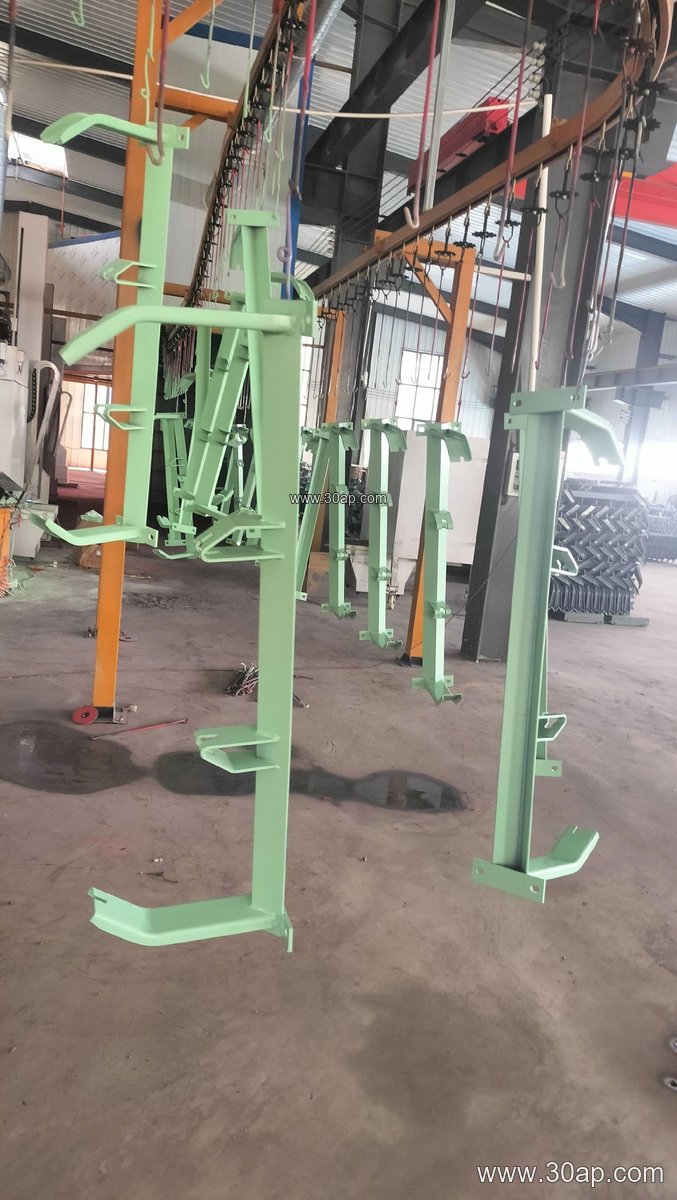
Typical belt width and roller diameter combinations are shown below as reference data, not as fixed rules. Actual mounting hole spacing and cross beam length depend on the belt width, trough angle, and conveyor design.
| Belt Width (B) | Common Trough Angle | Common Roller Diameter |
|---|---|---|
| B650 | 30 degrees | Ø89 |
| B800 | 35 degrees | Ø108 |
| B1000 | 35 degrees | Ø108 or Ø133 |
| B1200 | 45 degrees | Ø133 |
| B1400 | 45 degrees | Ø133 or Ø159 |
| B1600 | 45 degrees | Ø159 |
| B1800 | 45 degrees | Ø159 or Ø194 |
These values are examples only; a B1200 belt can be paired with different roller diameters and trough angles depending on load and belt stiffness.
Where It Fits in a Conveyor System
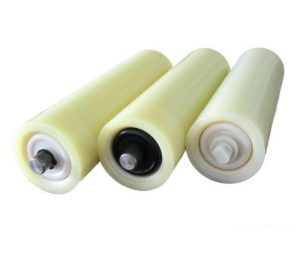
The four-roll idler bracket is usually installed on the carrying side of a conveyor, between the tail pulley and the drive pulley, where the belt is loaded. It works together with the conveyor belt, the idler roller set, and the conveyor pulley to maintain a stable trough. In a coal mining conveyor or a power plant coal handling line, this bracket helps contain coal dust and lumps. In a sand and gravel plant or a crushing and screening circuit, it supports heavy aggregate loads. The bracket also appears in tunnel spoil removal and fertilizer handling, where belt training and material containment are important.
For abrasive bulk materials, a high abrasion resistant conveyor belt may be used with these brackets to reduce wear on the belt edges. In underground coal mining, a flame retardant conveyor belt is often specified, and the bracket must be positioned to avoid rubbing against the belt surface.
Selection and Maintenance Notes
Buyers should match the four-roll idler bracket to the belt width, the idler roller diameter, and the required trough angle. The bracket material and finish should suit the environment: dusty, wet, or corrosive locations may need galvanized or painted frames. Check that the mounting holes align with the conveyor stringer and that the bracket can be adjusted if the belt needs re-training. During maintenance, inspect the bracket for bent cross beams, loose bolts, and worn mounting slots. A misaligned bracket can cause the belt to drift and wear against the conveyor bracket or frame.
When replacing idler rollers, keep the original trough angle and roll spacing; changing only the bracket without checking the belt path can lead to tracking problems. For wide belts, such as 1800mm or 2000mm, a heavier bracket section is usually required, but the final choice is determined by the conveyor design and load rating.
Related equipment such as the conveyor pulley and the conveyor belt should be reviewed together with the bracket selection. For more information on conveyor components, visit conveyor bracket and idler roller resources, or check conveyor belt guidance for belt-specific needs.