What a Conveyor Pulley Does on a Belt System
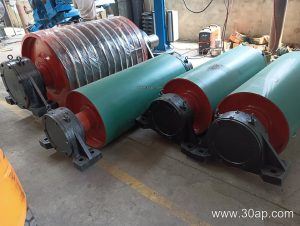
A conveyor pulley is the rotating drum that transmits power to the conveyor belt, or guides and tensions it along the return run. In a quarry, a cement plant, or a power plant coal yard, the pulley is the point where the drive meets the belt, so its diameter, shell, lagging, and shaft must match the duty. The drum is not a simple steel tube; it is a fabricated assembly with a shell, end discs, a shaft, bearing housings, and often a lagging surface, and each part carries load in a different way.
Buyers often use the term conveyor drum for the same component. Both names refer to the same product, and the choice between drive and non-drive units depends on where the drum sits in the conveyor layout, not on the name used in a quotation.
How the Drum Is Built
A typical unit combines a rolled steel shell with welded end plates, a through shaft or stub shafts, and bearing assemblies mounted on a frame. The shaft is sized by torque and radial load, not by belt width alone, so a B800 conveyor might use Ø80 mm or Ø100 mm shafting depending on the drive and belt tension. Common shell diameters range from Ø200 mm on small units to Ø1250 mm or more on heavy main drives, and face width usually exceeds belt width so the belt is fully supported.
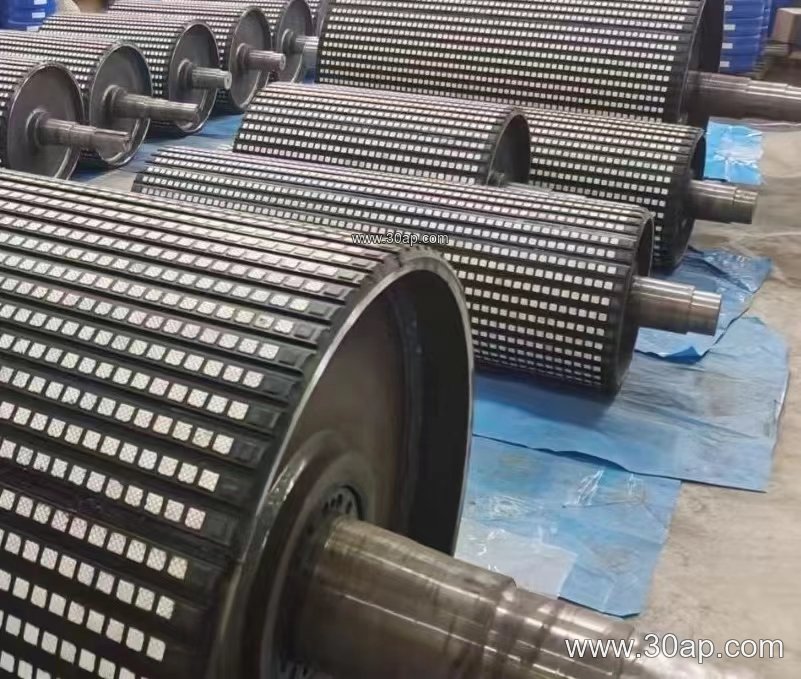
Surface treatment matters as much as the shell. Plain finish suits light duty and low wrap angles. Rubber lagging, applied by hot vulcanizing or cold bonding, improves grip and reduces belt slip. Diamond and herringbone patterns shed water and fines, while ceramic lagging is used where abrasive dust shortens cover life. Lagging thickness is usually 8, 10, 12, 15, or 20 mm, selected with the drive power and the environment in mind.
| Belt width (reference) | Typical face width | Example drum diameter |
|---|---|---|
| B400 | about 500 mm | Ø250 mm |
| B800 | about 950 mm | Ø500 mm |
| B1200 | about 1400 mm | Ø1000 mm |
| B1400 | about 1600 mm | Ø800 mm |
| B1800 | about 2000 mm | Ø1250 mm |
These are reference combinations, not fixed rules. A wider belt can run on a range of drum diameters, and the final choice follows belt tension, wrap angle, and shaft loading.
Drive, Tail, and Bend Positions Are Not Interchangeable
A drive pulley, also called the head or main drum, delivers torque through the shell and needs strong lagging and a robust shaft. A tail pulley at the loading end turns freely and often carries a wing or self-cleaning form to shed material. A bend pulley changes belt direction on the return run and is selected mainly for diameter and bearing capacity. Calling a tail drum a drive drum, or a bend drum a tail drum, leads to the wrong bearing, lagging, and shaft design, so the position should always be stated in the inquiry.
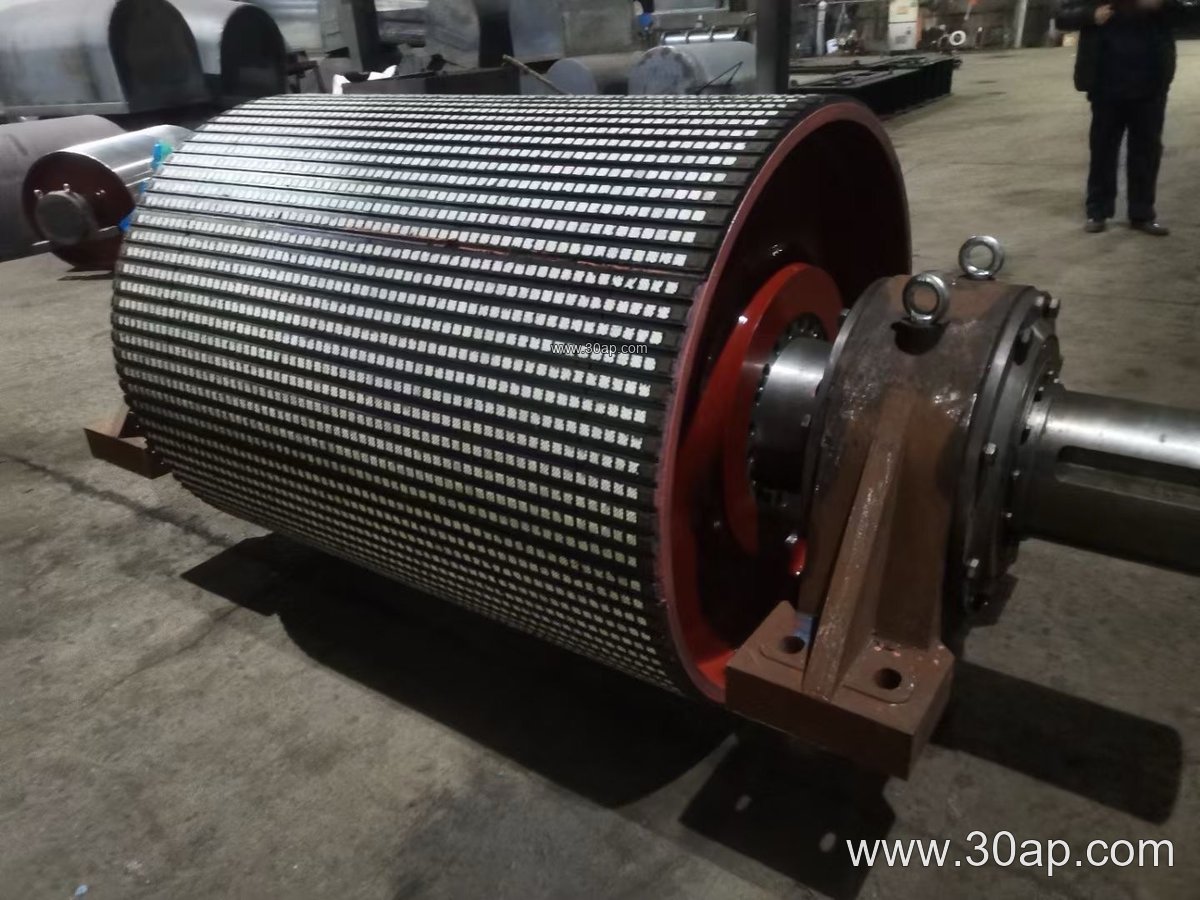
Other positions include the take-up pulley that maintains tension, the snub pulley that increases wrap angle on the drive, and the electric drum that houses the motor and gearbox inside the shell. Each has its own load case, and a supplier needs the layout drawing to quote correctly.
Where These Drums Are Used
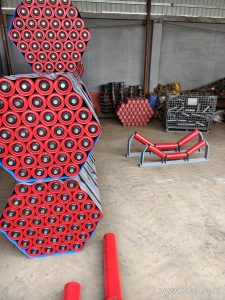
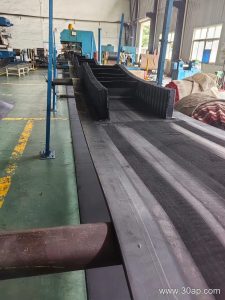
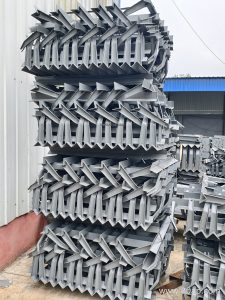
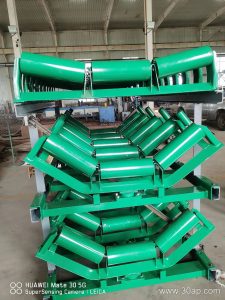
Belt conveyors in a limestone mine, a coal washing plant, or a sand and aggregate line all depend on correctly sized drums. The drum works together with the conveyor belt, the idler roller sets, and the conveyor bracket that fixes the bearing housing to the frame. A drum that is too small for the belt stiffness can cause tracking problems, while an undersized shaft may deflect and shorten bearing life. In dusty or wet conditions, sealed bearings and suitable lagging help keep the unit running between maintenance stops.
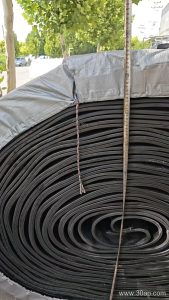
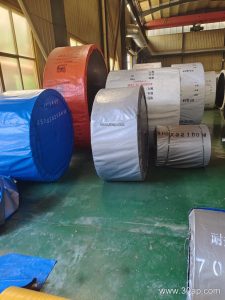
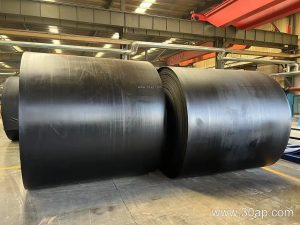
When the belt itself is a heavy-duty mining conveyor belt or a steel cord conveyor belt, the drum diameter usually increases to limit bending stress in the belt carcass. Lighter fabric core belts may run on smaller drums, but the belt manufacturer’s minimum pulley diameter should always be checked before ordering.
What Buyers Should Confirm Before Ordering
- Belt width, belt type, and belt tension, so face width and shell diameter can be set.
- Position in the conveyor: drive, tail, bend, take-up, or snub, with the required wrap angle.
- Lagging type and thickness, matched to grip needs and material conditions.
- Shaft diameter and bearing size, based on torque and load rather than width alone.
- Mounting details, including the conveyor bracket interface and available space.
- Environmental factors such as dust, moisture, temperature, and corrosion.
A clear data sheet with these points lets the supplier propose a drum that fits the conveyor instead of a generic unit. For more information on matching drums with belts and frames, visit www.example.com/conveyor-pulley or review the belt and roller pages at www.example.com/conveyor-belt.