What a Trough Idler Does on a Conveying Line
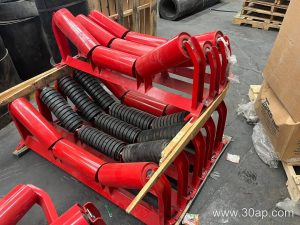
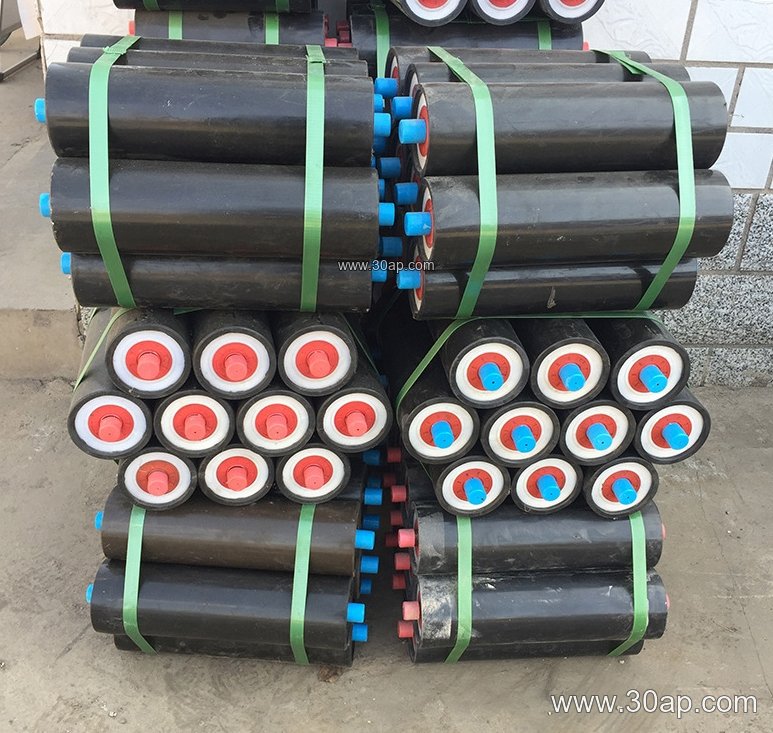
A trough idler is the assembly of rollers that shapes a flat conveyor belt into a trough, keeping bulk material centered as it travels. In most installations the idler roller group sits on the carrying side and consists of three rolls: one horizontal center roll and two angled side rolls. The trough angle is usually 20, 30, 35 or 45 degrees, and the choice affects how much material the belt can hold and how much spillage occurs at transfer points. You may see this same component called a troughing idler or a troughing roller set, and those are accurate equivalent names for the same product.
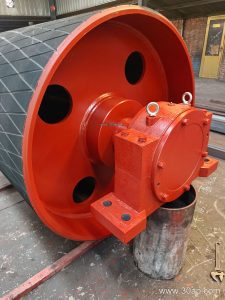
Trough idlers are distinct from the pulleys that drive and return the belt. A drive pulley, tail pulley and bend pulley each have their own role and are not interchangeable with idlers, so keep the terms separate when specifying spares. A conveyor pulley is a powered or redirected drum, while an idler roller simply supports the belt.
How the Assembly Is Built
Each roll normally has a steel tube shell, a shaft, bearing housings and a sealing arrangement. Roll diameters commonly include Ø63, Ø76, Ø89, Ø102, Ø108, Ø127, Ø133, Ø159, Ø178, Ø194 and Ø219 mm, chosen according to belt width, load and speed. Bearings are often 6204, 6205, 6305, 6306, 6308 or 6310, but a given bearing is not tied to one roll diameter. Roll length depends on belt width and trough angle, and the center roll and side rolls may differ. For example, three-roll trough sets on B800 or B1000 belts usually use shorter side rolls than the center roll, and these values are reference examples rather than fixed pairings.
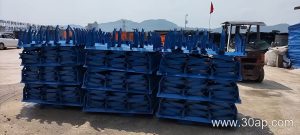
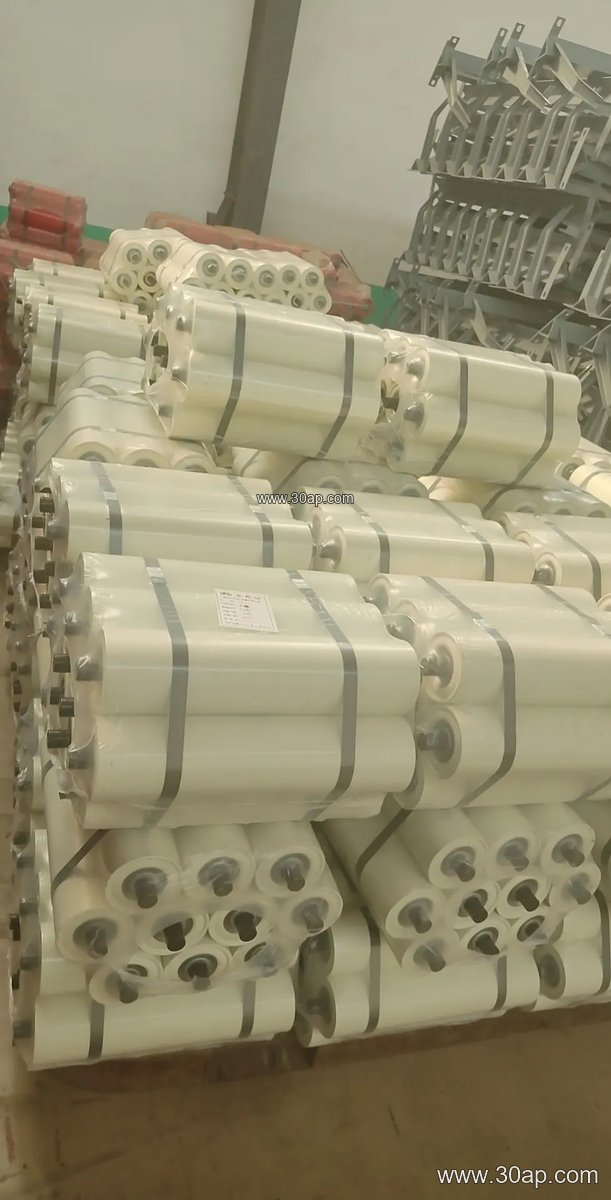
Roll surfaces can be plain steel, nylon, ceramic or rubber rings. Rubber-ring rolls are common in impact zones, while ceramic or nylon covers may be selected where sticky material builds up. The frame that holds the rolls is mounted on a conveyor bracket fixed to the stringer, and the bracket height and hole spacing must match the idler frame.
Where Trough Idlers Are Used
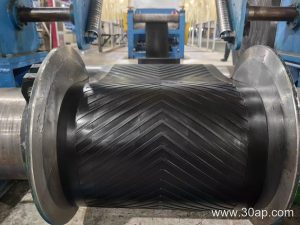
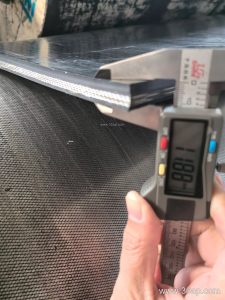
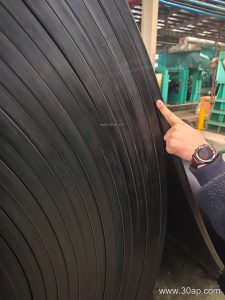
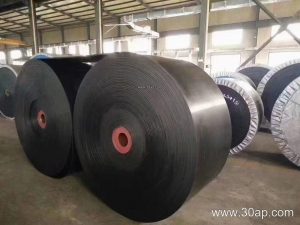
You will find troughing idler sets in quarries, limestone mines, iron ore and copper ore operations, coal washing plants, cement plants and power station coal handling. In a sand and aggregate line they support an abrasion resistant conveyor belt carrying crushed stone; in a coal yard they may sit under a flame retardant conveyor belt. A steel cord conveyor belt on a long overland run needs closely spaced idlers to control sag, while a fabric core conveyor belt on a shorter transfer may use a wider pitch. The same principle applies whether the belt is an EP conveyor belt, an NN conveyor belt or a multi-ply fabric core conveyor belt.
In load zones, a buffer or impact idler with rubber rings is often used instead of a standard trough idler to absorb the drop energy from a crusher or screen. On the return side, a V-shaped return idler or flat return roller trains the belt, and these are separate items from the carrying trough set. Mentioning them helps in layout planning but does not make them substitutes for a trough idler.
Reading Sizes and Dimensions
Belt width and roll diameter are linked by design, not by a single rule. A 500 mm or 650 mm belt typically uses smaller rolls, while a 1200 mm, 1400 mm or 1600 mm belt needs larger diameter rolls and longer shafts. The table below gives common reference values, not verified supply specifications.
- Roll diameter range: Ø63 to Ø219 mm, selected by load and belt speed
- Common trough angles: 20, 30, 35, 45 degrees
- Belt width examples: B400, B500, B650, B800, B1000, B1200, B1400, B1600, B1800
- Typical roll length for a three-roll set: about 200 mm on B500, 250 mm on B650, 315 mm on B800, 380 mm on B1000, 465 mm on B1200, 530 mm on B1400, 600 mm on B1600
- Sealing: labyrinth or contact seal, with grease retention as required
These figures are examples only. Side rolls and center rolls can differ, and a 1000 mm belt does not automatically dictate a single shaft diameter.
Buyer Checklist
Before ordering, confirm the belt width, the trough angle, the roll diameter and the frame fixing dimensions. Ask for the bearing designation, the seal type and the shell thickness, and check that the idler roller rotates freely by hand. On site, inspect for worn shells, seized bearings and material build-up, and replace a roll before it damages the belt cover. Matching the trough idler to the conveyor bracket and to the belt type, whether a heat resistant conveyor belt, an oil resistant conveyor belt or a heavy-duty mining conveyor belt, keeps the line running with fewer stoppages.
For more on matching idlers with conveyor belt and conveyor pulley components, review the full conveyor range at www.example.com/trough-idler before finalizing a spare parts list.