What a High-Capacity Idler Is
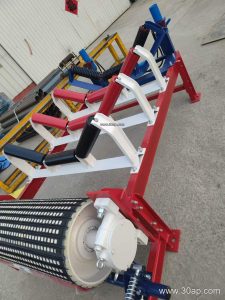
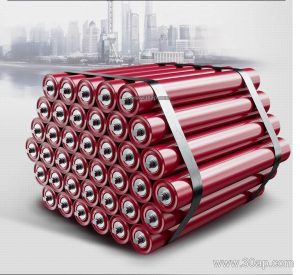
A high-capacity idler is a conveyor idler roller built to carry heavier belt loads, wider belts and more abrasive bulk material than a standard-duty roller of the same diameter. In practice, the term describes a design approach rather than one fixed model: thicker roller shell, stronger shaft, larger bearings, better sealing and a robust bracket interface. On a quarry conveyor or a power plant coal handling line, these rollers sit under the loaded strand and support the conveyor belt along its entire carrying length.
Buyers often meet this product under the equivalent name heavy-duty idler roller. Both names refer to the same item, and the choice between them is usually a matter of supplier vocabulary rather than a difference in construction principle.
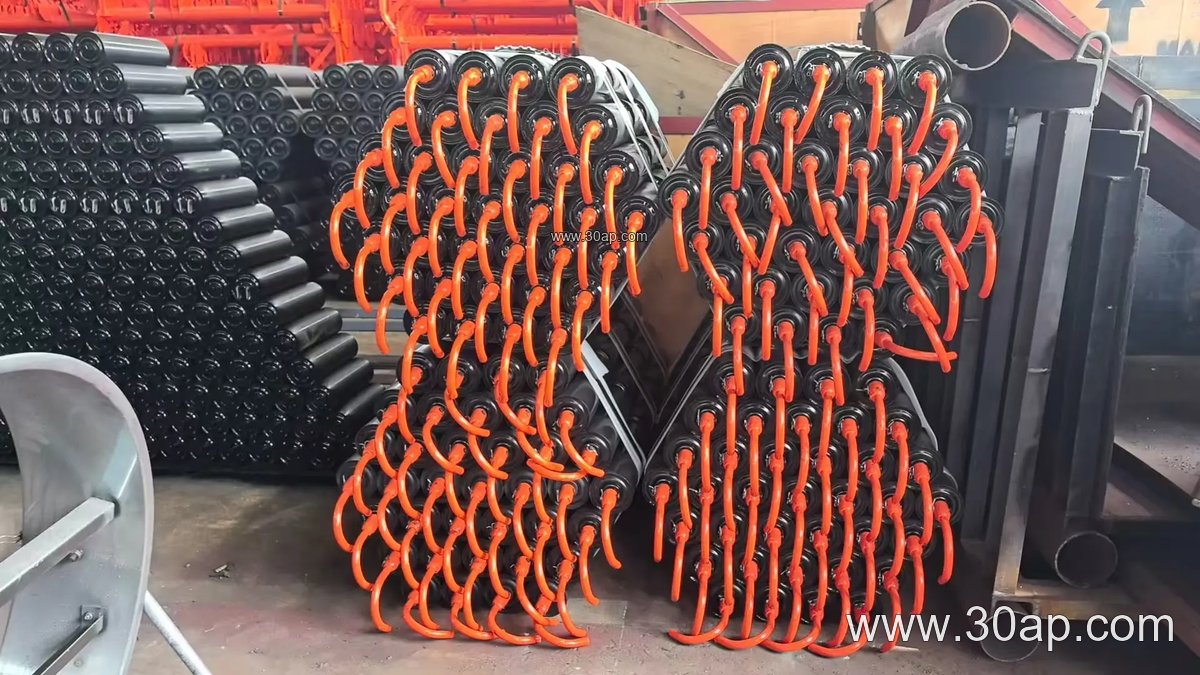
How the Roller Is Built
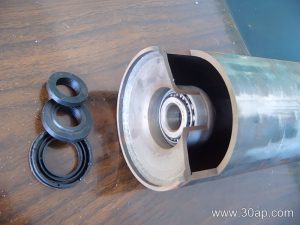
The core of the design is a balance between shell stiffness, bearing capacity and sealing quality. A high-capacity idler normally uses a seamless steel tube shell, machined end caps, a through shaft and deep-groove ball bearings sized to the load. Roller face options include plain steel, nylon, ceramic and rubber rings, and the surface form should follow the duty: rubber rings help absorb impact at transfer points, while ceramic or nylon faces can suit sticky or abrasive conditions.
Sealing matters as much as raw strength. Dust, fines and wash-down water are the usual causes of early bearing failure, so a multi-stage labyrinth seal with effective grease retention is a practical marker of a genuinely heavy-duty build.
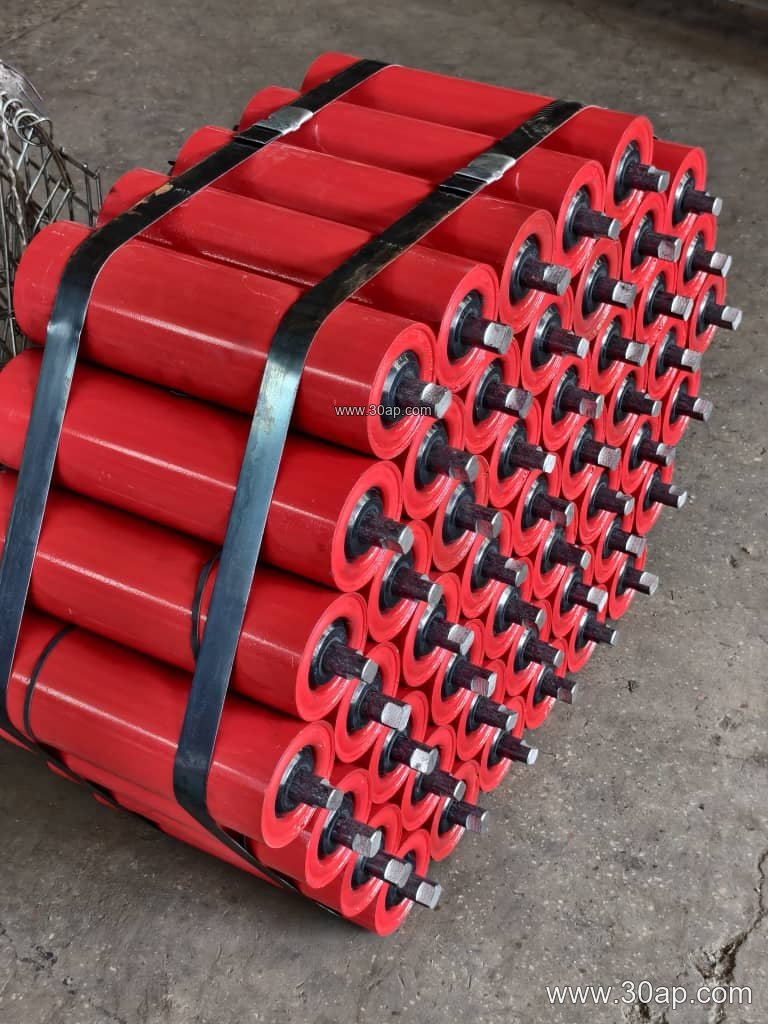
Common Sizes and Configurations
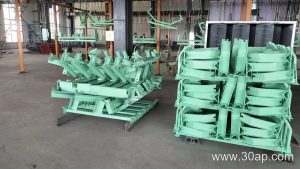
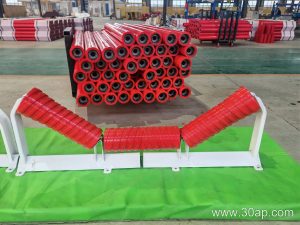
High-capacity idlers are usually supplied as part of a troughing set, either two-roll or three-roll, with trough angles commonly 20, 30, 35 or 45 degrees. Roller diameters in this class typically range from about 89 mm up to 219 mm, matched to belt width and load. The table below gives common reference values; final dimensions should always be confirmed against the conveyor design.
| Belt width | Typical three-roll idler length (example) | Common trough angle |
|---|---|---|
| B500 | about 200 mm | 20 to 35 degrees |
| B650 | about 250 mm | 20 to 35 degrees |
| B800 | about 315 mm | 30 to 35 degrees |
| B1000 | about 380 mm | 30 to 35 degrees |
| B1200 | about 465 mm | 30 to 45 degrees |
| B1400 | about 530 mm | 35 to 45 degrees |
| B1600 | about 600 mm | 35 to 45 degrees |
| B1800 | about 670 mm | 35 to 45 degrees |
Bearing selection commonly includes 6205, 6305, 6306, 6308 and 6310, chosen with shaft diameter and radial load in mind. A wider belt does not automatically dictate one shaft size, and one belt width does not lock the user into a single roller diameter. Side rollers and centre rollers in the same set can also differ in length.
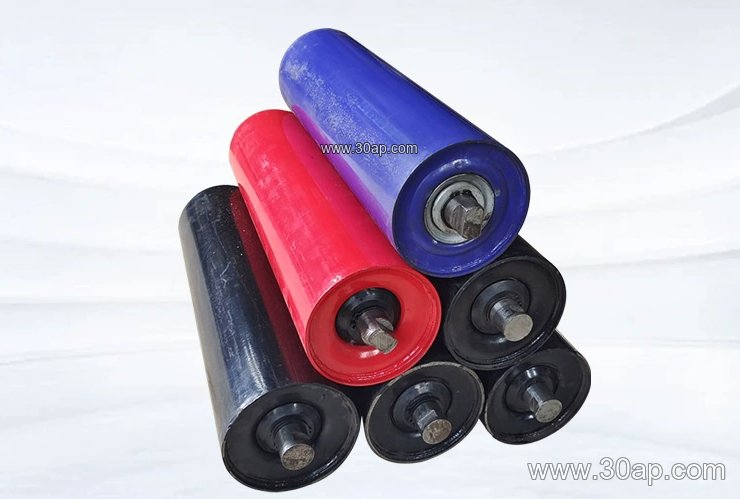
Where These Rollers Earn Their Keep
The strongest case for a high-capacity idler appears where belts run continuously and downtime is expensive. In an iron ore or copper ore terminal, a few failed rollers can stop a whole transfer line. In a cement plant, clinker and limestone dust attack seals relentlessly. A coal mining conveyor underground faces restricted maintenance access, so roller life directly affects shift output. Aggregate and sand making plants see high impact loads at crusher discharge, where rubber-ring impact idlers and reinforced frames are often more suitable than plain troughing rollers.
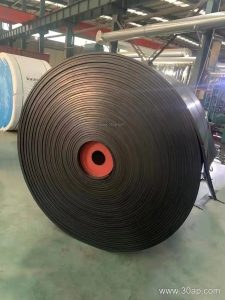
The belt itself also shapes the choice. A heavy-duty mining conveyor belt, a steel cord conveyor belt on a long overland run, or a thick abrasion resistant conveyor belt all transmit different loads into the idler. Matching roller class to belt tension and material weight is more useful than buying the largest roller available.
Selection Points for Buyers
- Confirm the actual belt width, trough angle and idler set form before ordering.
- Check shaft diameter, bearing number and seal type rather than judging by shell thickness alone.
- Consider the environment: wash-down, fine dust, heat or oil mist all affect bearing life.
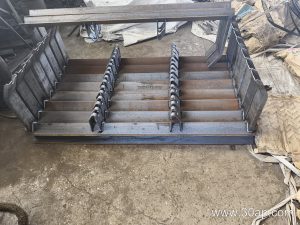
- Verify that the conveyor bracket and frame can accept the roller end fitting.
- Ask for the roller’s load rating and rotation resistance data where available.
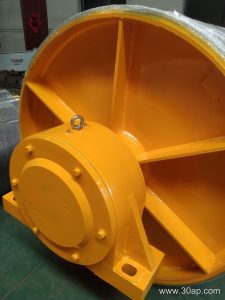
For a full conveying system, the idler works alongside the conveyor pulley, the conveyor bracket and the belt, so consistent interface dimensions simplify spare-parts management at sites such as a steel plant, port or tunnel project. A well-specified high-capacity idler is ultimately a maintenance decision as much as an engineering one.